Time to get the blog back on track! 😅 There’s so much to update on. Let’s travel back in time a few months to the third leg of Japan – Kyushu
👉 Make sure to read this post using your web browser to be able to view all the photos 📷 👀
We started our Kyushu journey in Fukuoka, home to some of the best ramen spots in Japan. After being in the tranquil islands of Akamai and Okinawa, this felt like our first entry point into lively Japan. The apartment we’d booked in the city centre had a projector, so after venturing out for some delicious ramen, we watched an episode of Anthony Bourdain’s Parts Unknown in Japan to increase the excitement!
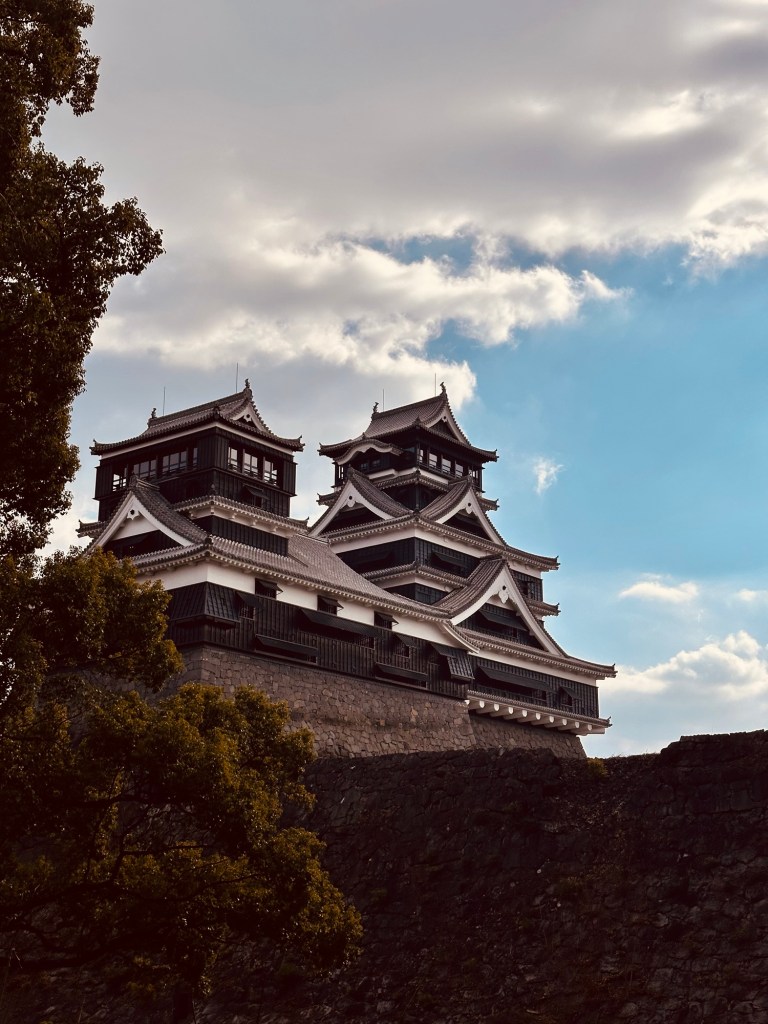
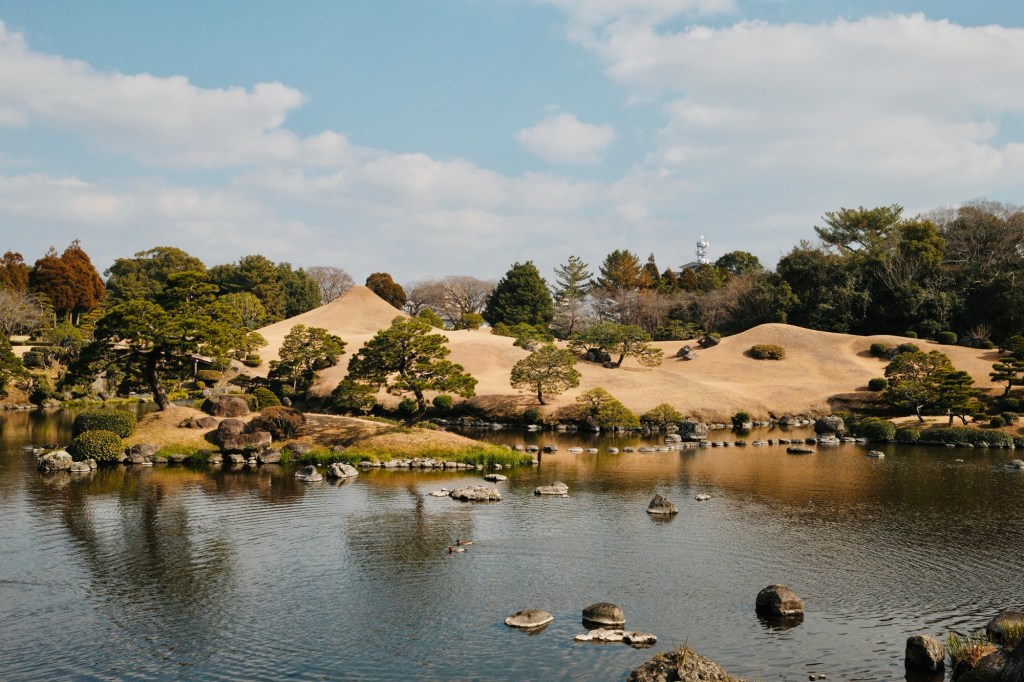
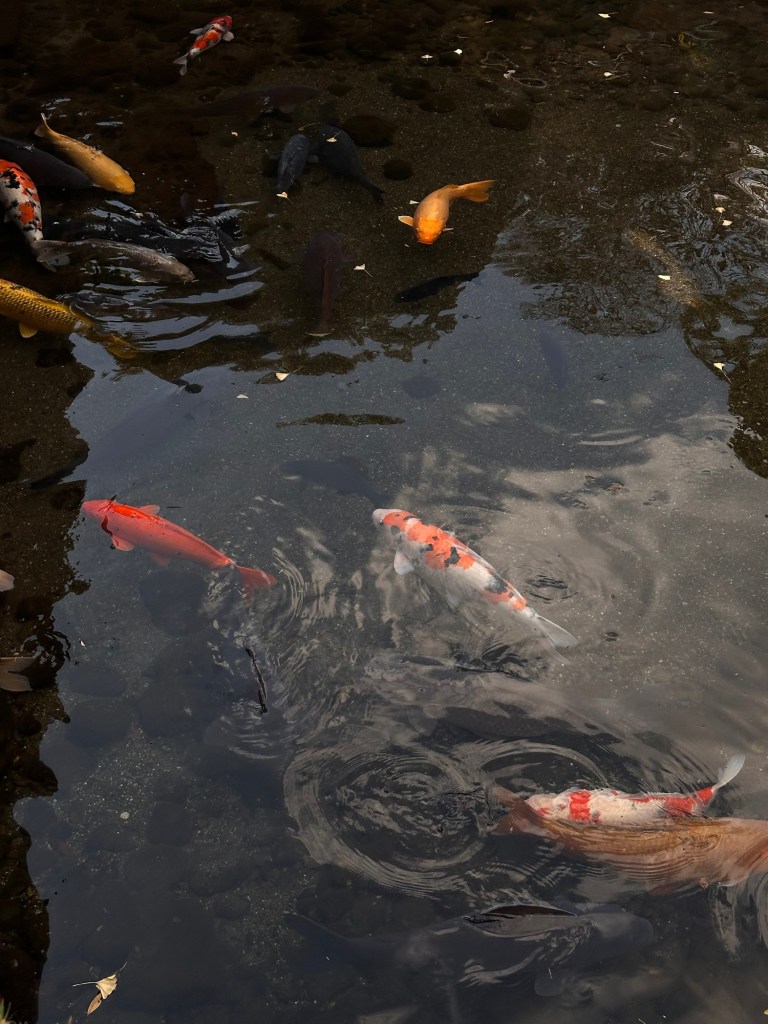
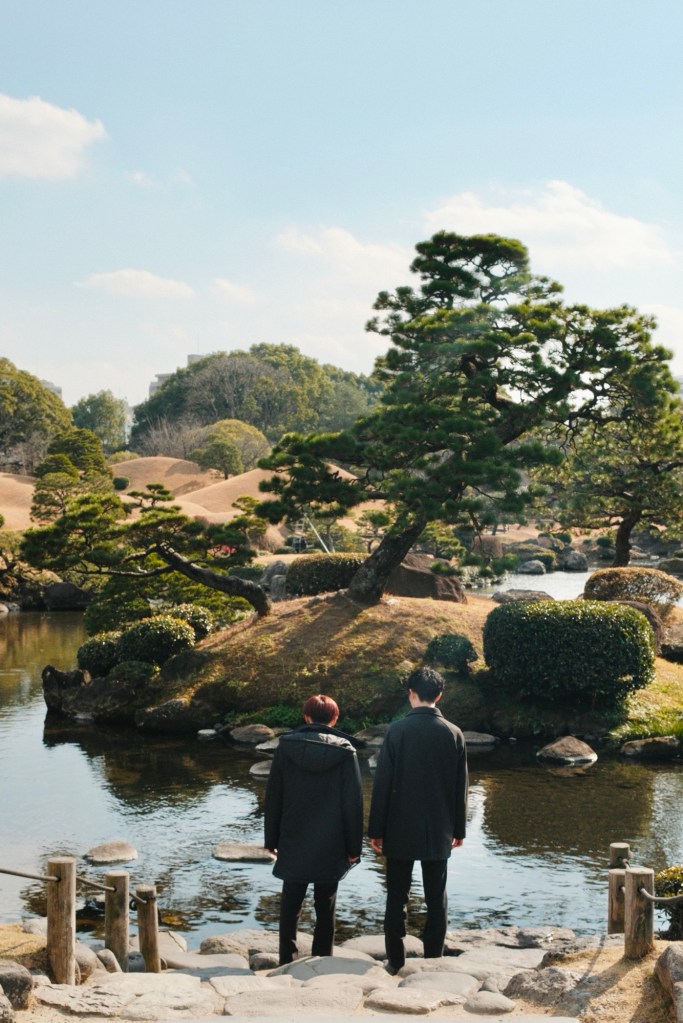
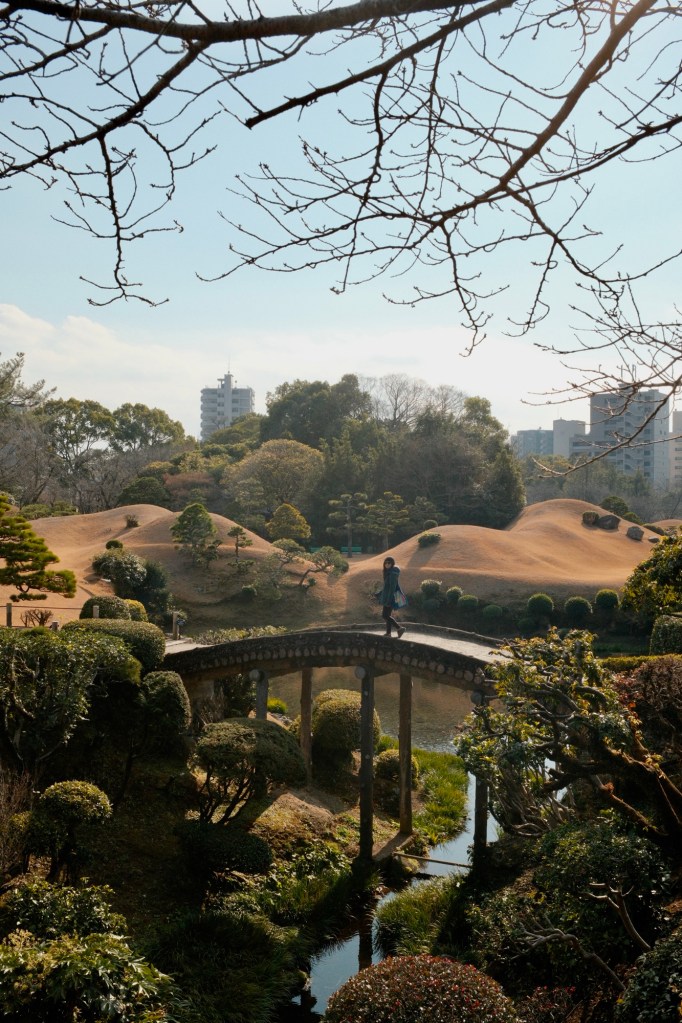
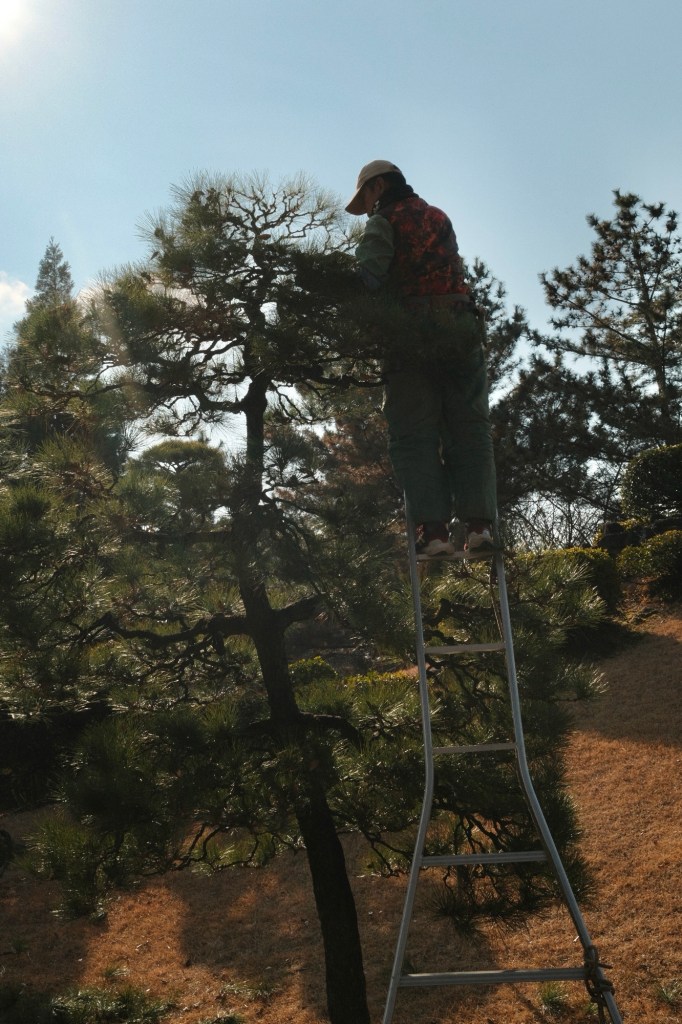
We drove south from Fukuoka, stopping at Kumamoto to check out a castle (like our previous castle outing in Okinawa, it was also damaged from an earthquake) and the peaceful gardens of Suizenji Jojuen. The gardens gave a great introduction to ornate Japanese gardening – a beautiful lake; artfully pruned bonsai trees; and a cute curved bridge with rolling hills backdrop. 10/10 Kumamoto.
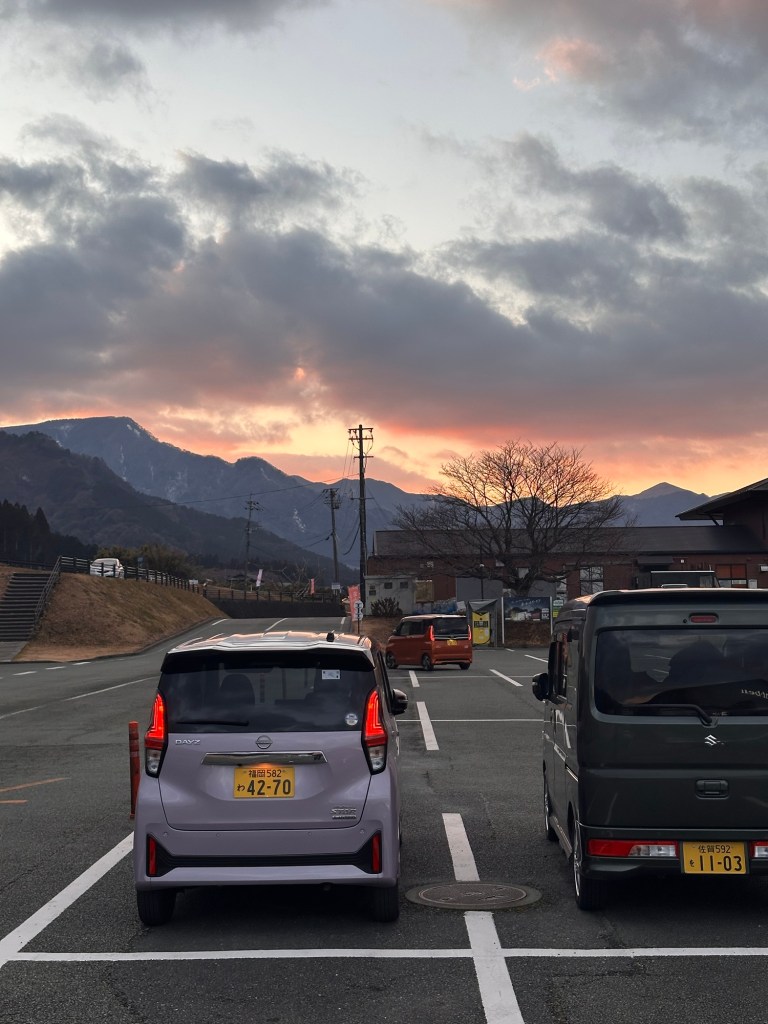
We were headed for Mount Aso, the largest active volcano in Japan, and set in the national park of the same name. We made a stop at our new favourite shop, Mont Bell– a Japanese outdoor specialist known for high-quality goods – to pick up some more suitable cold-weather outdoor wear for our time in Japanese winter. Also, the location of my first cultural faux pas – trying on clothes in Japanese clothes stores is an interesting experience. I was entirely unaware that one should take their shoes off to enter the small changing room, even if the floor was not changing between shop and changing space, only separated by a curtain. I was informed by a staff member after exiting the changing room that shoes were very much not allowed when trying on clothes. I’d been doing so well in the country famed for polite processes and respect 😓
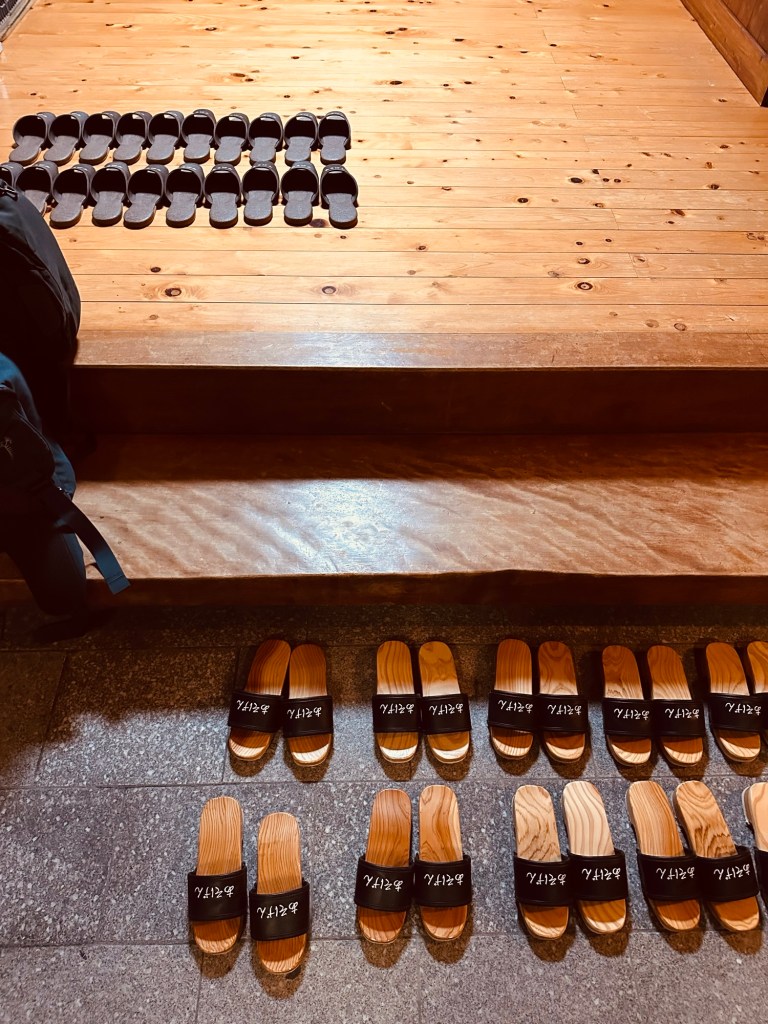
Kitted out with the finest Japanese outdoor gear, we headed to our hotel nearby. This was our first onsen hotel. Onsen hotels feature natural hot baths courtesy of the thermal volcanic water deep underground. More often than not, you’ll find communal baths separated by gender, the kind where you need to get naked with everyone else – we’ll return to this subject later. Our onsen hotel was, in fact, another variation where we got our own private onsen to use, which limited any potential embarrassment, for now.
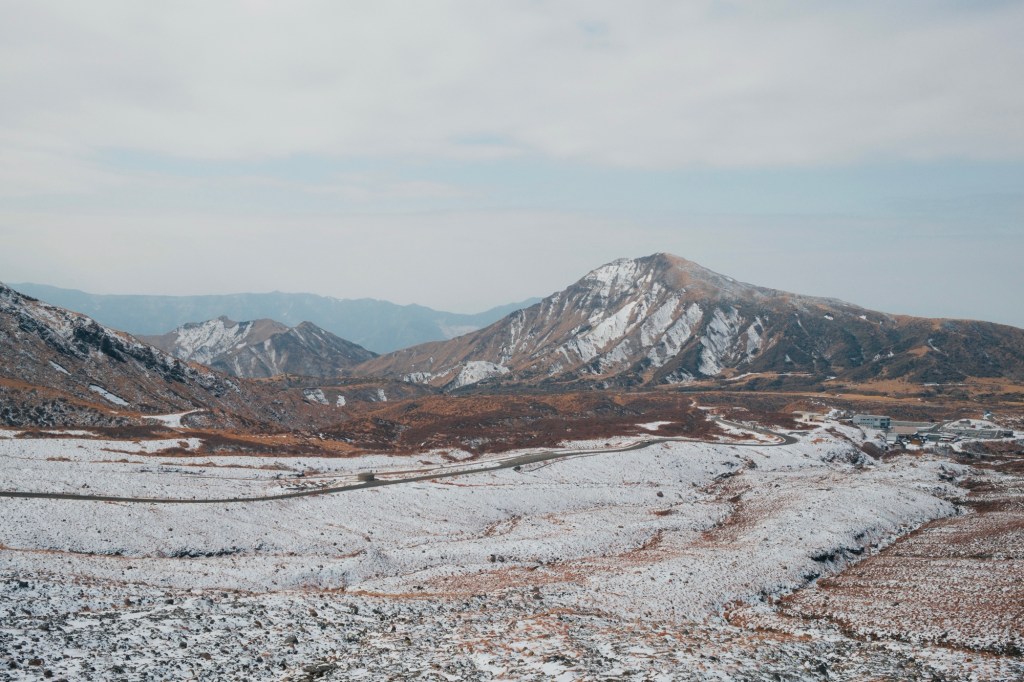
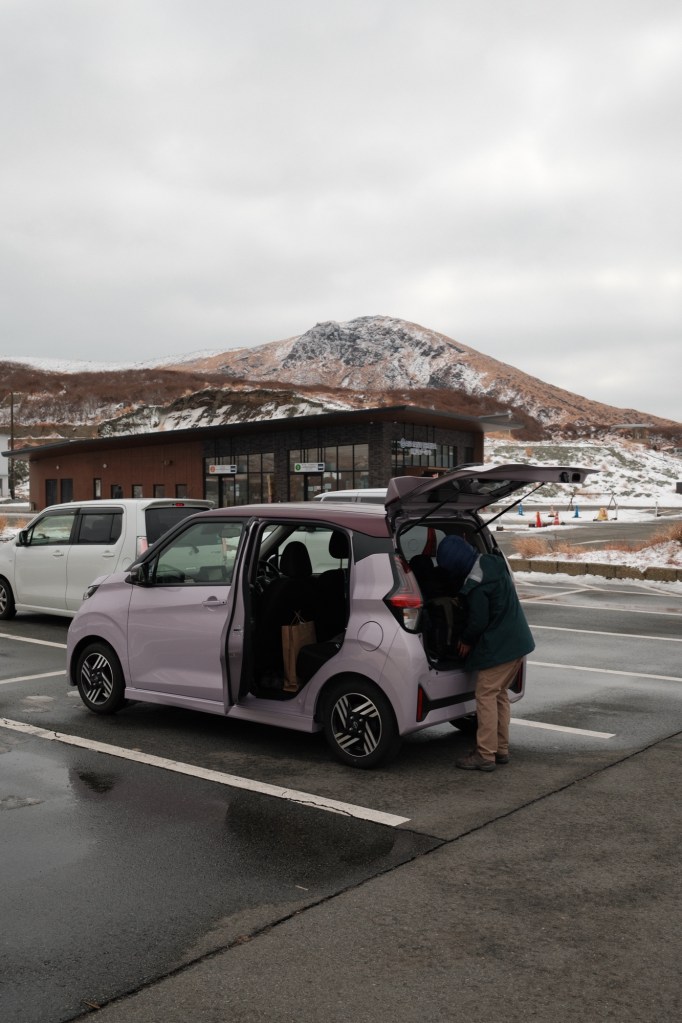
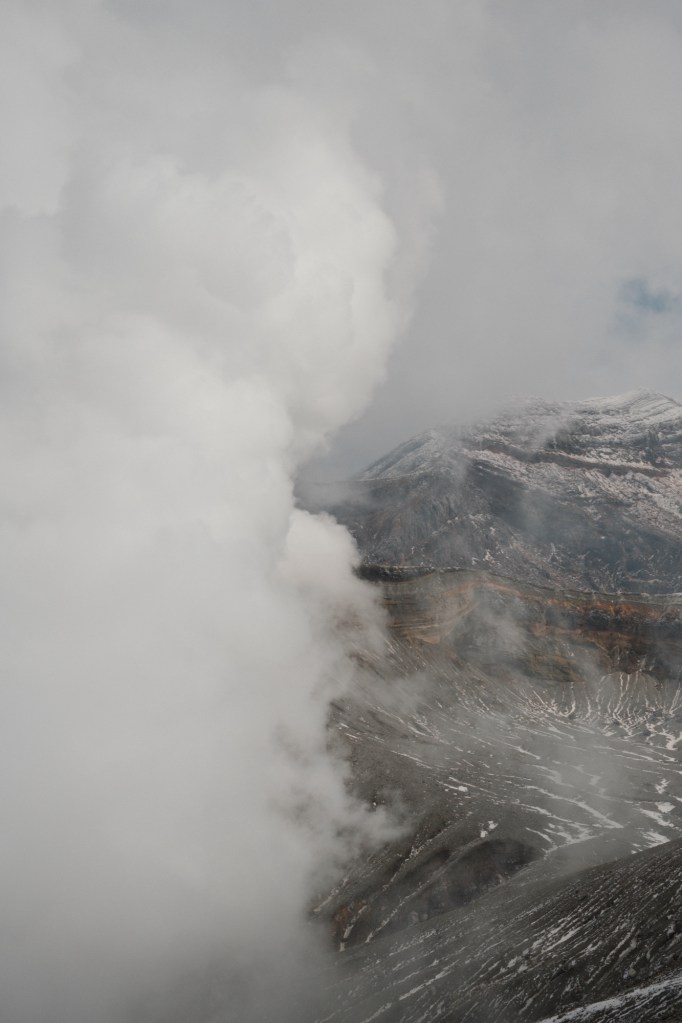
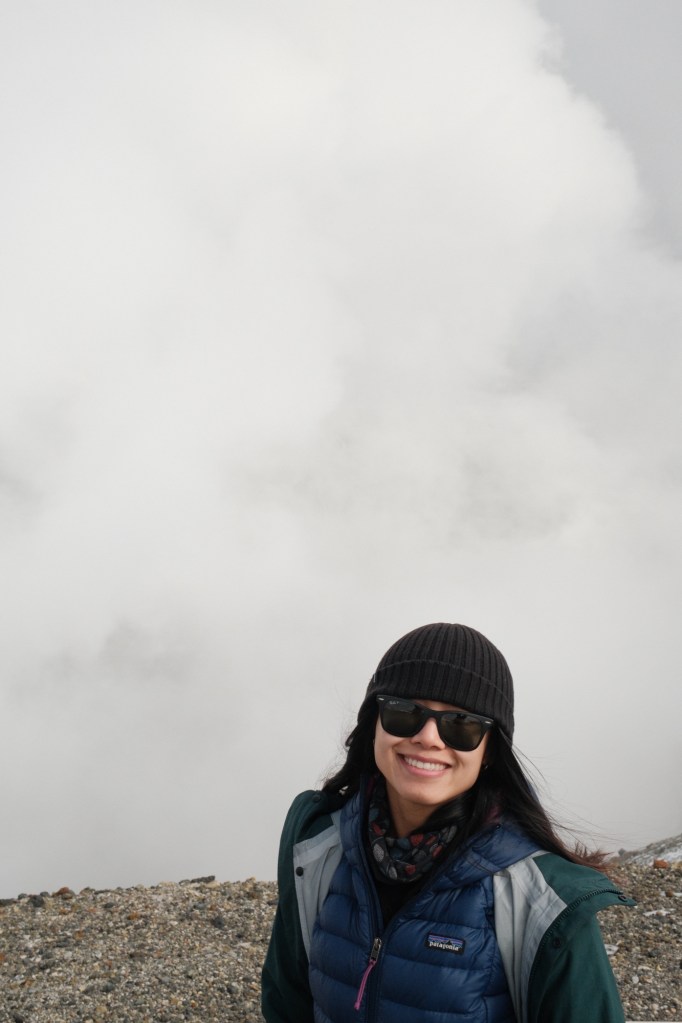
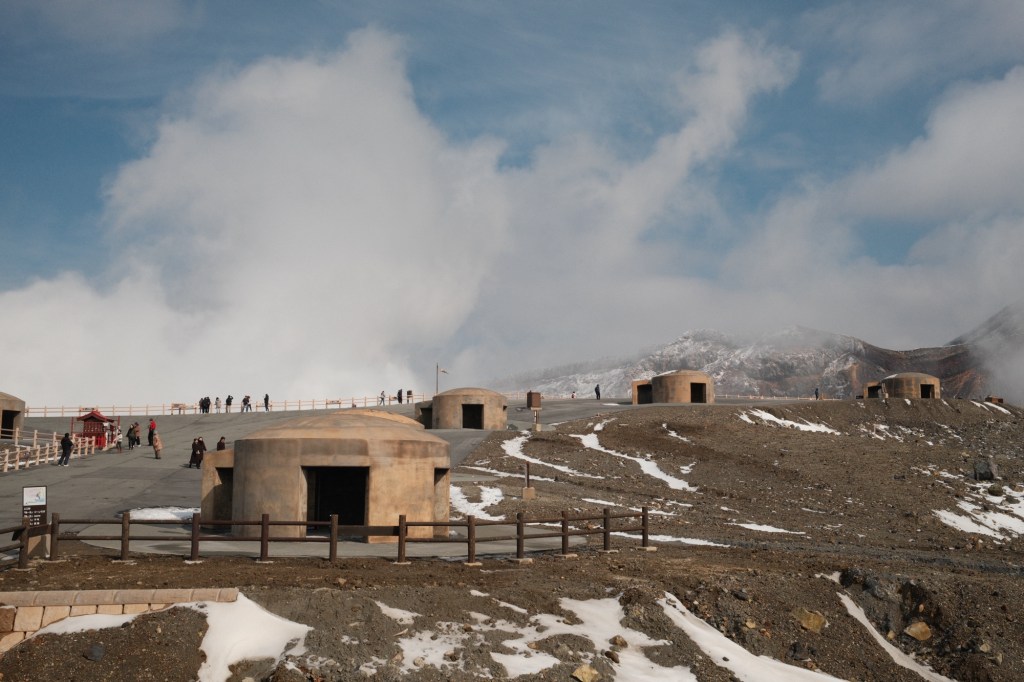
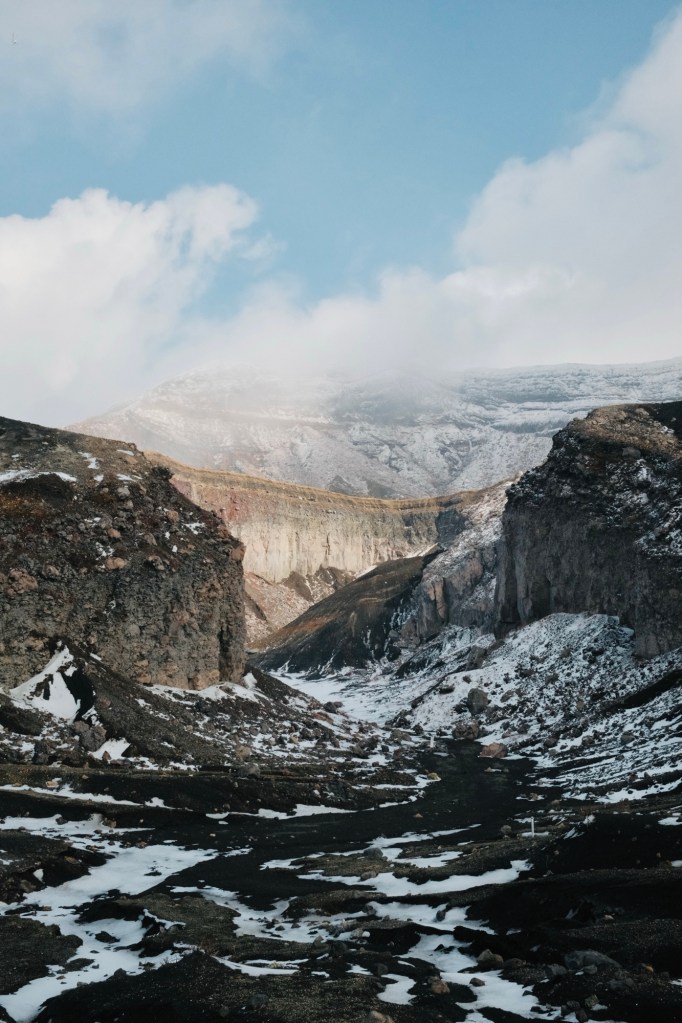
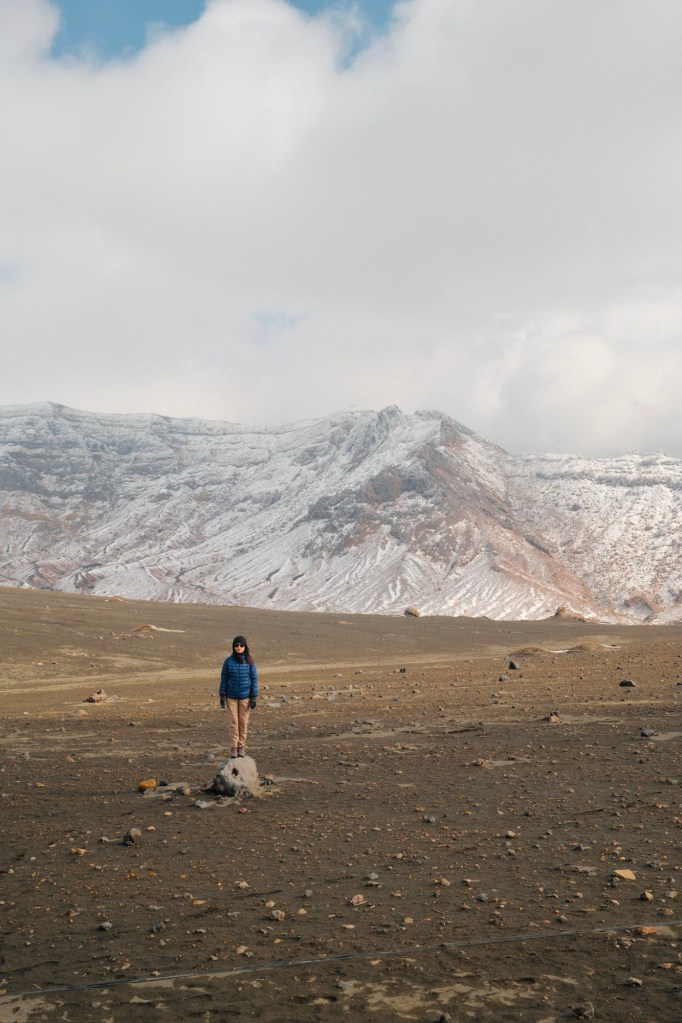
Mount Aso is stunning; you can drive nearly to the top courtesy of a great sweeping road, which was nearly empty when we drove on it in January – I’m informed that during high season it gets super busy with coach tours. At the summit, you’ll find volcano eruption shelters and a small visitor centre. You can wander around the crater and take in the scale via the vast plumes of vapour escaping into the atmosphere. And yes, it smells pretty bad. We enjoyed standing next to the 5-level illuminated sign which shows the danger level at any given moment. It even switched from low to less than low when we were there. A gentle reminder that just the previous evening we’d experienced our visit earthquake warning via our phones – a system that Japan has in place for the whole country. Our building didn’t shake, but it was quite exciting getting the loud warning (and maybe a little scary).
Our next stop was at Takachiho Gorge, a river canyon with incredible geometric rock formations lining the river. We were meant to hire a rowing boat to see it from the water, but opted against it when the weather took a turn for the worse. We retreated into the sleepy town of the same name nearby to find some food. After entering one of the few restaurants, we failed to convince the elderly owner to serve us okonomiyaki. Perhaps it was the request to add no meat or fish to mine 😂

Our second and third onsen experiences were outdoors. We managed to book two small houses in the countryside where they have outdoor private thermal baths. Such a good way to end the day. I questioned whether it was suitable to drink a beer in the baths as you would do in a hot tub or pool, but Carmen was unsure whether it was in keeping with Japanese tradition 🙅🏻♀️
The second house was near a town called Kurokawa Onsen famed for being an onsen town. You can purchase a very reasonable onsen pass that gives you a key to visit as many of the town’s onsens as you want. As you wander through the town, you see people in dressing gowns walking between the various onsens. We didn’t participate but definitely one for the future. There are many onsen towns across Japan which do something similar.
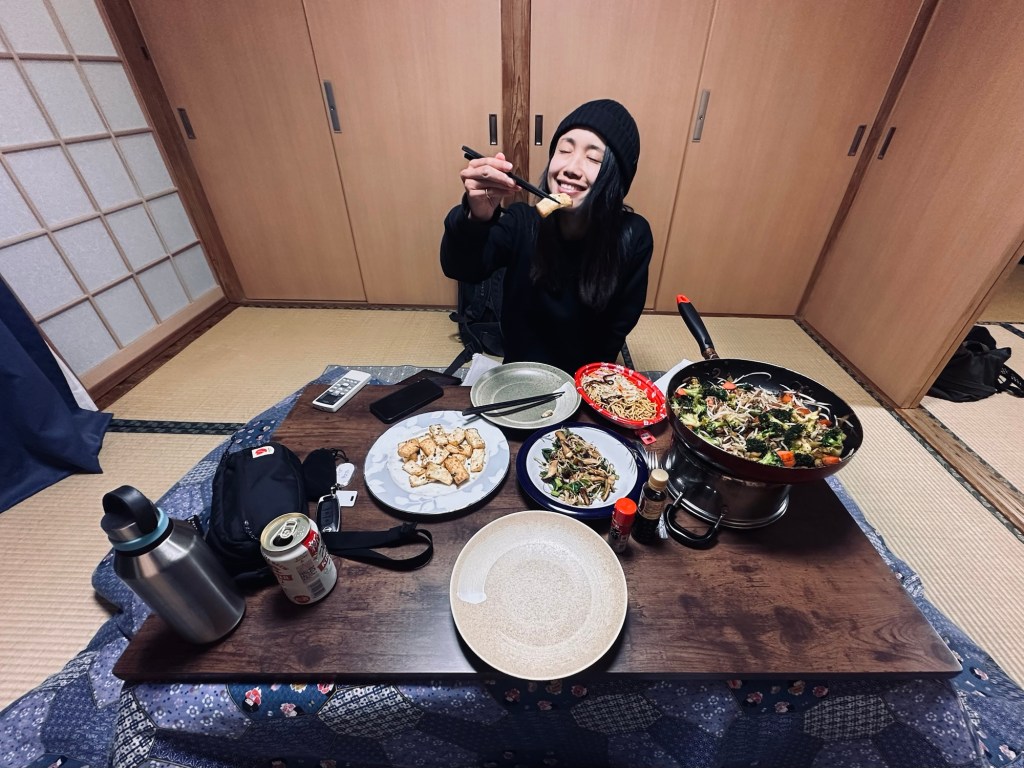
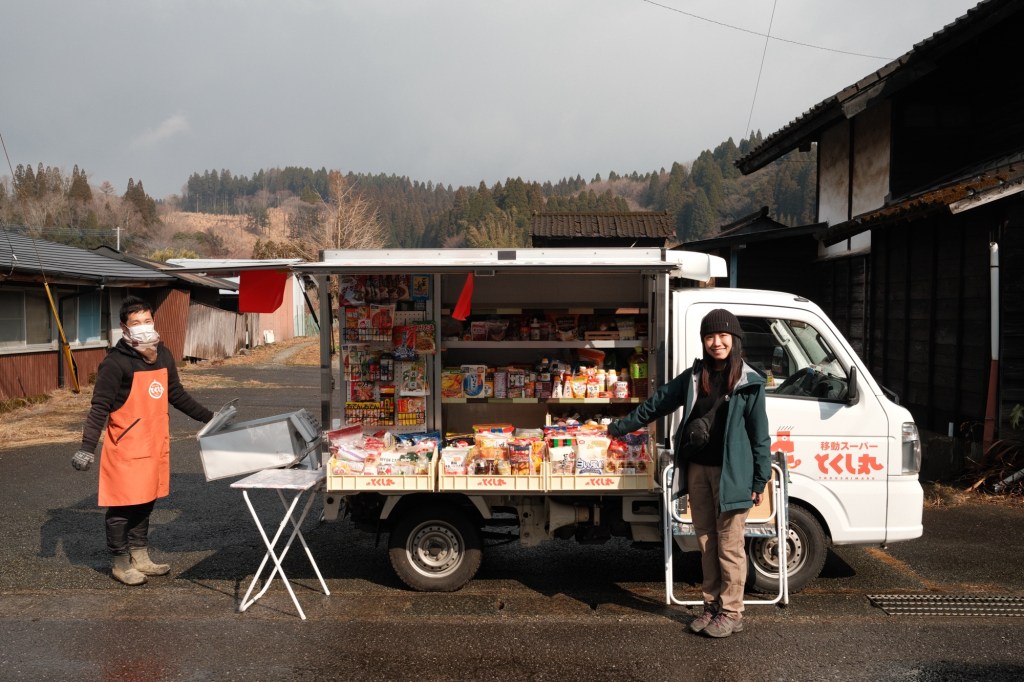
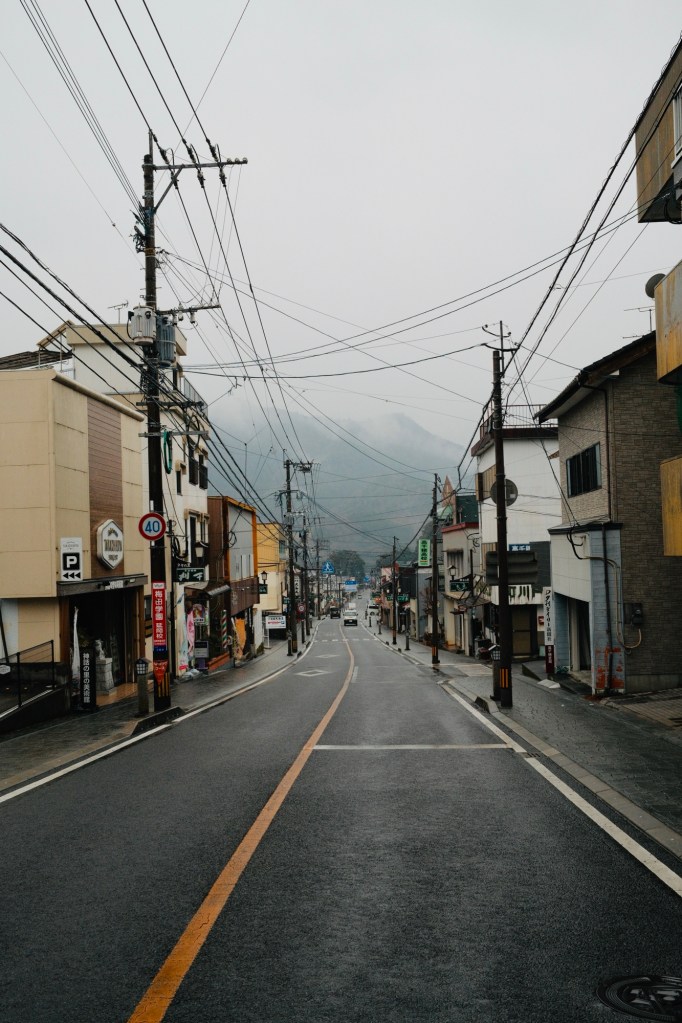
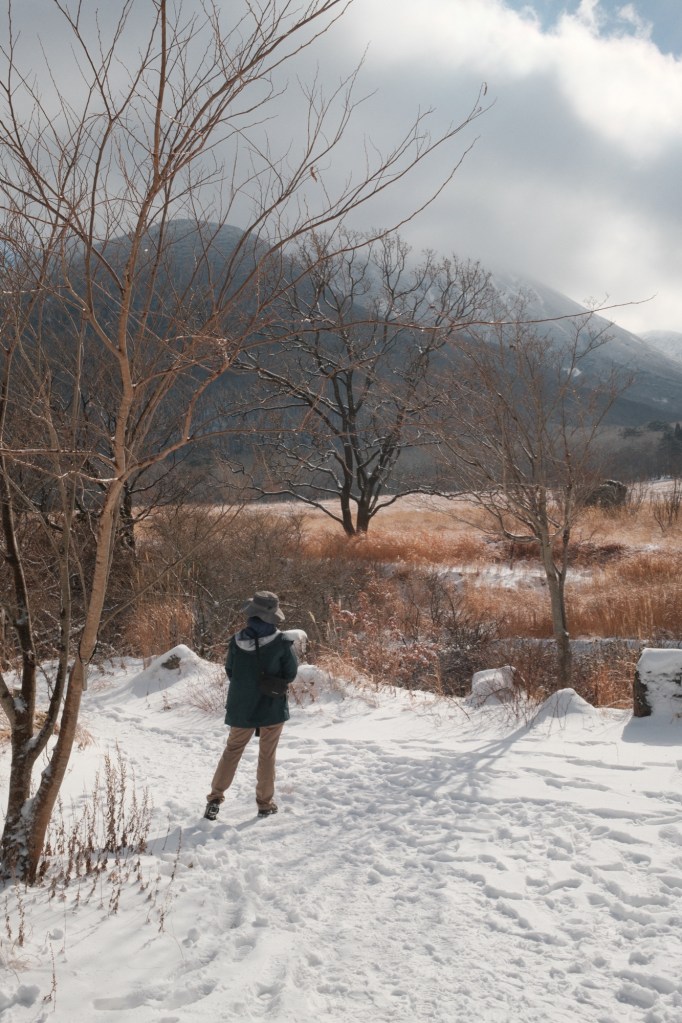
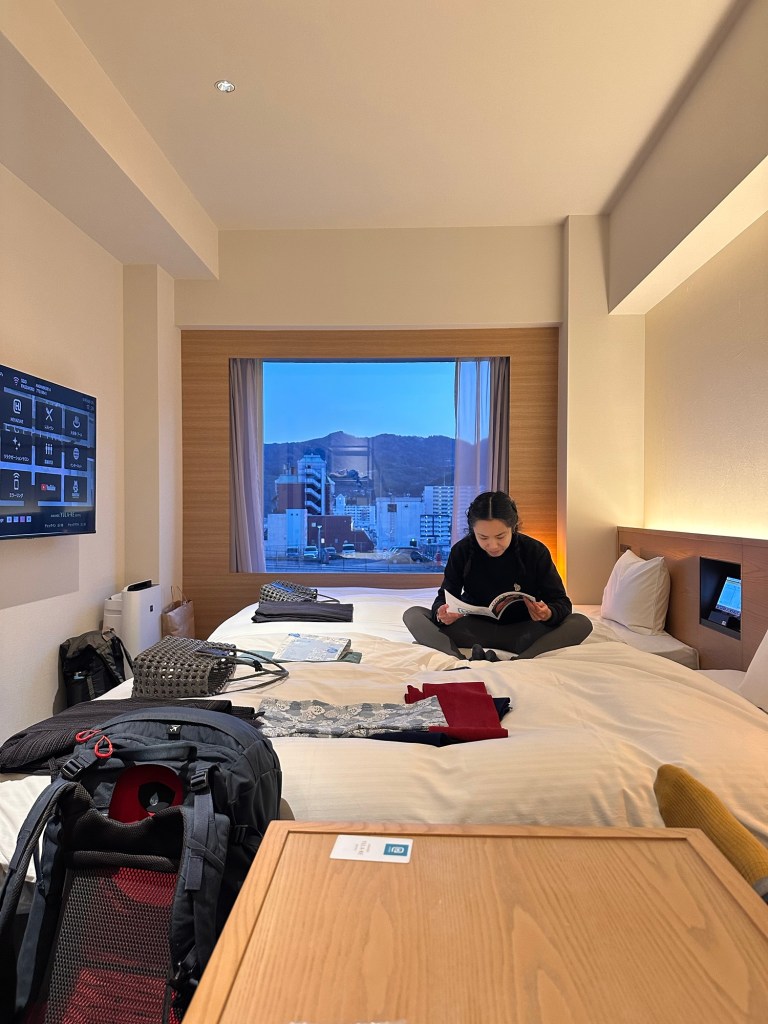
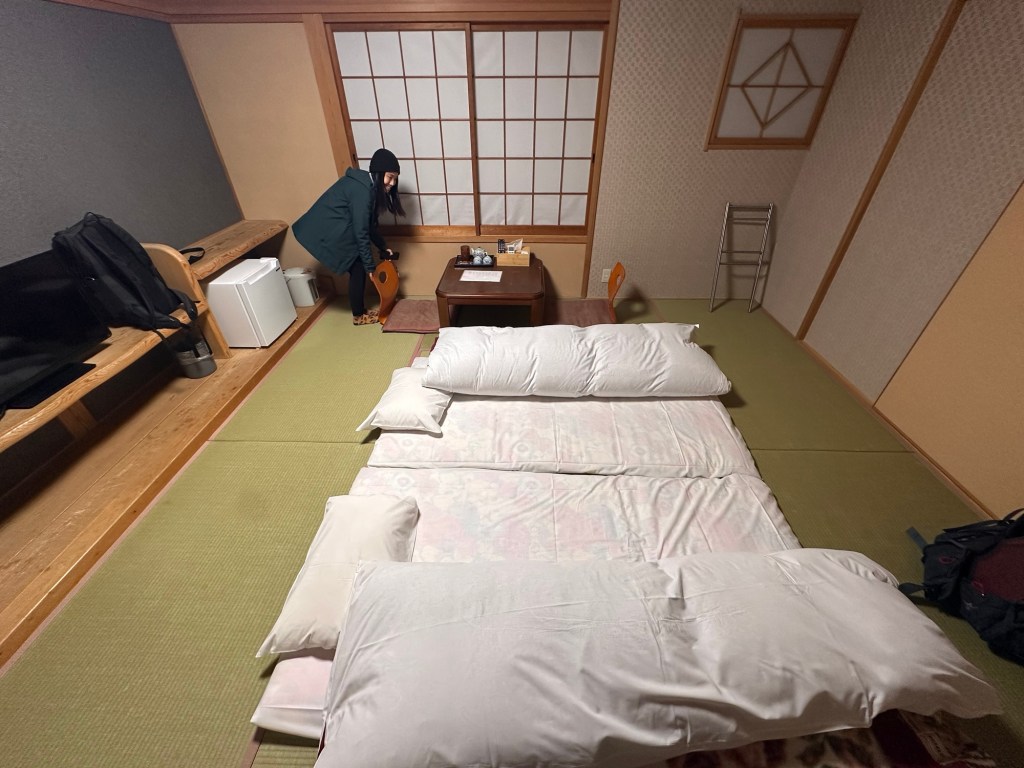
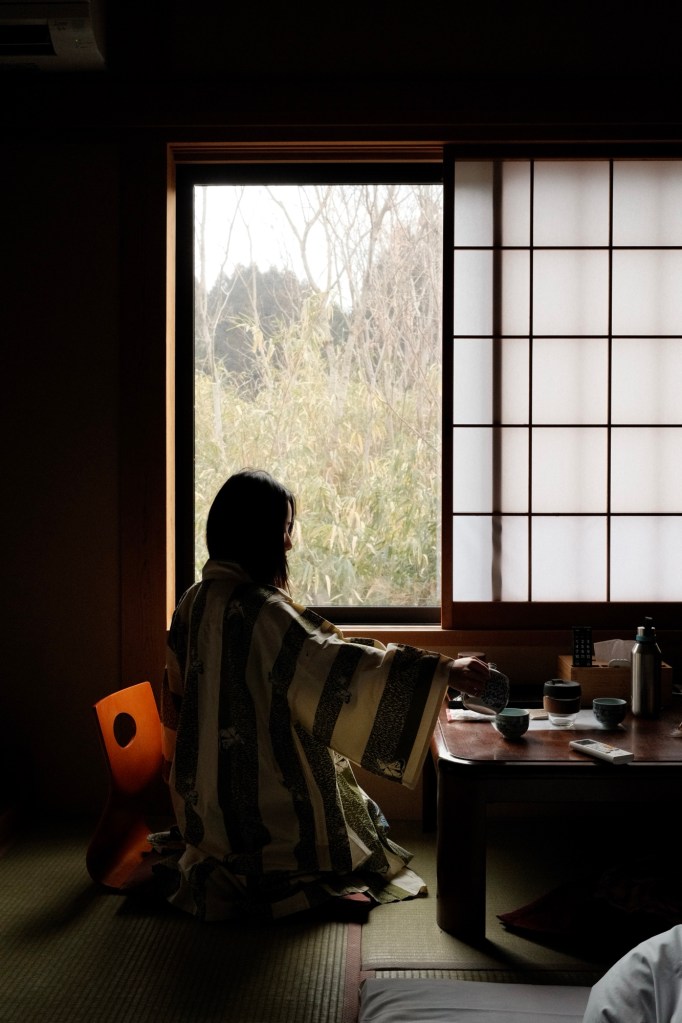
One thing I haven’t mentioned yet is how much we enjoyed sleeping in traditional Japanese rooms with bamboo matting and simple futon bedding, which is rolled out before bedtime. It’s the typical image of Japan, and you wonder whether it’s going to be comfortable, and it is! There was always a small table and floor-height chairs to sit at and drink tea too. And like much of Asia, a mini fridge for keeping food cool.
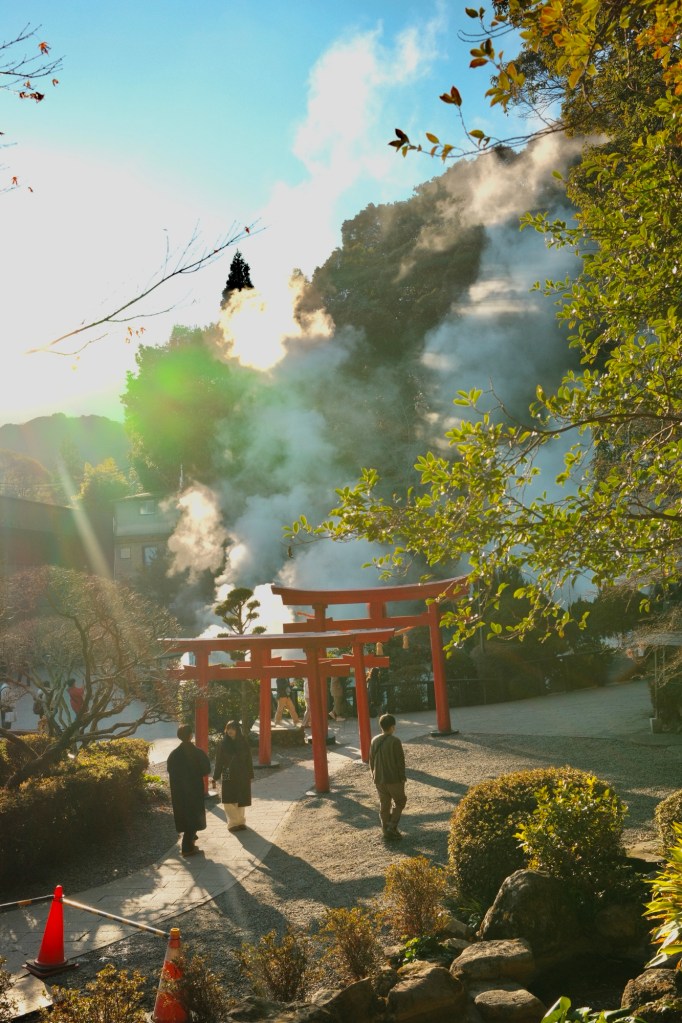
Our furthest stop in Kyushu was Beppu, also known for its spa and onsen hotels, but also the Hells of Beppu, where you can see big bubbling water pools, greenhouses warmed by the thermal water, and lots of gassy vapour coming from the ground. Fun for a wander, and not particularly expensive either.
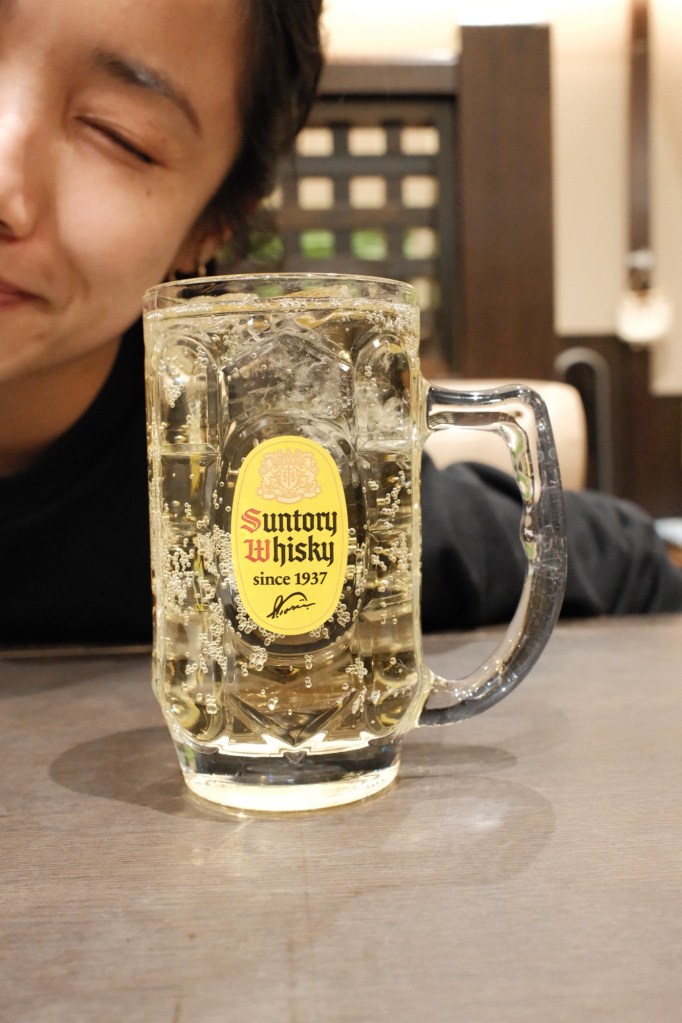
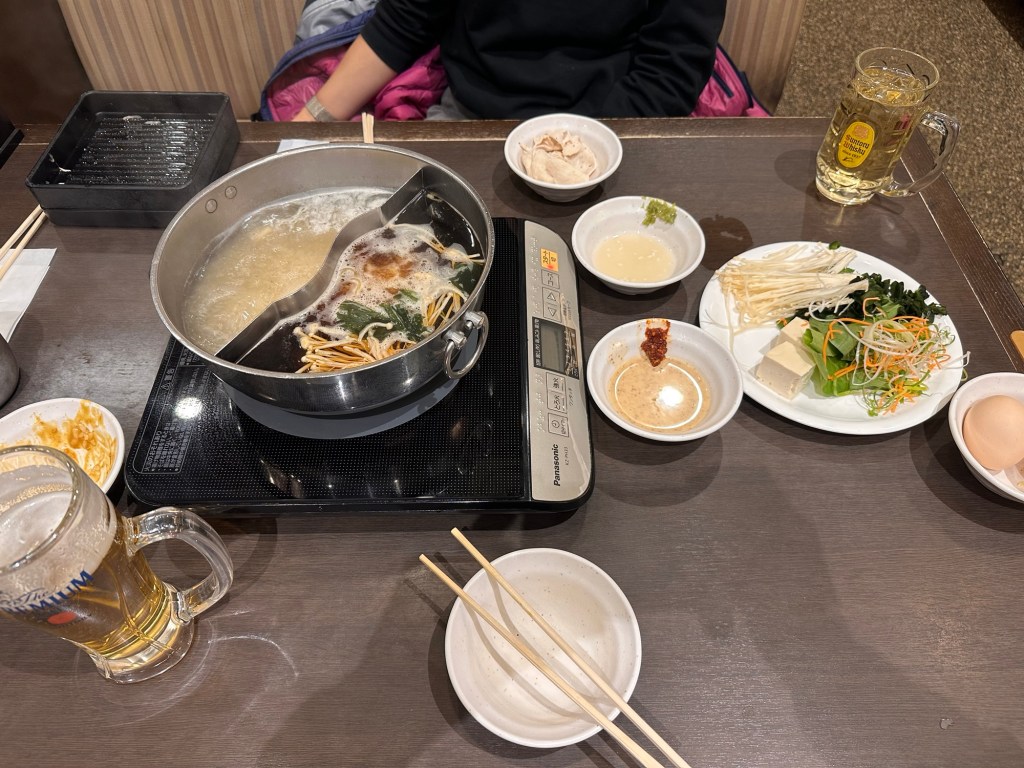
I got to sample my first Japanese hot pot in Beppu, known as Shabu-shabu or Nabe. Quite similar to Chinese hot pot but with slightly different ingredients and sauce flavours. It’s a really fun experience, and one where you eat A LOT. The restaurant we went to also included bonus courses of katsu curry and ice cream on the side. And we couldn’t devour so much delicious food without drinking our new favourite drink of Whisky Highballs. Shabu-shabu is quite a meaty experience normally, but I could just pick veg and tofu for my broth.
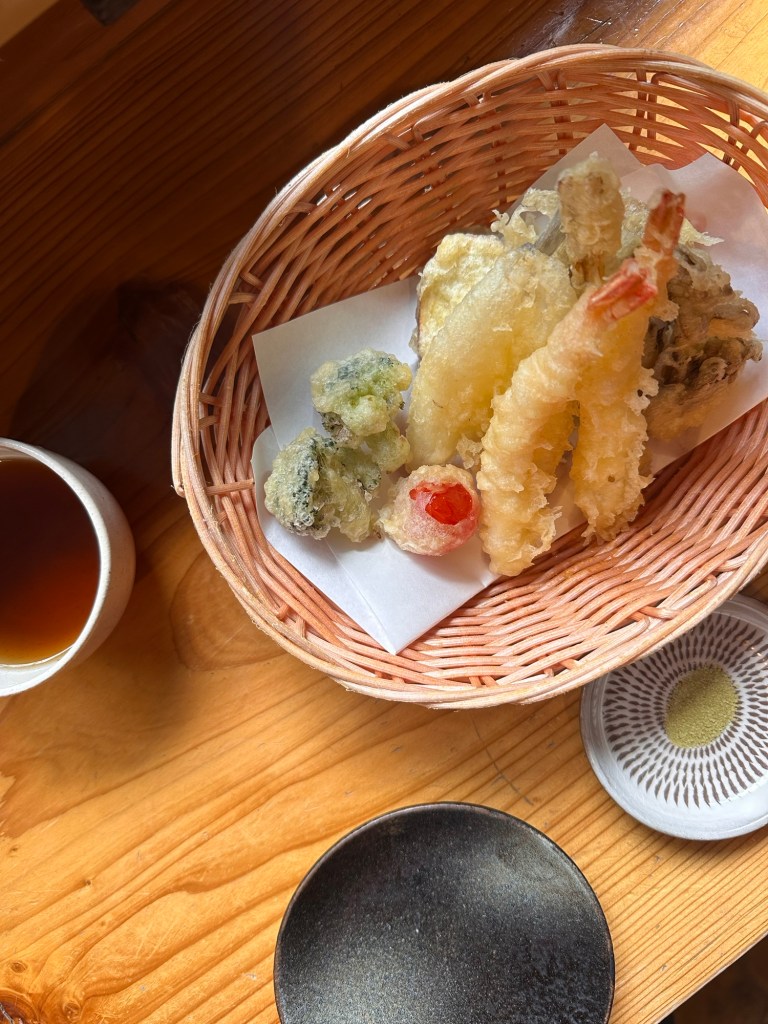
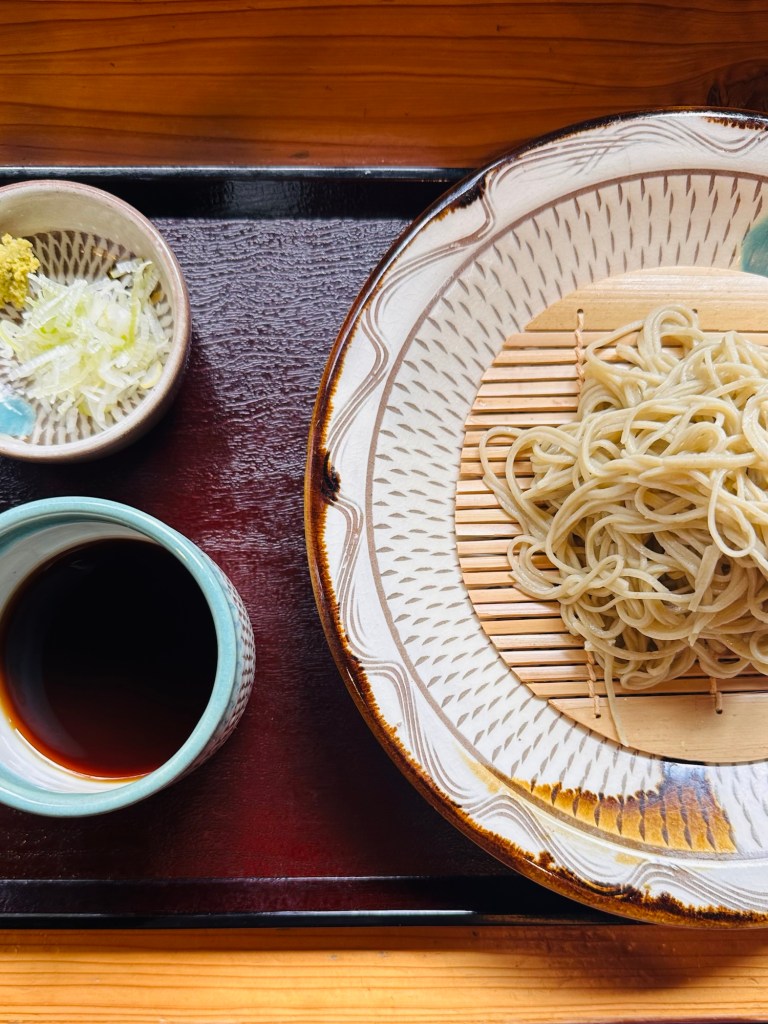
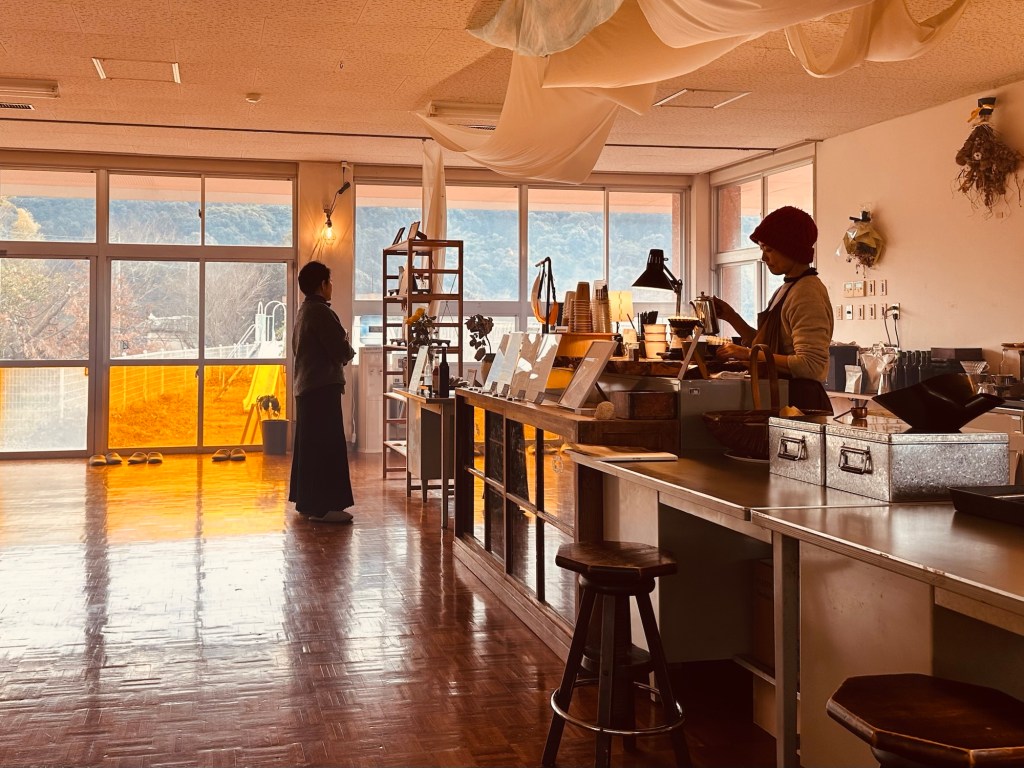
On the drive back to Fukuoka the next day, we stopped at two great places for lunch and coffee. The first was a small, unsuspecting restaurant just off the main highway, which was run by a man who was hosting cooking classes. He served us the best cold soba noodles I think either of us has ever eaten, with a side of perfectly cooked tempura. The dish was so simple, but that’s why it was so delicious. And the second place was a coffee roastery run by a family in an old school hall, which doubled as a coffee shop and community space. Japan is full of wonderful gems like this, passionate people serving up great produce using artisan methods.
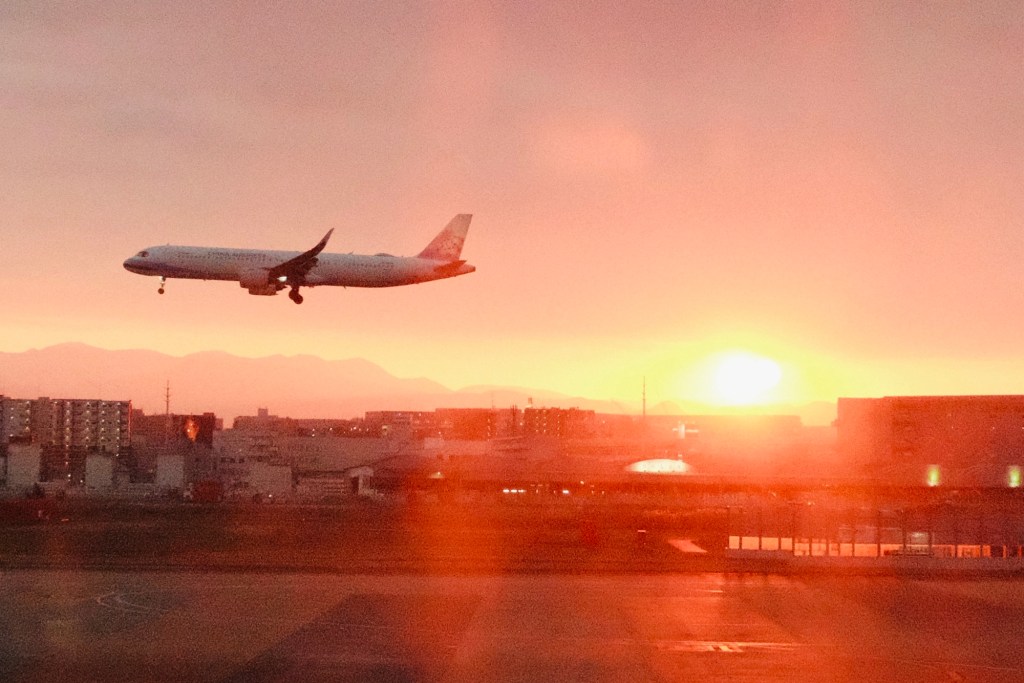
Up next: We fly further north for the Art Islands (Naoshima), Kyoto, Nara, and Osaka! We may even have a trip to Nintendo World secured 🍄
 seemehear
Leave a comment