Hello, Japan 🇯🇵
Japan is our longest stop on our worldwide odyssey. We’ll be here for two months in total. When coming up with our dream route for the year, I think Japan was the first place we both said, and we originally assigned three months, but then scaled back a little 😅
Our route will take us from the southernmost tip in Okinawa to the north in Hokkaido, snaking between the islands and cities that make up the Japanese archipelago. We’ve planned a mix of time in nature and the big towns and cities, and there’ll also be plenty of time to snowboard in a few locations in the Japanese Alps and Hokkaido.
We flew directly to Okinawa from Hong Kong and landed in fairly mild weather as Okinawa is so far south. We had no illusion that the rest of Japan would be this way with winter in full swing, but we were prepared (well, just about).
Okinawa
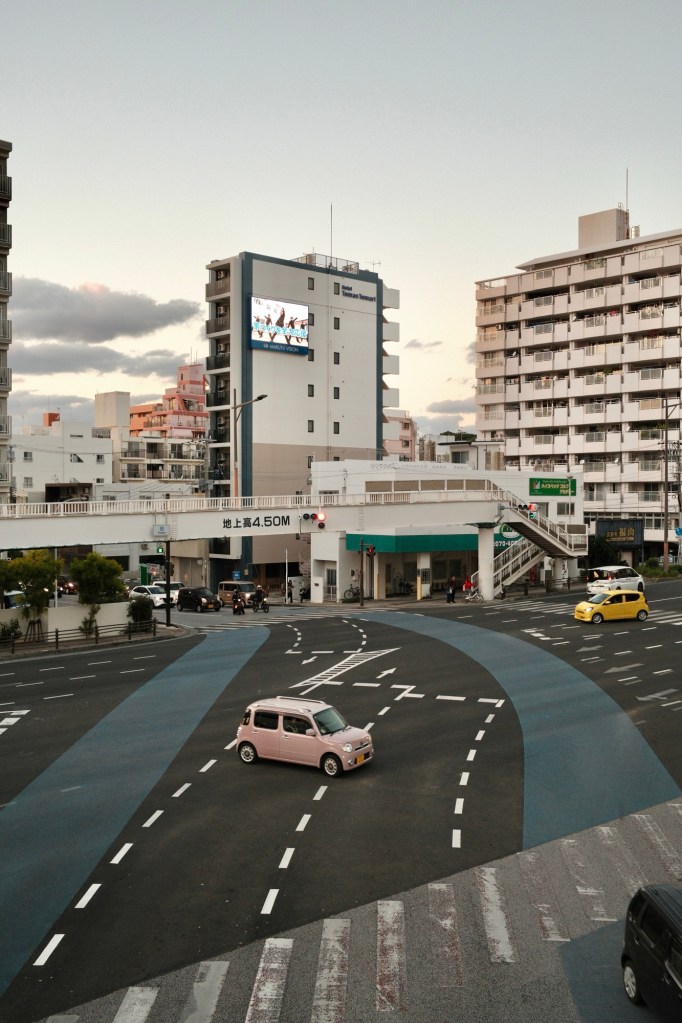
Travelling via the Naha monorail into the city from the airport, everything felt interesting. The question will be how do I limit myself from taking too many photos over the next two months? We quickly learn that even the simplest of hotel, apartment, or hostel booking is generally great value in Japan, super clean, and nearly always with hidden features. Our first hotel room had a mini kitchen, both washer and dryer, and lots of technology. I don’t know why I was surprised, but you become accustomed to expecting that lower prices will equal poor quality, but that’s not really the case in Japan. It feels like nearly everyone takes pride in their job or with their business.
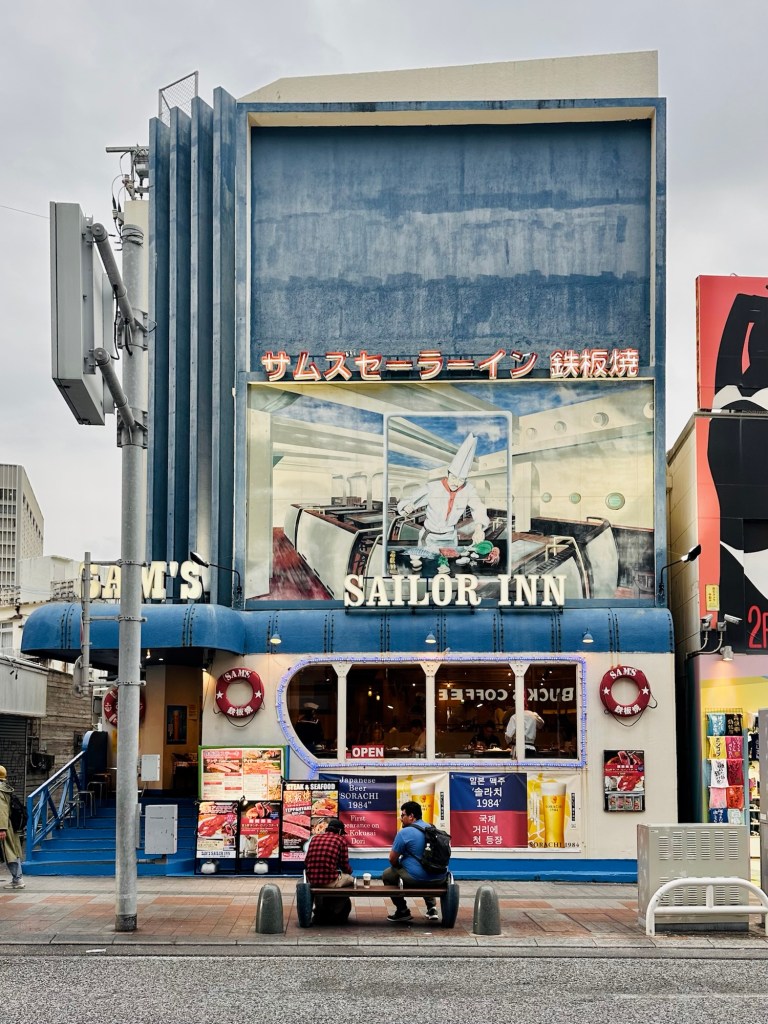
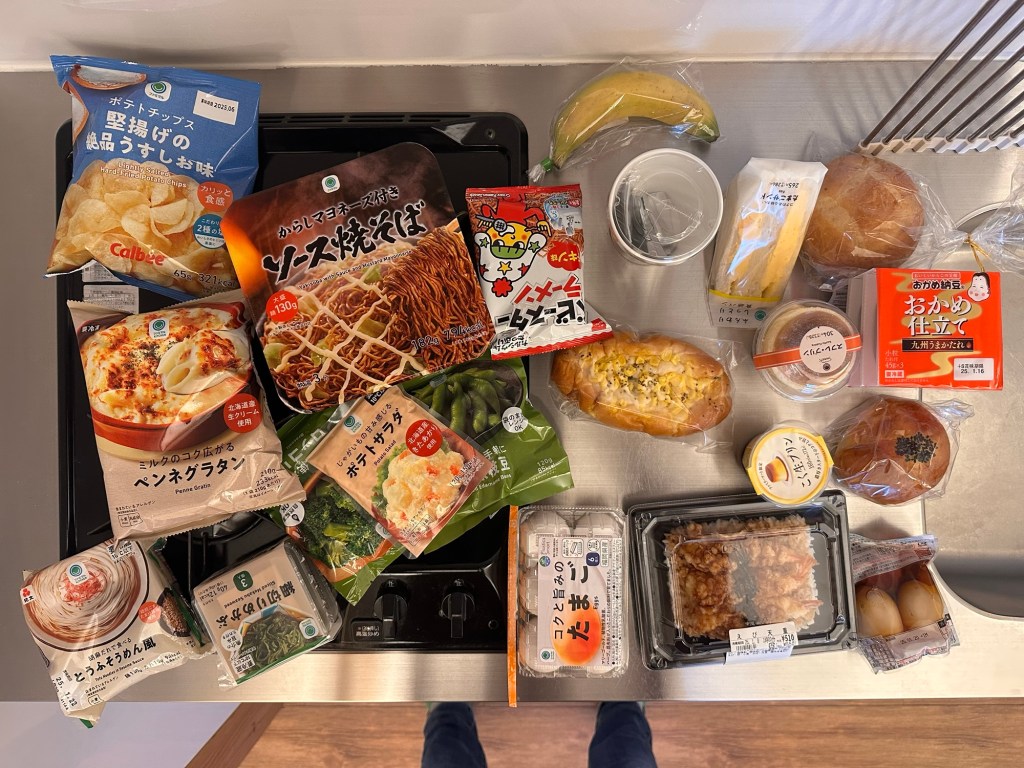
Naha is a fairly big city and the capital of the Okinawa Islands. There’s a lively high street and a big food market that has fresh food and loads of restaurants and pubs. It didn’t take long for us to swing by a Lawson – one of the three main convenience store chains across all of Japan – and buy a selection of goodies. If you read my China post, you’ll know we dined out there a lot. Endless snacks, noodles, beers, sakes, sweets, and the highly famed Japanese egg sandwich that I’ll likely be living off for the next 8 weeks (Japan is known for not being all that veggie-friendly, but let’s just see how I get on).
Naha’s Moving Castle
On our first full day, we headed to Naha Castle on the other side of the city. We didn’t realise until we arrived that the castle was badly damaged in the 2017 earthquake, and they’re currently reconstructing it. At first, we very nearly didn’t bother entering, but I’m glad we decided to. We got to see the renovation firsthand through a curated exhibition, but also via the workshops where they were carving the new wood for the building. It was a great intro to Japanese craftsmanship and the lengths they’ll go to create beautiful buildings from local materials, with all the wood being sourced nearby or within the islands. Due to the frequent cyclones that Okinawa can experience, they had covered the entire castle in a giant metal building to complete the restoration without impact from the weather.
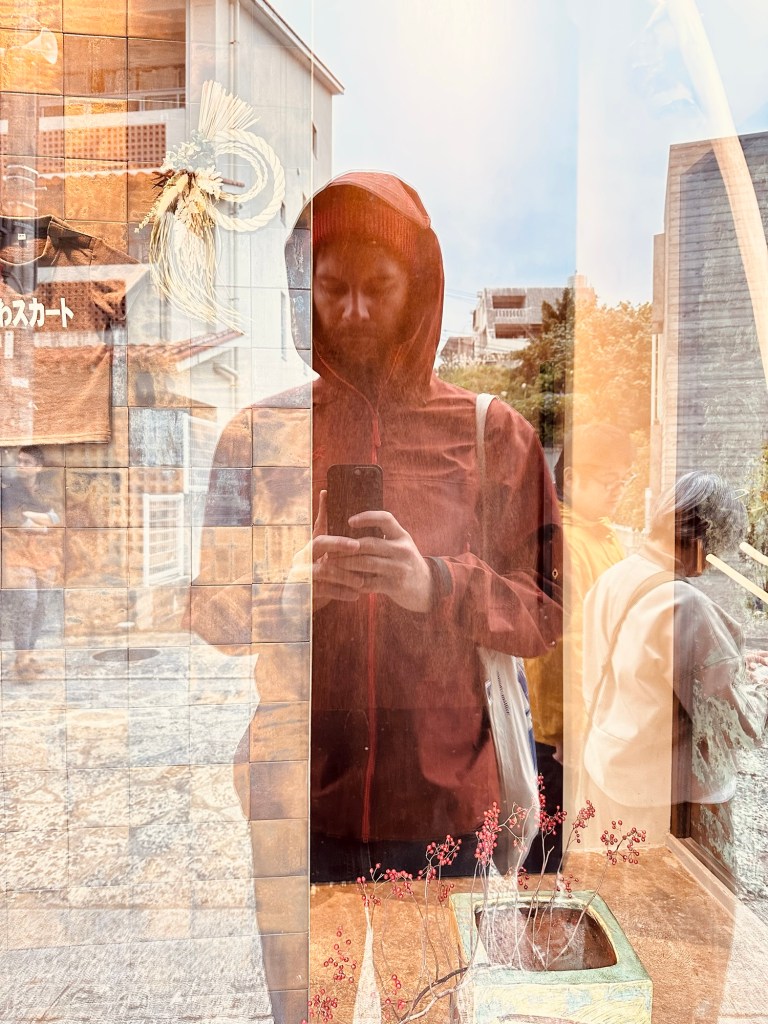
Naha is known for its ceramics, so we visited a quaint street called Tsuboya Pottery St, with lots of ceramic shops. This was our first real test of being in Japan but unable to buy anything 😂 I’d recommend a visit here if you like Japanese tableware, etc. So many beautiful patterns and styles.

Tokashika Island
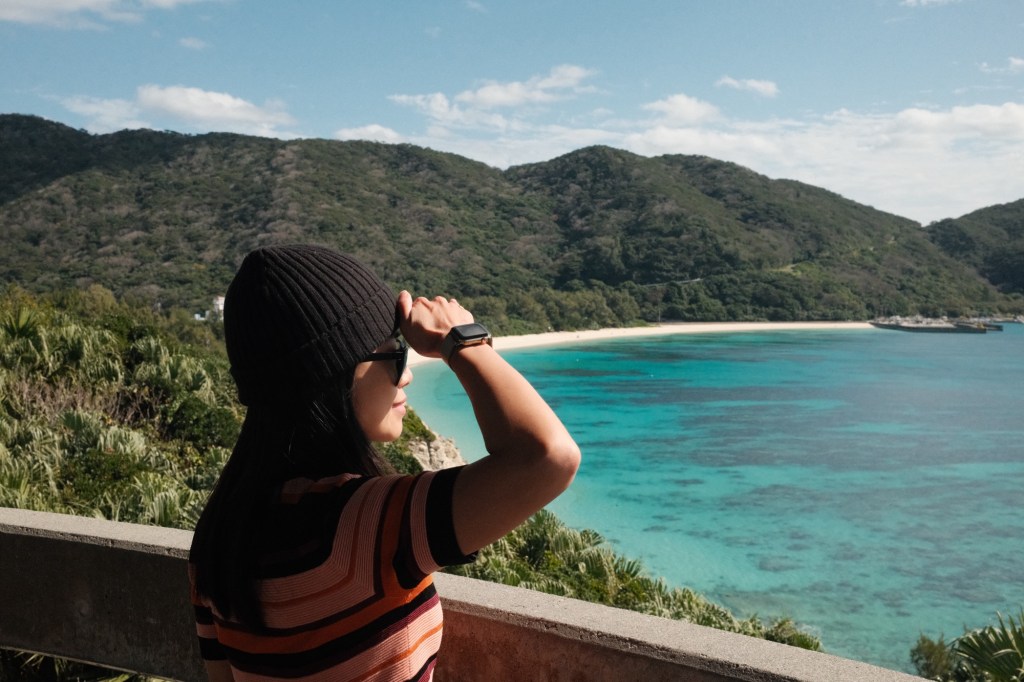
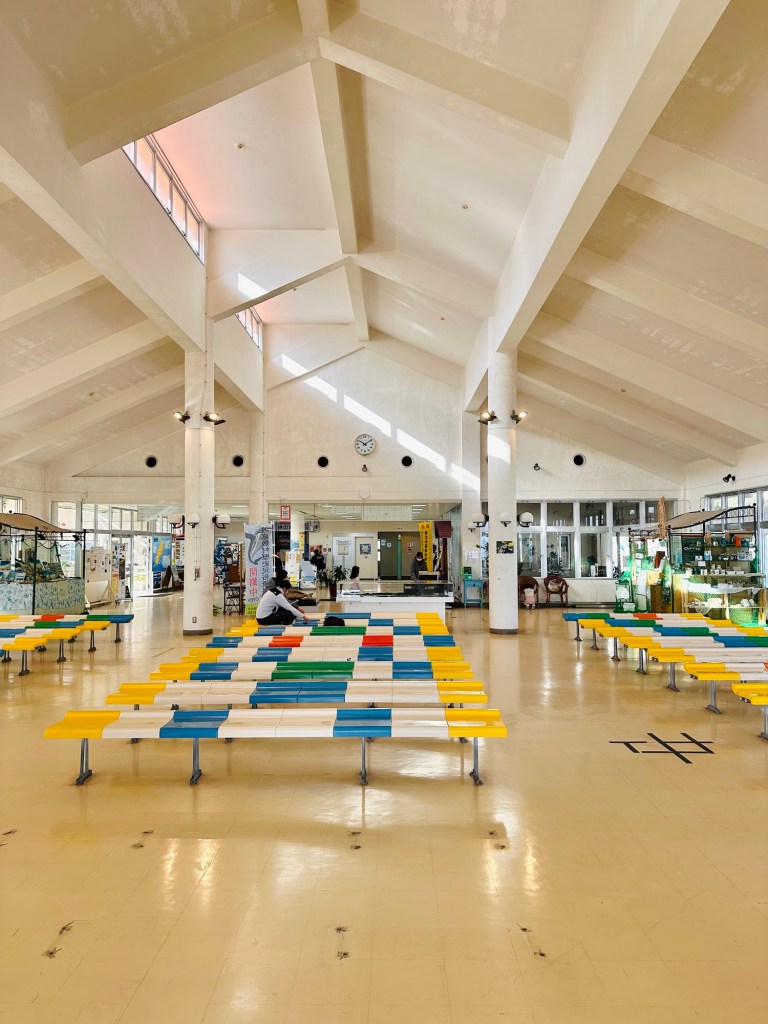
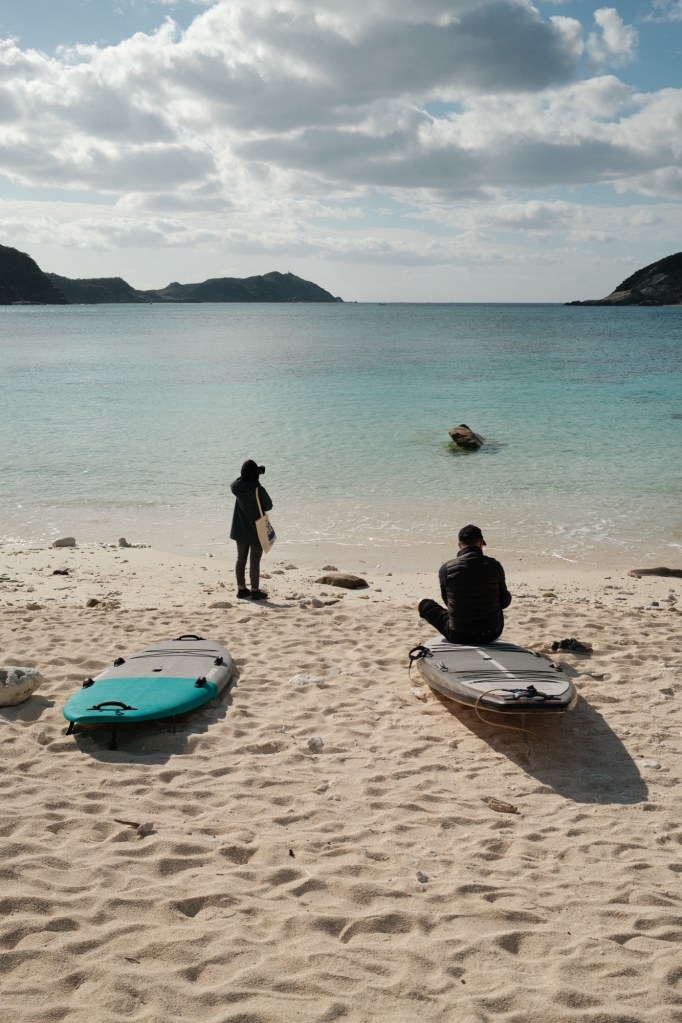
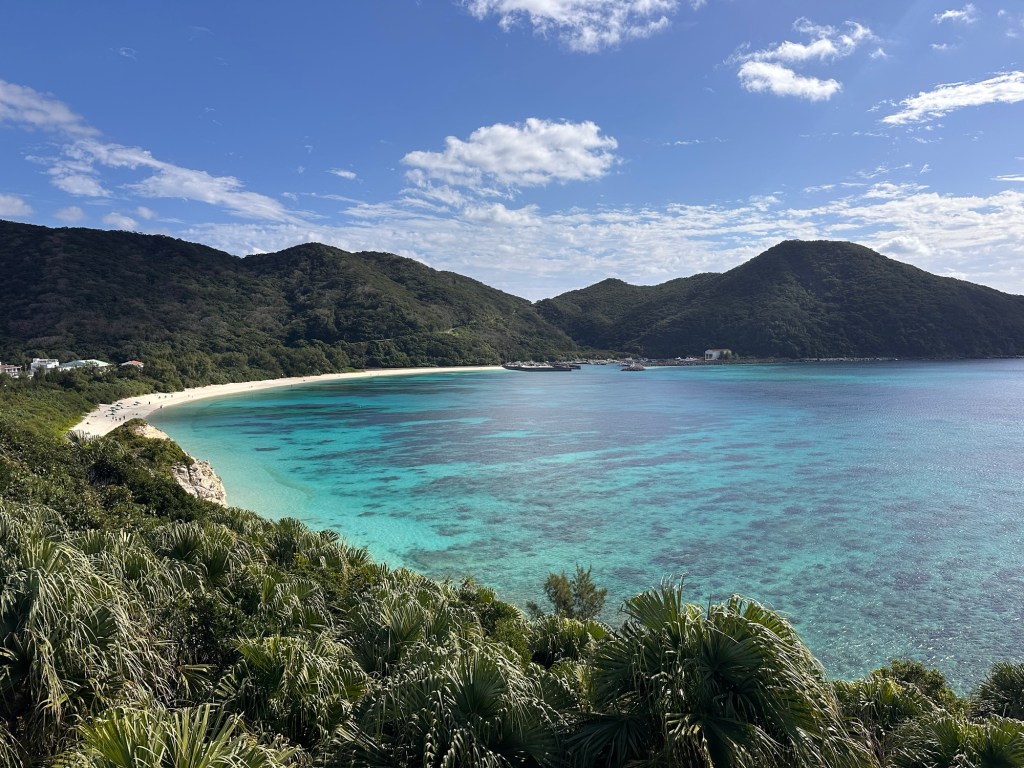
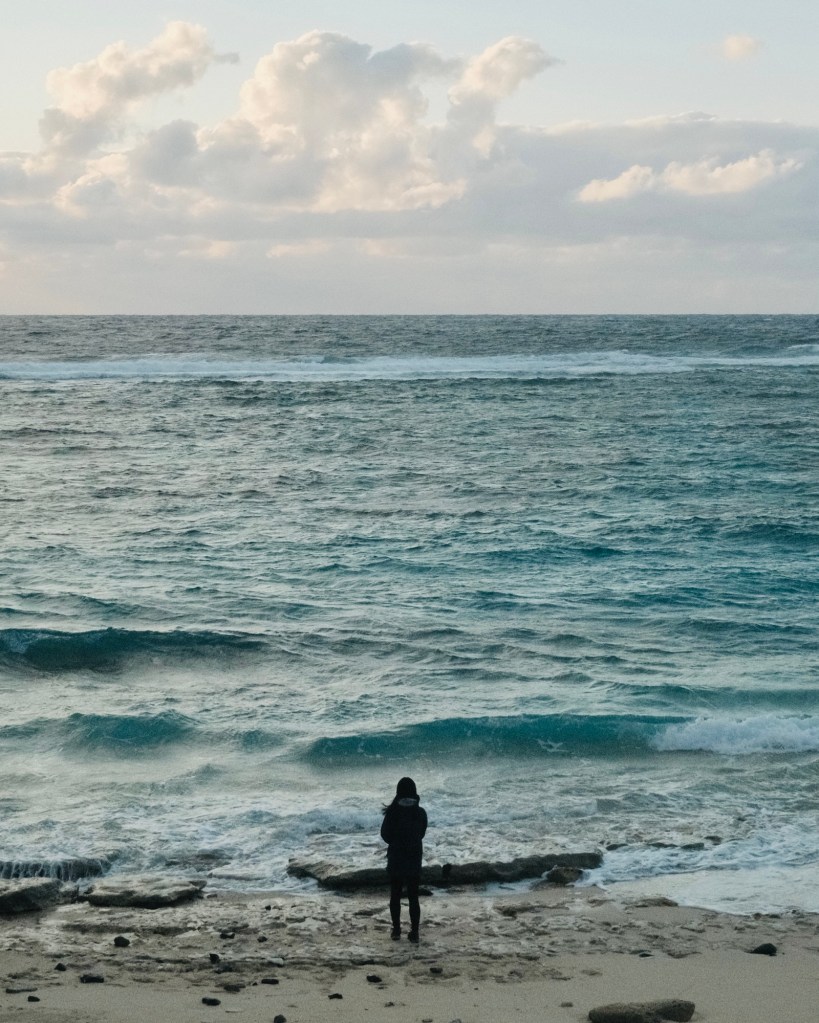
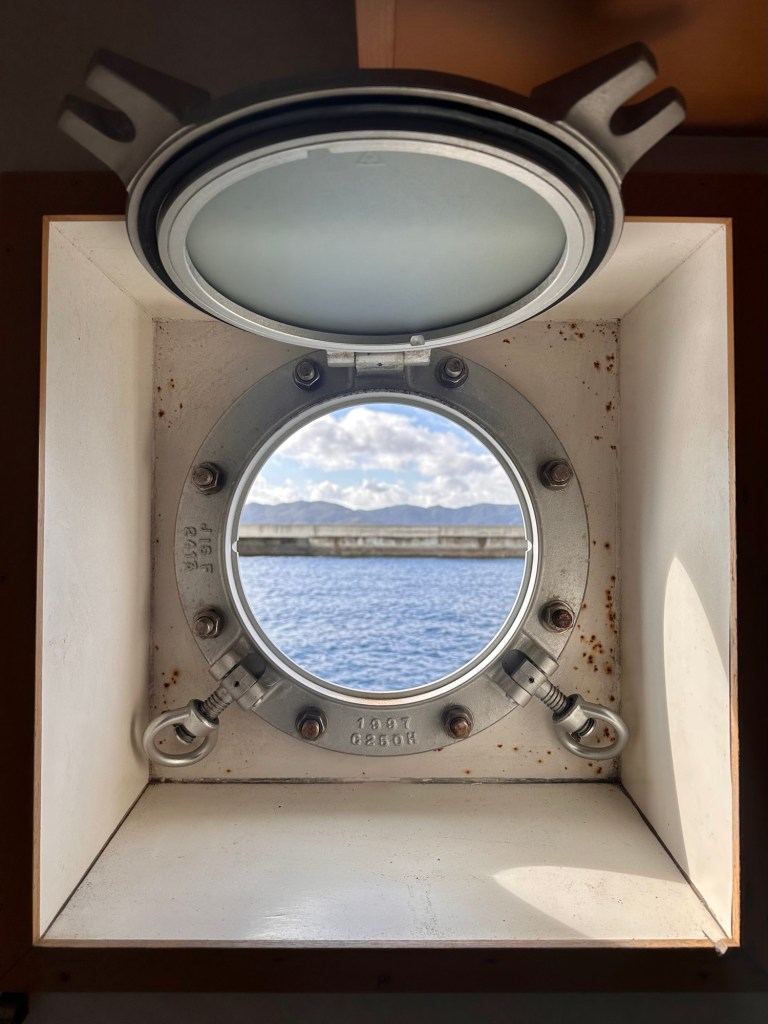
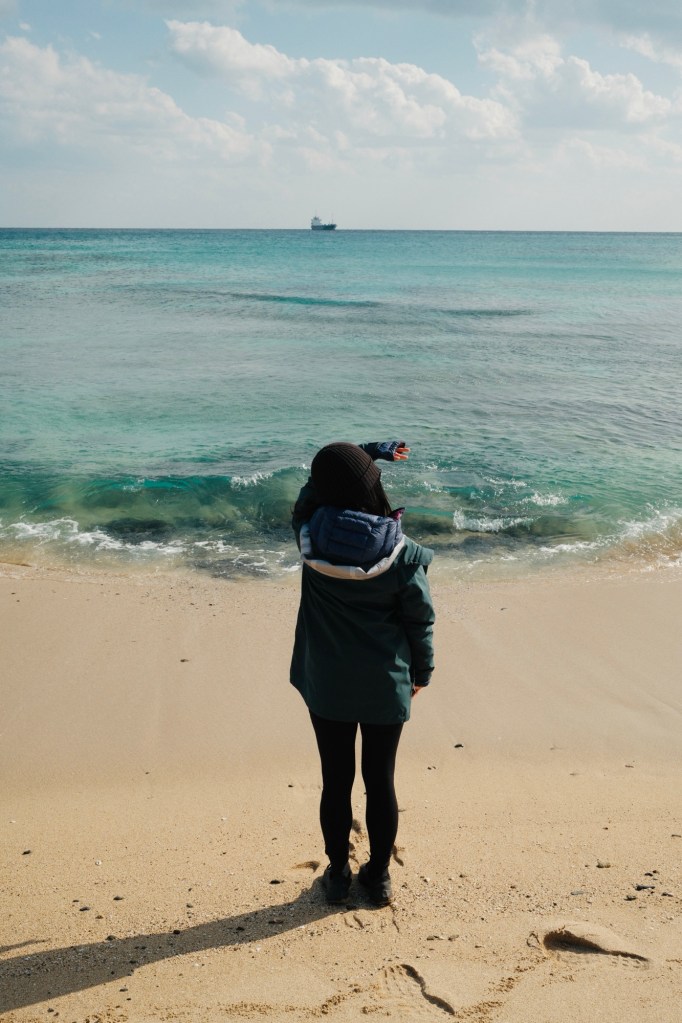
We took a ferry to nearby Tokashika Island the next morning. We wanted to visit the island next to it, Zamami, but our planned ferry was cancelled due to high winds affecting the route. It didn’t matter though, as we swiftly bought different tickets to the next ferry leaving for Tokashika, and we were pleasantly surprised when arriving, especially as we didn’t know a thing about the place. Tokashika is a small, peaceful island with a few small villages and hamlets scattered around. We faffed about a little when we arrived and missed the only bus going round the island, but luckily another bus turned up to shuttle us and a few others (I presume bus b comes into action in situations like this 😂). We got off on the other side of the island at a serene, turquoise beach. We scrambled over some rocks and wandered around before grabbing lunch at one of two places that were open for business. We had taco rice, which is a common menu item in Okinawa because of the many Americans who have lived here since the 1950s, created to serve their thirst for North American cuisine. More on the U.S. in Okinawa later. We decided to walk back to the ferry via another beach, which would take us about an hour.
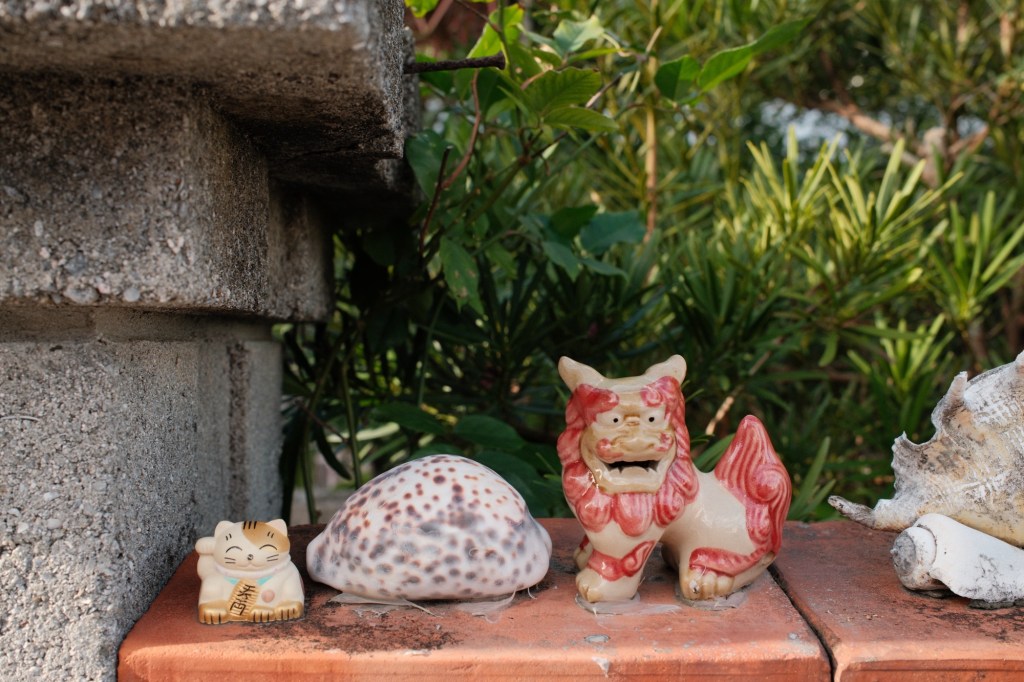
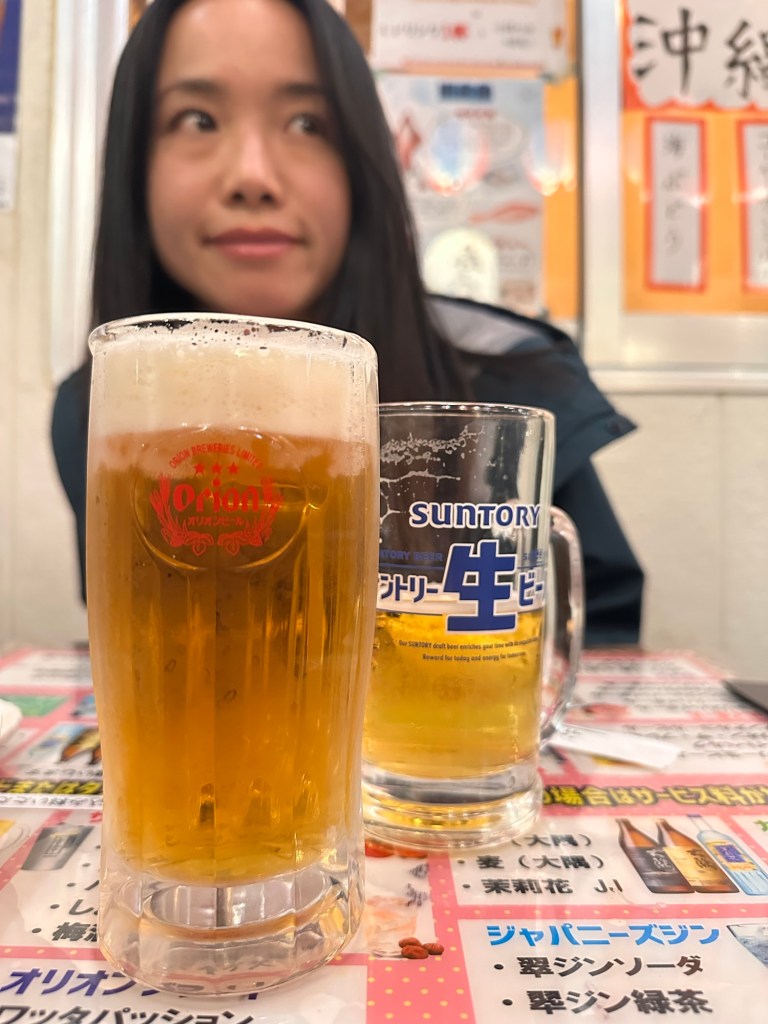
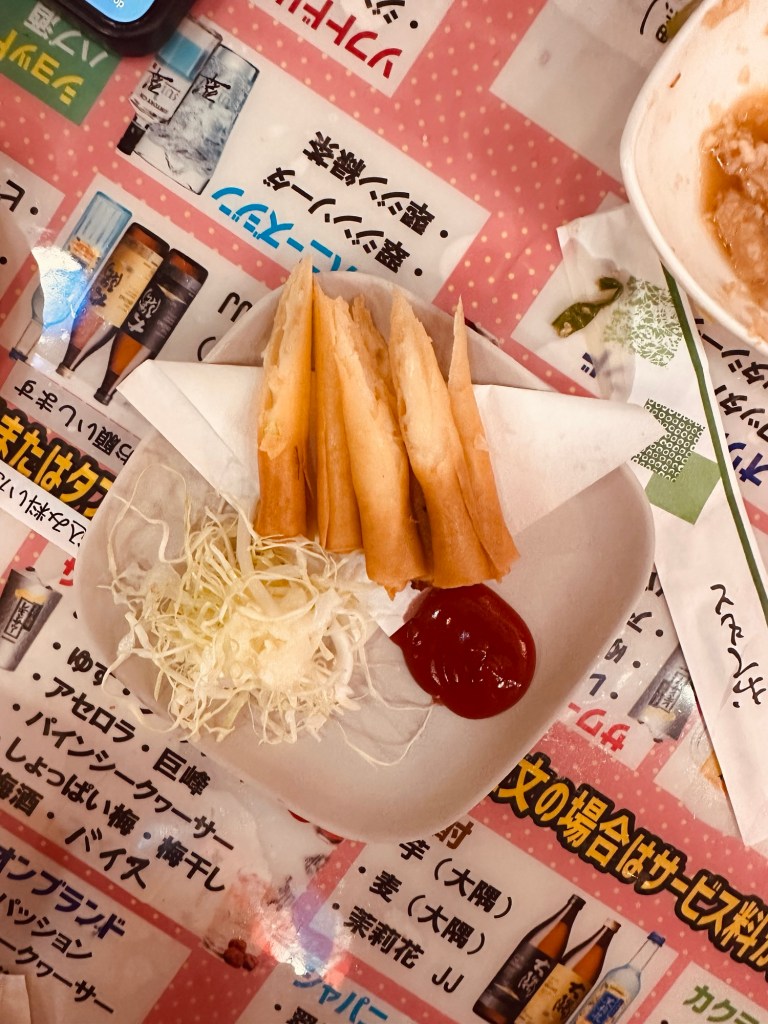
We spent the evening in the covered market at a small izakaya (essentially a pub serving food). Everything we ordered was delicious and fairly cheap. Think Japanese tapas when it comes to the food – smallish plates of simple dishes, sashimi, tofu, edamame, spring rolls, yakisoba. It was also at this point I realised the Lost in Translation (2003 movie) Whisky Brand that Bill Murray is advertising is, in fact, a very real and popular alcohol company sold in Japan. “For relaxing times, make it Suntory time” (that’ll mean nothing to you if you haven’t seen the movie 😂).

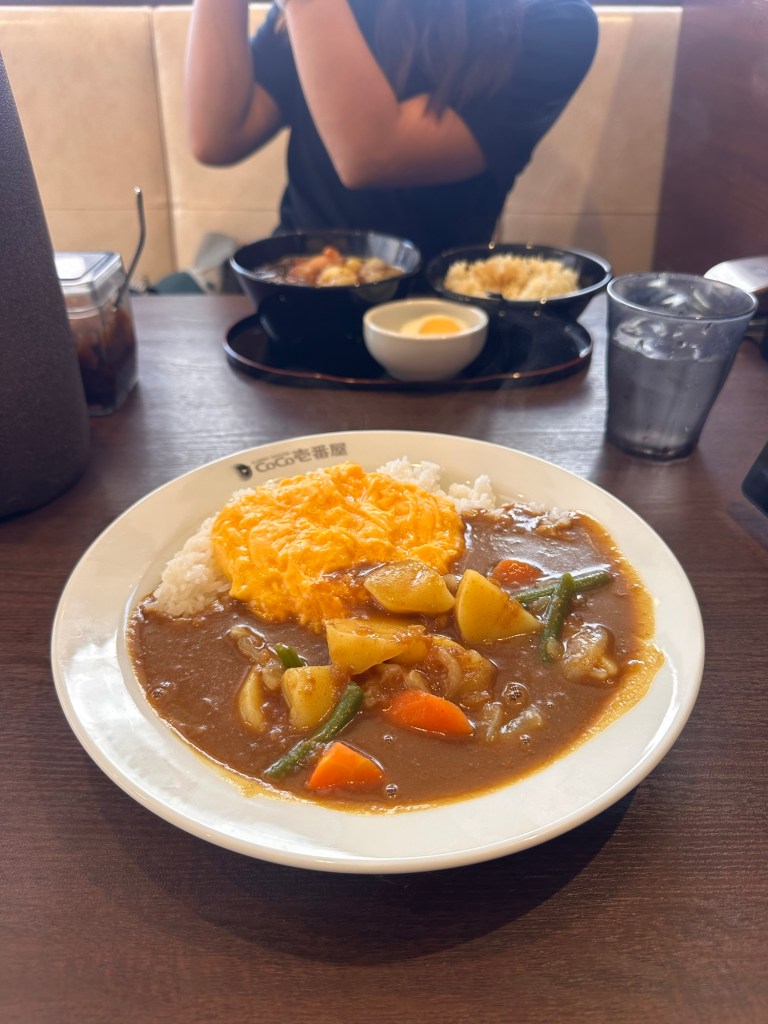
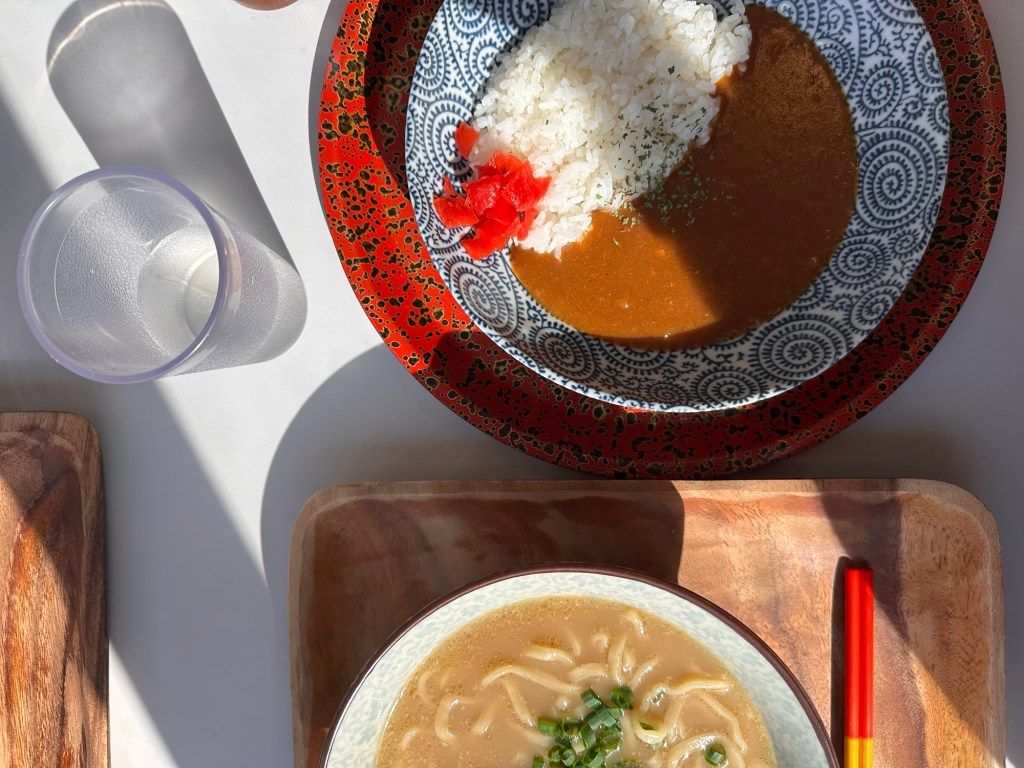
We hired a car for the remainder of Okinawa, as we were travelling to the north of the island. As you drive out of Naha, things get a lot quieter, especially as it was off-season. You drive by the big U.S. military bases, and coastal views keep getting better after that. We made a pit stop for Japanese curry at a chain called Coco, which we discovered is everywhere in Japan. It’s a great option for low-cost meals, where you order from a screen at the table. You can customise your curry to the max. I had curry with vegetables, scrambled eggs, and some Nato (fermented beans), alongside rice.
Okinawa mini history
Okinawa has had a mixed history, with ties to Japan and China and being part of the Ryukyu Kingdom, but it’s very much its own place with its own culture. However, you’ll still find many typically Japanese things here. After the Second World War, the U.S. occupied the Okinawa islands until the 1970s, then continued to base its military here, and they’ve never left. This is somewhat of a contentious thing with some Okinawa locals, and discussions have taken place on when they’ll leave or relocate to other U.S. military territories. It is noticeable when you move around. You’ll frequently see military planes and helicopters, and there’s even a US-themed village— make of that what you will.
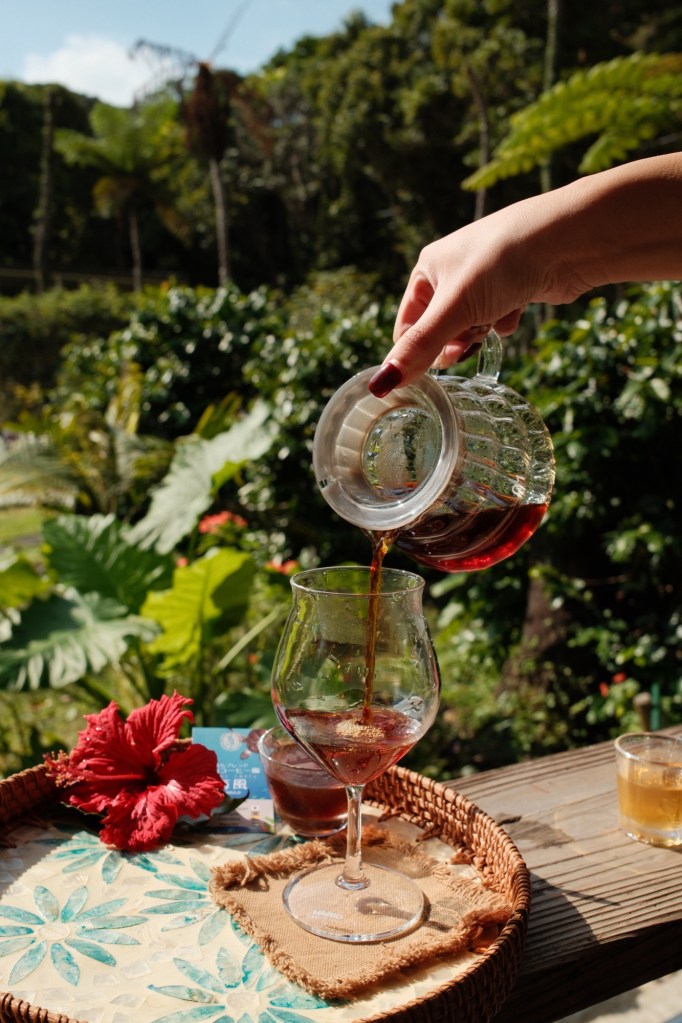
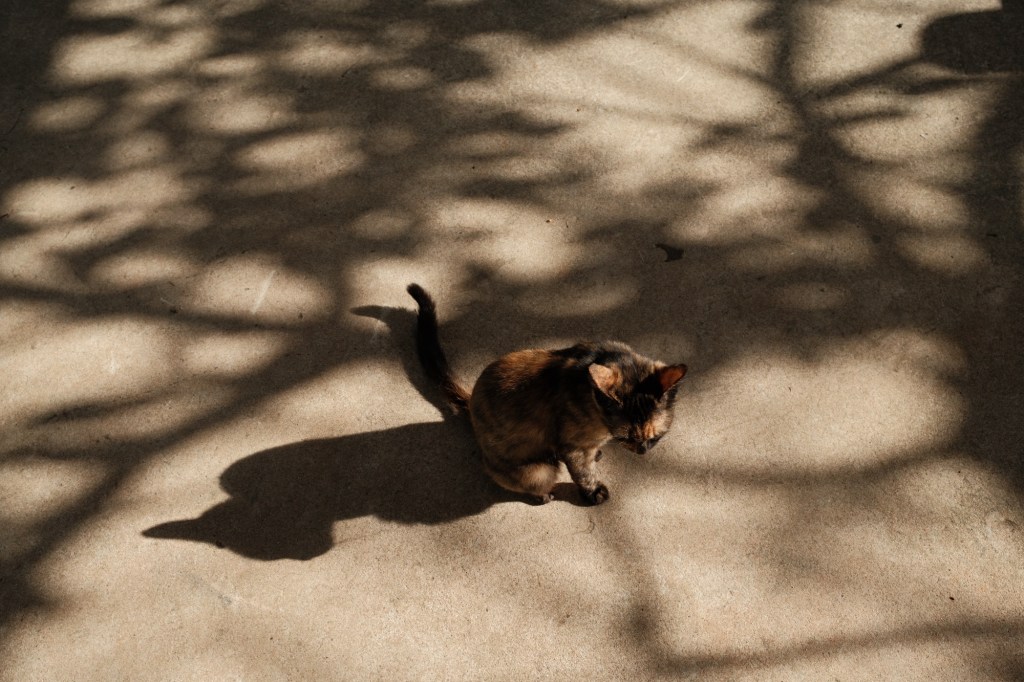
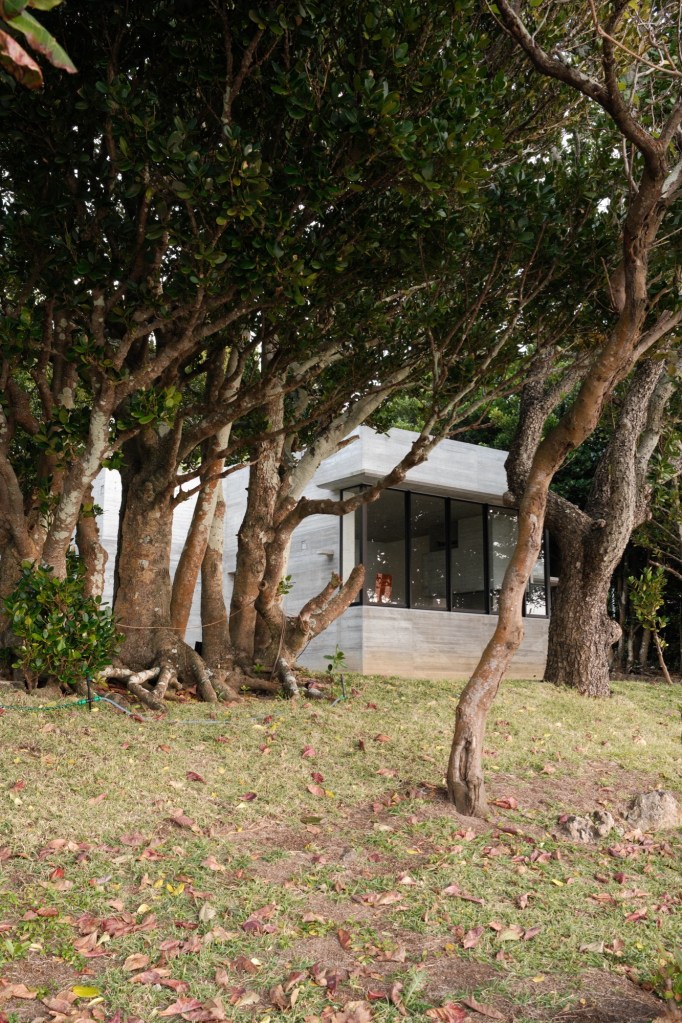
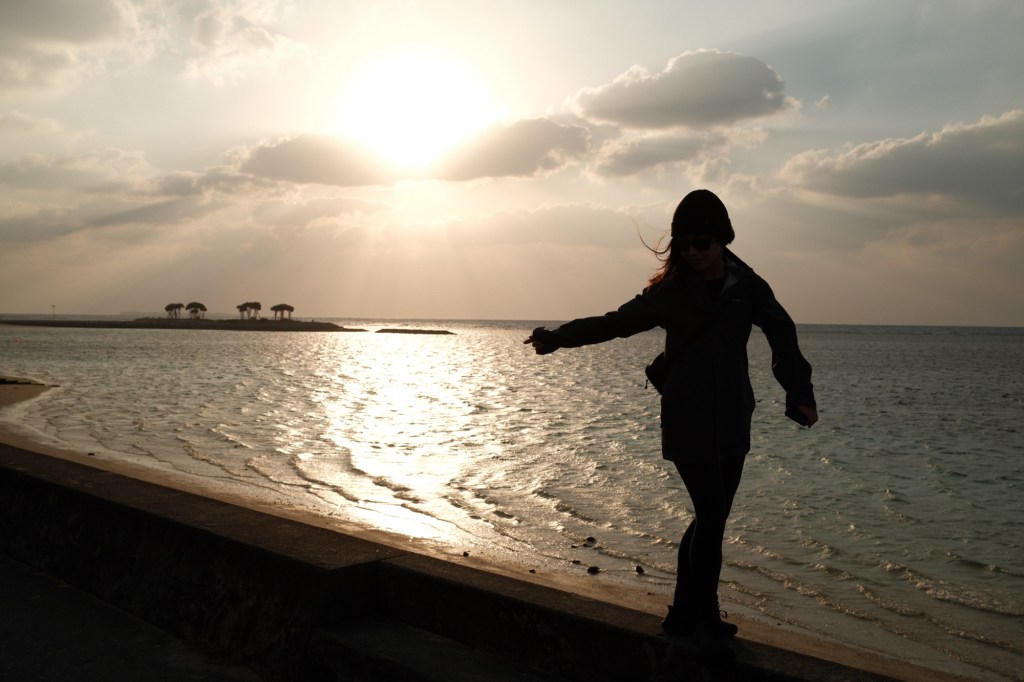
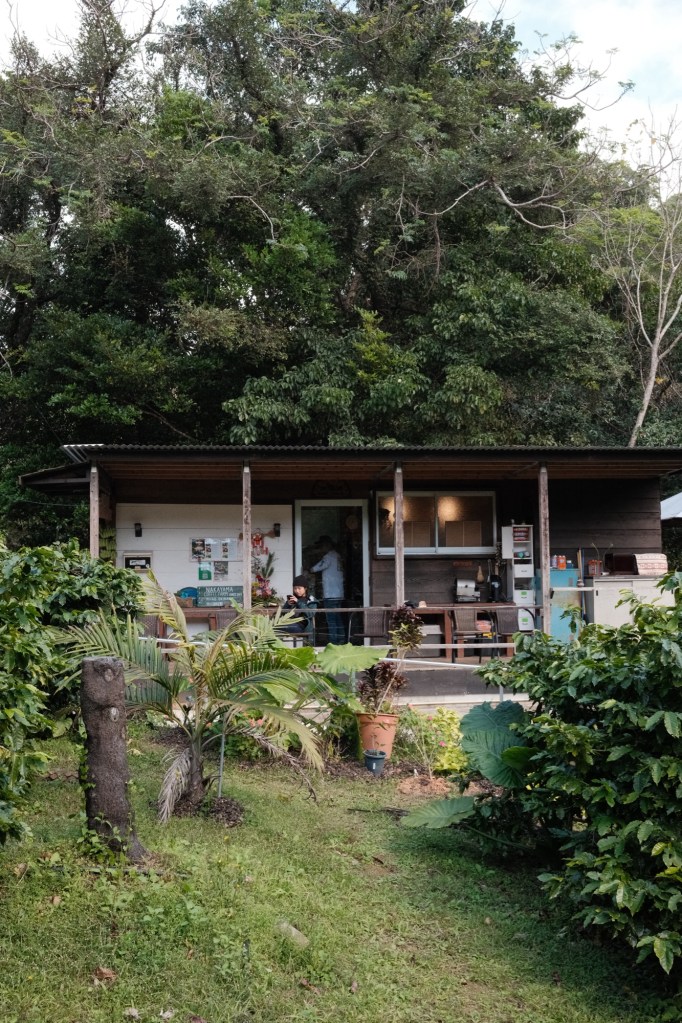
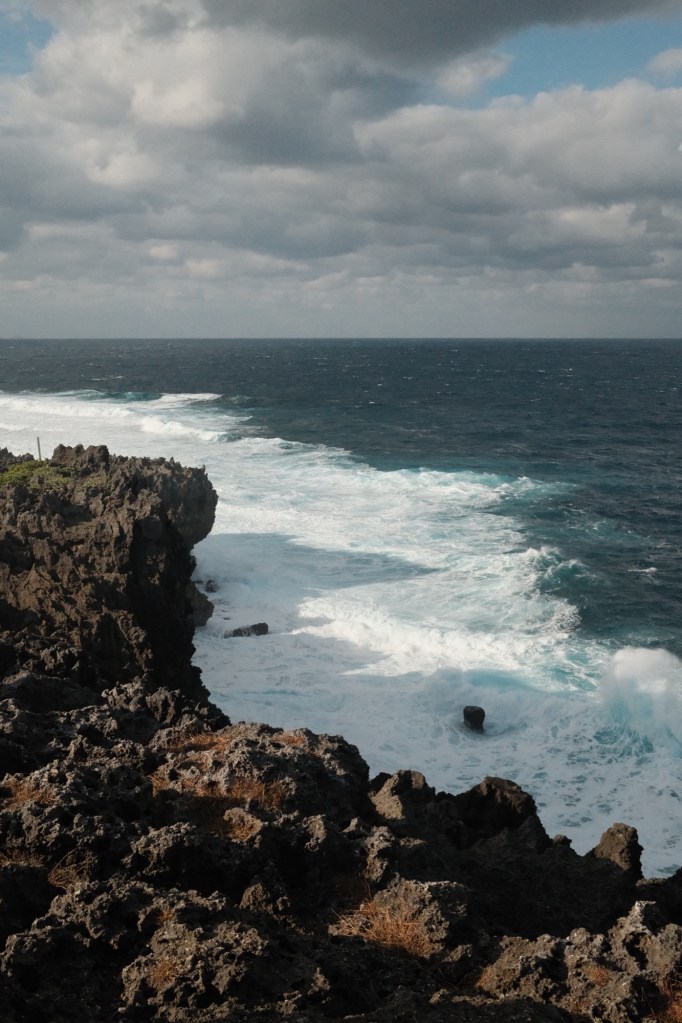
The north of Okinawa is peaceful with beautiful beaches, coves, trees, and sweeping roads. We stayed in a small lodge in the middle of nowhere, which was quite similar to a UK static caravan. We spent the days driving to various viewpoints, where there were very few people. We made a stop at an Okinawan coffee farm one morning where we were served artisan coffee grown and roasted in Okinawa, and poured into wine glass like tasting cups with a perfectly sunny farm backdrop.
Amami Islands
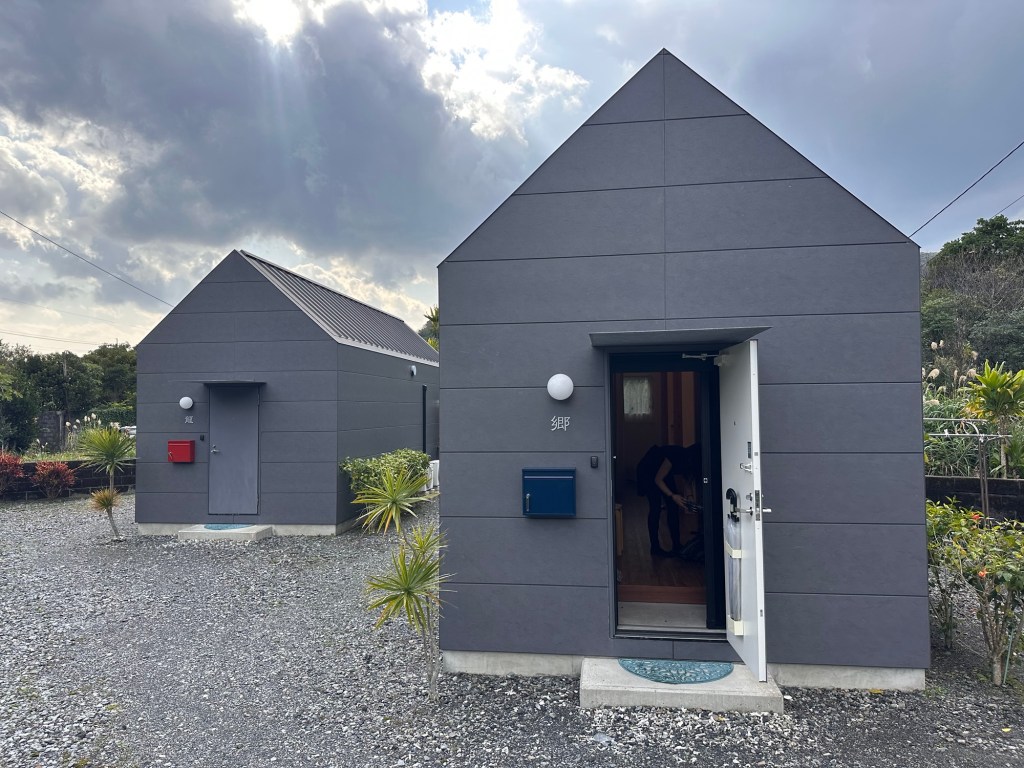
We flew from Naha to Amami Island, just a little further north. We would be spending four nights here in a small, but perfectly formed house on the west coast. If Okinawa was quiet, there wasn’t a sound to be heard on Amami. If you’re trying to write a book or get some peace, this is the place to go. Pretty coastlines and harbours, amazing food, and minimal people. We had a great time staying in the tiny house pictured below. It had everything we needed and it was just a great place to stay. The two mini houses had been constructed on the site of the village nursery and are now serving as an Airbnb, but also a community space where events can take place, or locals can stay if they need to.

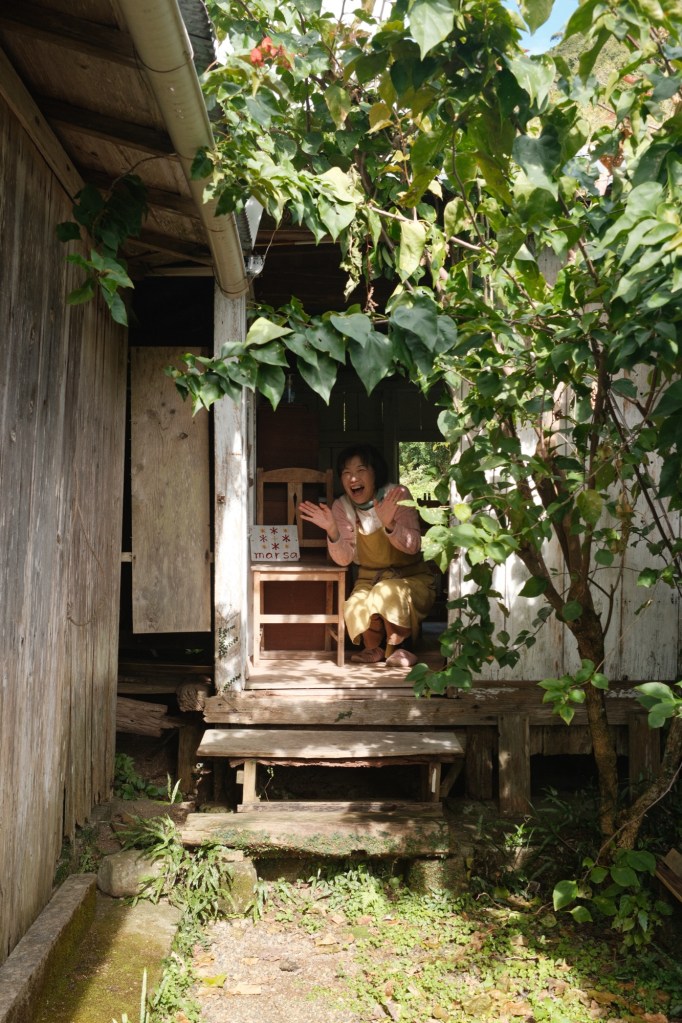
We spent our days driving around, catching a view, and we also took a day trip to Kakeromajima island on the south of the main Amami island. We were the only tourists on the ferry that crosses the channel a handful of times a day. We were also the only people to board a bus when we arrived. We needed to ask the driver where we should go, and he recommended a small village on the other side of the island. He kindly pointed out a few sights as we drove over the hills to reach our destination. There was nothing open when we got to the village, but the beach was pretty. We phoned a number on the front of a closed coffee shop to see if they would be opening that day, but they said not. We then phoned another café in the next village who said they could open for us. We walked along the road and bumped into the owner who kindly cooked us a delicious lunch and chatted a little about the island. It felt like the perfect experience. And to my amazement, they cooked mini Japanese homemade pizza toasts with salad, and served their homemade jam. The owner had moved to Kakeromajima for better weather, having previously lived in Tokyo as an architect. After learning how to bake, they opened the small but perfectly formed café that we were sat in. Japanese hospitality is a special thing, I can’t think of many closed cafes that would open after a phone call from two visiting tourists.
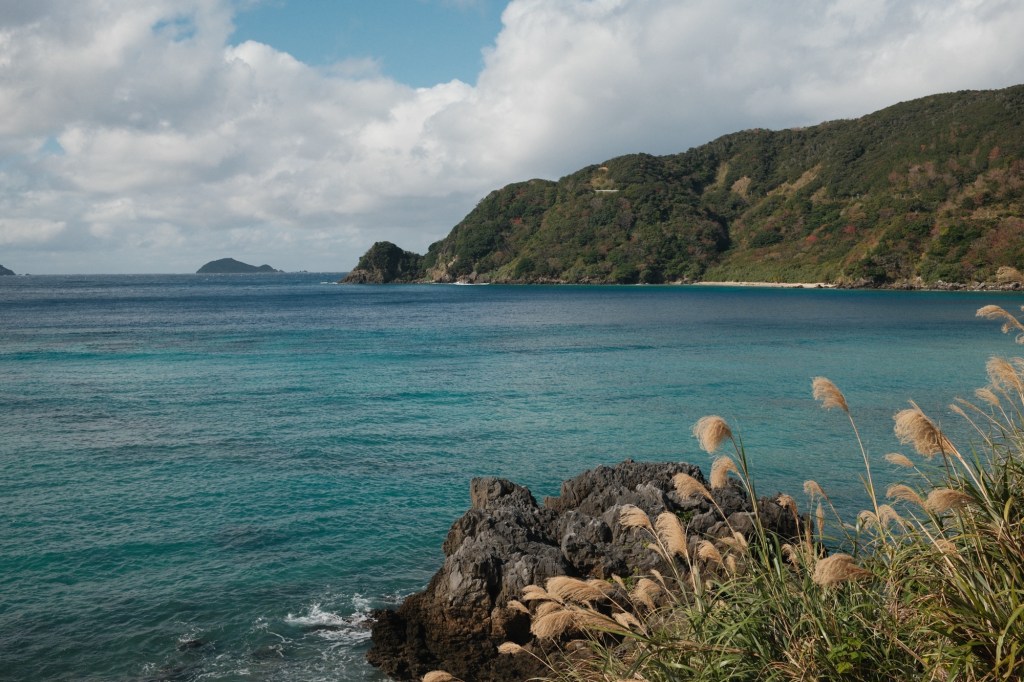
Like Okinawa, Amami has loads of great beaches and a coastline you can mostly drive along. I was amazed at the sheer volume of tunnels everywhere, but after learning a little about the island’s history, it made sense – the residents of Amami all lived in multiple coves cut off from each other by land, and access only by sea. In the twentieth century, a huge effort was made to connect these communities through a network of tunnels all over the island. It’s an impressive piece of engineering; surely, Japan is the tunnelling king of planet Earth.
We visited the Amami Museum in Amami Town, which was great for learning about the history of the islands in a fairly engaging format. I think it cost about £2, so well worth it.
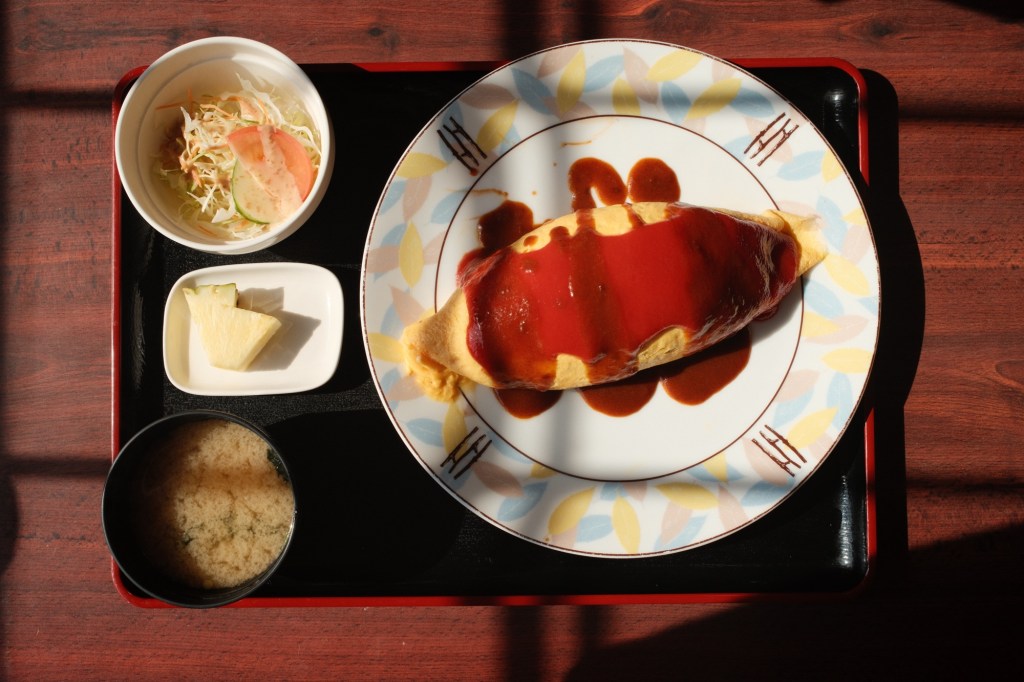
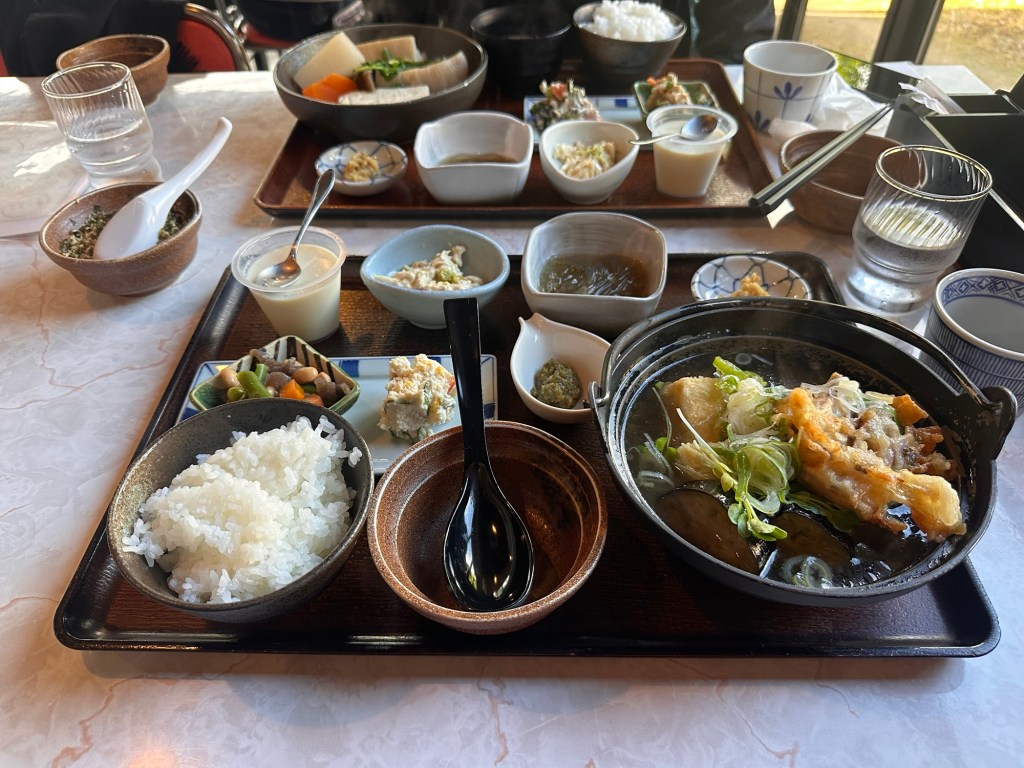
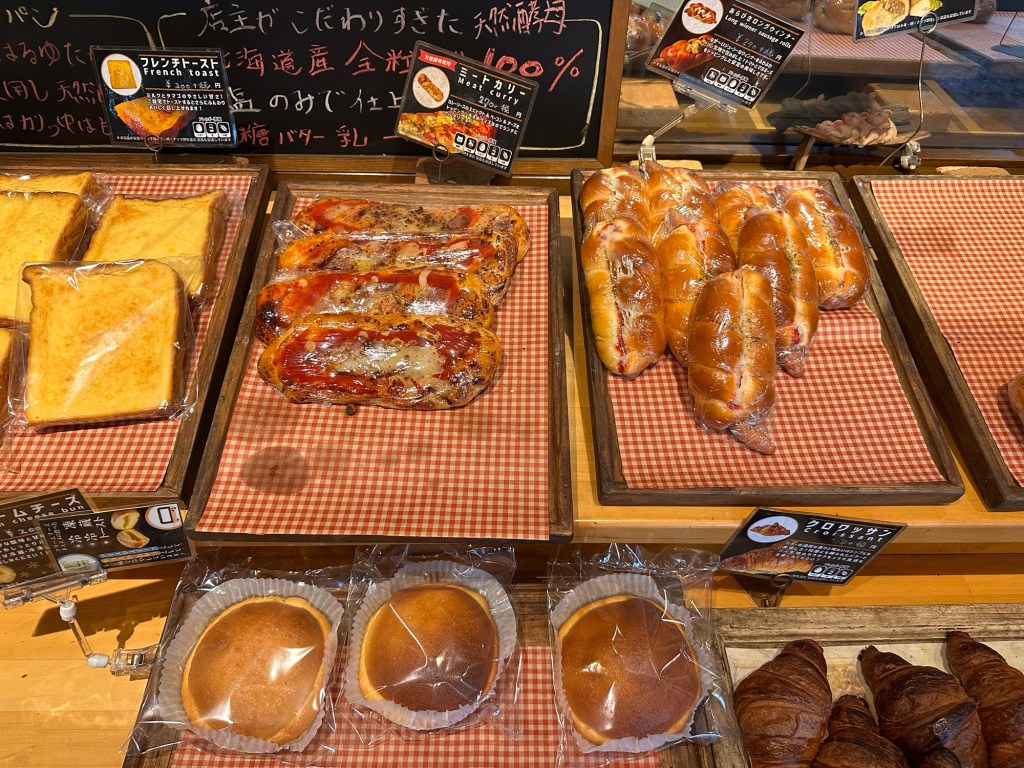
The restaurants on Amami are a real treat; we dined at a specialist tofu restaurant that made its own tofu and served it in a multitude of ways, alongside meat and fish or as a veggie bento-style meal. There were numerous delicious bakeries serving up pizza breads, sandwich’s, melon pastries, and salt breads – Japan knows how to bake! And we also ate at a more traditional Japanese omelette restaurant, the kind that makes those extra neat omelettes that often pop up on Instagram.
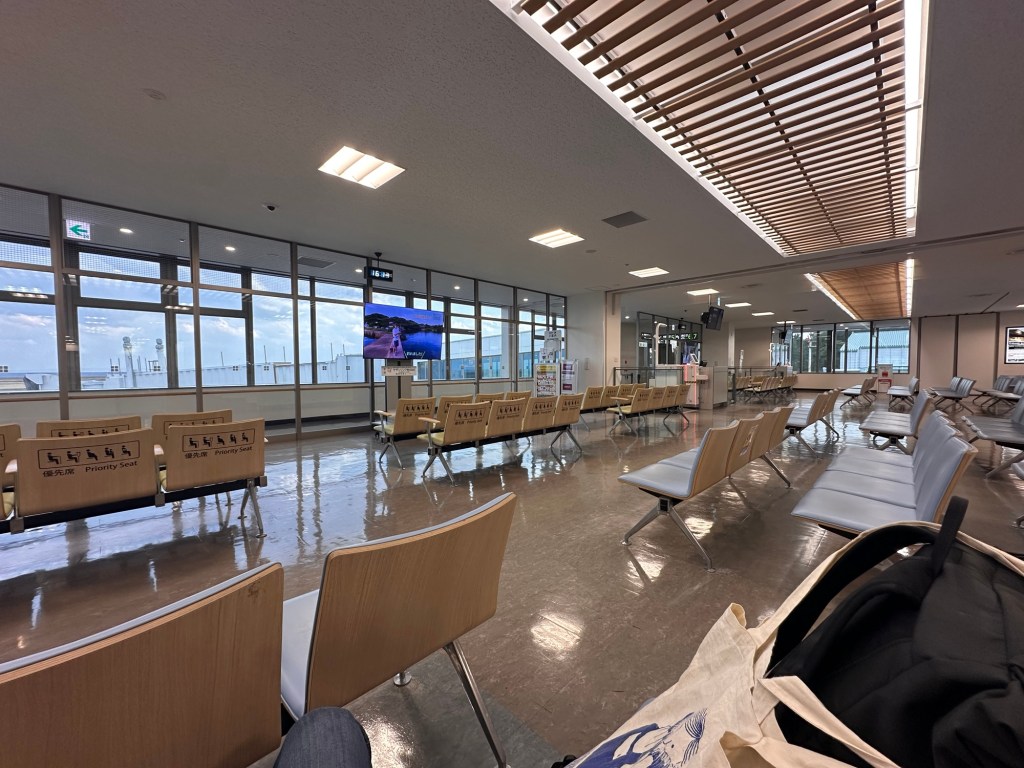
Fittingly – after rarely encountering anyone on the island – we ended our time on Amami in an empty airport waiting for our flight to Fukuoka. If you’re looking for peaceful Japan with warmer weather in the winter, and lots of beautiful locations, Okinawa and Amami Islands are the place to go.
Next up: Kyushu for volcanoes, ramen, onsen, and more! 🌋🍜♨️
 seemehear
Leave a comment