📖 Reading Tip – open in your device’s browser to see the photo galleries 📷 Just tap “Read on blog” at the top (they don’t work in email 😭).
Once again, we would be entering a different climate, with winter in full effect in South Korea, so it was time to pull out the cold-weather wardrobe from our overpacked bags. Sadly, I was still feeling a bit grim following being ill in SE Asia, but it was still great to be in South Korea – a first time for both of us.
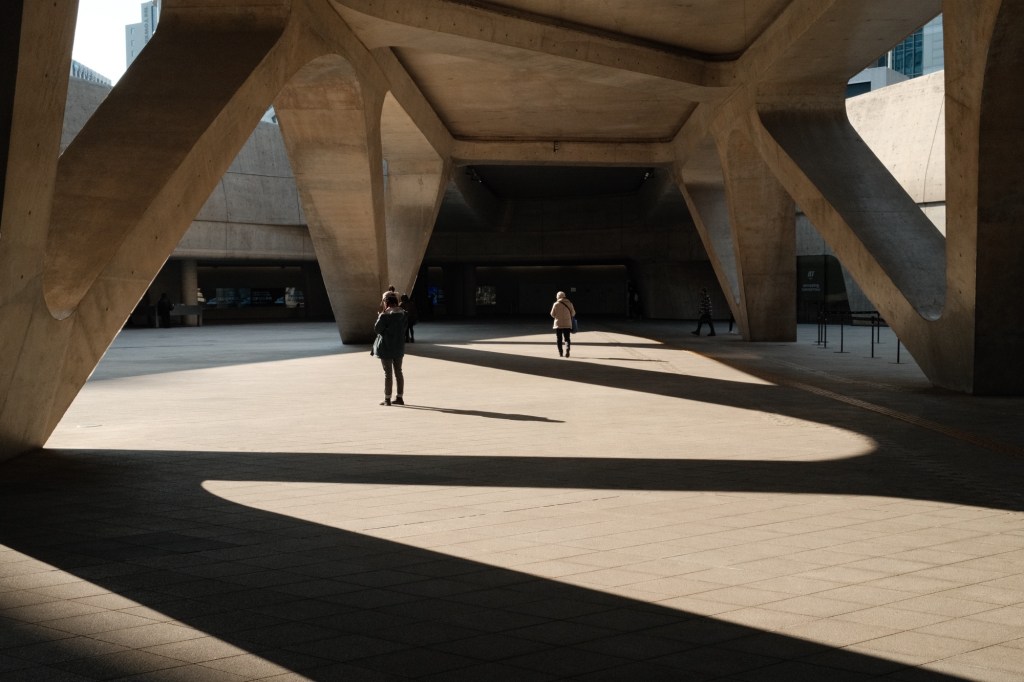
Seoul
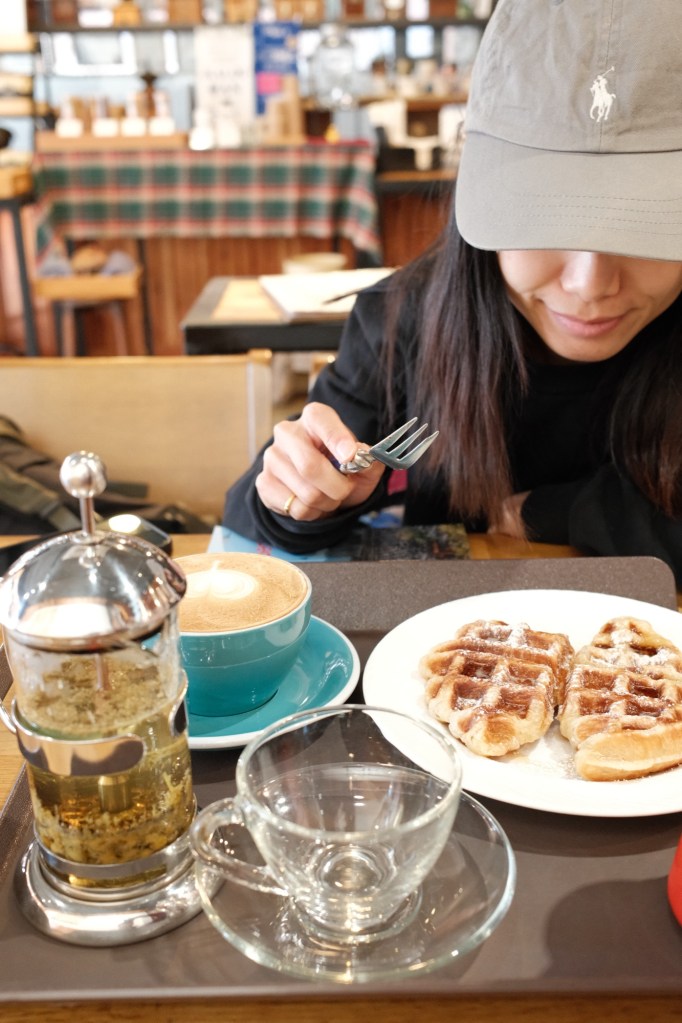
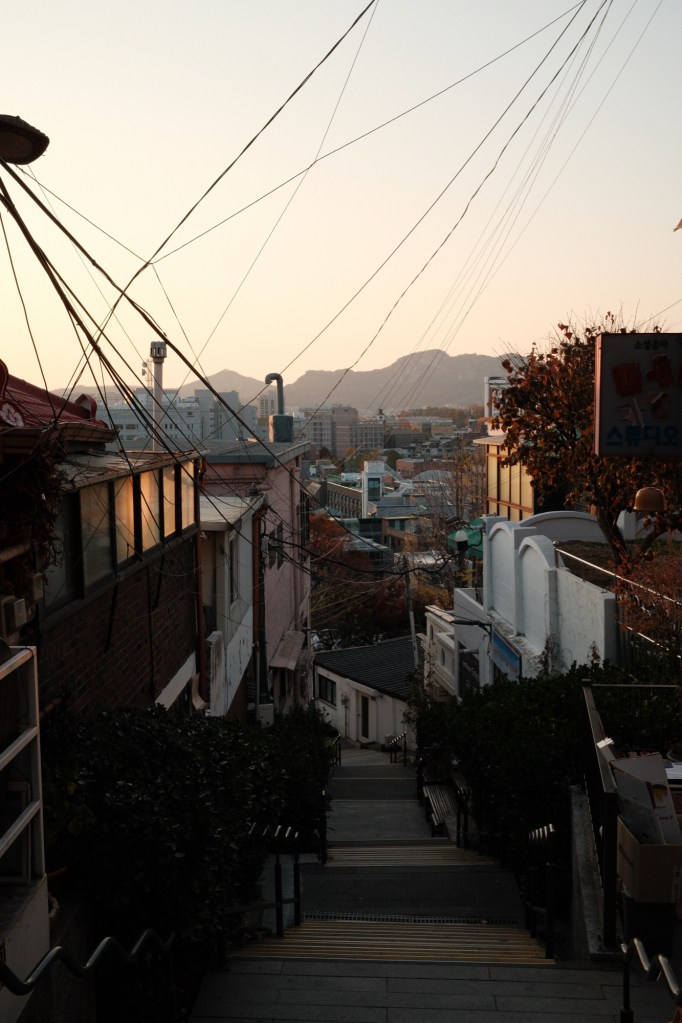
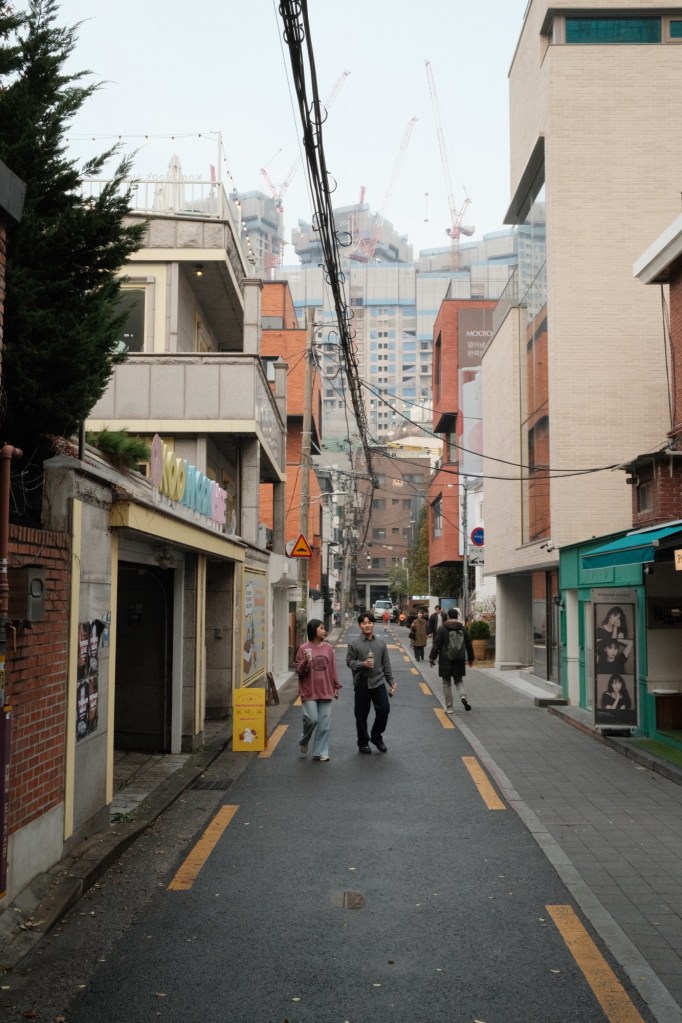
I pondered what neighbourhood to stay in for a few weeks, being a bit indecisive on what we were looking to achieve during our time in Seoul, but in the end, I decided budget-friendly, lively, and artsy was what we needed – Hongdae it was. There were lots of good vibes on arrival; our friendly hostel owner allowed us to check in early as I think he could tell how exhausted we looked after our red-eye flight from Hanoi, landing at 6 a.m. – and perhaps my pasty ill complexion increased our patheticness. To celebrate, we ate waffles and drank good coffee in a nearby café which had been around for decades – the owners famous for how they roast the beans.
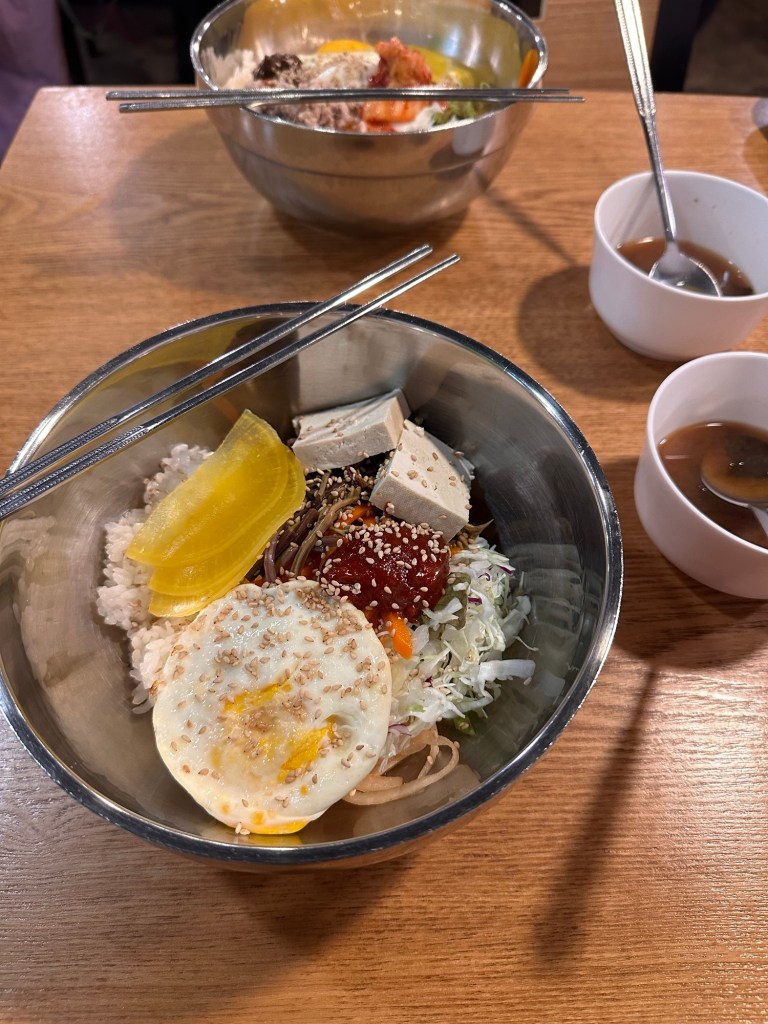
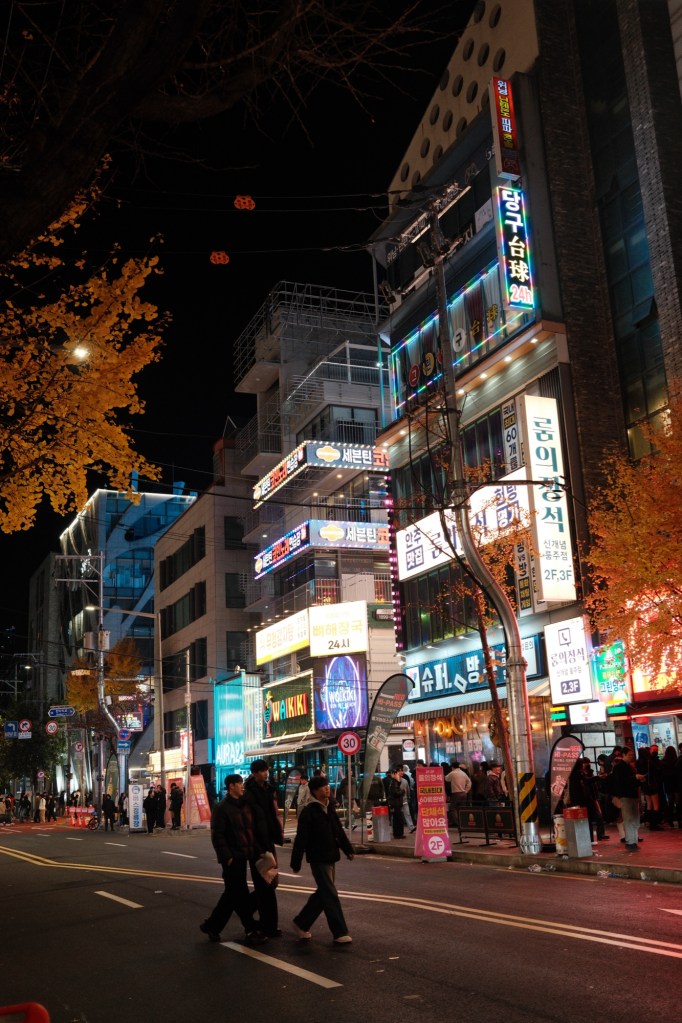
After some serious napping, we headed out for bibimbap and a piece of Seoul nightlife. On first impressions, this place has it all going on – loads of interesting food, bars, clubs, cool shops, and great architecture. Seoul feels like a place you can keep on visiting, like NYC, Paris, Berlin, etc. There’s no way we’ll even scratch the surface on this visit.
Our first Bibimbap – the famous Korean dish of rice and various toppings mixed in a bowl with a good helping of Gochujang (red pepper paste) and whatever else you want to add – was delicious. Number one tip is that you must mix it really well; I’ve definitely been guilty in the UK of barely mixing it. The restaurant host even checked our mixing quality to make sure we were about to receive the correct Bibimbap experience.
Hongdae is full of bars and karaoke places, and everyone is having a great time. It’s fun to walk around and soak it all in. I was wise to the fact that beauty products and services would without a doubt find a way of making an appearance while in South Korea, as it is a topic Carmen is passionate about. We didn’t even make it through one day without visiting the famous Olive Young – the shop that sells it all. And it certainly wasn’t the only visit 🫠
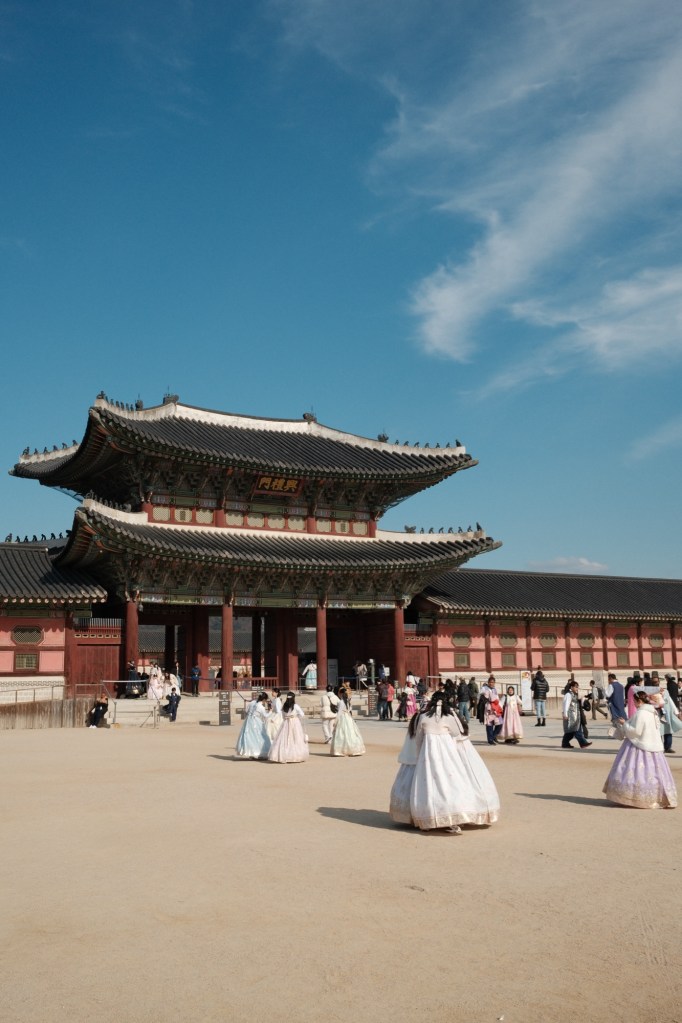
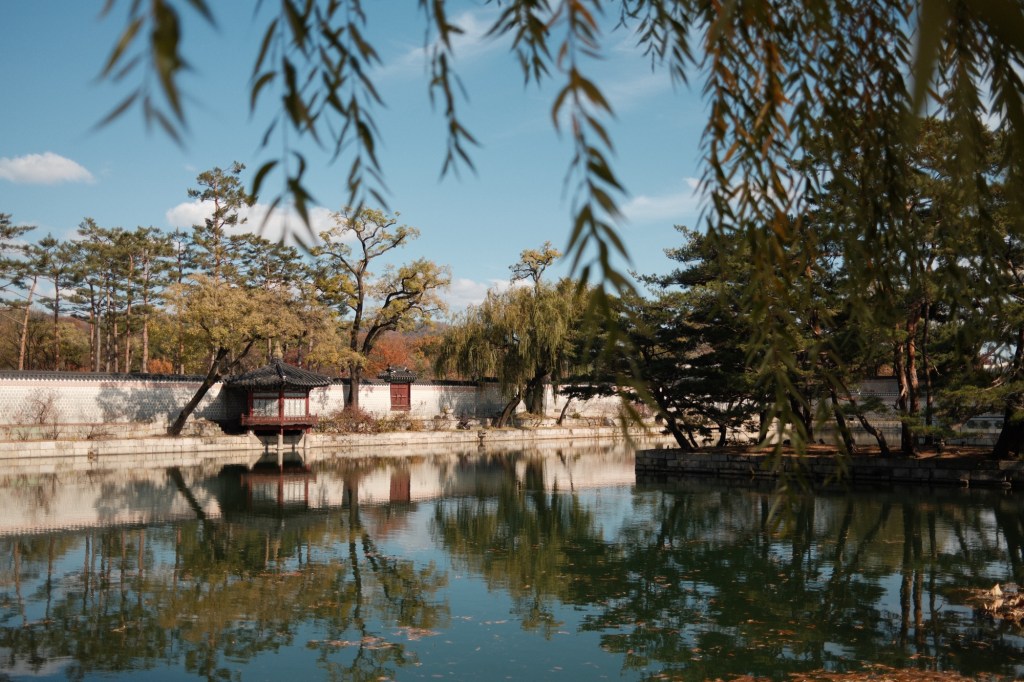
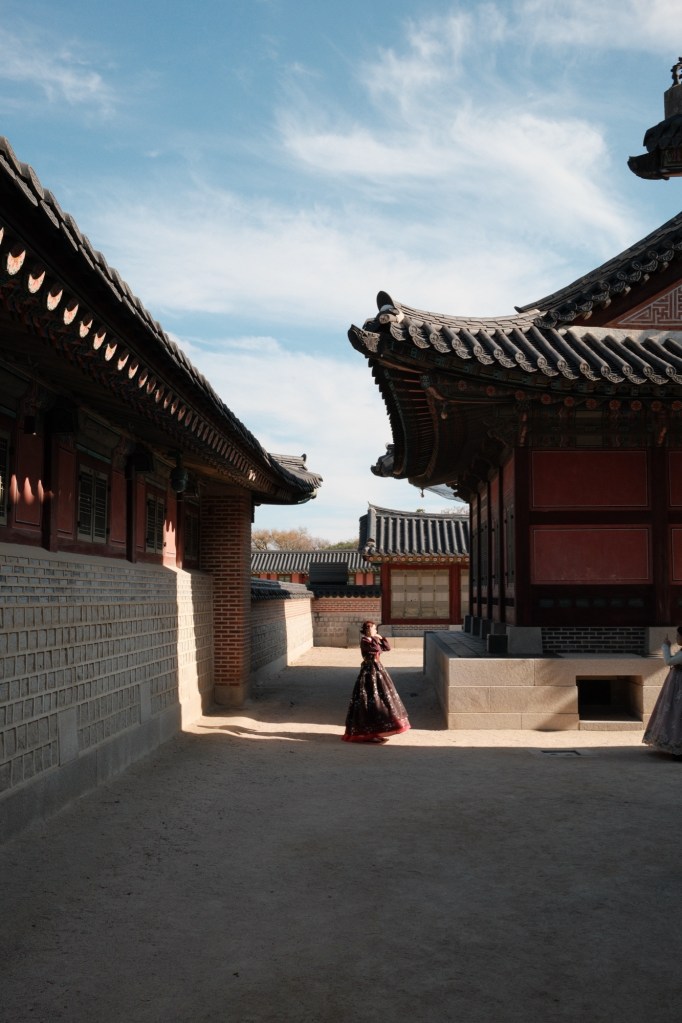
Our first full day was made up of visiting Gyeongbokgung palace, a mostly rebuilt / restored complex in the middle of the city. It’s a beautiful place to wander. If you wear traditional Korean outfits, you get in for free – Carmen and I didn’t bother on account of the costume hire being way more expensive than a ticket 🎟️
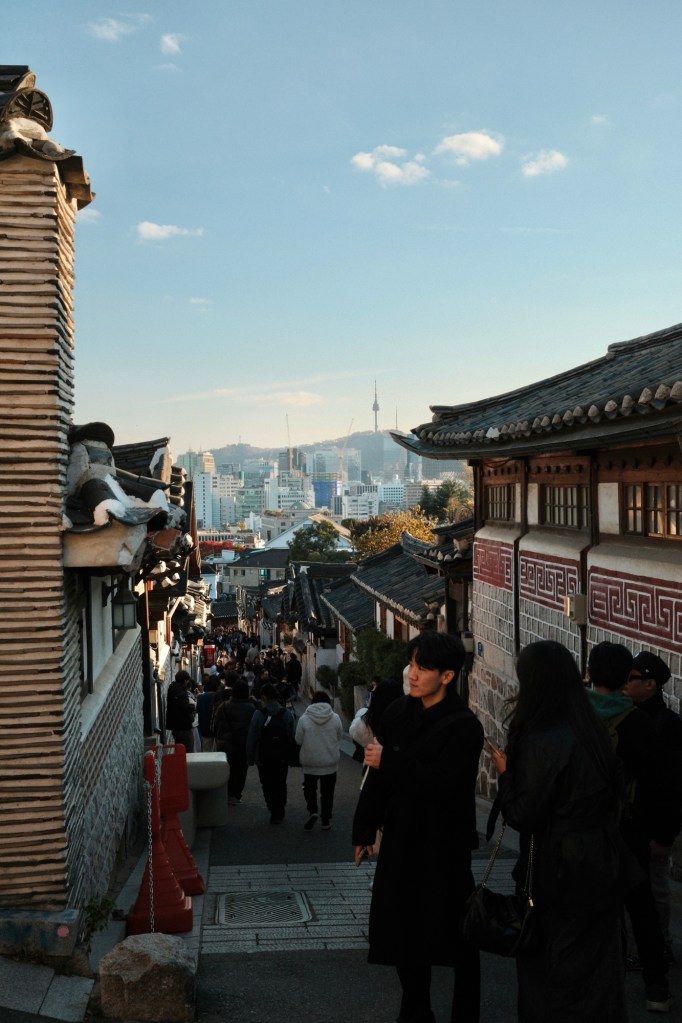
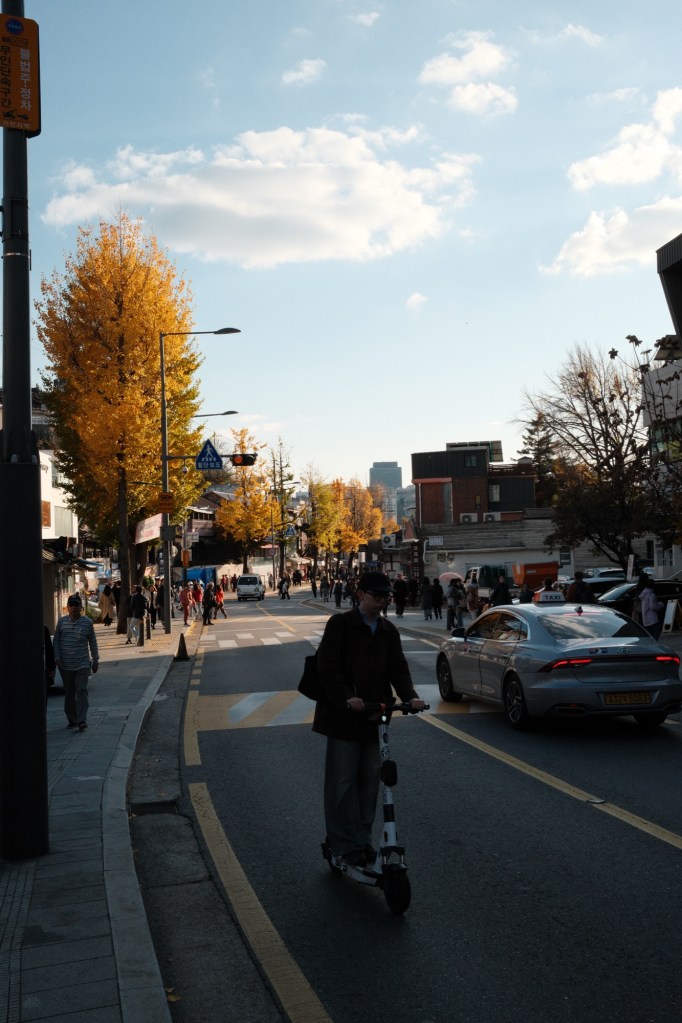
We walked from there to the nearby neighbourhoods, grabbing coffees en route. Like China, there are plenty of ginkgo trees everywhere. Bukchon Hanok Village is close by, where everyone wants to get a particular photo of old Seoul – it’s probably a bit overrated, but we did stroll through. I had what can only be described as the best banana milkshake I’ve ever drank at a place called Baekmidang. We stopped at an arts and crafts fair where Carmen bought a small porcelain hamster – a new mascot for our trip 🐹
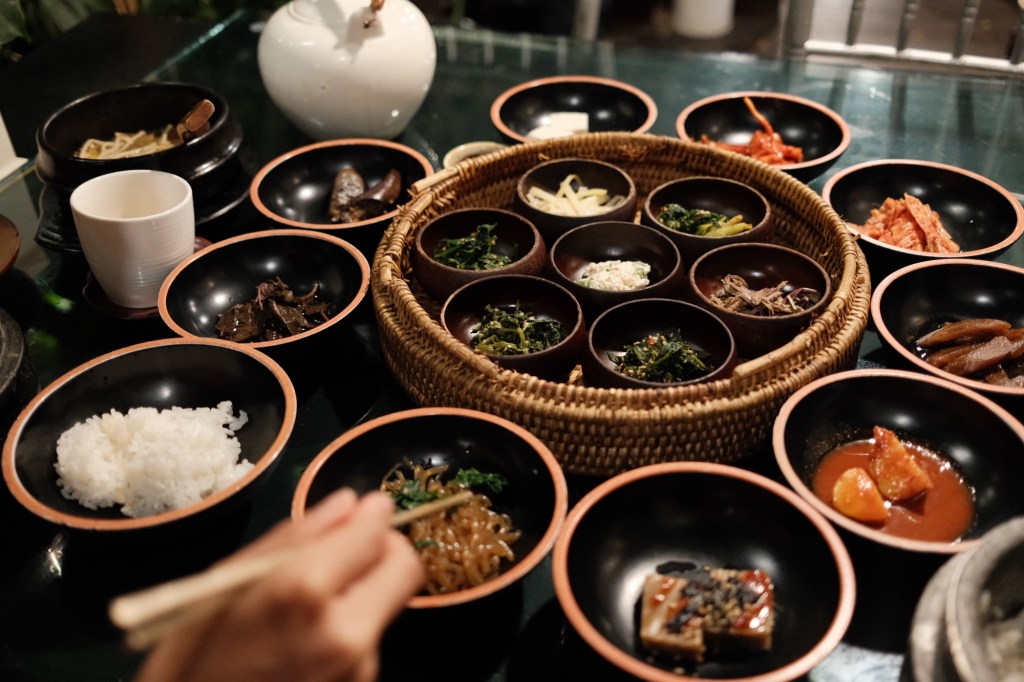
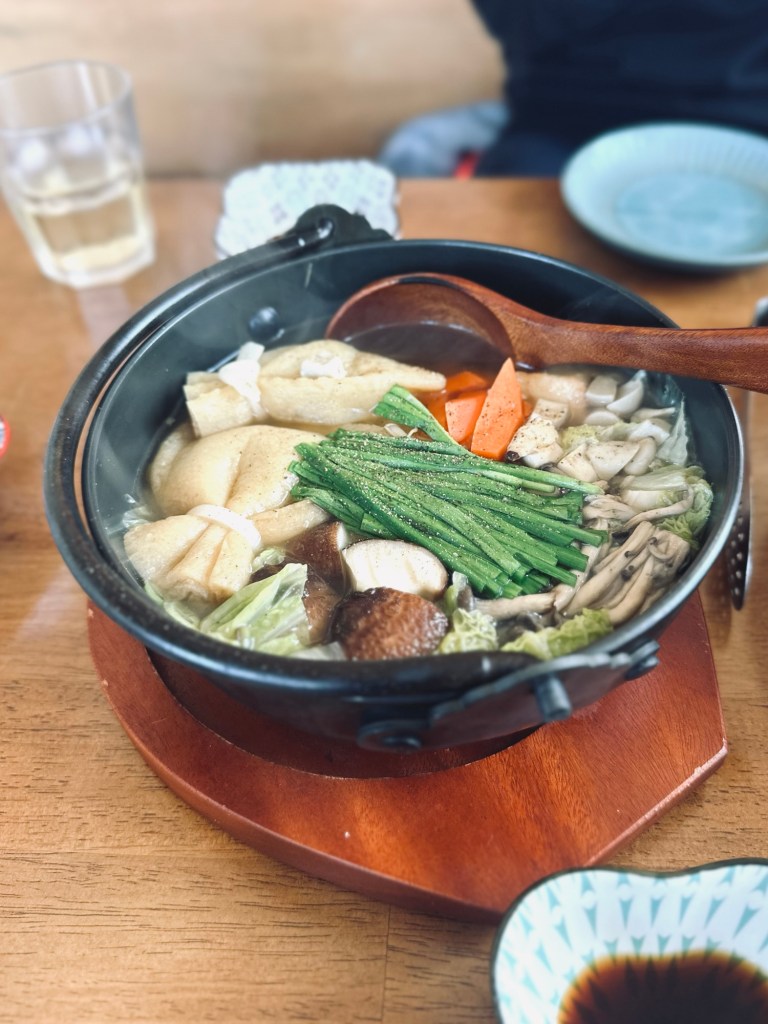
South Korea isn’t all that veggie-friendly, but there’s still plenty to eat if you work around it, and to soften the experience, we went to a traditional Korean restaurant that specialised in all things vegetarian food. We hadn’t banked on just how many courses of food would appear, but it was a good experience. The restaurant cum-art gallery had someone playing the piano for the entire time we were there.

The Train to Busan
We took the train to Busan, a four-hour journey as we opted for the cheaper tickets, but it was a comfortable ride. Still feeling a bit wiped out, I slept for the whole thing. We picked Busan on a bit of a whim, probably influenced because we watched the apocalyptic zombie film ‘Train to Busan’ a few years back, which has little to do with the city of Busan, but the name sticks in your mind. There’s plenty to do though, so we’d opted for 3 nights.
I’d recently watched a video on Instagram about some small trains you can ride around a hillside in Busan, so was feeling quite excited about buying the tickets until I discovered they were conducting the yearly train maintenance on the exact dates we’d be in town. Never mind, there are many more miniature mountain trains to be ridden.
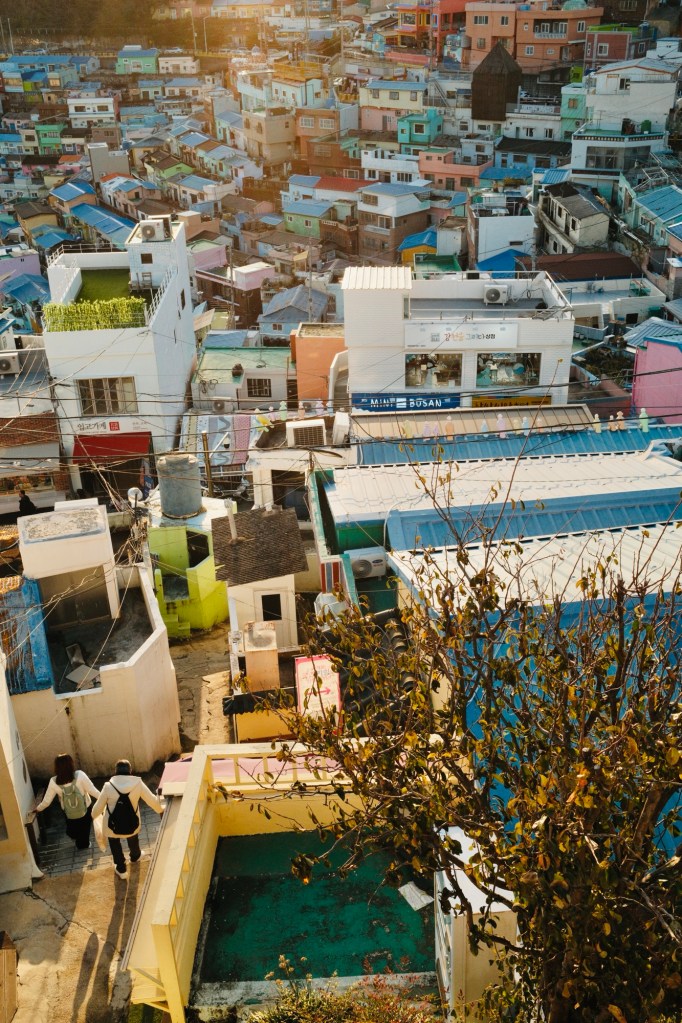
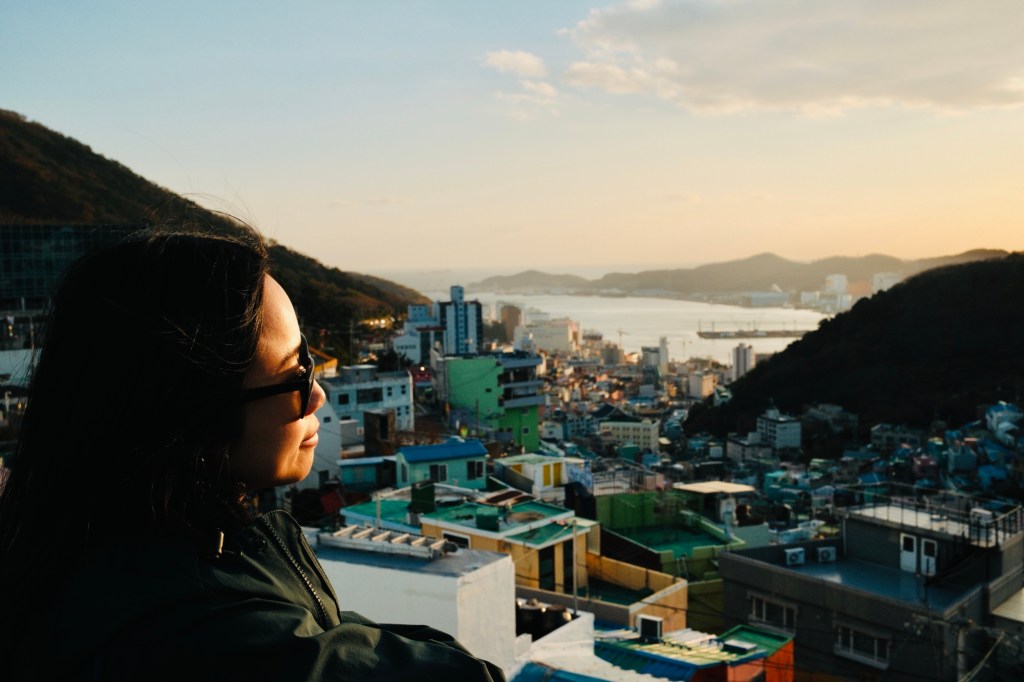
We visited a now-popular neighbourhood known for its colourful houses on a hill with a view of the ocean named Gamcheon Village. Built on a steep hill, it’s known as ‘Korea’s Santorini’ and the ‘Machu Picchu’ of Busan. Families were originally moved to Gamcheon post-war, with the area growing in size over the decades. It’s now a designated cultural hub for arts, following a facelift around 15 years ago.
A Wet Market
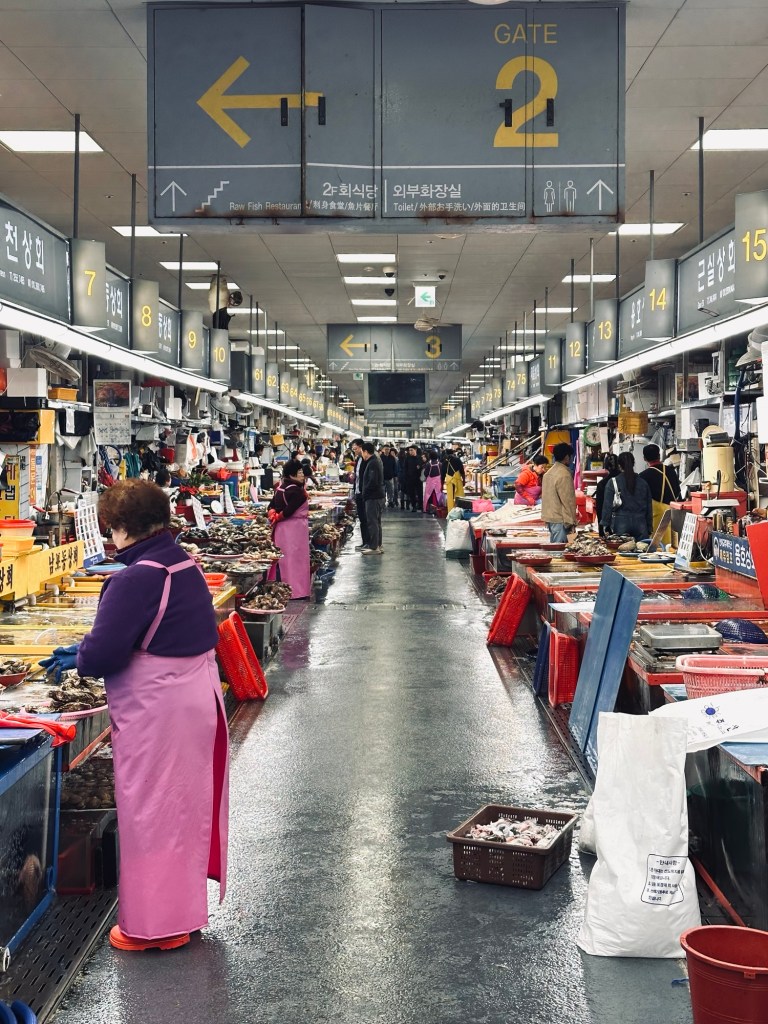
Carmen had her eyes set on a visit to the biggest wet fish market in South Korea, known for its huge range of sea creatures that could be selected and cooked for you. On entering the market, it was apparent that this place was quite the spectacle – vast tanks of live creatures, all shapes and sizes – some trying to escape their inevitable fate. I spotted an octopus making its way out of an enclosure and onto the floor, but to be pulled back in by the stall’s proprietor. I also witnessed a fish jump right out of the tank – it didn’t make it back.
Carmen picked a small selection, and we headed upstairs where they would be prepared for her. The operation is slick: after you pay for your goods, they’re quickly transported into the restaurant part of the market where each trader has a sister kitchen that cooks your fish. You don’t really have an option of how they’re cooked; it’s down to chefs’ choice. It was fairly reasonable in terms of cost, and it’s a fun experience if you eat fish. And even as a non-fish eater, it was still interesting.
Pancakes and potato cheese hot dogs by the sea
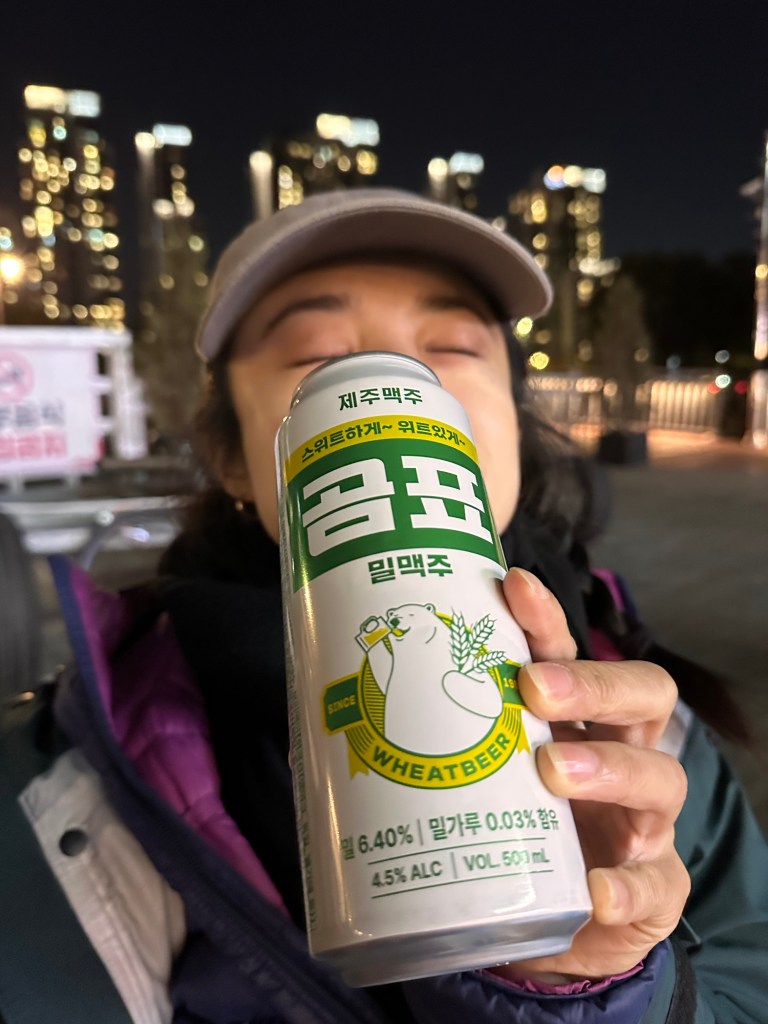
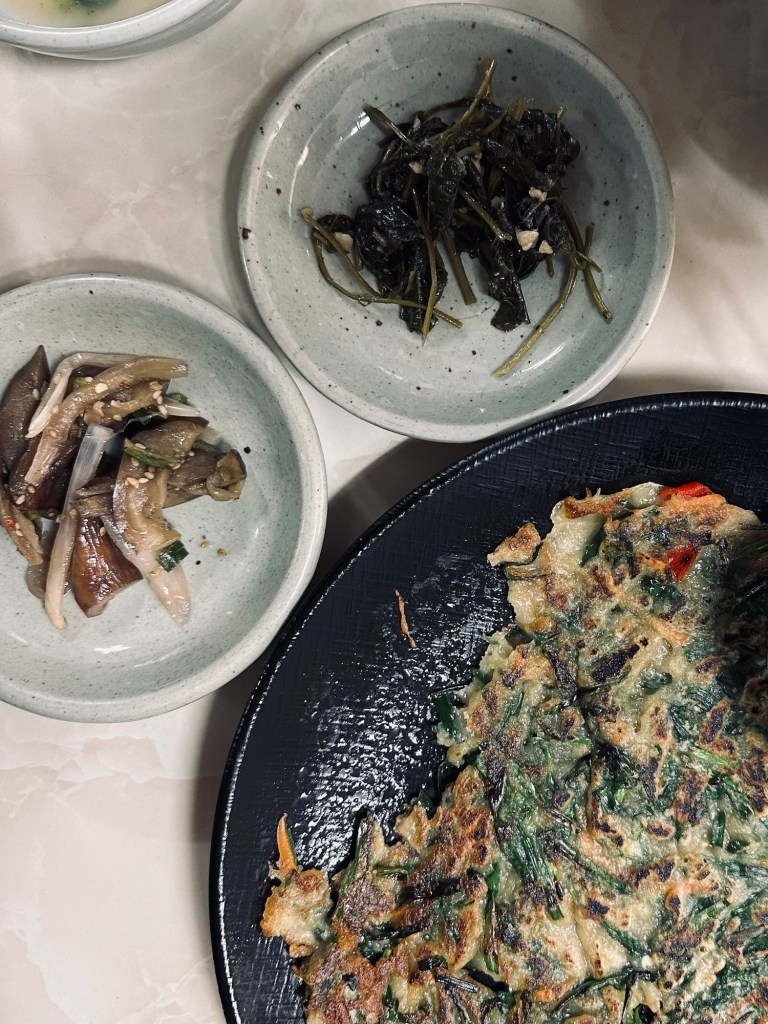
We sampled a few local delicacies while in Busan— namely cheese and potato corn dogs (minus any actual meat), and seaweed & spring onion pancakes that were really good, accompanied by a bibimbap and porridge. The latter being in an old-school diner near Hongdae beach that seemed like more of a local spot. We also realised that there’s such a thing as ‘salt bread’ sold all over Korea, a really simple small bread roll which is baked with butter in the middle and seasoned with salt on the outside— well worth a try if you see it listed somewhere.
Jeju Island
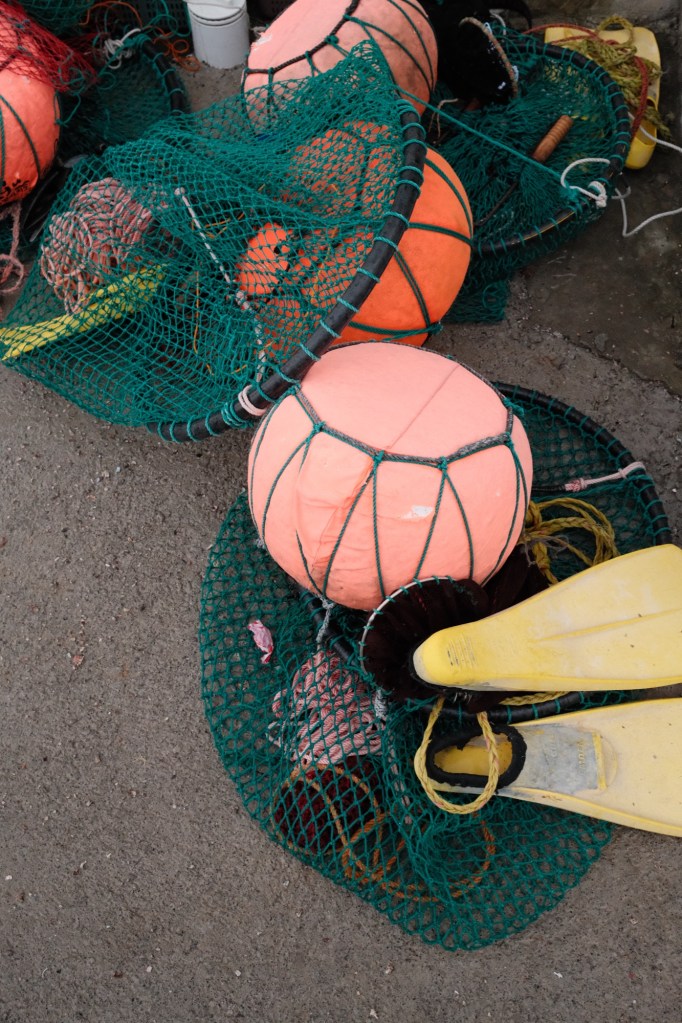
Jeju Island was next, famed for the ‘women of the sea’, recently celebrated by the Apple TV+ film ‘The Last of the Sea Women’. The women of the sea are, as the name suggests, women who traditionally spend their time in the sea catching, or more appropriately, foraging for sea life to eat or sell. The tradition goes back a long way, and it’s a way of life that’s at risk of survival as the younger generations desire different careers. There are plenty of documentaries and articles about them, including the Apple film, so give them a watch or read to get the full story. It was great to be here on the island they predominantly live on, and we did hope to spot a few on our travels.
Jeju is also known for its volcanoes, tasty oranges, and laid-back vibes. It’s weirdly also the busiest flight route in the world! The choice of flight options was particularly overwhelming; the planes took off every ten minutes, it seemed.
We’d opted to hire a car for Jeju, as points of interest and where we’d be staying were quite spread out. There is a good bus network, but it seemed to take a while to get around from looking at the timetables. The car price was fairly cheap. The one thing I would say about driving in South Korea is that you need to be super aware of the rules. We didn’t run into any trouble, but it did feel quite intense, with the number of speed cameras, road markings, and how much the in-car sat nav warned us of potential hazards. That being said, it was an enjoyable place to drive with really well-maintained roads and lots of places to park. Also, quiet roads as we were there in the off-season.
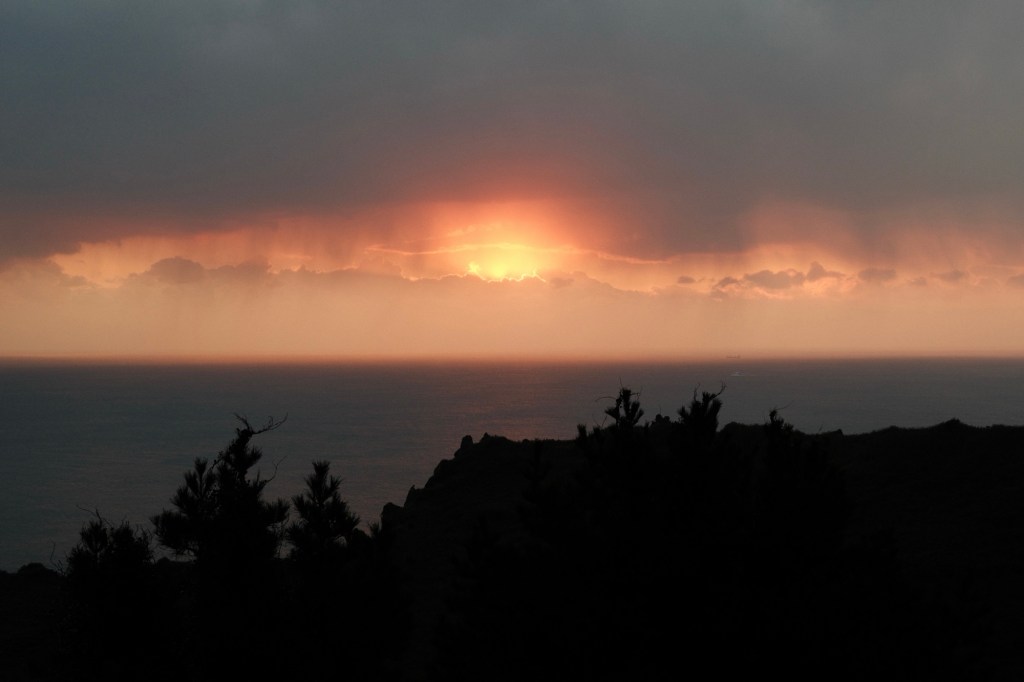
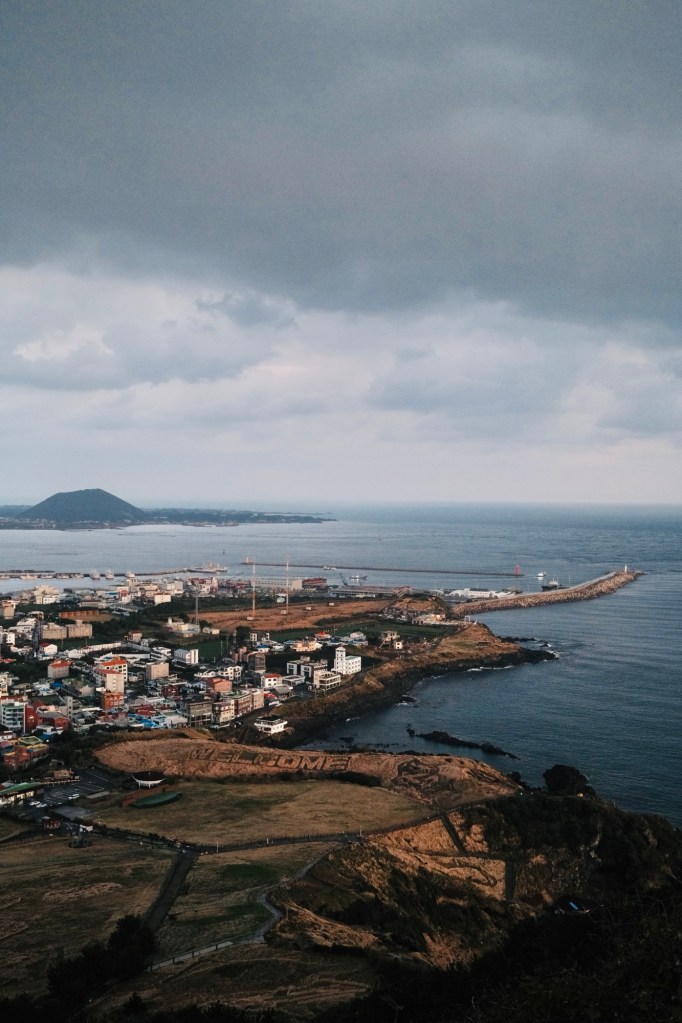
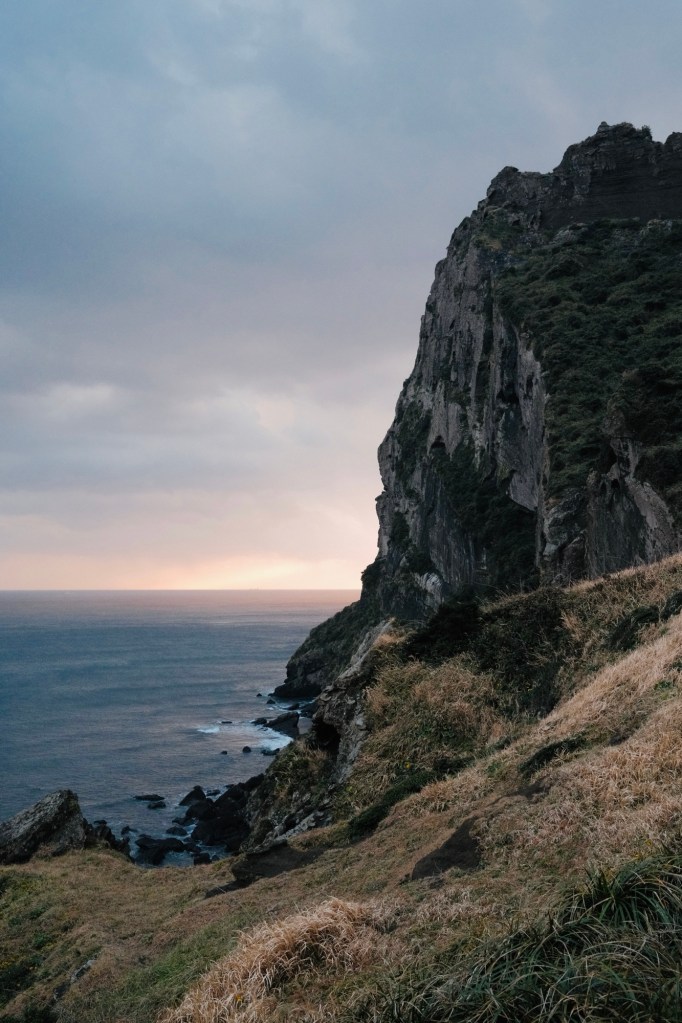
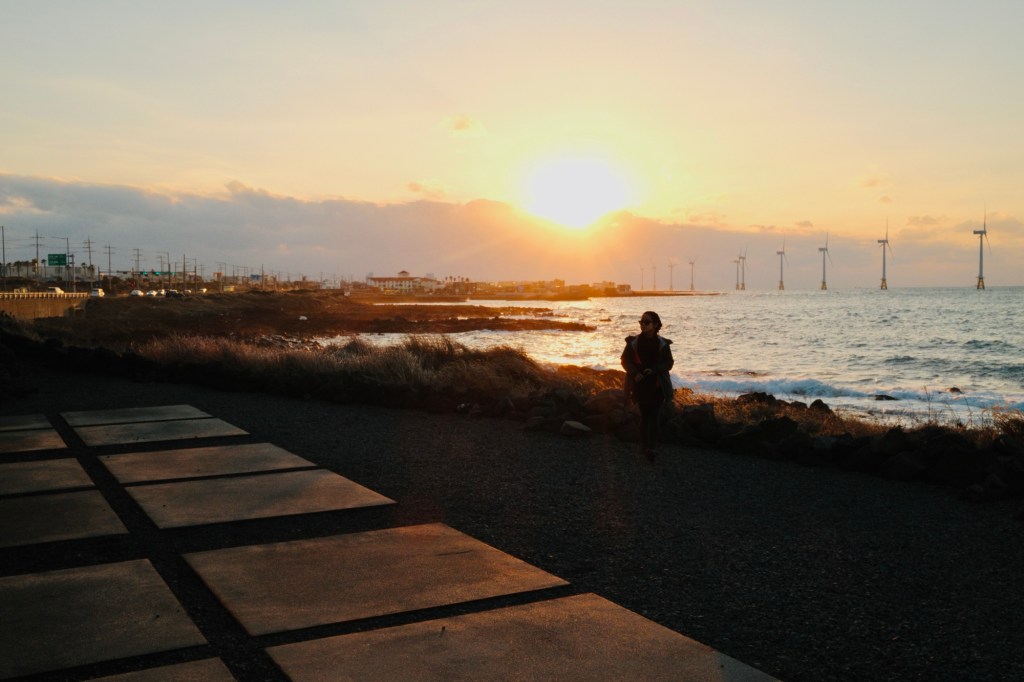
Our first night was spent in the town of Seongsan on the easternmost tip of the island. We managed to get up before sunrise and start the trek up a volcano named Seongsan Ilchulbong. We luckily arrived at the summit just as the sun was poking its head out of a row of neatly positioned clouds that lay against the horizon. We got a good view of the eastern coast of Jeju and of the volcano crater, which didn’t appear too active. This was just a little taste of hiking on the island, as we planned to venture up the bigger Mount Hallasan in the middle of the island the next day.
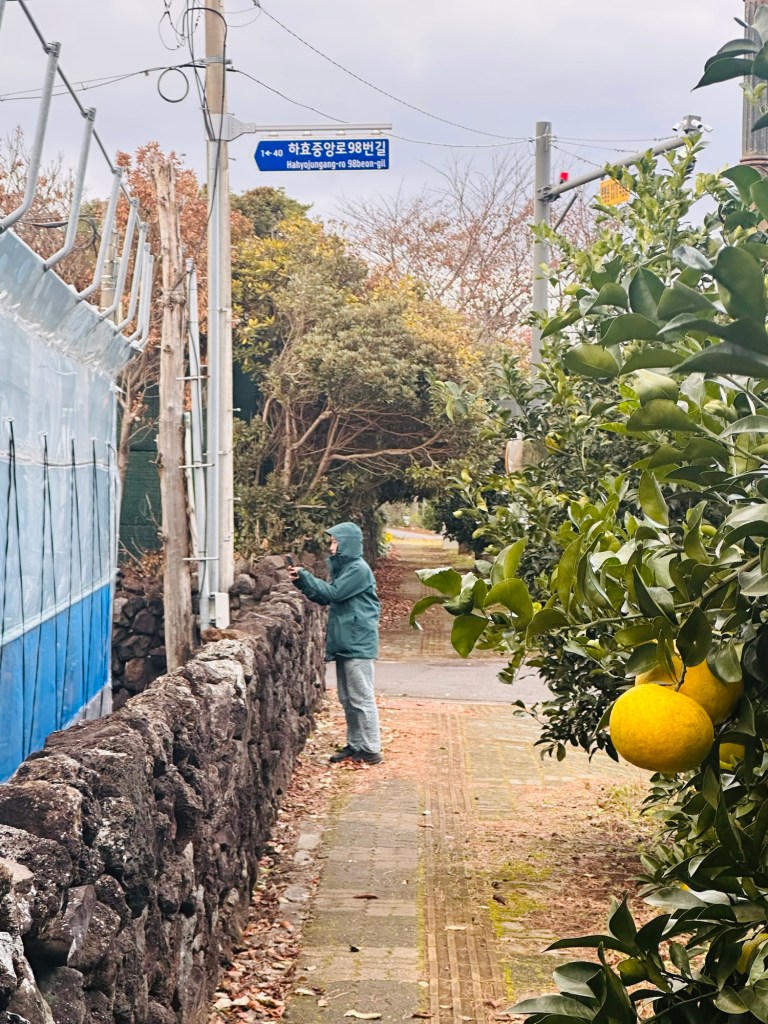
We’d be spending the next couple of nights on the south of the island in Seogwipo, so we slowly drove in that direction, stopping at a few coffee places and a matcha tea farm (which Carmen was very happy about). By this point, we started to notice the Jeju oranges growing everywhere, so were keen to buy some when we could.

You shall not pass…
We set off a little late for getting to Mount Hallasan, but made it there around 11 a.m., which seemed reasonable enough for making it up and down, but after parking up, a man came towards us telling us to turn around, gesturing that the mountain is now closed 🙅♂️ We were a bit upset by this as we were excited about the hike, and the fact it’s the tallest peak on the island, but there was no convincing the man that we had actually parked 15 minutes before the apparent closing time. You get the picture 😅
Now, I think Carmen and I are easily fit enough to get up and down Mount Hallasan, but on viewing the returning hikers making their way back into the car park (they probably set off at 6am), we realise we might have underestimated the conditions. They were fully kitted out with crampons and ice axes strapped to their backpacks. Maybe we weren’t quite prepared, and it was good we were turned away 😂
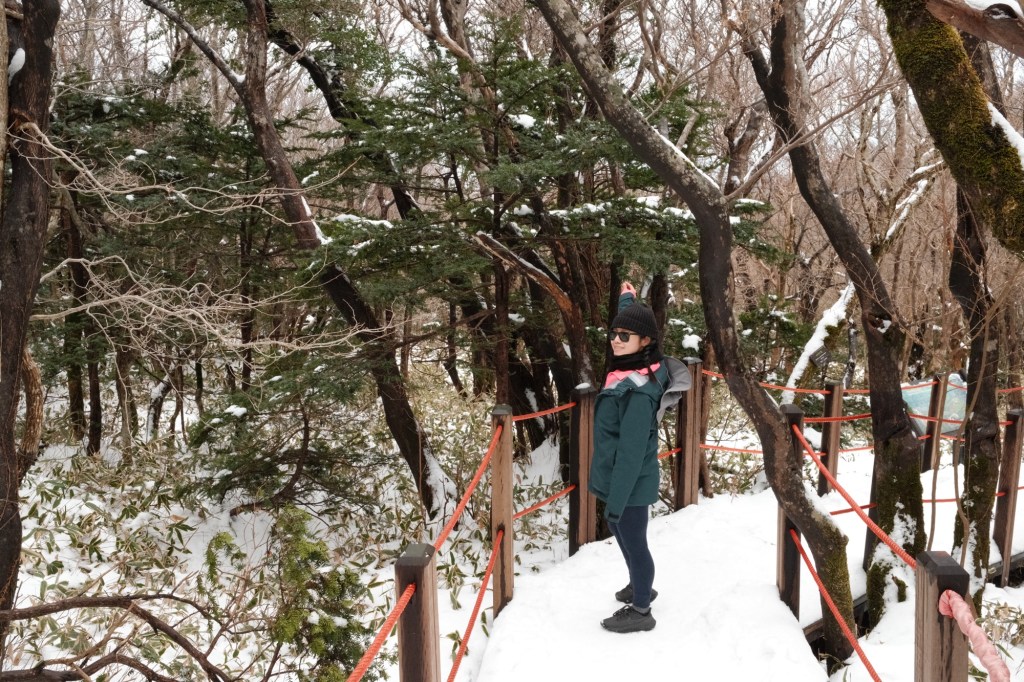
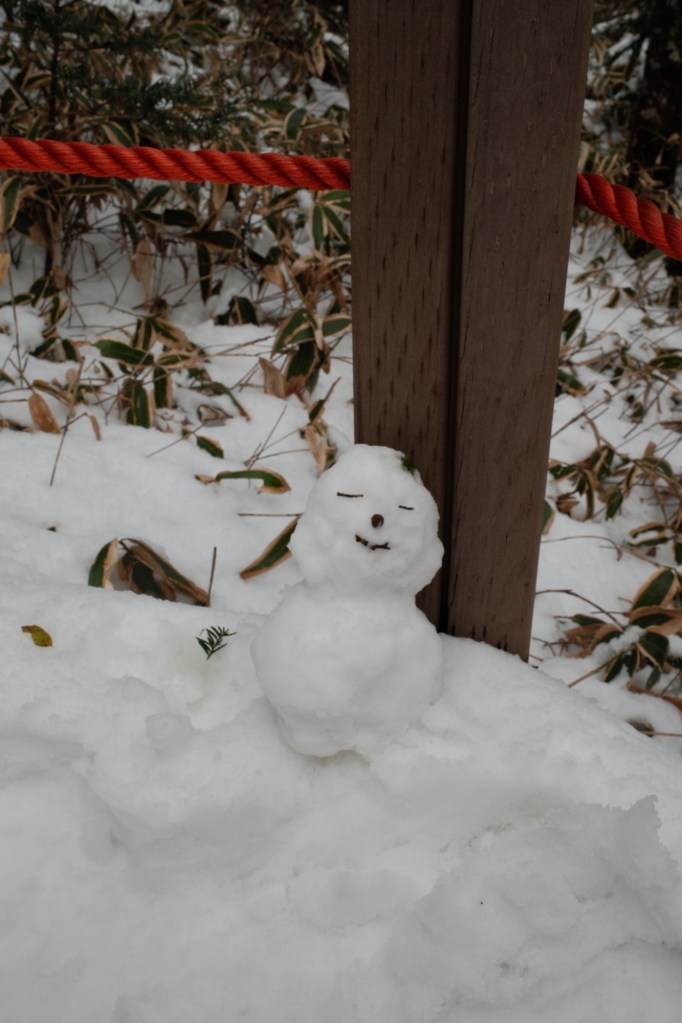
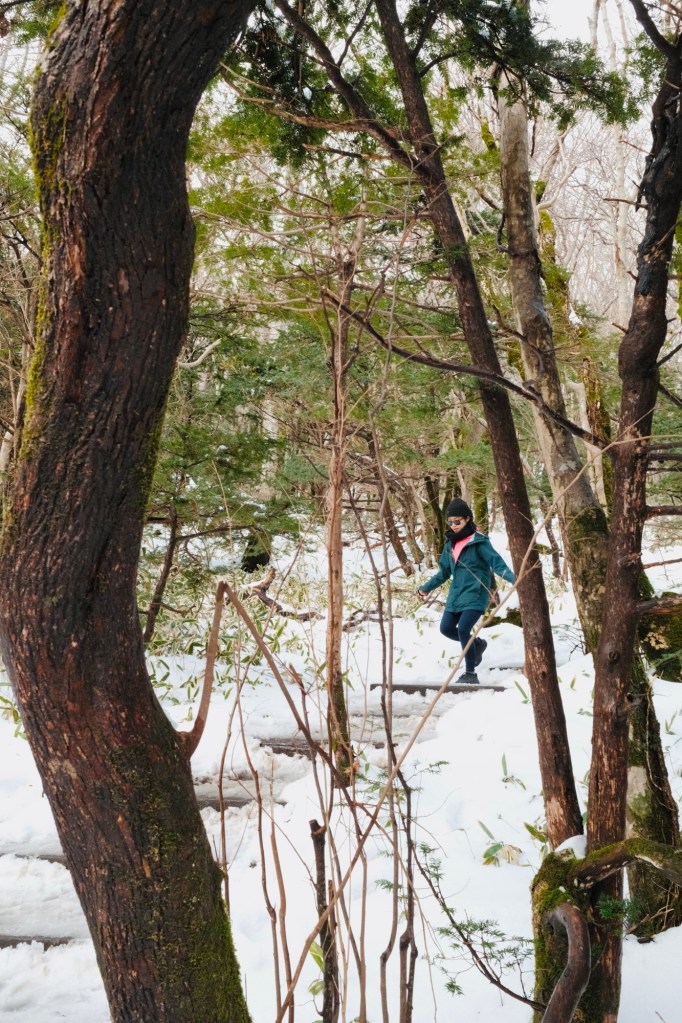
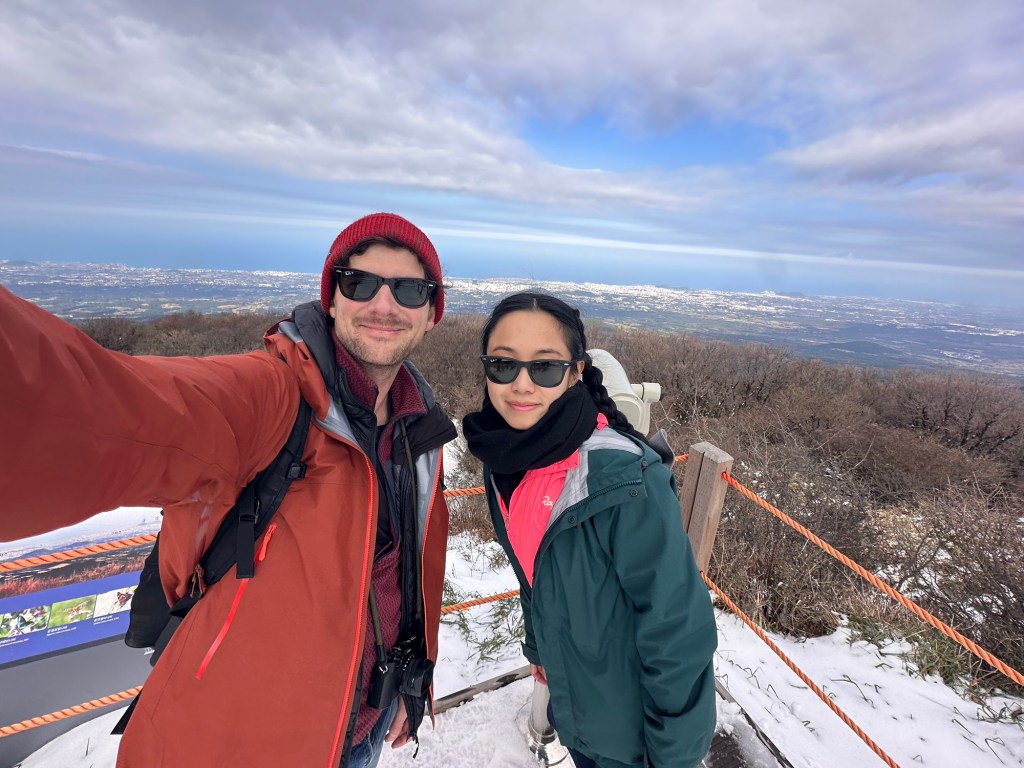
After our mountain rejection, we found a nice spot about 20 minutes’ drive away, where we could walk up a smaller peak and get a great view of Jeju and of Mount Hallasan. A perfect alternative. The walk was snowy and a bit icy, and we did spot quite a few wearing basic crampons, but it was an easy hike. We chatted to a local family at the top who said we were lucky as the weather is rarely clear where we were, so getting the view we did was a luxury.
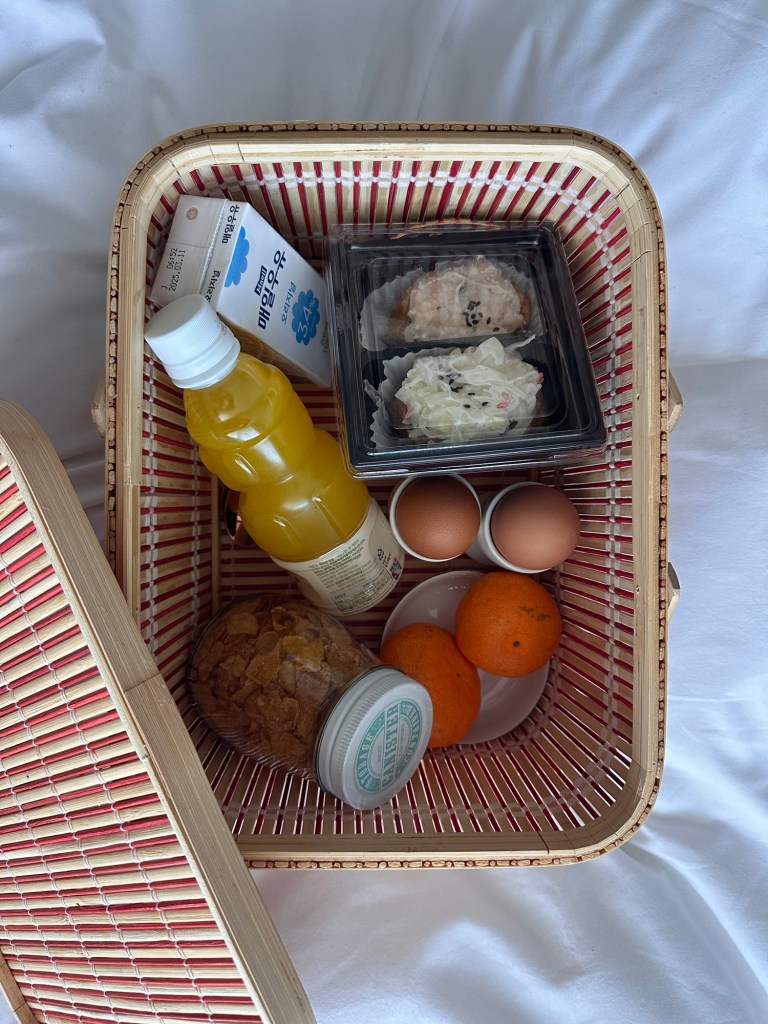
Other notable highlights were walking the covered market in Seogwipo – there’s lots of food to pick from. Eating the Jeju oranges which grow all over the island, our hotel packed various orange delights into our breakfast – jams, juice, and biscuits. After our snowy hike, we went to a veggie restaurant called Soombida 숨비다, where we had a Mapo Tofu, soup, and a few other dishes. They made a sparkling Jeju orange soda which I’ll try to recreate back home.
Jeju was a great place to visit, even in the winter. There was lots to do and see, and it had a very relaxed feel everywhere we went. We sadly didn’t spot any women of the sea on our travels round the island.
Back to Seoul for some final culture and food
As I was ill when we arrived in Seoul previously, I didn’t really get to indulge in all the Korean culinary treats I wanted too, as my appetite was so low, so high on the agenda was eating. Our agenda for the last couple of days needed to include the following:
- Baked goods – Seoul has loads of great bakeries and coffee spots.
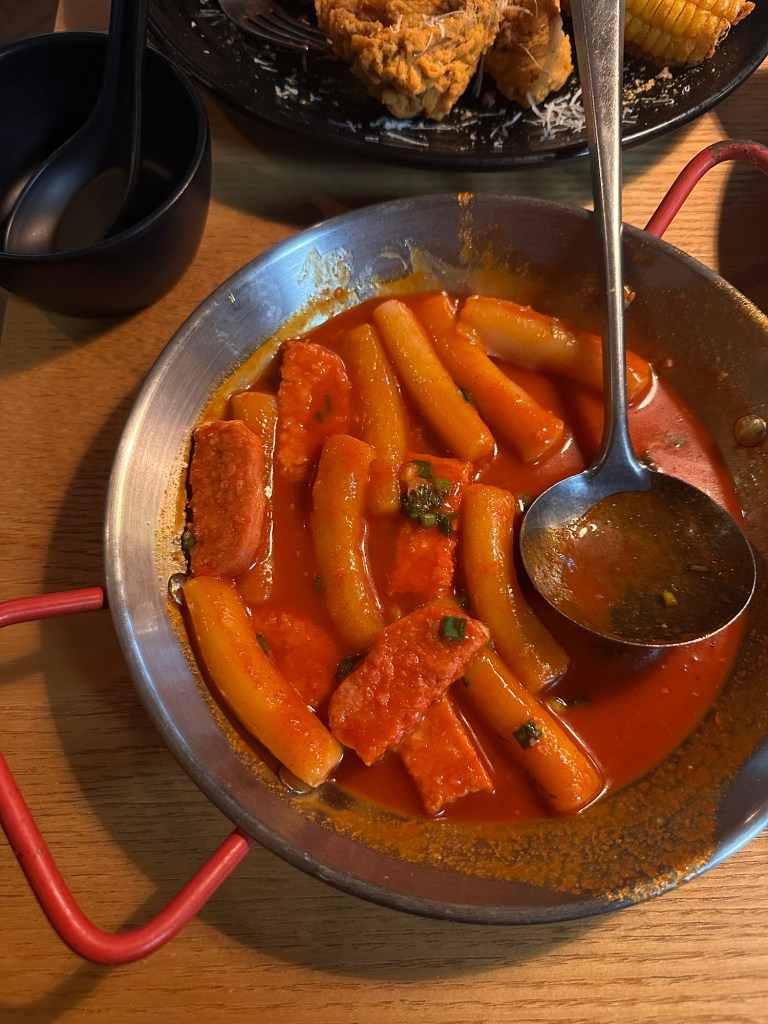
- Eat Tteokbokki – rice nocchi-like dumplings in a tomato sauce (best eaten with beer or Soju).
- Drink plenty of Soju – a clear and colorless distilled alcoholic beverage drank all over South Korea.
- Find some veggie KFC ‘Korean Fried Chicken’ – this one might be a tall ask in this meaty country.
- Eat and drink in a traditional pub/cheap-eats place.

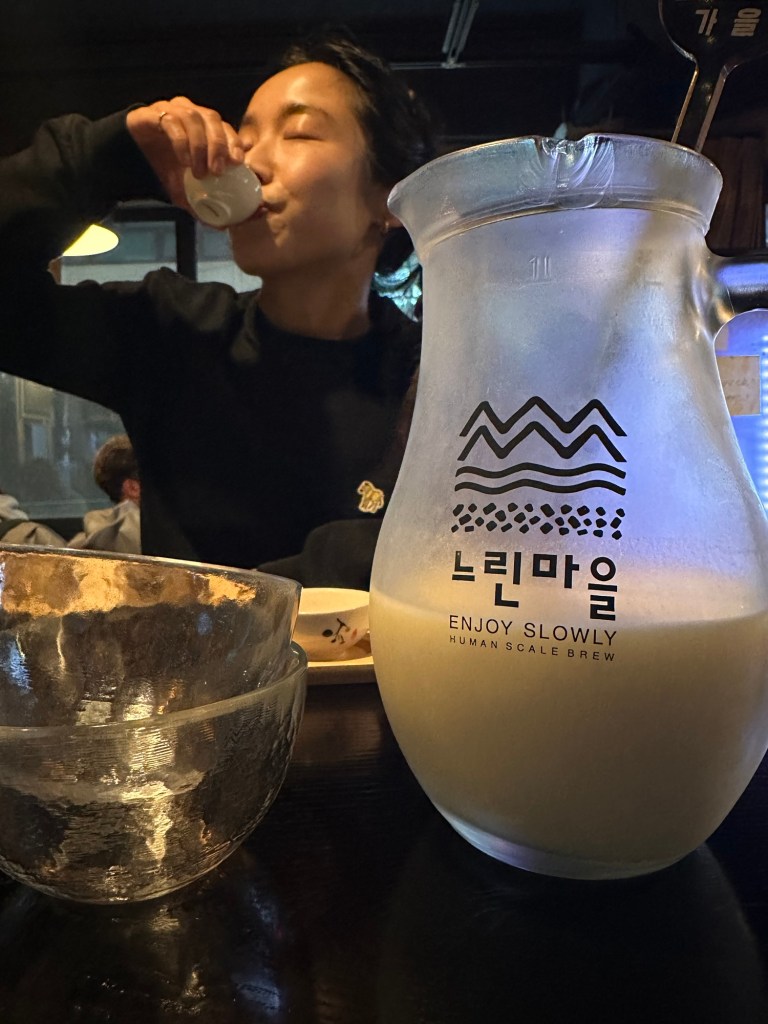
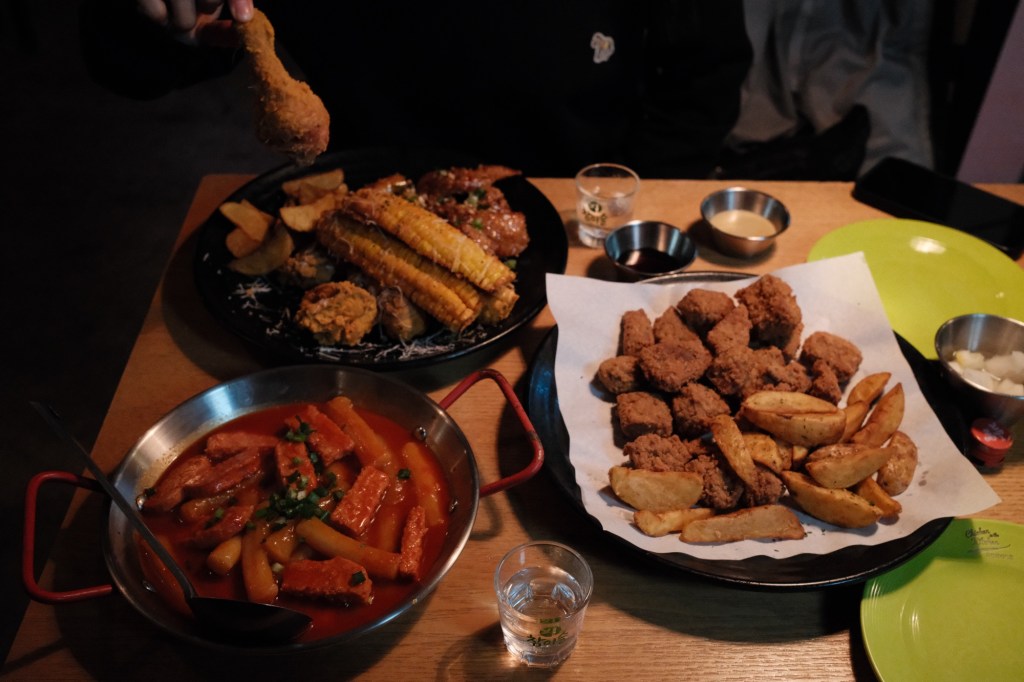
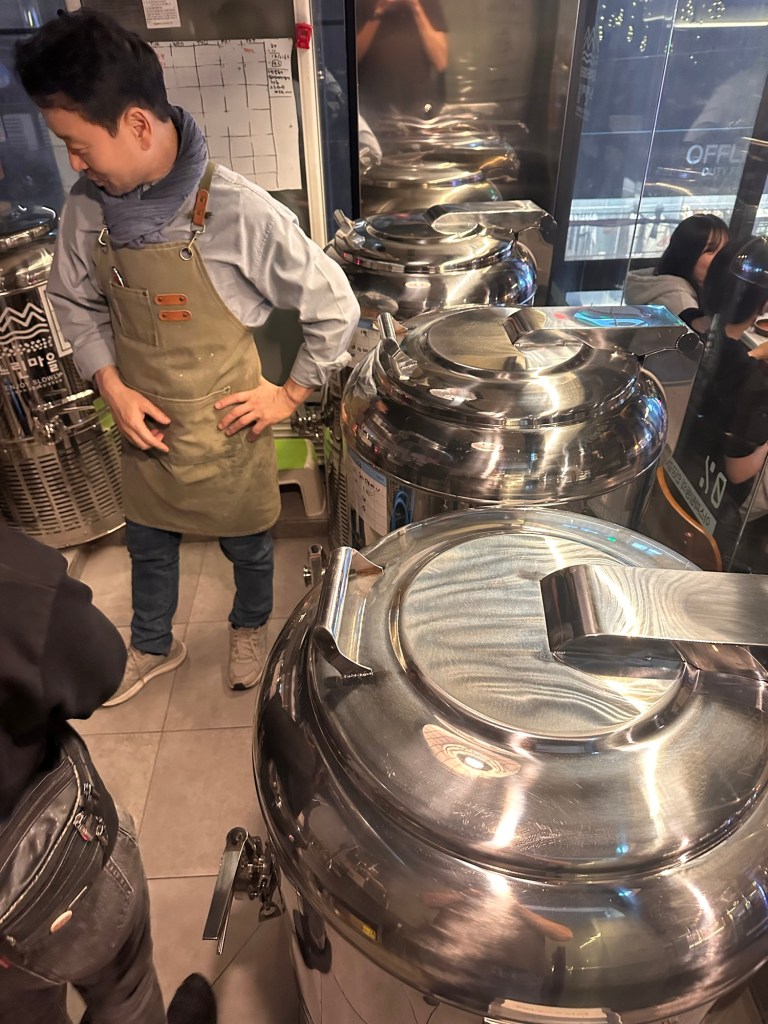
The hunt to complete the above list was on. First up, we headed to Hongdae (where we stayed first time round), and Carmen found a Korean fried chicken restaurant which did a veggie version alongside the regular varieties. The portions were massive and it tasted good – 8.5/10. They also sold Tteokbokki too, so double ticks on our list. We then had rice wine at a brewery/bar nearby where the owner showed us how he brews his rice wine, before we sampled four different styles, 10/10.
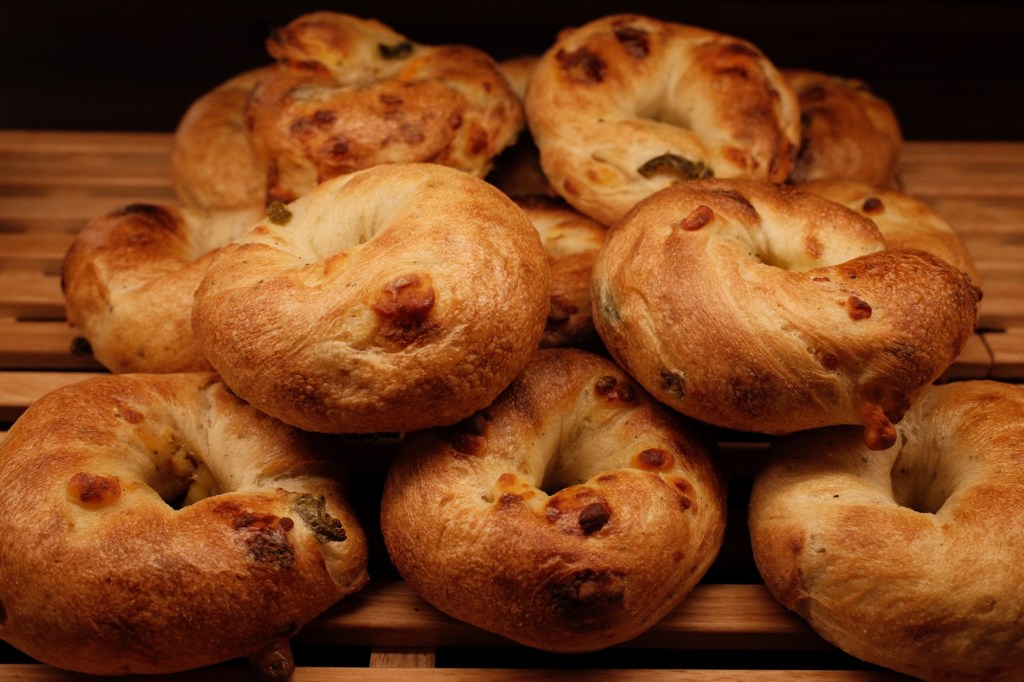
The next morning we headed straight to Sungsu Baking Studio in a hip neighbourhood near Seoul Forest Park. We bought a Jalapeño and cheese bread, pain chocolat, and salt bread. 10/10 for all three. Definitely check it out if you’re in Seoul. It’s a nice area to wander and get coffee too.
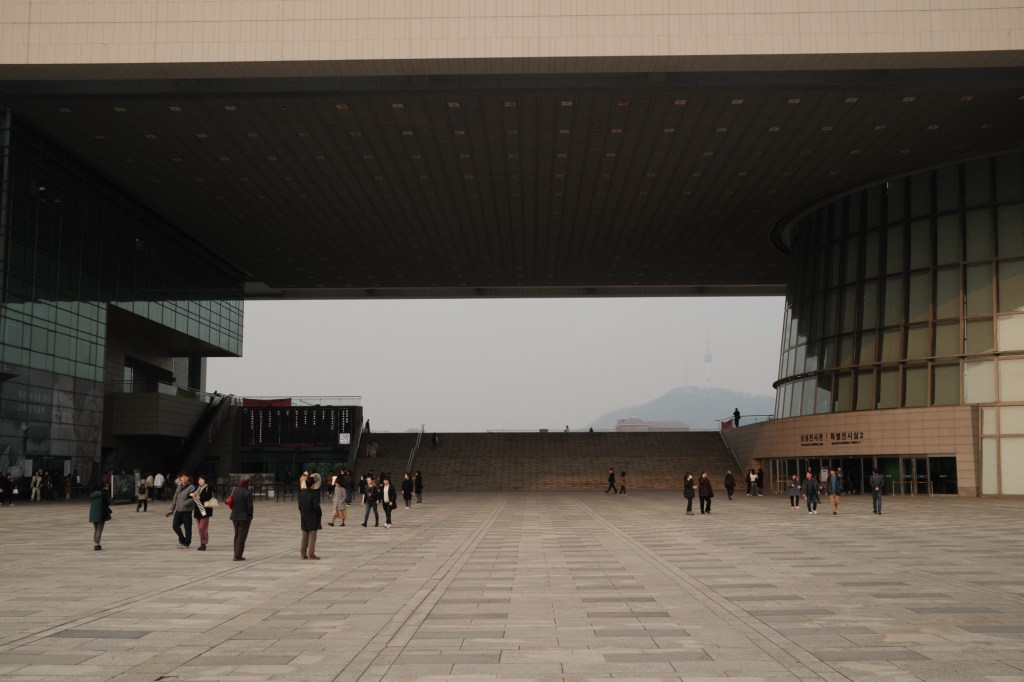
We did a pit stop in the National Museum of Korea, which was well worth it. Lots to see for free, and a permanent exhibition where you can learn the history of Korea in an engaging format. As we travel through Asia, it’s been really interesting to read about the overlaps in history, country-to-country, and how the Asian geo-political landscape has been shaped over the last 1000 years or so.
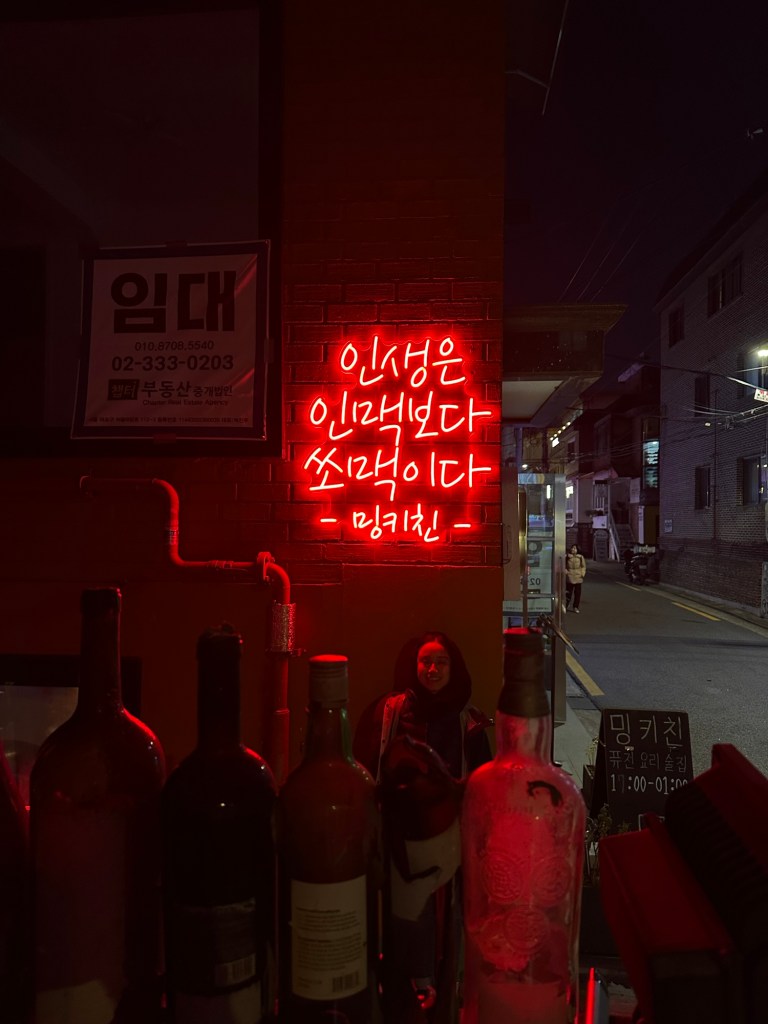
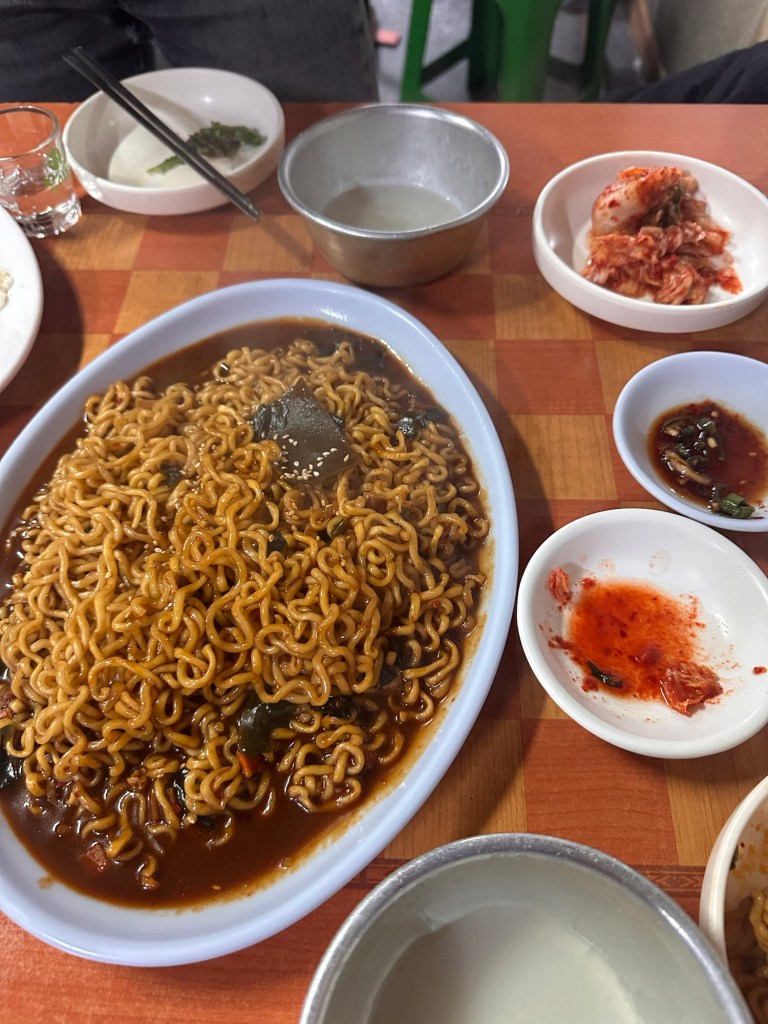
We ended our final evening in Seoul at the perfect budget friendly eating and drink spot: Seoul Sikpum 서울식품, a total hidden gem, upstairs in a small alley. It was everything I was looking for in a place where you drink, eat, and sample some Soju. We had fried noodles (the packet kind in a dark sauce); Tteokbokki; fried eggs and Spam (for Carmen); and a crispy seaweed pancake. Of course, there was plenty of kimchi on the side, and we got to pick the Soju we wanted ourselves from a fridge in the corner of the room – we opted for the traditional, less sweet version, and we also got a bottle of rice wine to drink alongside (white in colour). A Soju fact – Jinro Soju (the most commonly seen brand) is the most sold alcohol in the world! It felt fitting as we entered; there was a group of very drunk locals at a table, who seemed like they’d been in there for hours. One of them welcomed us by checking we got the right Soju, and increasing the amount of self-serve kimchi we had put on a plate – more was required.
See you next time, Seoul.
Up next: Philippines for a boating adventure with our friends, Matt & Lloyd ⛵️
 seemehear
Leave a comment