📖 Reading Tip – open in your device’s browser to see the photo galleries 📷 Just tap “Read on blog” at the top (they don’t work in email 😭).
We headed back to China. We’d had a great first leg before we visited Tibet, so we were both excited to return. For the next two weeks our agenda would include:
- Chengdu – friends, pandas and a Sichuan opera
- Xi’an – Terracotta Warriors & Biang Biang noodles
- Beijing – The Great Wall, Forbidden City & exploring the neighbourhoods
- Shanghai – no major plans, we’ll see what we find!
Chengdu
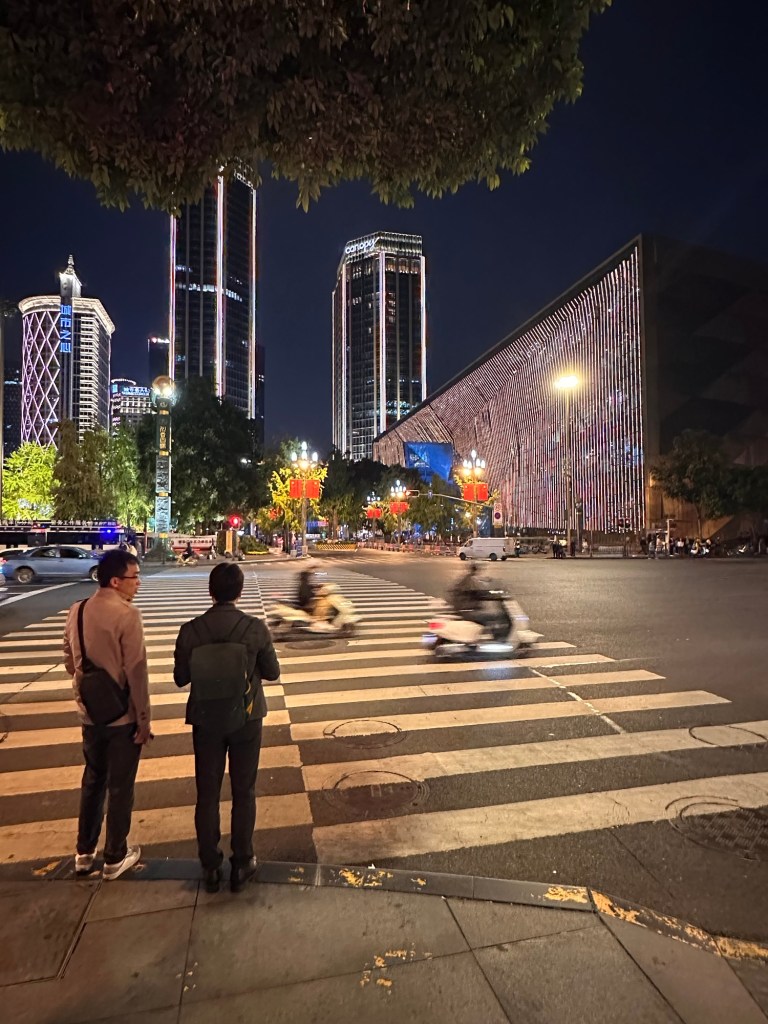
We stayed in central Chengdu, which made getting around easy. It’s a big modern city which has a good vibe. There’s loads to eat, and sichuan food is great – lots of spice and flavour from Sichuan peppercorns.
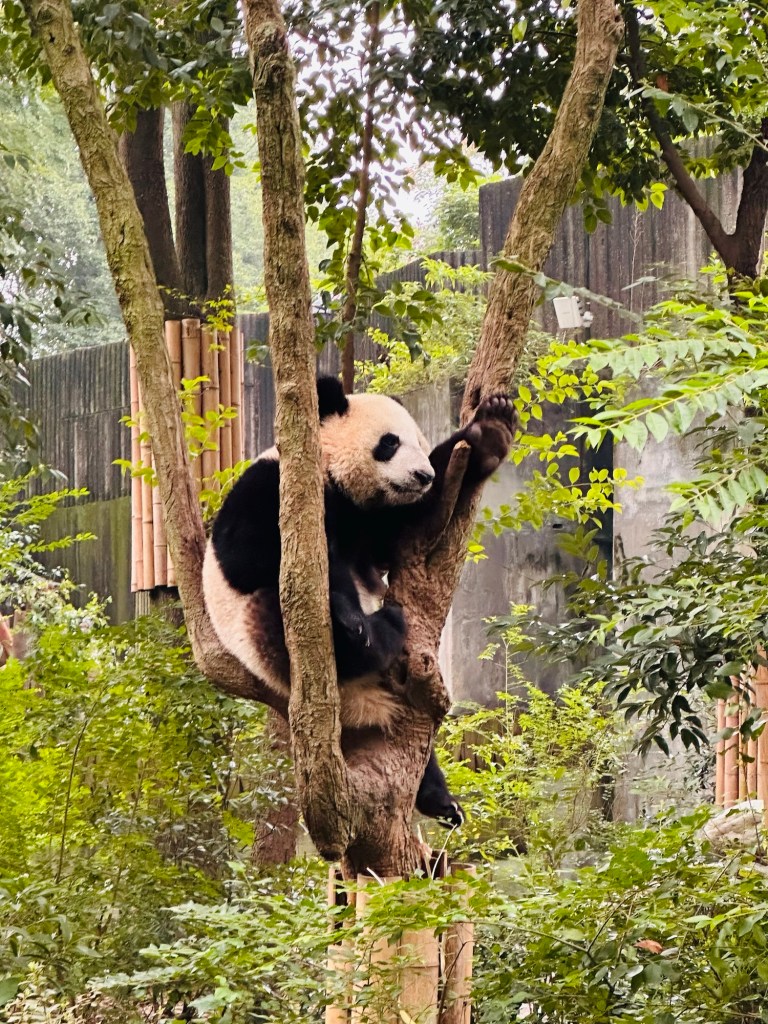
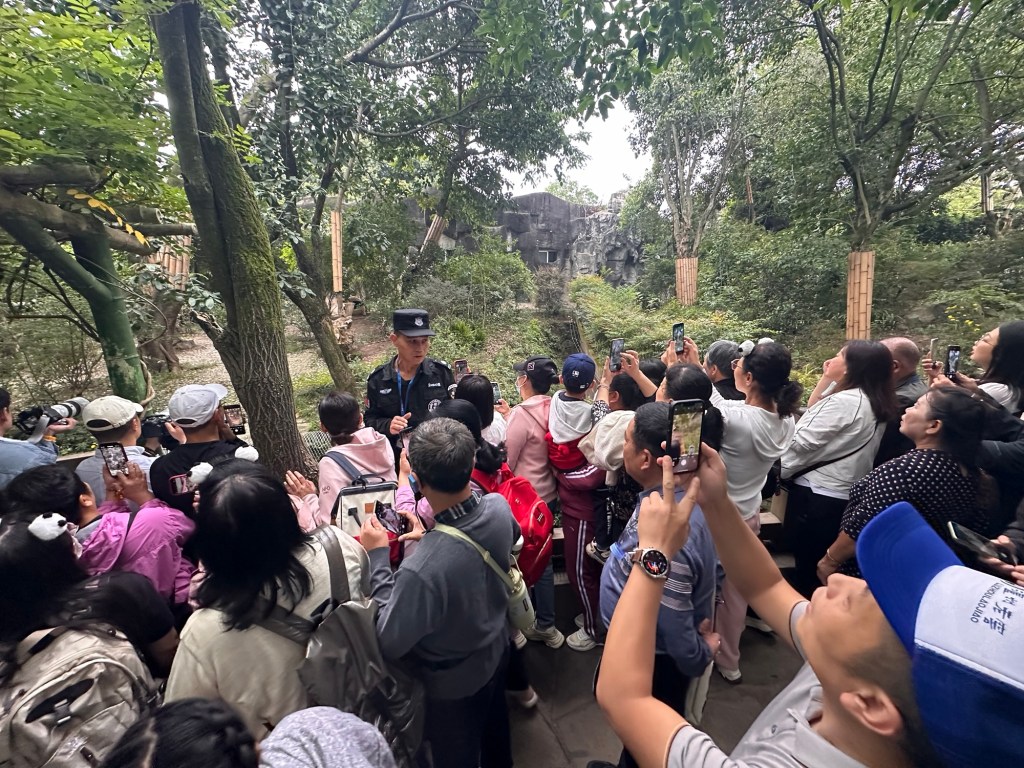
You can’t come to Chengdu and not see the giant pandas. Well, I actually hadn’t really thought about it. I’m never that motivated to visit a zoo, and I felt like it might just be a panda zoo. We were pleasantly surprised to find it was nicer than a zoo, it’s a huge place, and one of the main tourist attractions for people all over China. Pandas are one of their biggest exports. If there’s a Giant Panda living in a city near you, it will have been born in Chengdu Giant Panda Centre. Pandas are sold or leant across the world by the Panda Institute here (at quite the premium we understand). We’d hoped to see some baby pandas, but it wasn’t quite the season, but we did however see a lot of full grown Pandas, and at a very close distance. The crowds were massive, but it was still really fun. Even just watching the spectacle of panda fans running to get the best spot at the various enclosures spread out over the huge site. Human food was thin though, so we departed shortly before lunch to get something to eat. Top tip – arrive early early, like 07:30am, to avoid the crowds, and take some snacks. Best moment – a sleeping panda in a tree waking up and yawning 🐼
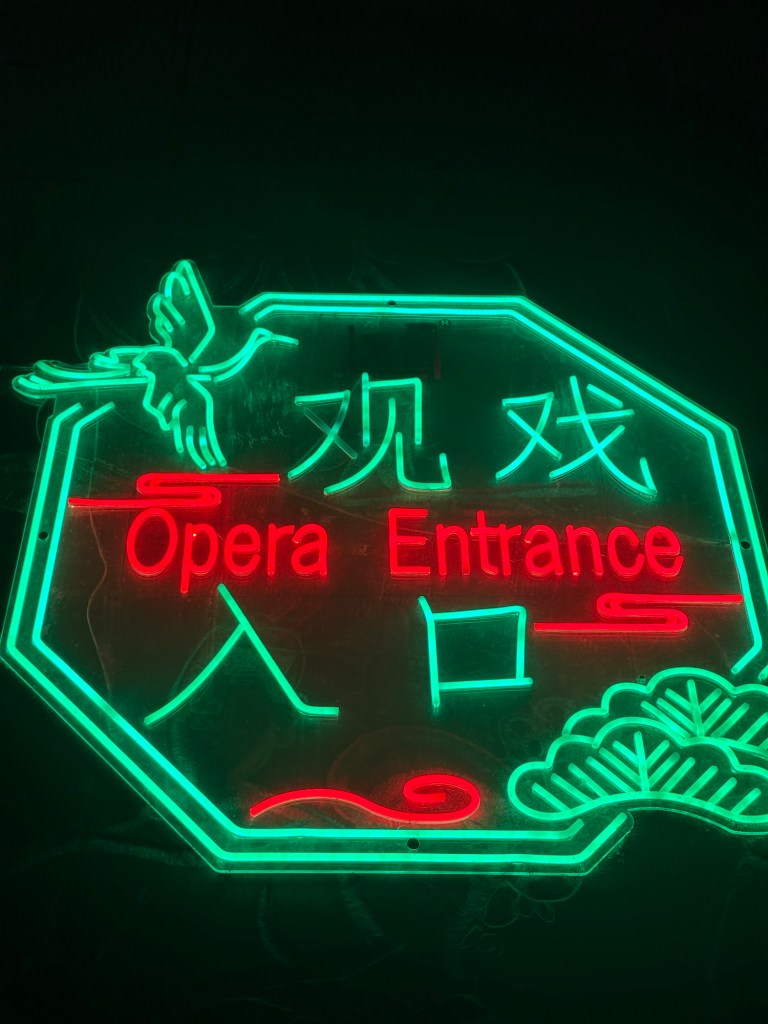
We went to a Chengdu Opera one evening, which was really fun. It was a mix of classic opera singing but with the twist that it included multiple styles of traditional Chinese arts – shadow puppets; dancing; comedy; and the highlight for us was the magical changing masks show. Masked performers switched their faces in nano-second speed. It was impossible to see how they did it, and they had so many variations 🎭
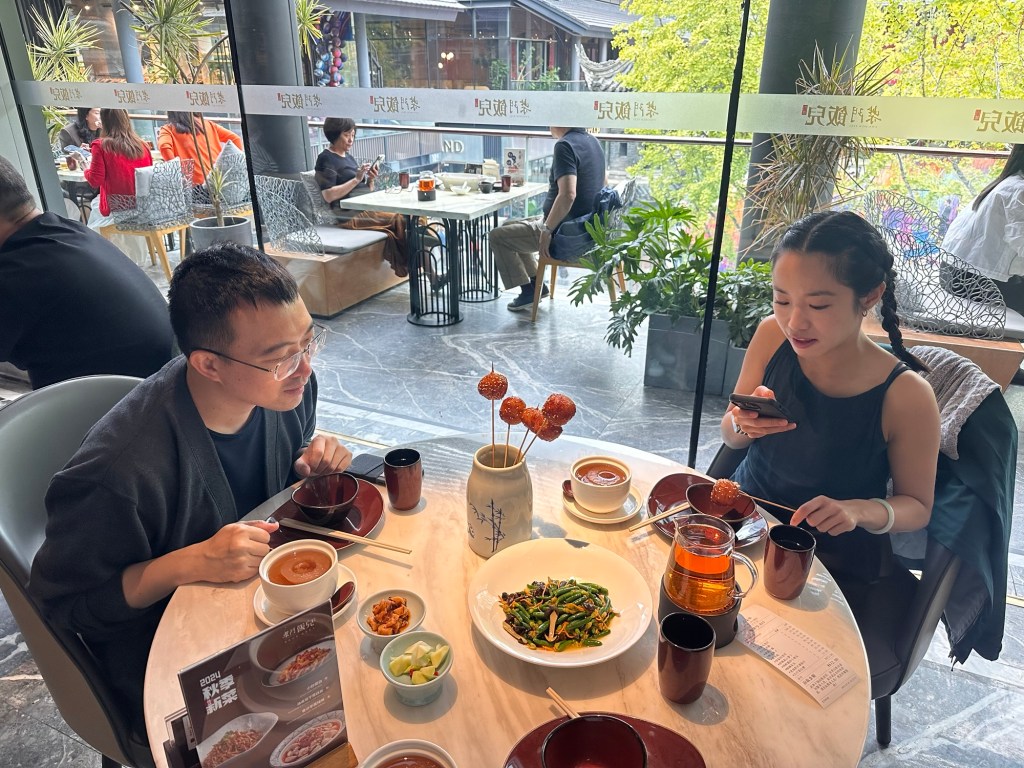
We’d arranged to meet up with a friend, Ray, and go for lunch. Ray booked a place in a new shopping area in Jinjiang district, where he treated us to many sichuan dishes. Lots and lots of mouth numbing dried Sichuan chilli’s, but the thing with Sichuan spice is that it’s flavoursome and numbing, but not overly hot, so it’s easy to keep on eating it. They actually offer to remove the dried Sichuan chilli’s from your dish when they serve it at the table so they’re not eaten 🌶️ Thank you Ray, for such a good lunch and hosting us 🙏
Lawson Interlude 🏪
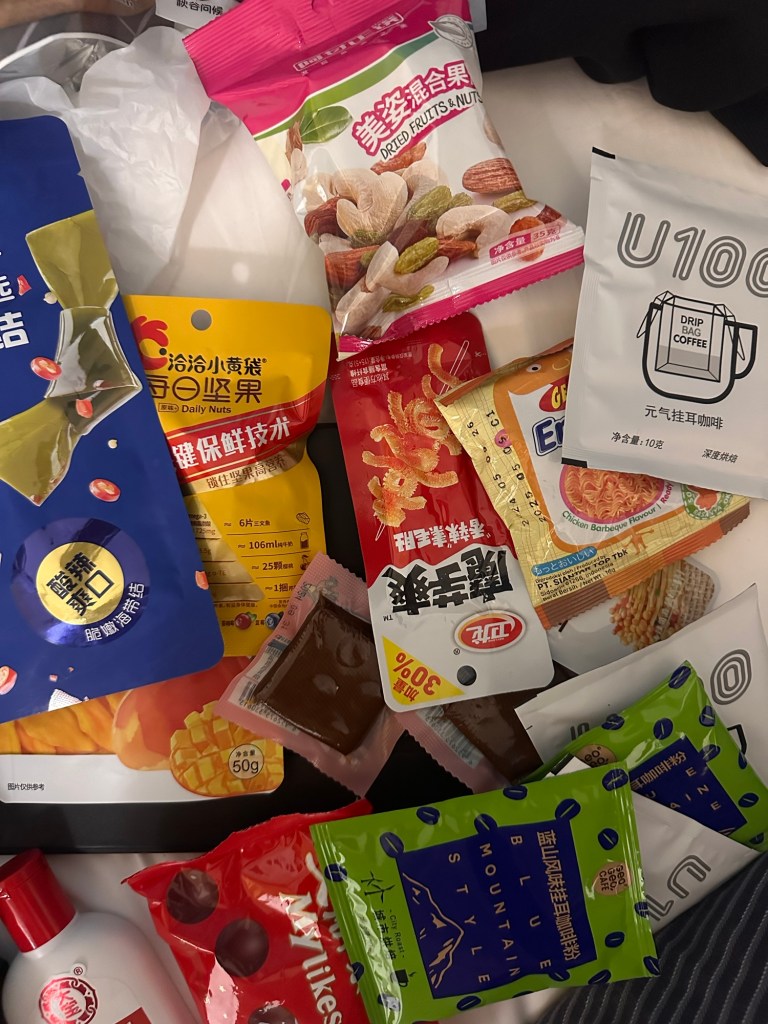
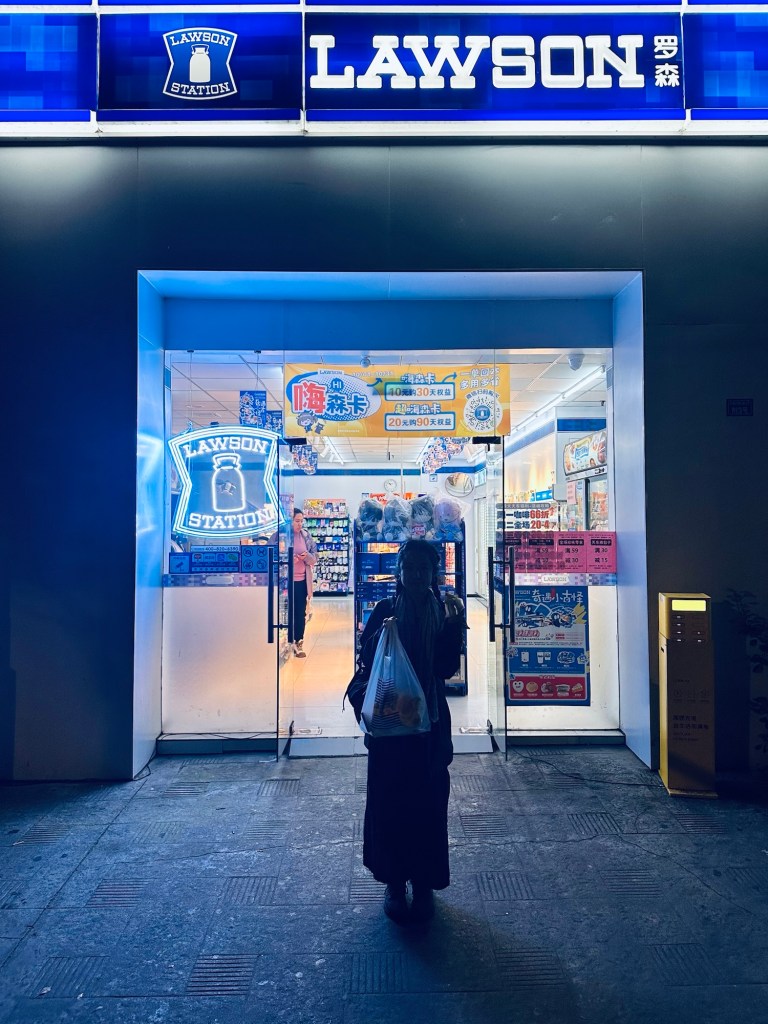
Lawson is a mini supermarket chain across Japan, China and a few other Asian countries. I’d seen photos of Mount Fuji with a branch of Lawson in the foreground, but I didn’t know the simple joy it brings. They kinda sell everything. We found ourselves eating full meals from there. Top 3 highlights – Swiss rolls 🍥; pour-over coffee bags ☕️; and egg and potato salad sandwich’s 🍳 Carmen rates all the low-sugar soy milk cartons 🧃cooked purple sweet potato 🍠 and the mandarins 🍊
We constantly had a large snack bag courtesy of Lawson, while travelling in China, loaded with treats.
One evening while eating our Lawson dinner on the street we ended up speaking to a monk visiting from Tibet who was impressed at our al-fresco curb side dining. We ended up bumping into him multiple times in Chengdu. We spoke only through a translation app, which was pretty common when moving around China. Carmen added him on WeChat just in case we have any future monk-related questions.

Xi’an
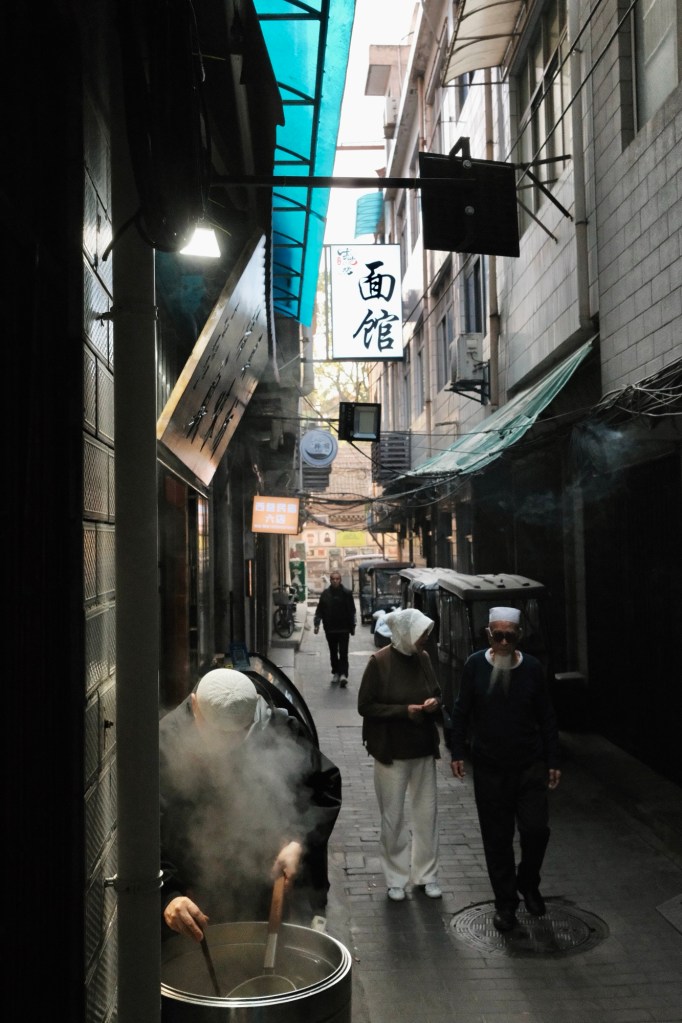
We headed further north to the old capital of China, Xi’an. We stayed in the Muslim quarter which is right in the centre of the old city near to the bell and drum towers. There’s a huge food market there which is great for eating a range of different food styles.
Xi’an is super famous for two things in particular – Terracotta Warriors and Biang Biang noodles – and we’d be delving into both.
Terracotta Warriors ⚔️
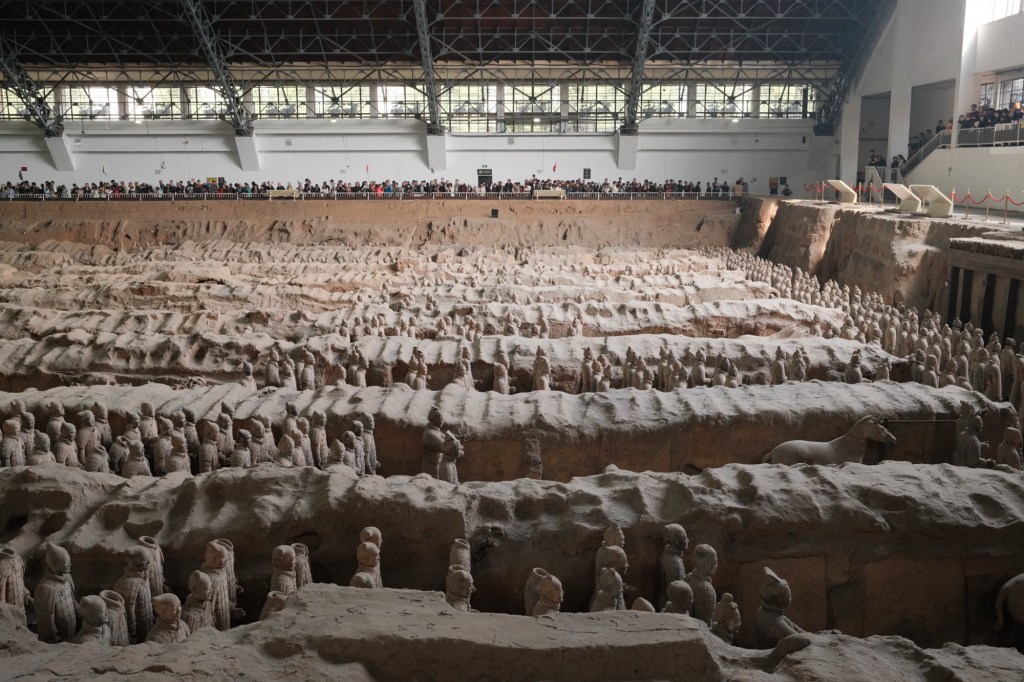
We knew what to expect from our recent panda excursion, the crowds at the warriors would be big, and they were. But it was really well managed and the walking route to view the various dig halls was well planned.
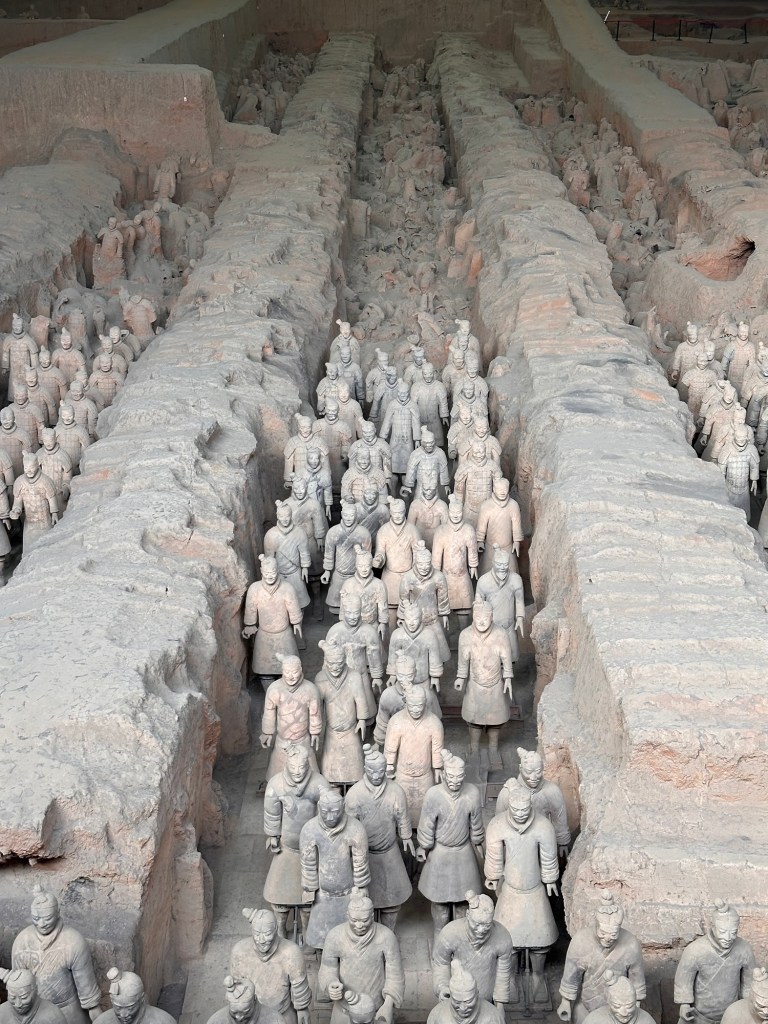
The story of the warriors is crazy. It was in the 1970’s that local farmers digging a new well found the heads of the some of the warriors so archeology teams were brought in to investigate. What they found keeps stunning the entire world – vast trenches of buried terracotta warriors and other statures spread over a huge area just north of Xi’an. There’s now some fairly solid theories on how it all unfolded over 2000 years ago, and a recent Netflix documentary which breaks it down, piece-by-piece (pun intended).
I didn’t realise before visiting that all the warriors and other statues were actually painted to match their real life counterparts. There’s also a big range of styles, and even full size horses, carriages, and weapons. They built everything the emperor would potentially need in the afterlife.
The terracotta warriors was a huge long running project that started many years before the death of the emperor, and involved hundreds of thousands of people from across China. Prisoners from around China were shipped to Xi’an to serve their time preparing the burial site.
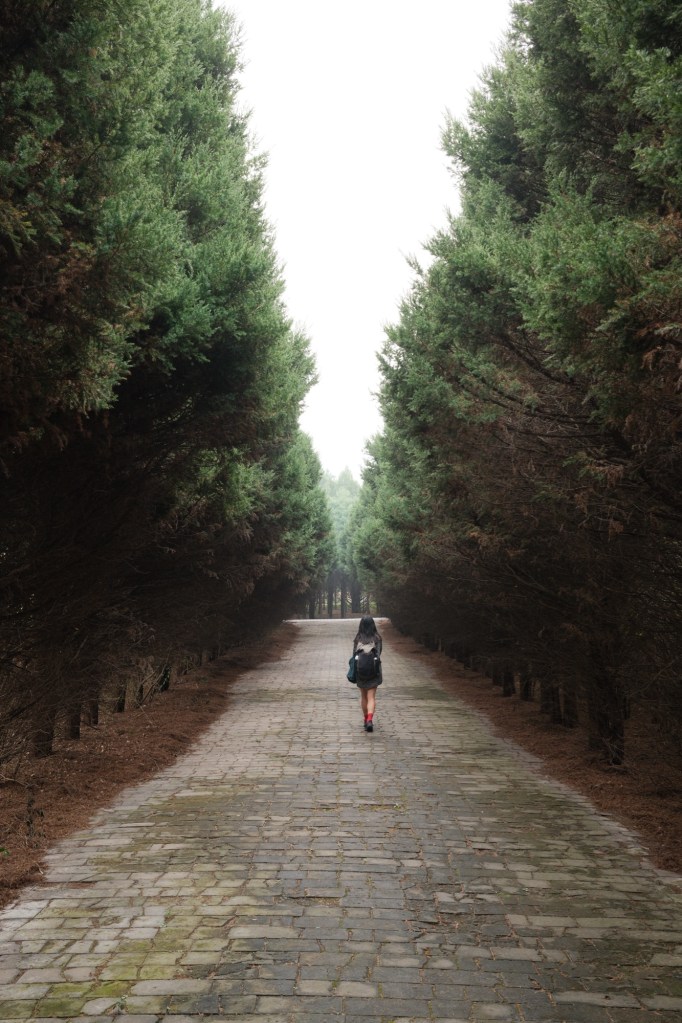
The bigger mystery is still very much covered up. The terracotta warriors surround the Emperor’s burial site which is yet to be excavated. We walked the circumference of the site (2.5km), a 76-meter-tall tomb mound shaped like a truncated pyramid, now covered in trees. Watch this space to see what China does in the future with excavating it, but I imagine it’ll keep the masses coming to see the warriors and their emperor for years to come.
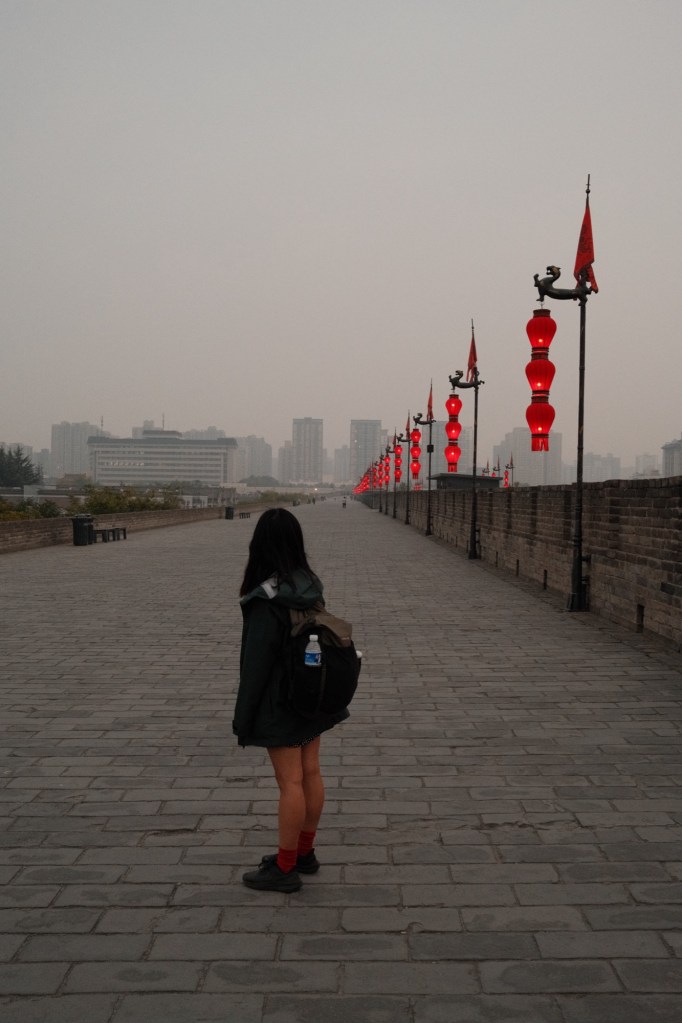
We decided to walk the old Xi’an City Wall. We thought we’d complete it within a couple of hours, but gave up after half as it was pitch black with no one else on it 😂 You could hire bikes on the wall – bit of regret we didn’t opt for the Tandems they had available and cover more distance!
Mixue🍦
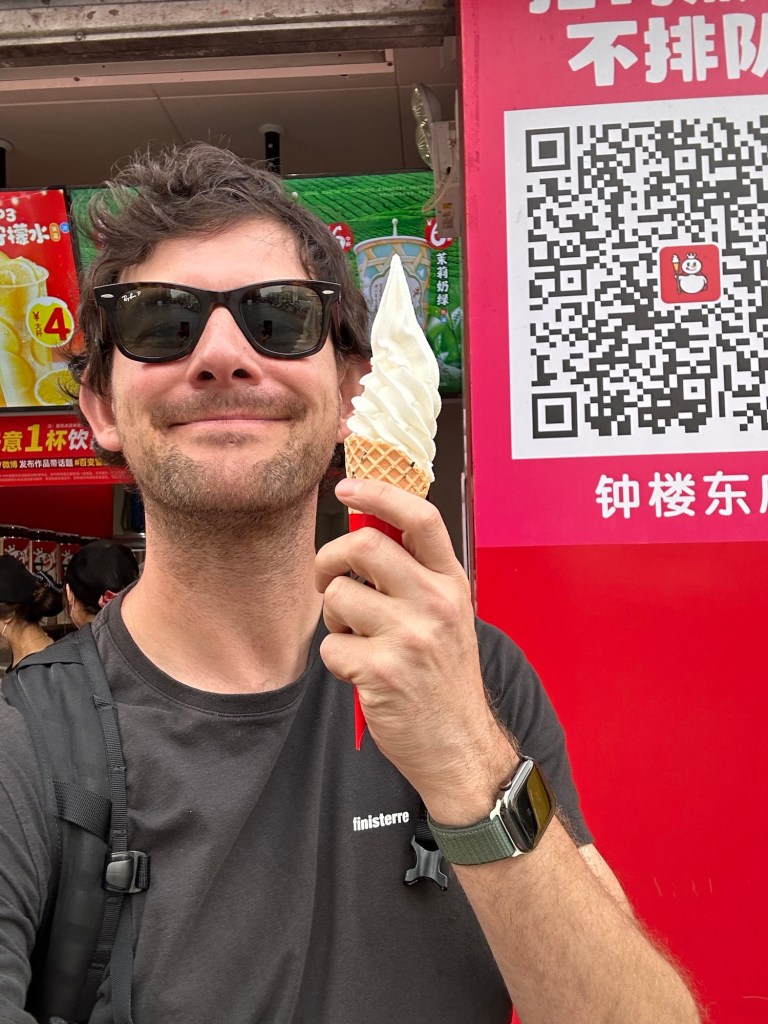
We discovered something very important on our travels through China, and that thing is Mixue – a shop that sells bubble tea and ice cream. We didn’t know this at the time, but they’re famous for being outrageously cheap. They sell an ice cream for 20p, and it’s not just any ice cream, it’s probably the most delicious ice cream we’ve ever eaten. It’s a vanilla soft serve in a sesame flavoured cone. We just kept going back and getting more, anywhere we went. You’ve been warned.
Biang Biang Noodles 🍜
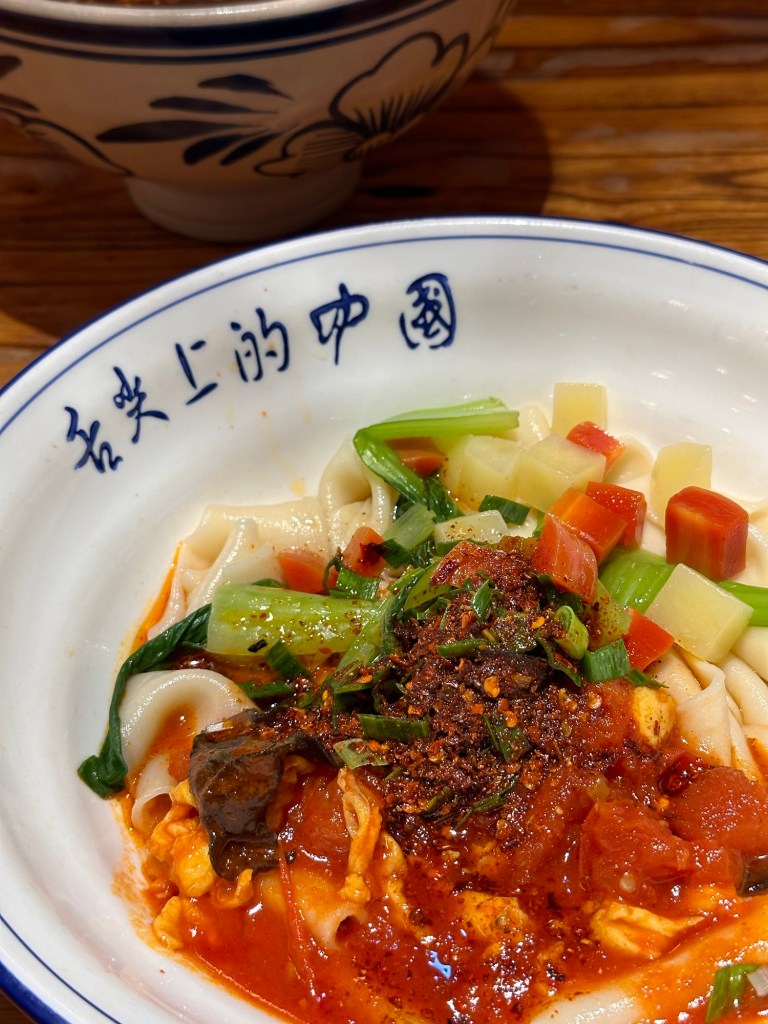
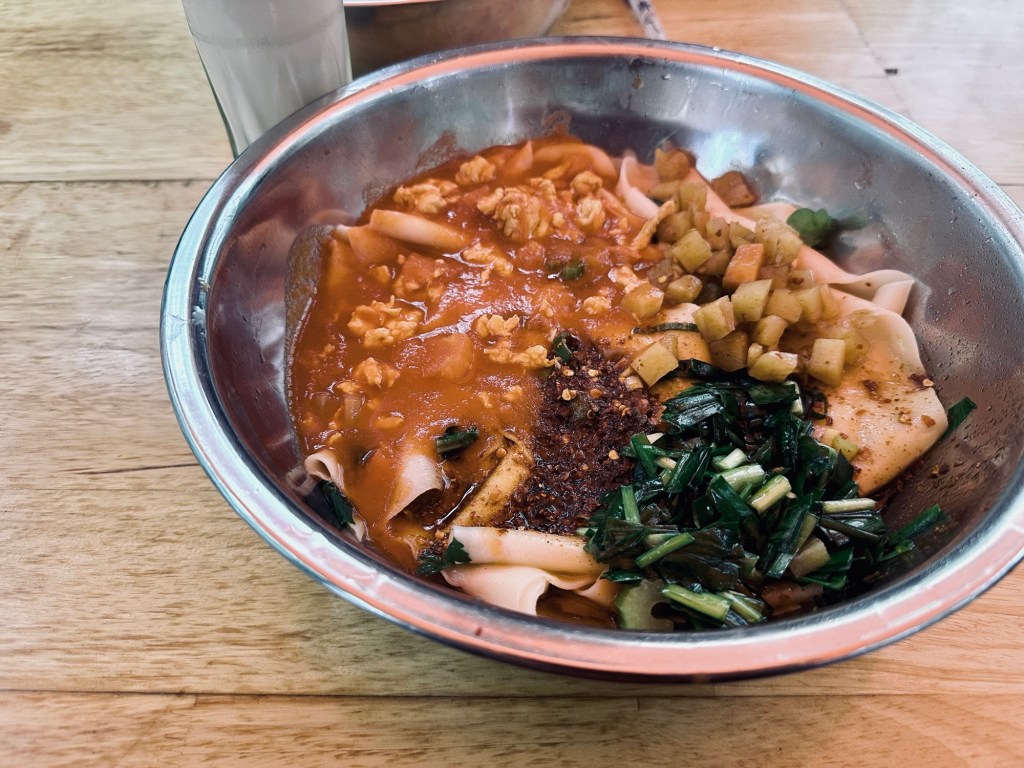
We searched hard in Xi’an for the perfect bowl of Biang Biang noodles. We’ve eaten good Biang Biang noodles in London so it wasn’t an alien concept (and if you’re reading this and thinking where do I eat such noodles in London, head to Master Wei’s in Bloomsbury without hesitation). We sampled a few places after landing on “the” noodles. A simple hole in the wall type place that had a big queue with outdoor seating (all the hallmarks of the best cuisine throughout Asia). You could choose small or large and that was about it. The great thing about Biang Biang is that you can easily order it without meat if it comes with it, as it’s normally just added on top. There’s something about the consistency of the tomato that makes or breaks it, not too watery, not too thick, with the right amount of egg and spinach, and just a small amount of cubed potato. Obviously spice is key, it needs the right kick, and signature Xi’an flavour. And hand stretched and cut noodles, often one or two long pieces which seem endless when trying to move them around with your chop sticks.
Biang Biang fact – the traditional character in Chinese for ‘Biang Biang noodles’ has more strokes (or lines) than any other character in Chinese, a record breaking 58!
Beijing
We’d now travelled in the south, west, and north of China, so it was time to head east to Beijing, home of so many of China’s famous landmarks.
Beijing felt a little different to where we’d already visited in China. The first thing that stood out was how low the buildings are for a capital city, there’s many neighbourhoods and Hutong’s (traditional northern China narrow streets packed with shops, restaurants and houses), where it doesn’t go above 1-2 floors, which means the light is bright though the day.
Forbidden City 🏯
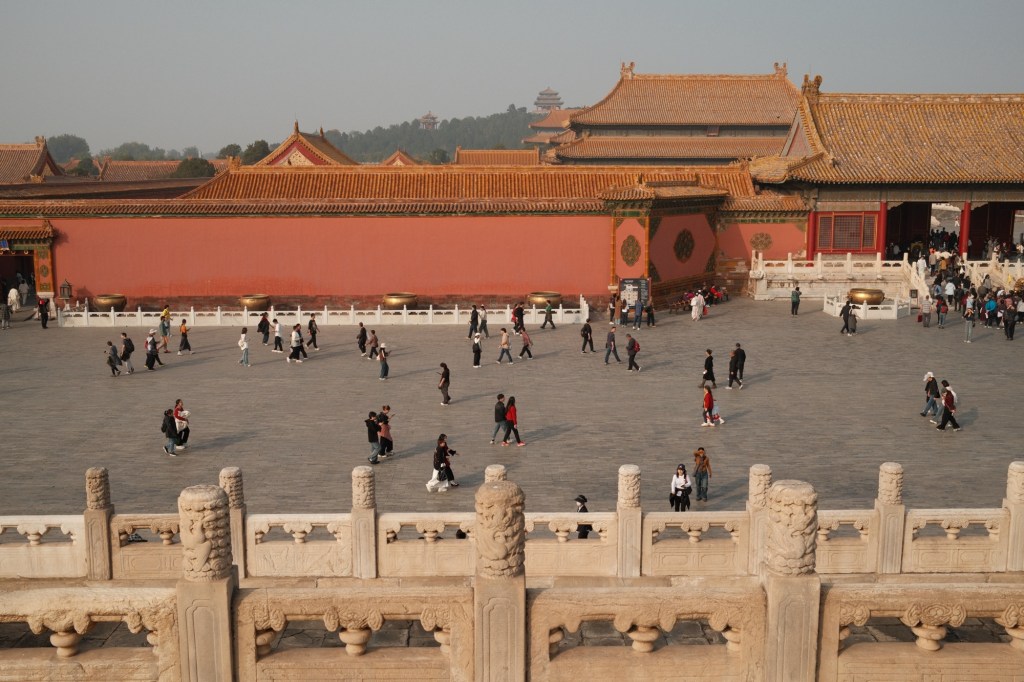
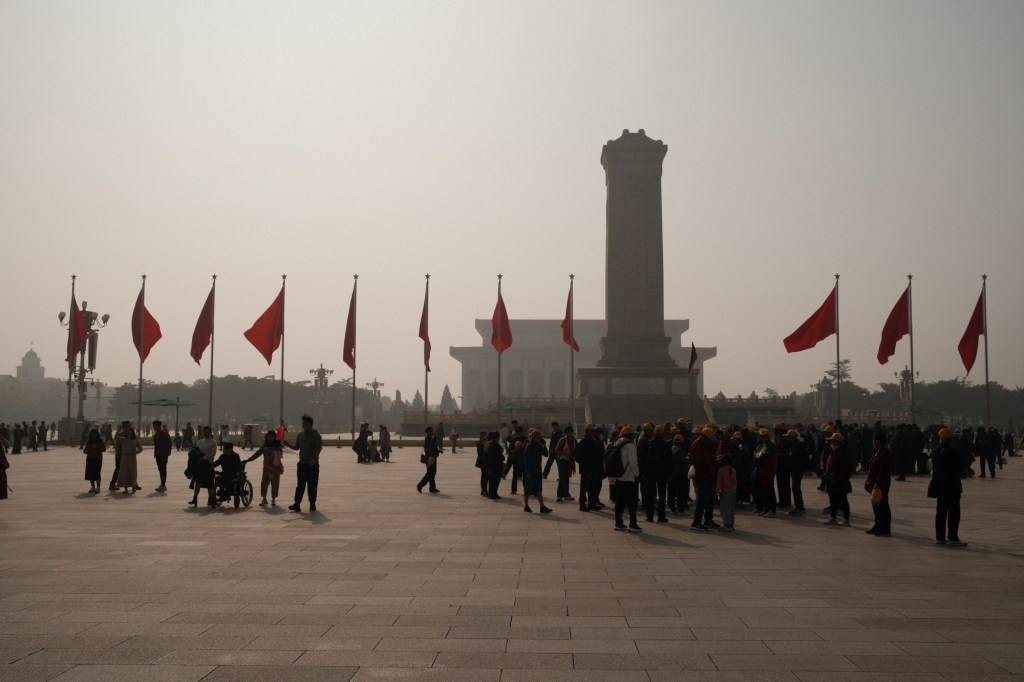
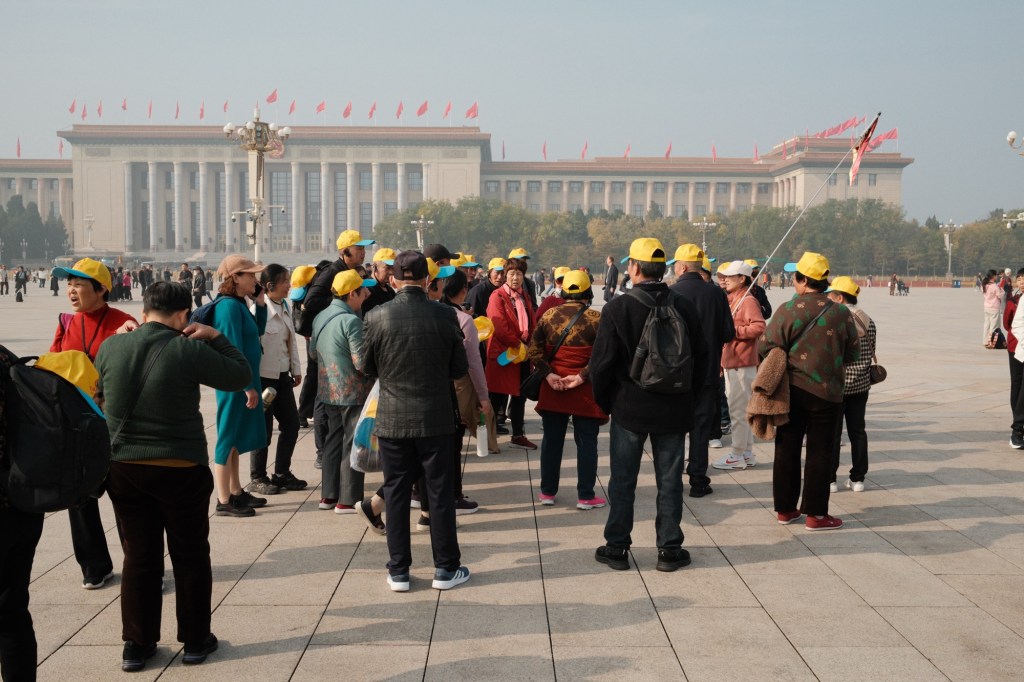
Getting to the Forbidden City felt like a sizeable challenge. There’s one route in and one route out, which means you need to walk a lot and be prepared to queue, and we certainly did queue. It was worth it though. It all starts with walking through Tiananmen Square, which is a strange feeling, after seeing archival photos over the years of the disastrous events that took hold at the end of the 80’s.
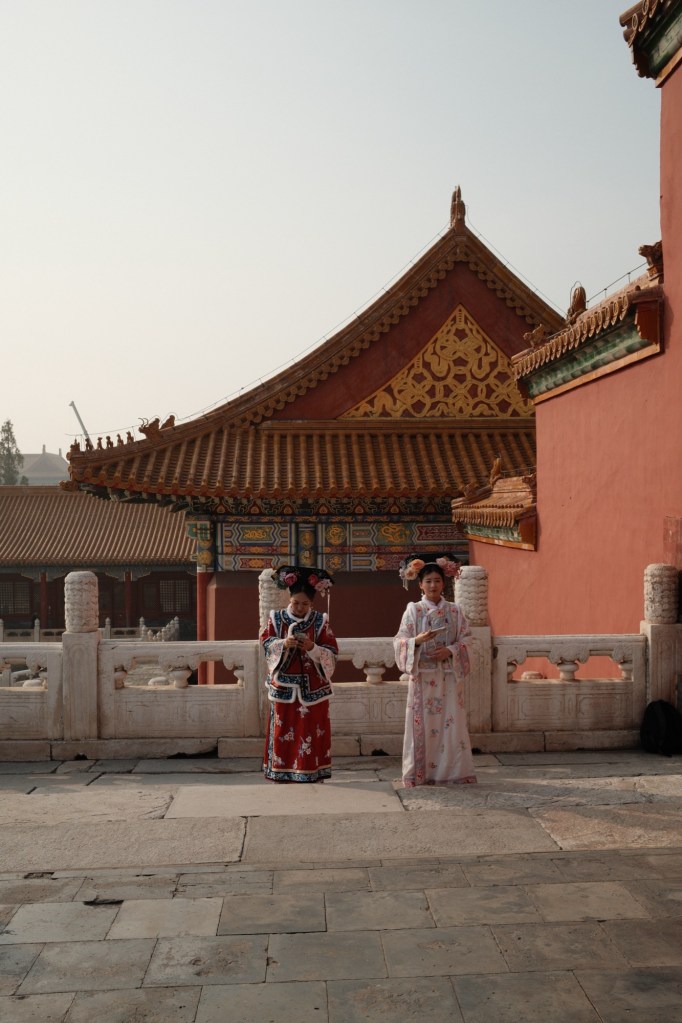
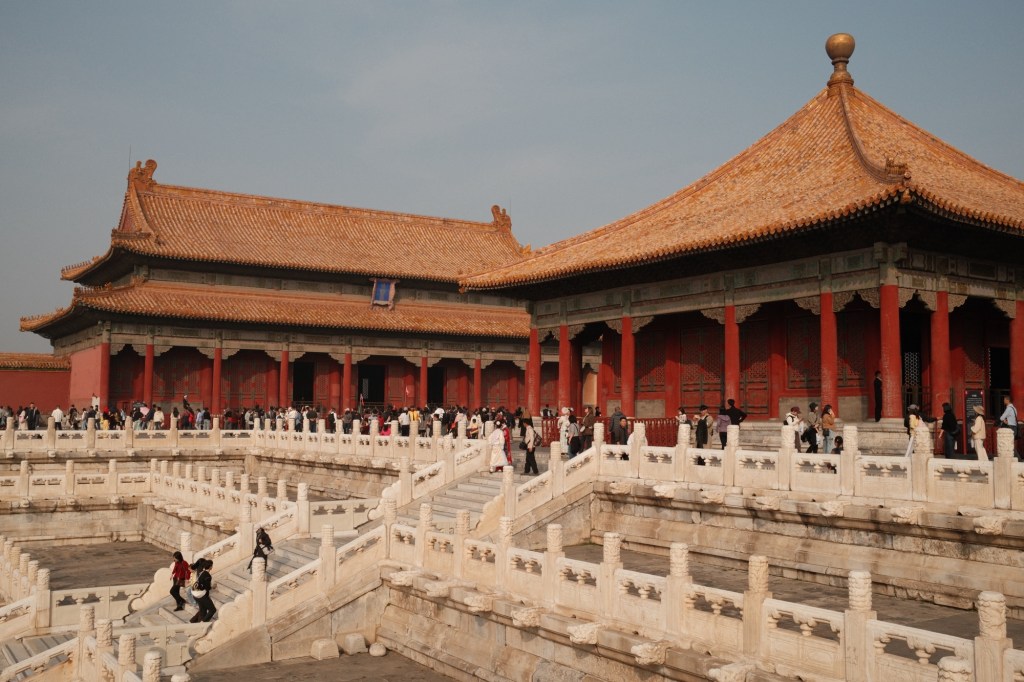
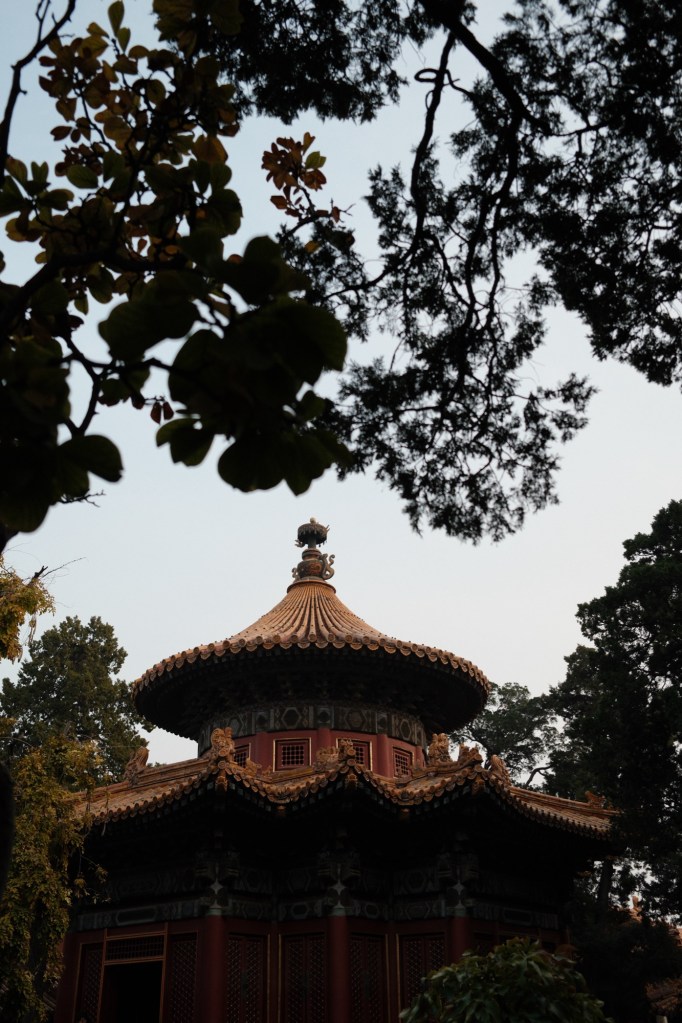
A mini history lesson – The Forbidden City was previously a sectioned off area in Beijing. Only the emperor, his family, and his elite teams would live and work there. To the general public it was off limits. And behind closed doors, the careful planning and execution of the empire would take place. It was the home to 24 Ming and Qing Dynasty Emperors. It contains around 9,000 rooms. The Forbidden City ceased being the political centre of China in 1912 with the abdication of Puyi, the last Emperor of China, and became the Palace Museum in 1925.
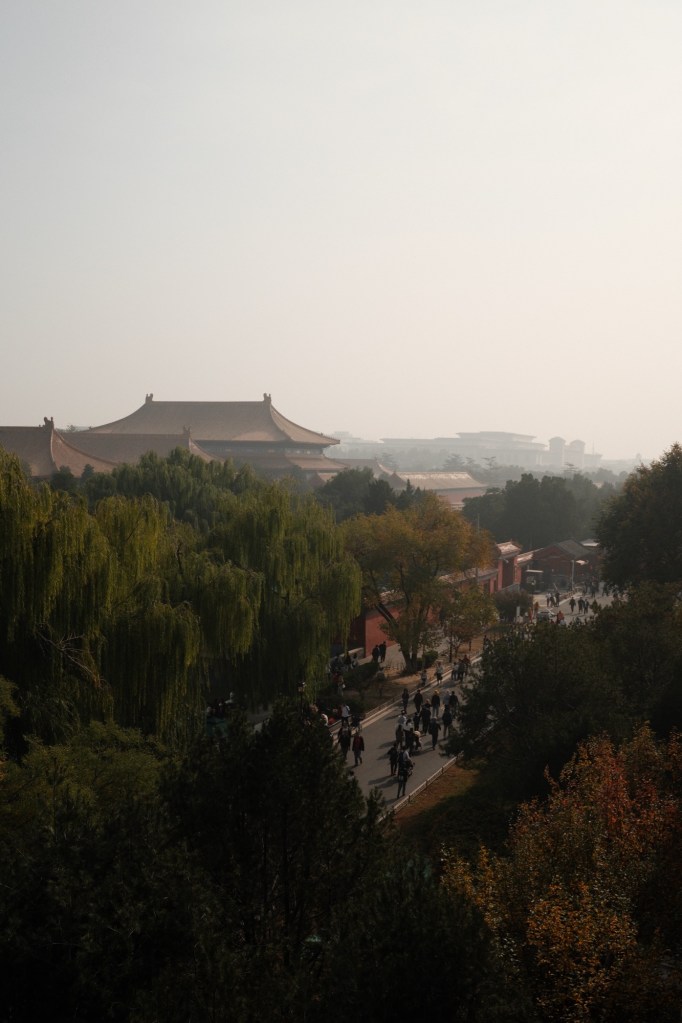
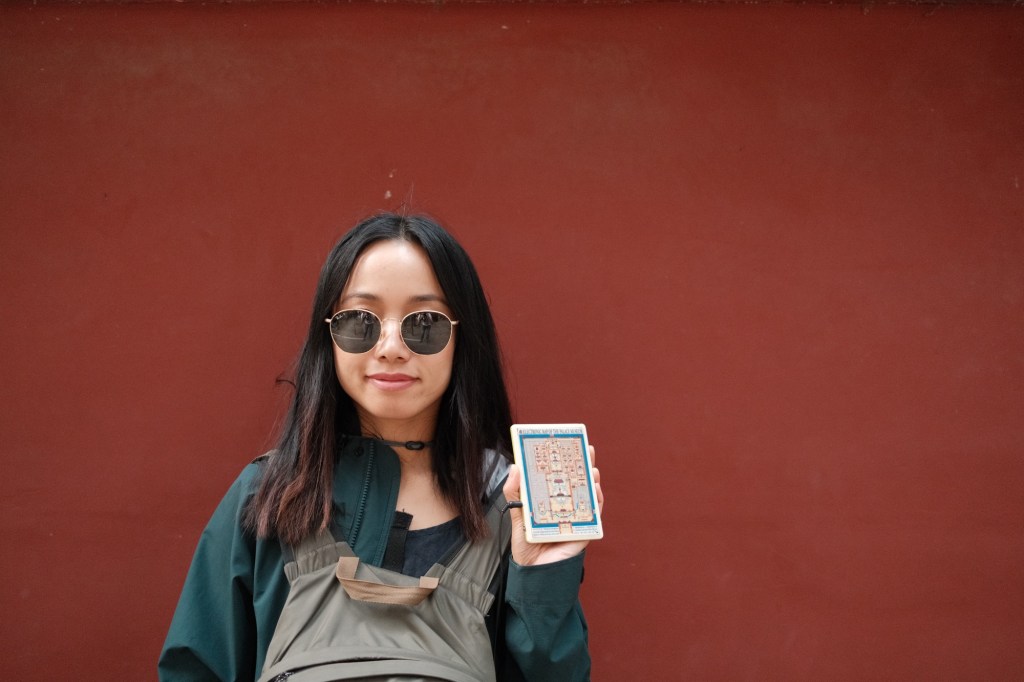
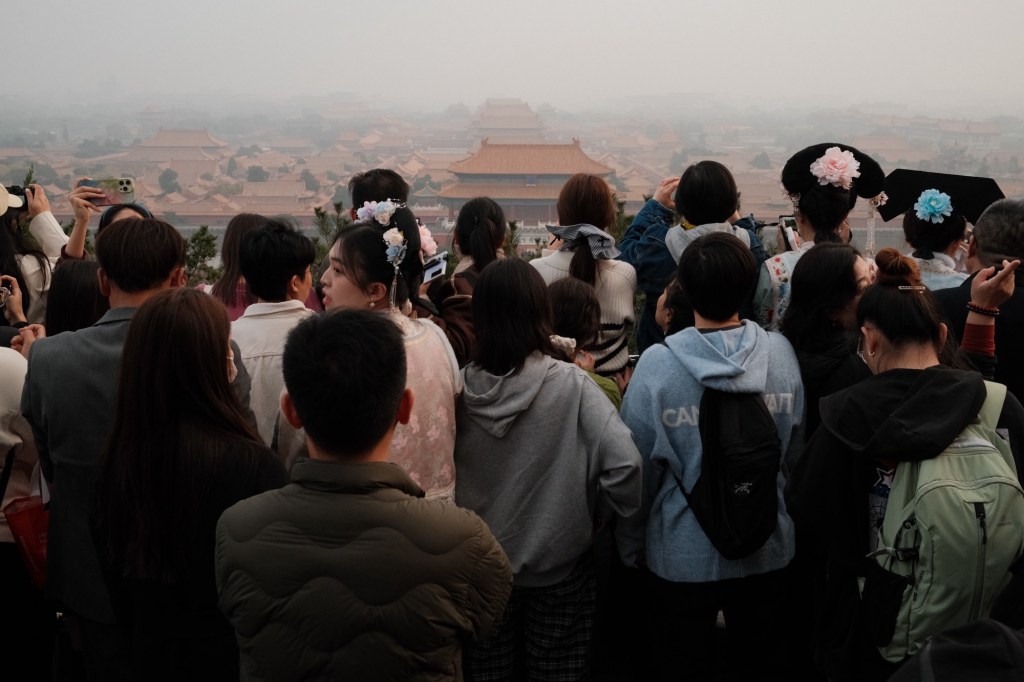
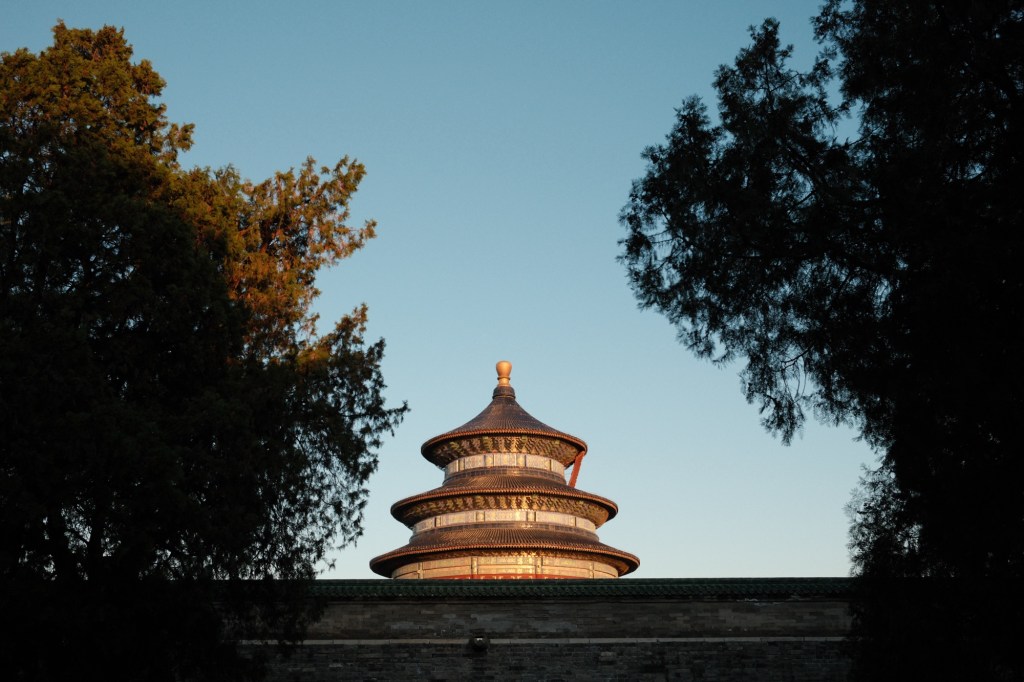
The Forbidden City is HUGE. We thought we’d see it in a day and I don’t think we scratched the surface. It just keeps going on and on. So perhaps one to spread out if time permits. At first you think how amazingly preserved it is for the age, and it is, but there’s been much restoration to keep it looking so good. The temples and palaces are stunning, and there’s multiple amazing collections of things – for example, we ended up in a Chinese porcelain exhibition on the history of “china” in China. Now you may be thinking, yawn, but it was actually very interesting. Loads of amazing patterns and illustrations. There’s also a beautiful garden just before you exit. We caught sunset in the park opposite which was previously part of the Forbidden City, not that we actually saw the sun. The pollution was bad when we visited Beijing, so visibility was low. We did see some fairly funny crowds trying to take photos though.
The Great Wall
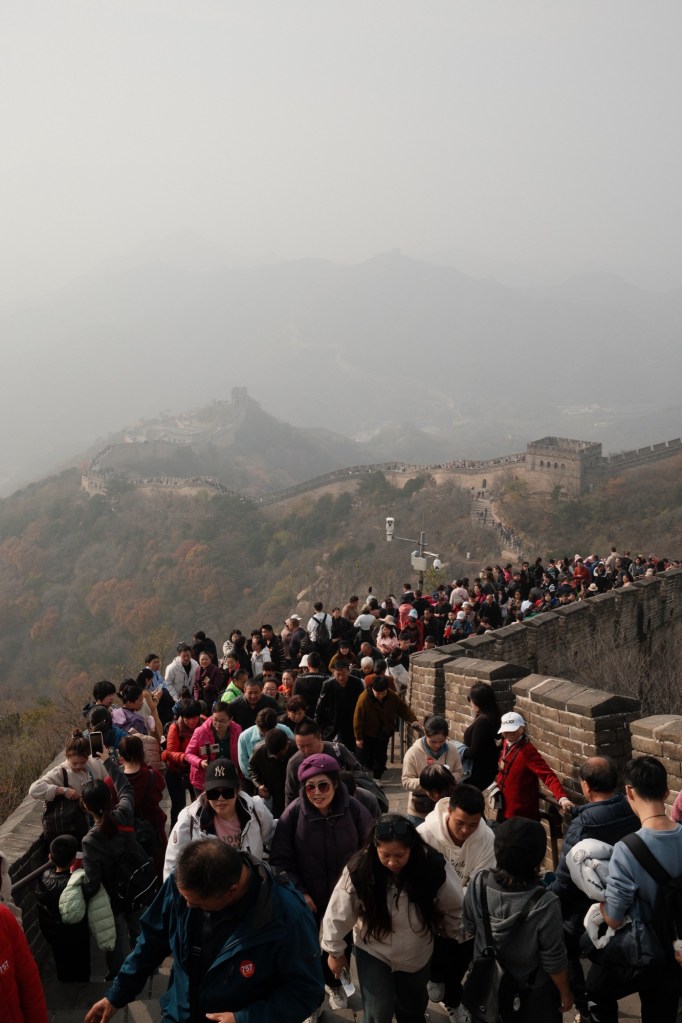
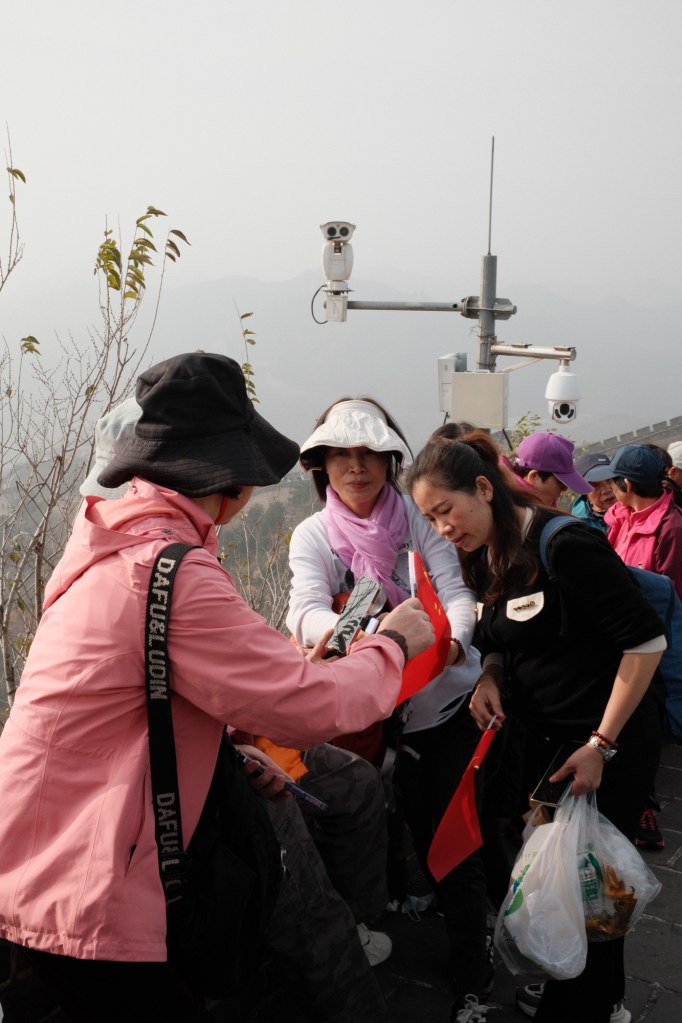
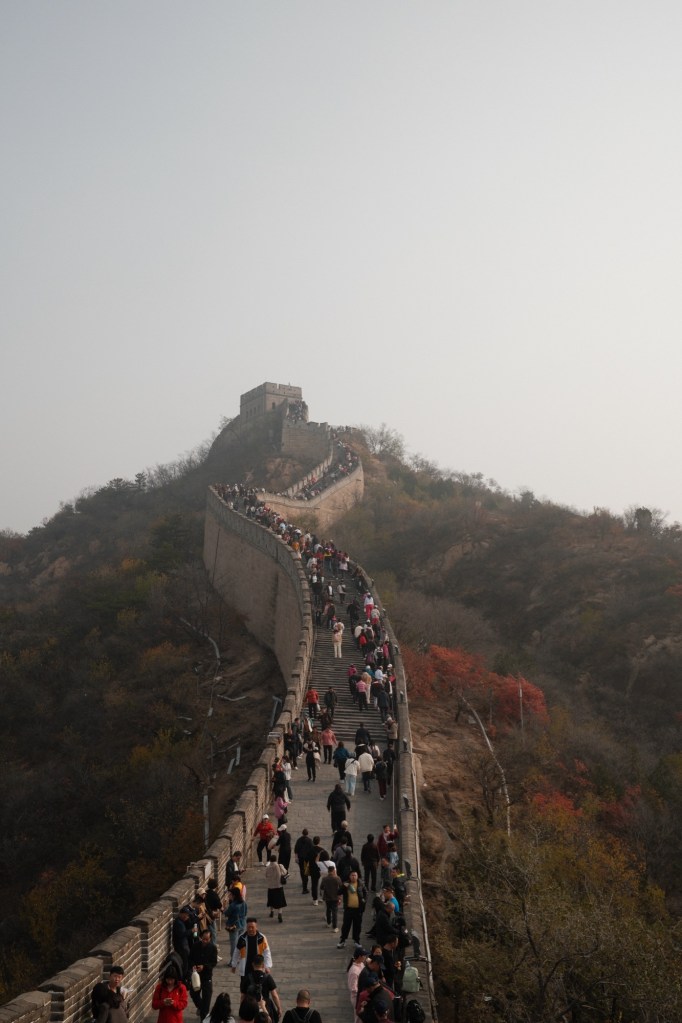
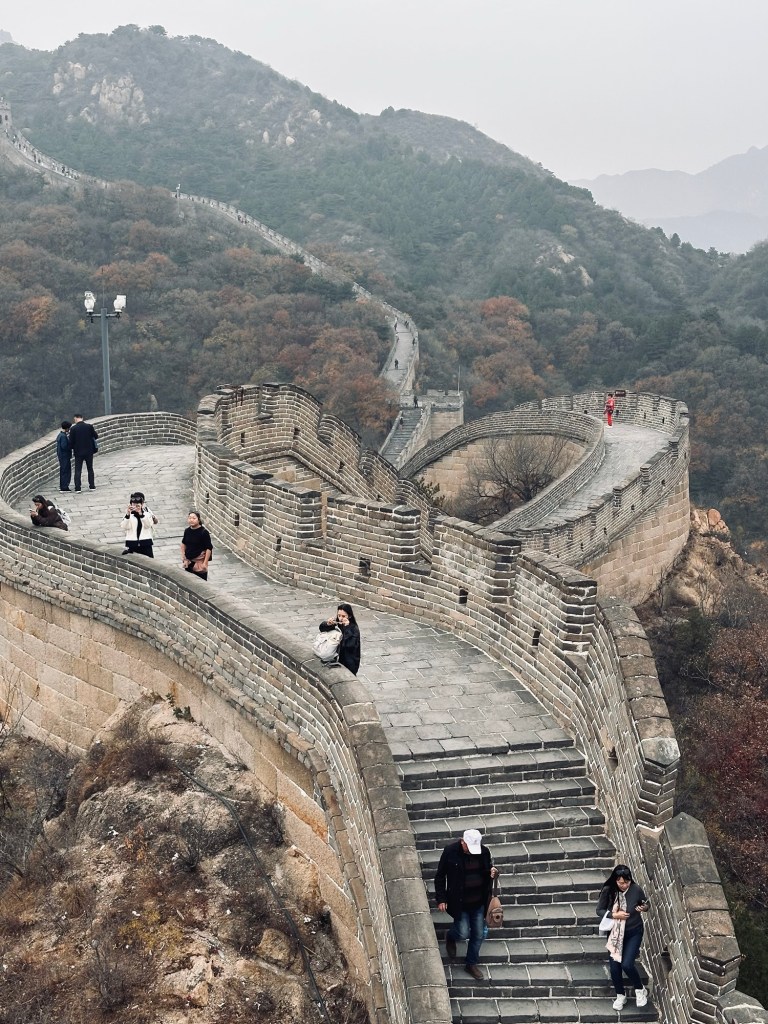
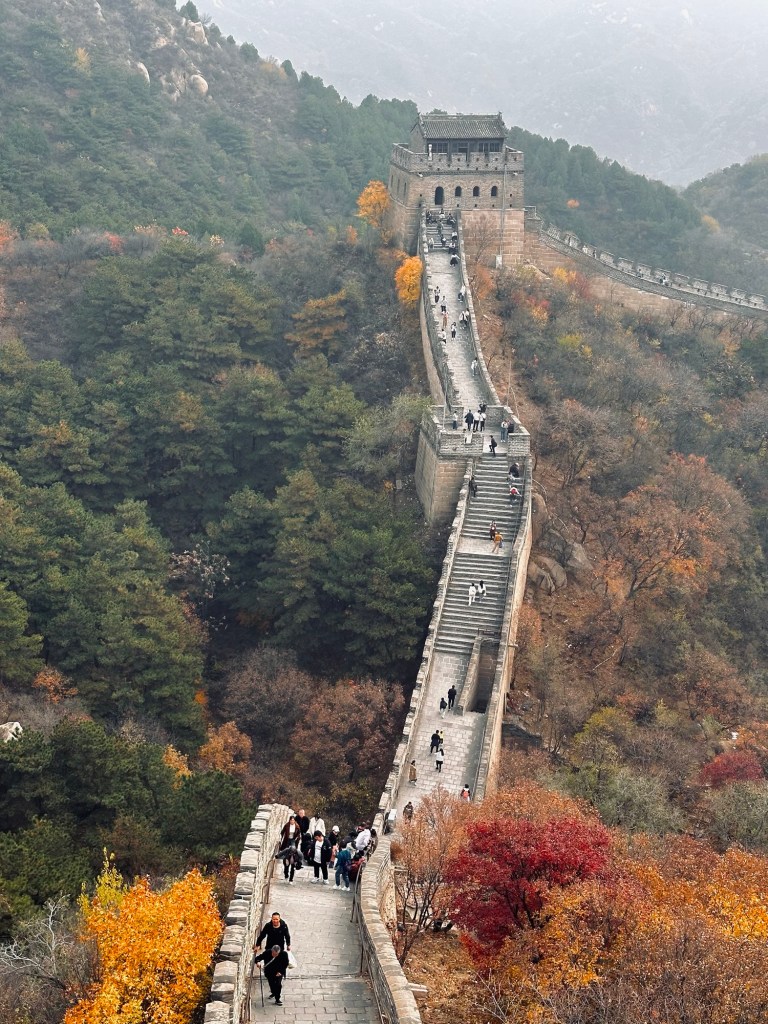
One of the most famous landmarks on the planet. When you say China, it’s probably one of the first things you think of. We hear it’s just a myth that it can be seen from space, but it is massive. You can visit the wall at around ten different entry points near to Beijing, some of them more popular than others, some are in ruins and cut off from general tourists. We went the easy route and took the train from Beijing to Badaling where you can easily access the wall and walk around 12 gates (or sections). We had a stern telling off at the gate because I had a drone in my bag, buy after it was placed in a storage locker we were permitted to enter.
The wall curves and snakes over the hills in such a strange formation. It was surprisingly steep in parts, much steeper than photos make out. It was busy, so busy you questioned whether it was the best place to come, but it was still an interesting experience to see everyone getting out of breath climbing the steep sections and wrestling for position in the peak view spots. Towards the final gates of the Badaling section, it gets quite quiet. If it all gets too much there’s slides that take you directly off the wall and back down. And you can now also take a bullet train home, meaning you’re back in Beijing in 20 minutes. And did I mention they had a Mixue ice cream shop at the bottom.

Around Beijing

We visited some cool neighbourhoods that are worth checking out. Number one, Dashanzi, or 798 Art District, had a Berlin like quality to it. Lots of art, on the street and the gallery walls, plus nice spots to sit and watch the world go by.
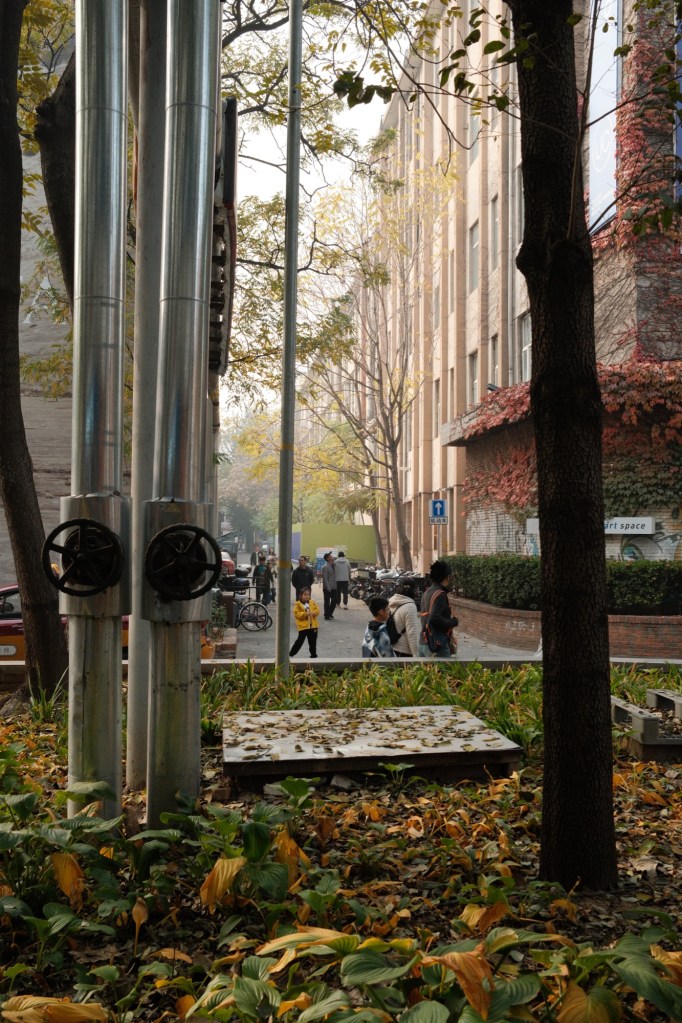
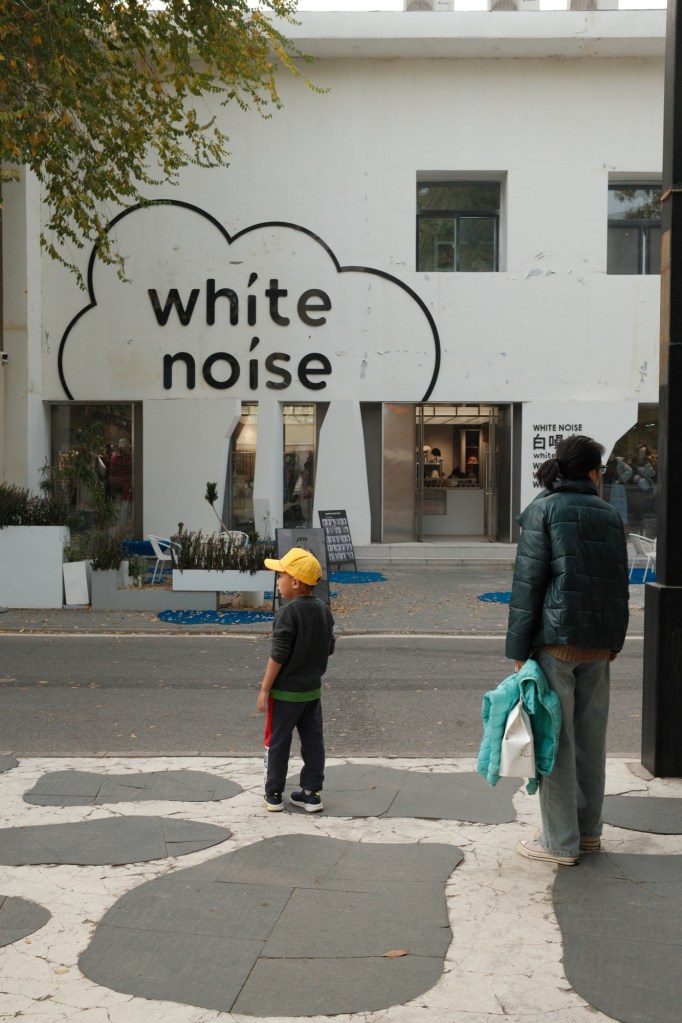
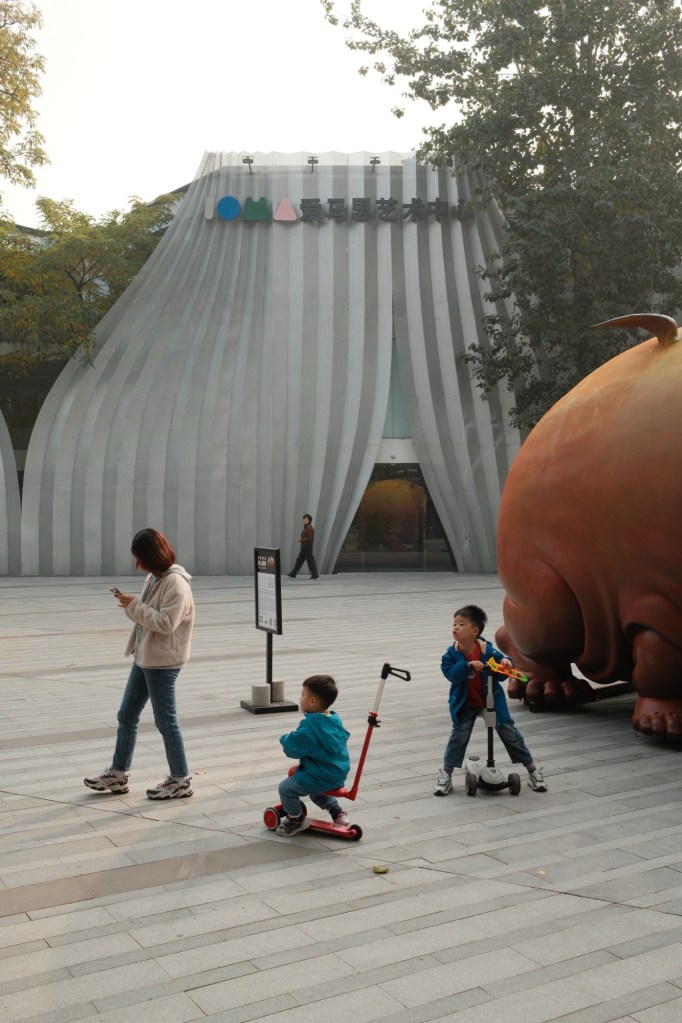
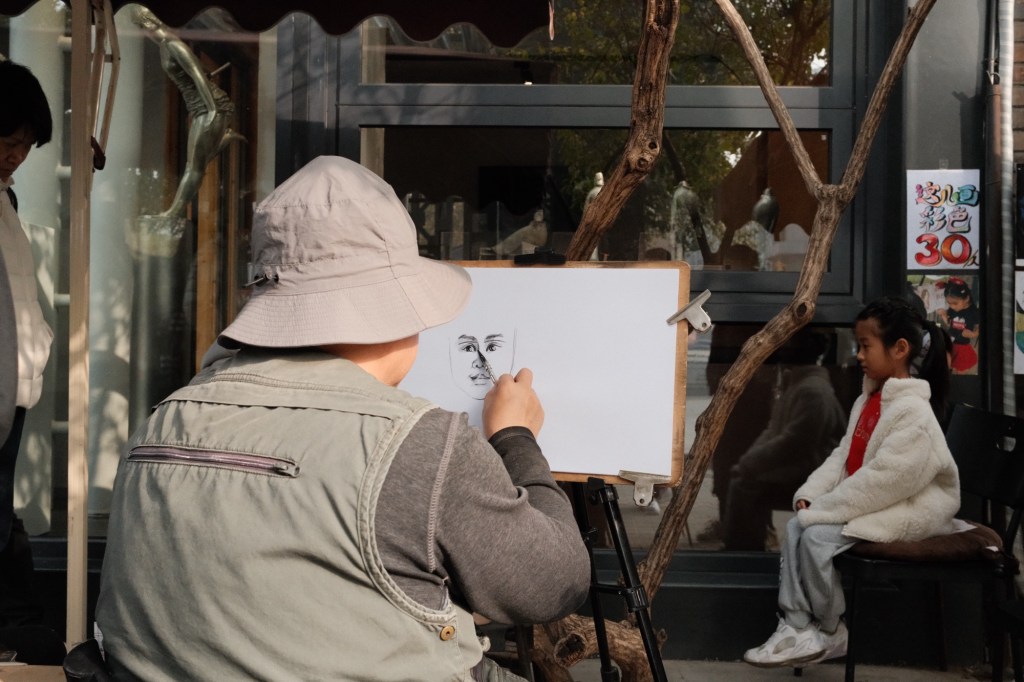
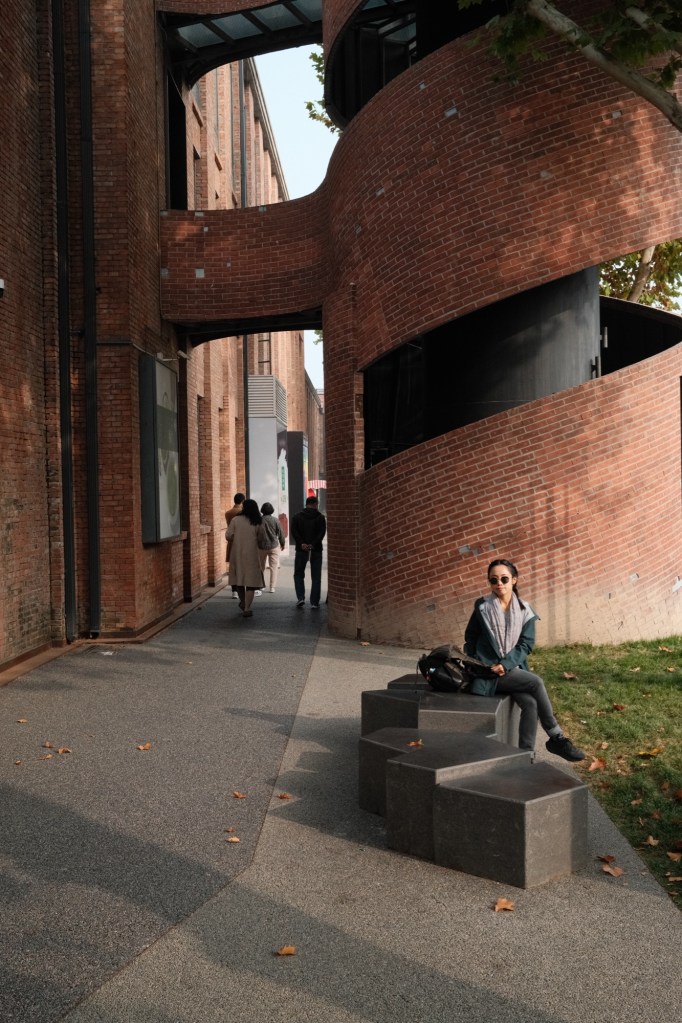
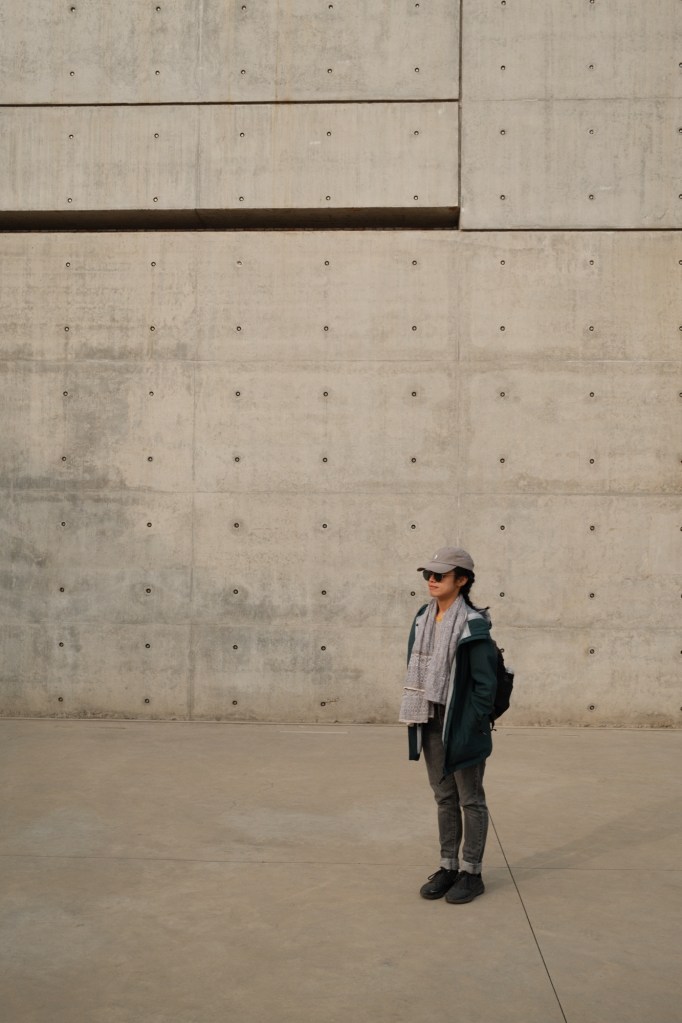
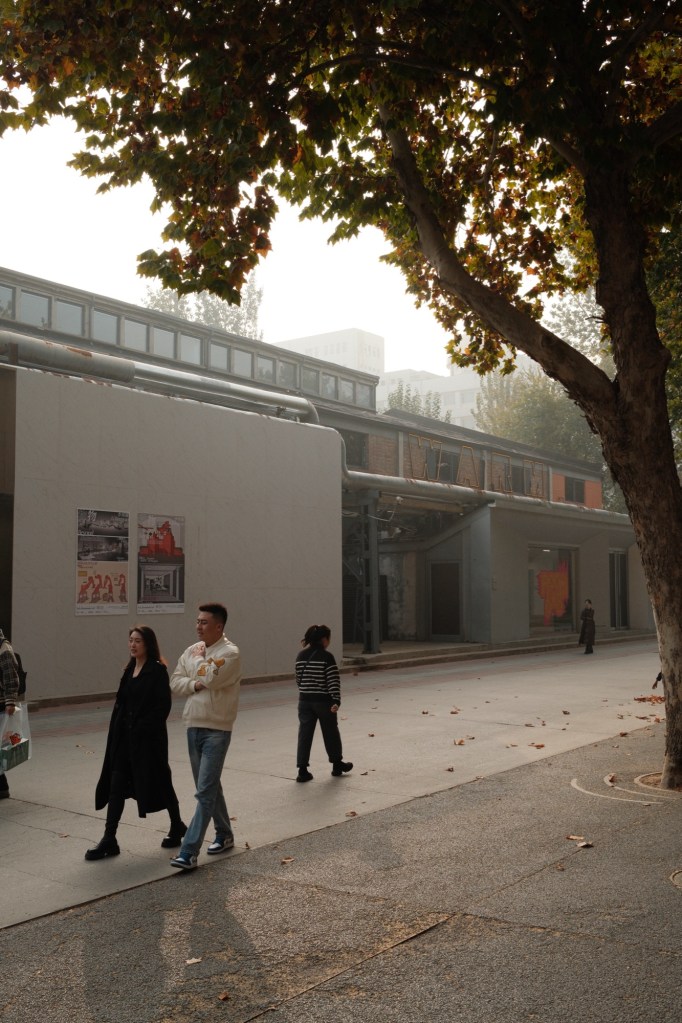
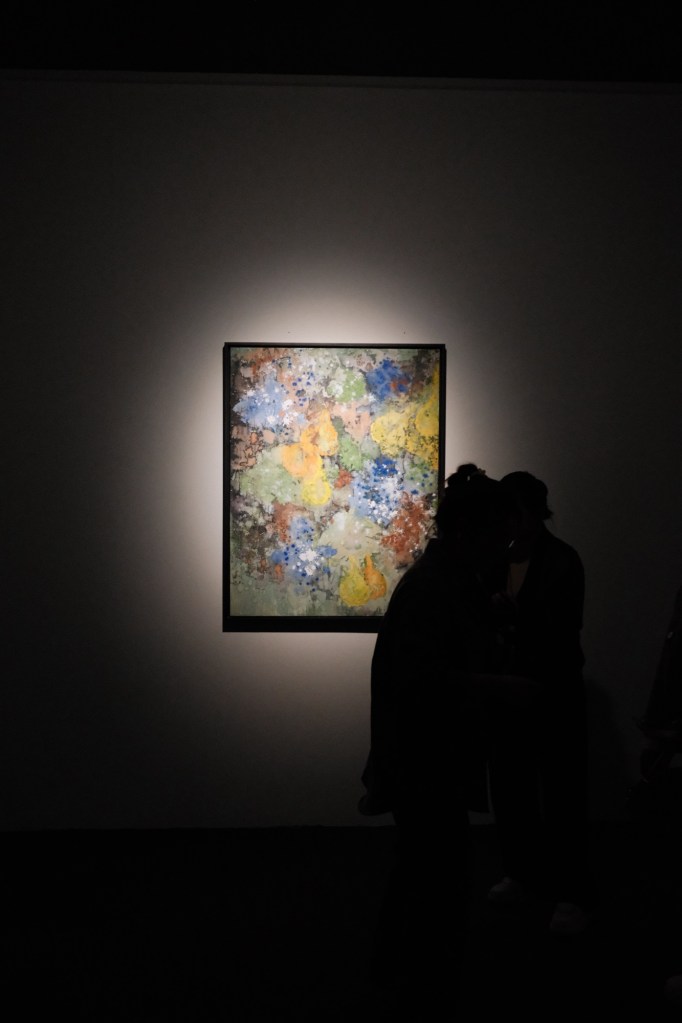
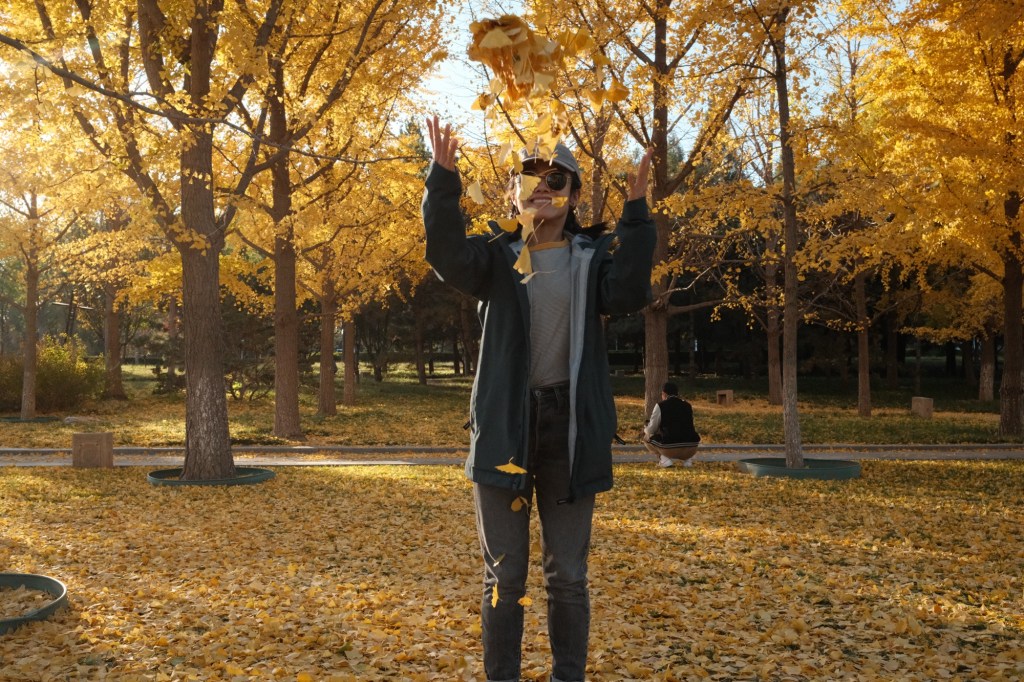
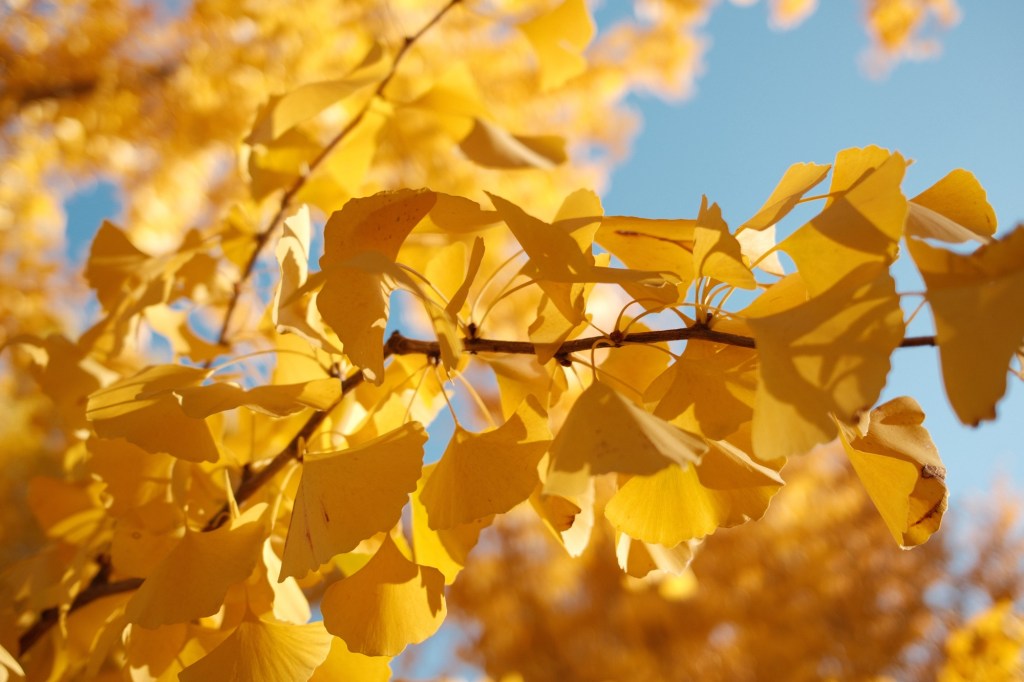
We also really loved wandering in the Gingko trees that can be found in multiple areas all around the city. They turn an amazing yellow colour in autumn.
Just north of The Forbidden City, Gulou was also good. There’s quite a few famous Hutongs with lots of independent shops and restaurants.
Duck hunt – Carmen invested some serious time into finding the perfect Peking Duck, as Beijing is the home of it after all. Many hours went into the search, and a few failures too. Mostly, restaurants running out of said duck but only after we’d sat down and she had ordered. Eventually the winning candidate came from a highly rated supermarket in Gulou, where an entire meal was bought as a takeout, at a very low price. Rave reviews ensued.
Another amazing find in Chengdu, Xi’an and Beijing was the amount of vegetarian buffets catering for the Buddhist market. We’d never seen so much delicious veggie food in one place, it was endless. The last one we visited in Beijing even had unlimited drinks and ice cream available. I think the highest price we paid for all-you-can-eat was around £6.

Shanghai
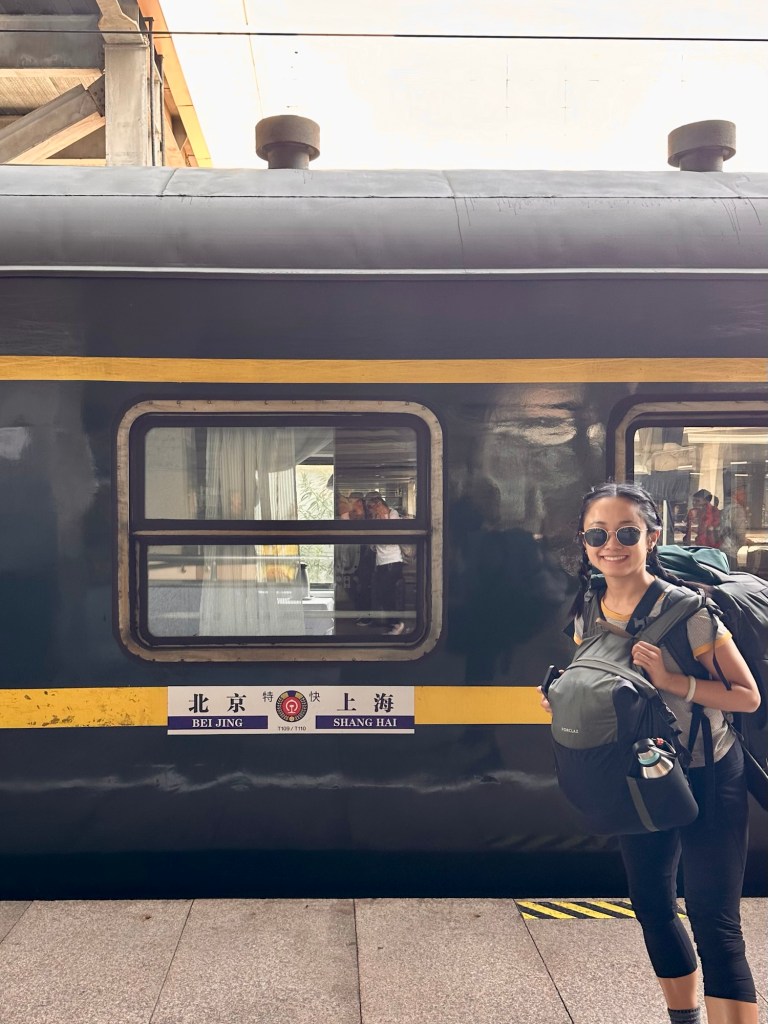
We took a sleeper train from Beijing to Shanghai, which took around 12 hours. We shared a cabin with a family travelling with their young daughter, who was very well behaved for the whole journey. I don’t think there was a single cry or tantrum, a common theme throughout China when observing families travelling or eating together.
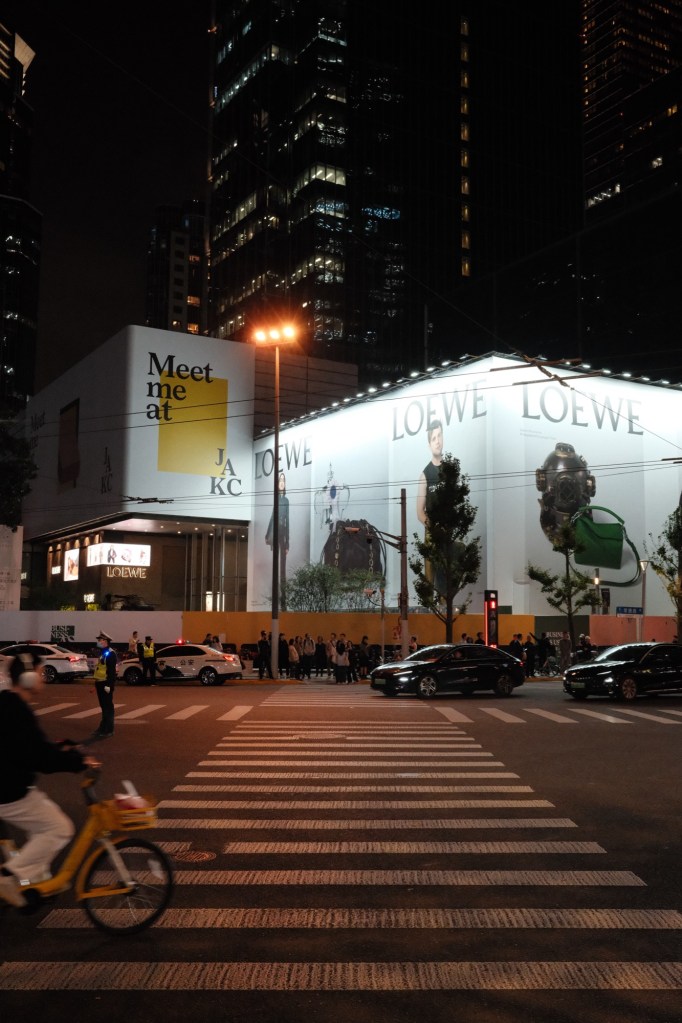
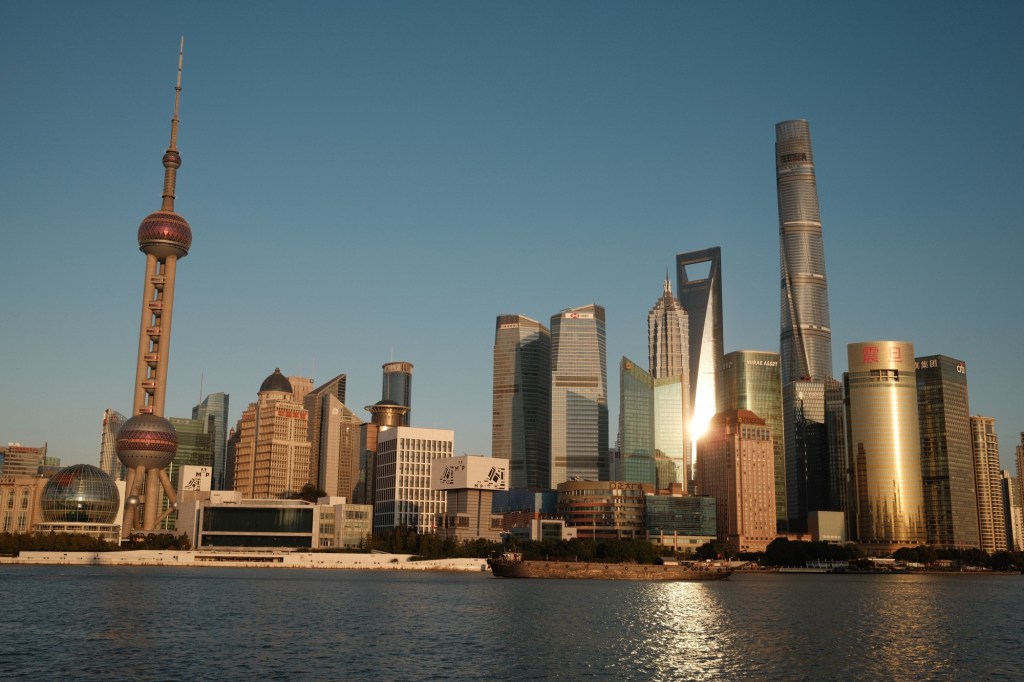
Shanghai was as expected in many ways – very modern and more similar to any other large city across Asia and Europe. It was good for wandering, with lots of options for eating/snacking. I couldn’t help but think how much I’d really liked Chengdu and Xi’an though, while I was there. I think the limited amount of time we had in Shanghai contributed to that. We’ll be back in Shanghai, there’s plenty more to see. And at a time with a regular budget, not our one-year carefully planned finances 🤑


China had been 11/10, much much more than I had imagined. So many surprise things to see, amazing food, efficient transport, welcoming people everywhere we went, such good value accommodation (low-low prices). Even though tourism is massive across the country, it felt more localised and that the western world isn’t tapping into what’s available in wider China (outside of Beijing and Shanghai).
Up next: Malaysia and Borneo. We’re spending nearly a week in Penang and then heading to Kuala Lumpa, and onto Borneo (Brunei side).

 seemehear
Leave a comment