📖 Reading Tip – open in your device’s browser to see the photo galleries 📷 Just tap “Read on blog” at the top (they don’t work in email 😭).
We were travelling to Lhasa in Tibet by sleeper train from Xining, which crosses the Tibetan plateau at over 5,000 metres. We wanted to travel to Tibet directly from Nepal, but the border crossing is tricky – current rules state that if you’re travelling with a British passport you need to enter China through specific cities to activate your visa (like Chengdu, Xi’an, Beijing etc.). Tibet is also fairly locked down, a permit is required to travel there and you must be accompanied by a Tibetan guide.
To buy the train ticket required us to jump through a few hoops too, our initial booking was cancelled as they didn’t have a copy of our permit. This was a tad disastrous as the train is in high demand, you almost need to be in Glastonbury ticket buying mode to secure a cabin when they’re released for sale. Luckily the owner of the Tibetan tour guide company we used helped us buy another pair of tickets.
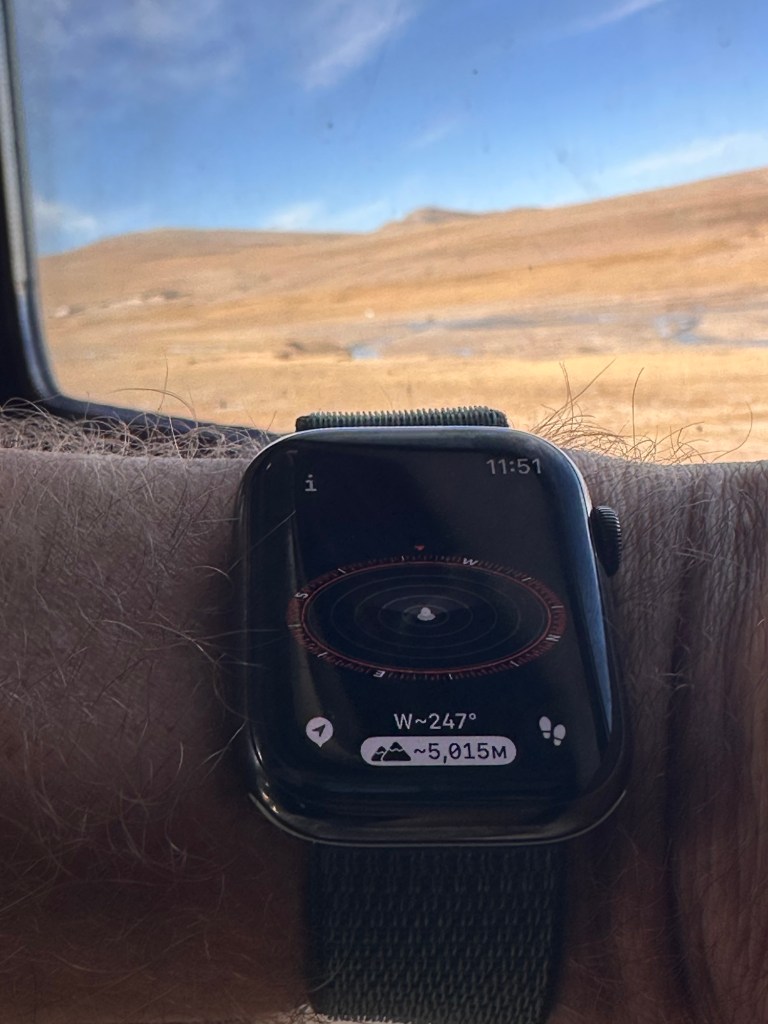
We were only mildly nervous about the altitude, we were going higher than either of us had ever been (when you remove flights in pressurised planes etc.). The train journey alone would take us well over 5,000 metres, and they say altitude sickness can occur at anything over c3,000 metres. We were fine in Nepal at around that, so we figured we’d be ok.

Qingzang Railway
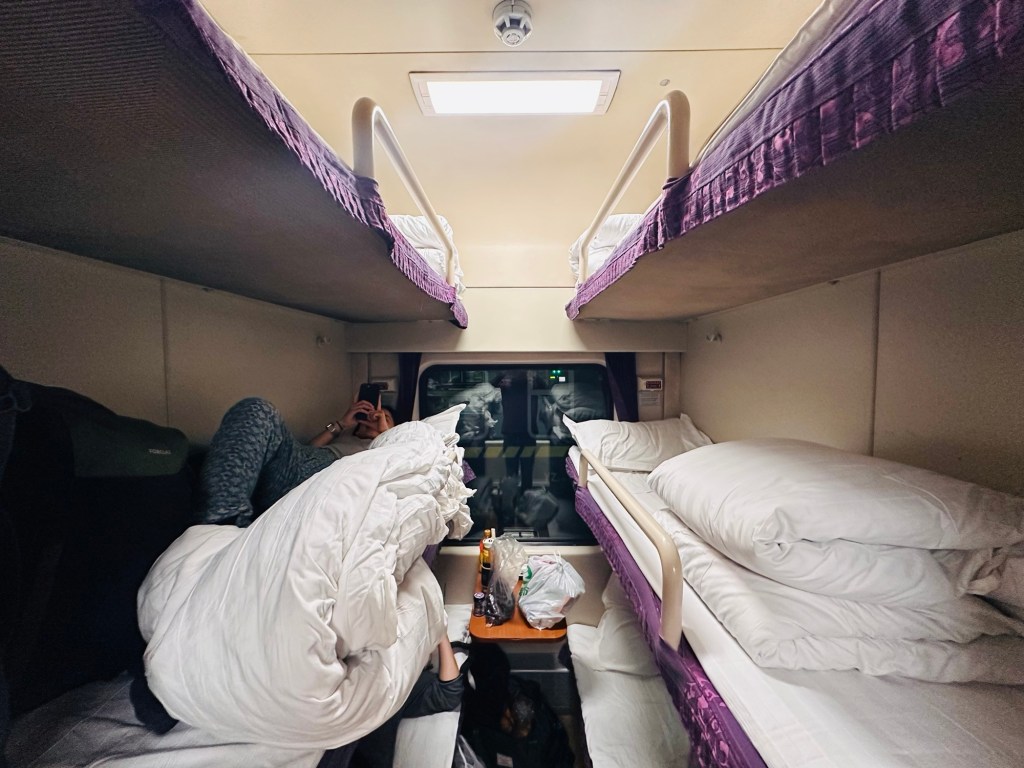
We both felt really excited on departure day. Permits and train tickets in hand, we headed to the station in the evening to board the sleeper train. The journey would take about 20 hours and we’d be sleeping in a 6 birth ‘hard sleeper’, which is slightly less glamorous than the 4 birth ‘soft sleeper’ we’d originally booked. I resisted from buying a few train beers as would be custom at this stage of the journey. They say alcohol and high altitude don’t play so nicely together, so I’ll wait till I’m fully acclimatised in Lhasa to try the local tipple.
There was a real air of excitement in the mixed crowd boarding the train, visiting Tibet is special. Even before China decided to claim sovereignty, Tibet was on/off limits for hundreds of years – a closed society, steeped in years of Buddhism and mystery. Obviously I’d naively watched the film Seven Years in Tibet a few weeks earlier to learn a thing or two.
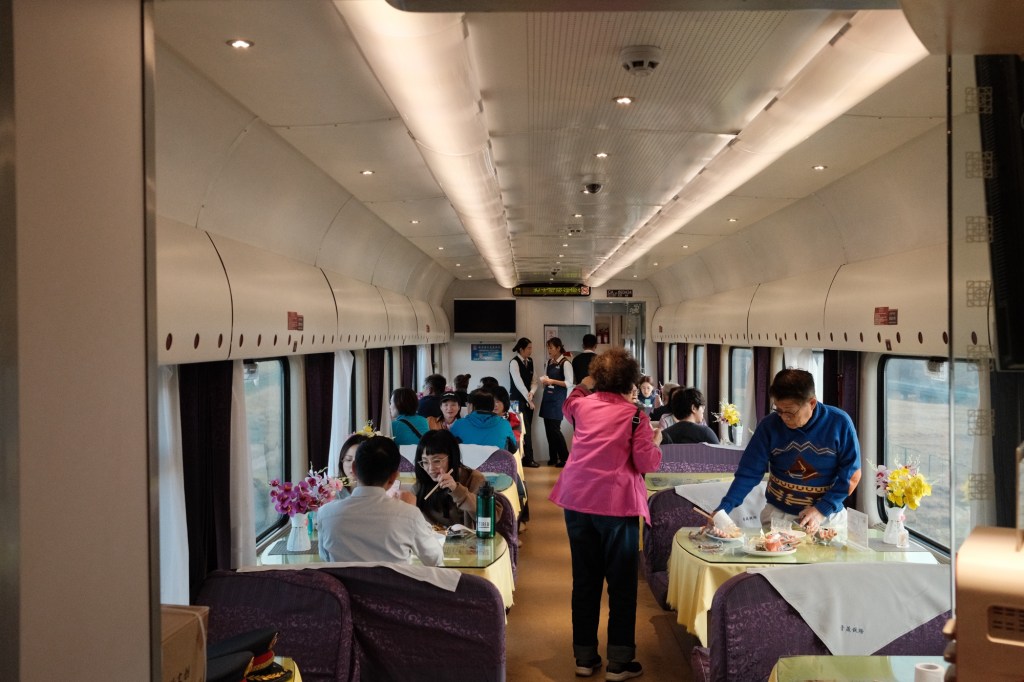
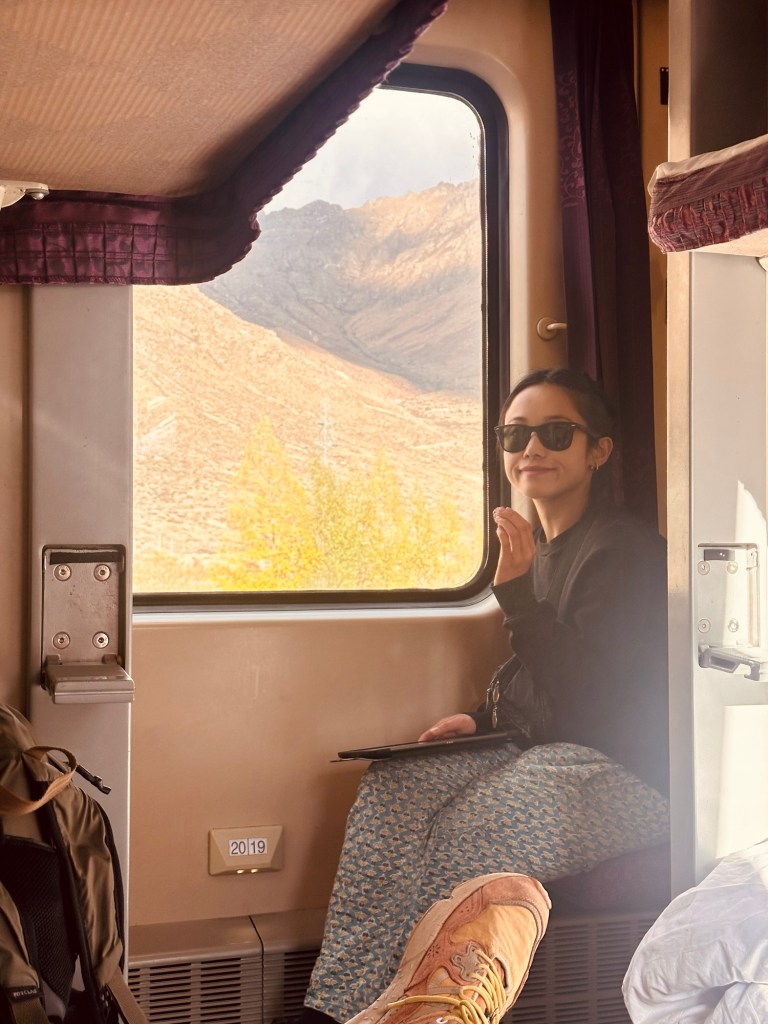
We get lucky with our cabin and it turns out we only have one neighbour sharing with us. He kindly shares his food too. The ‘hard sleeper’ doesn’t seem so hard either – comfortable beds with pillows and a duvet. All very clean and proper. We even have a little table and two chairs directly outside the cabin. Toilets and washing facilities are also ok, and there’s a dining car and regular food for sale brought through the carriages.
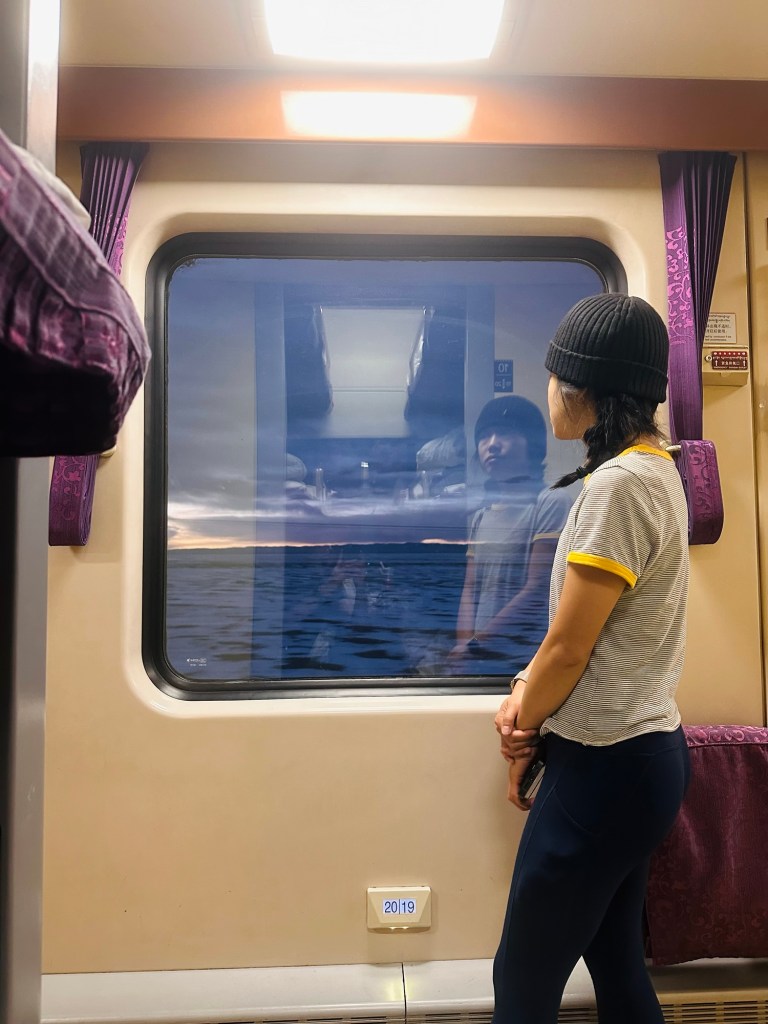
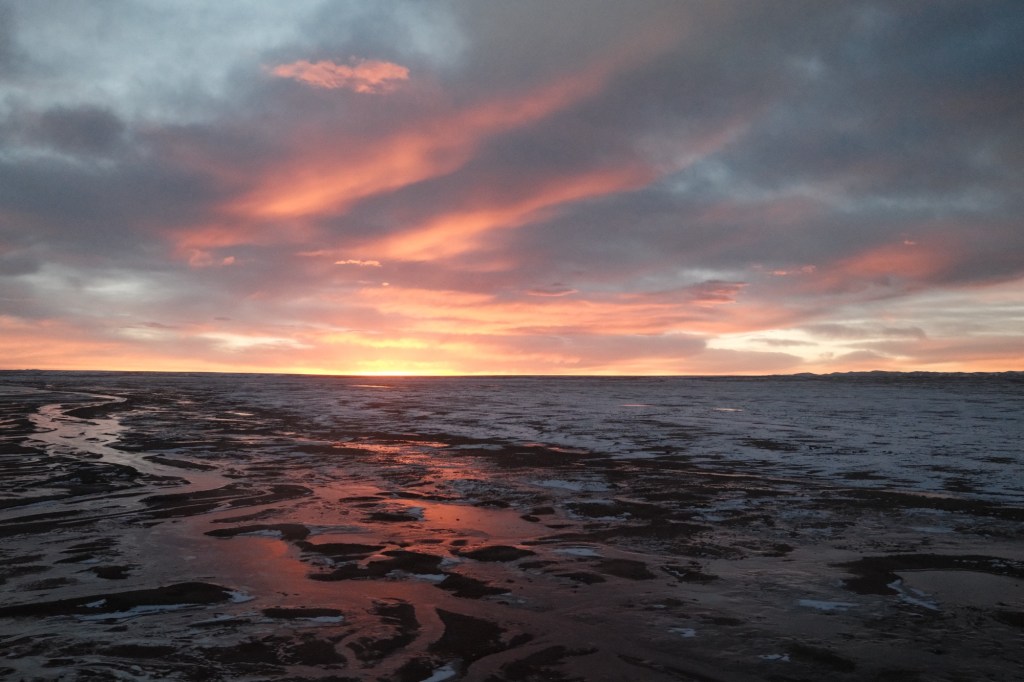
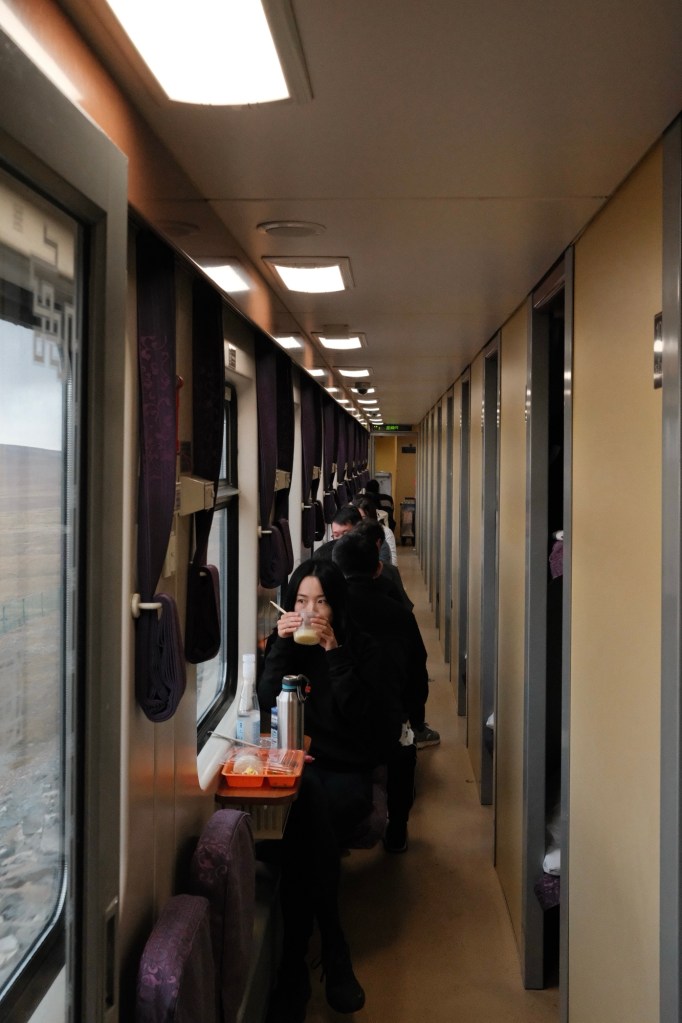
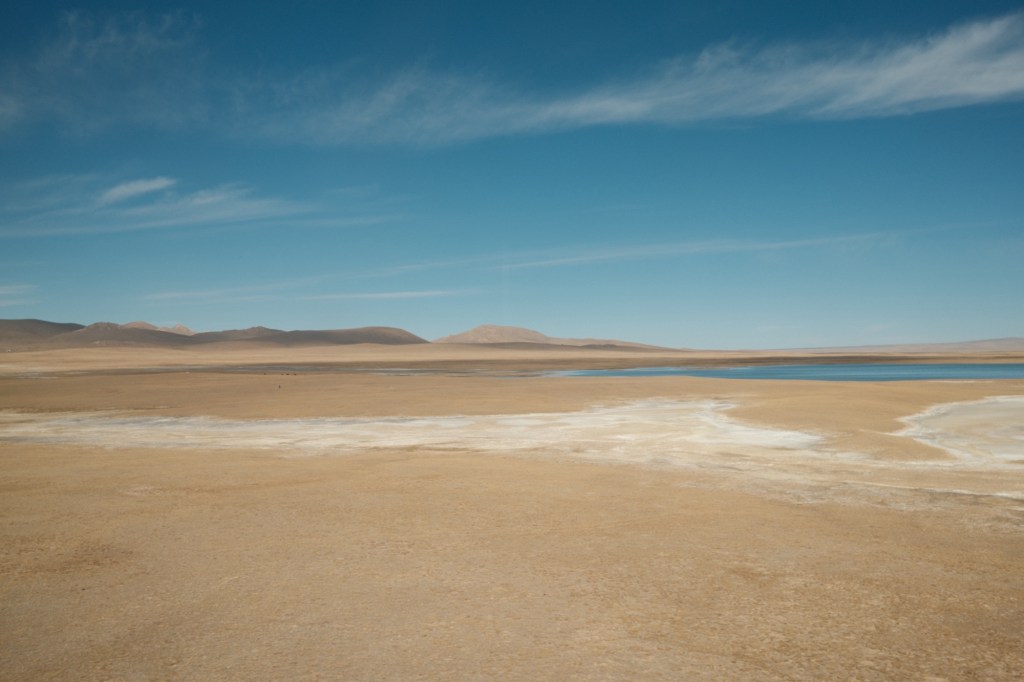
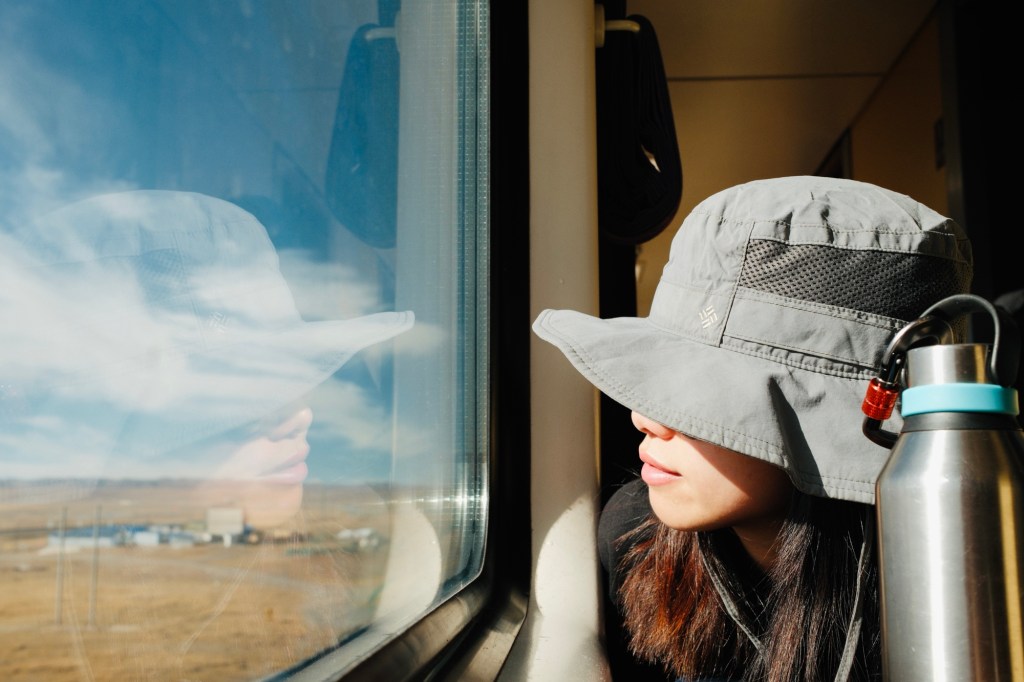
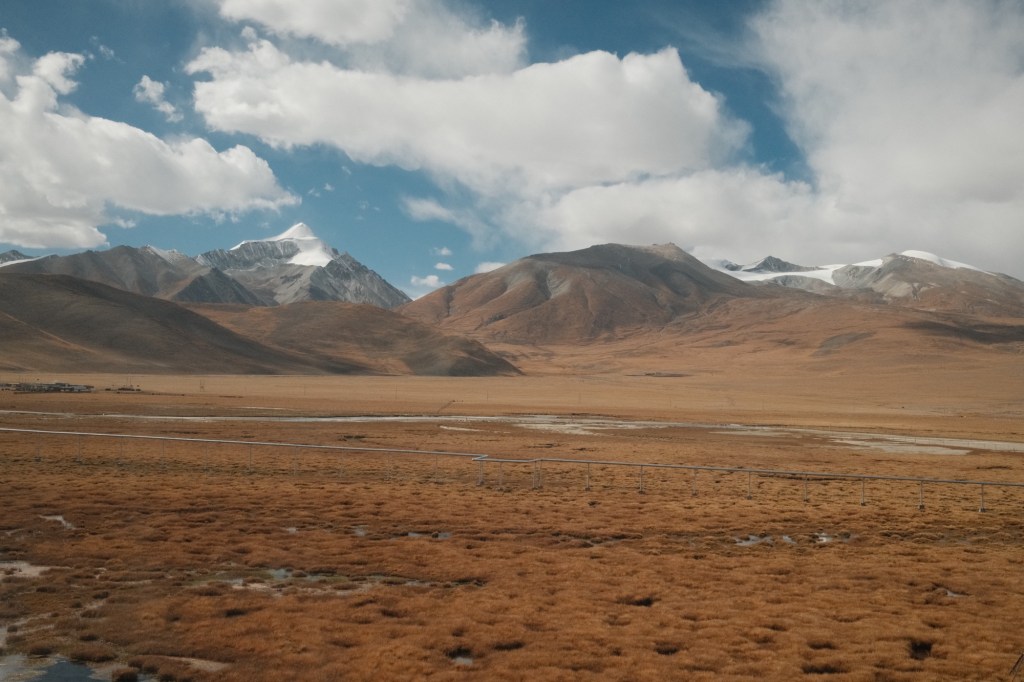
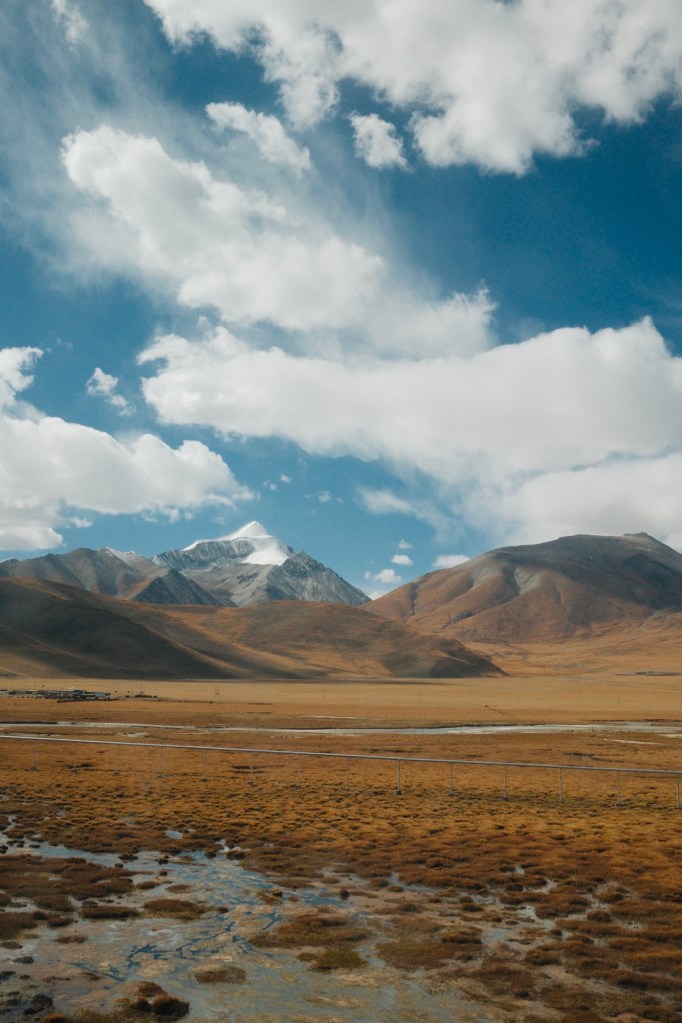
We awake at dawn to marvel at the Tibetan plateau laid out in front of us. A sprawling, very cold tundra – it’s a wonder how they even built this railway line, but China really are the masters at getting engineering done at lightning speed – there’s much wildlife to see too, yaks; deers; goats; birds.
I gradually start to feel not quite myself through the day. Like a building hangover, the kind that takes hold after too many drinks on an empty stomach and minimal sleep. I try to nap it off, but it’s not the remedy. I spend an hour or two lying still on my bunk as Carmen attempts to feed me fennel seeds (the new cure for most health problems or warding off anything else 😂). I’m fairly ecstatic to get off the train by the time we arrive, and within 10 minutes of fresh air I’m feeling normal. Neither of us feel any altitude sickness symptoms after this point.
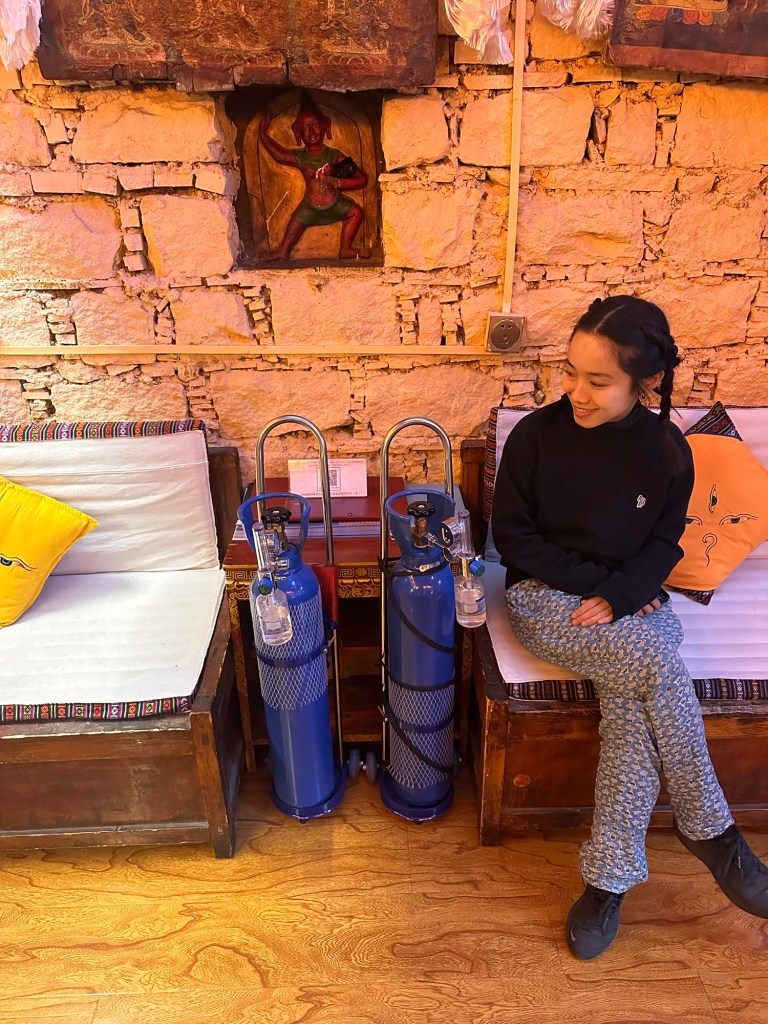
Even with a little altitude sickness, the train was a great experience. It’s also worth noting I could have requested oxygen from the on-board doctor if I really started to feel ill. There were little valves next to each bed where they can attach a tube for you.

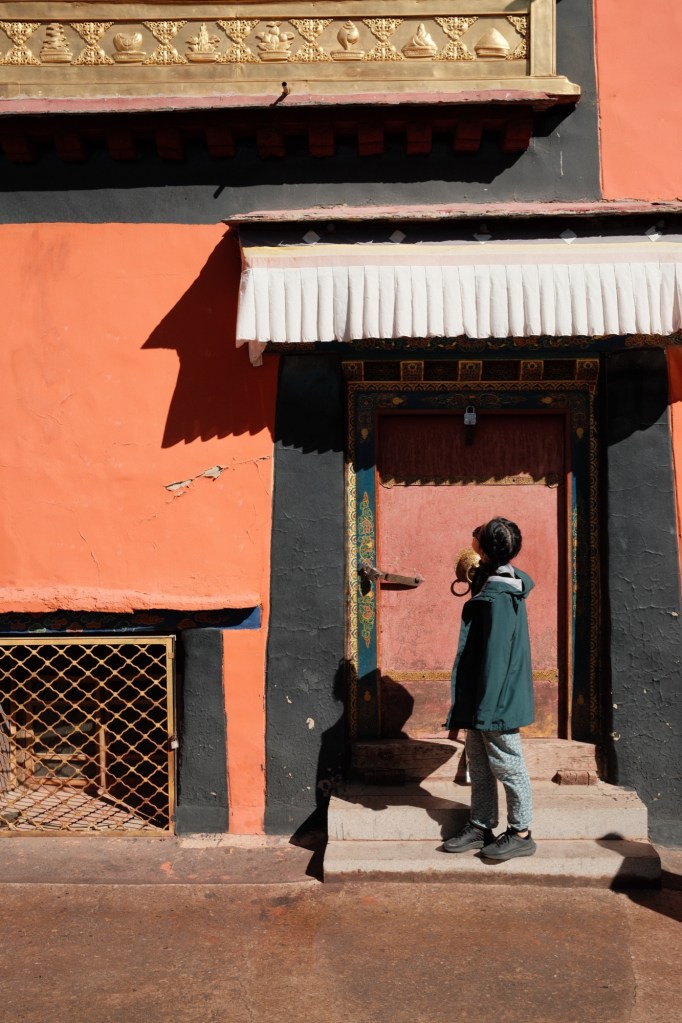
We meet our host (a tour company named ‘Road to Tibet’ – we highly recommend using them if you are going to Tibet), and part of our tour group at the station and head into old Lhasa. This place feels unique – beautiful coloured buildings, in a very particular architectural style that I haven’t seen anywhere else, all quite low with irregular shaped windows, in shades of red and brown .
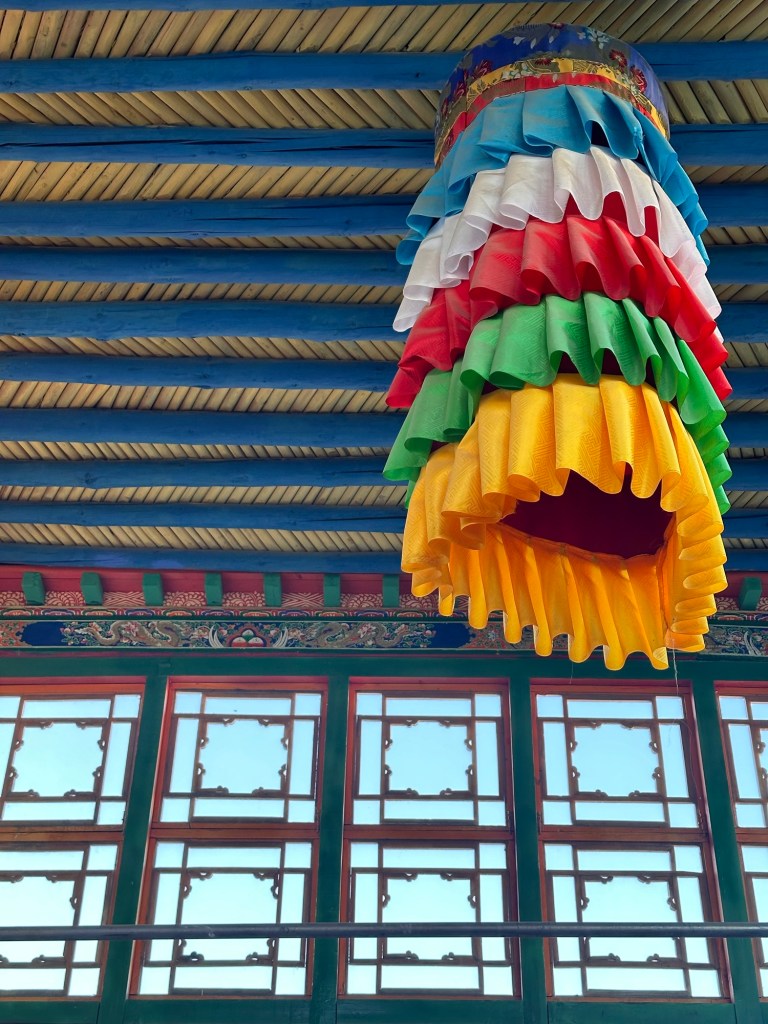
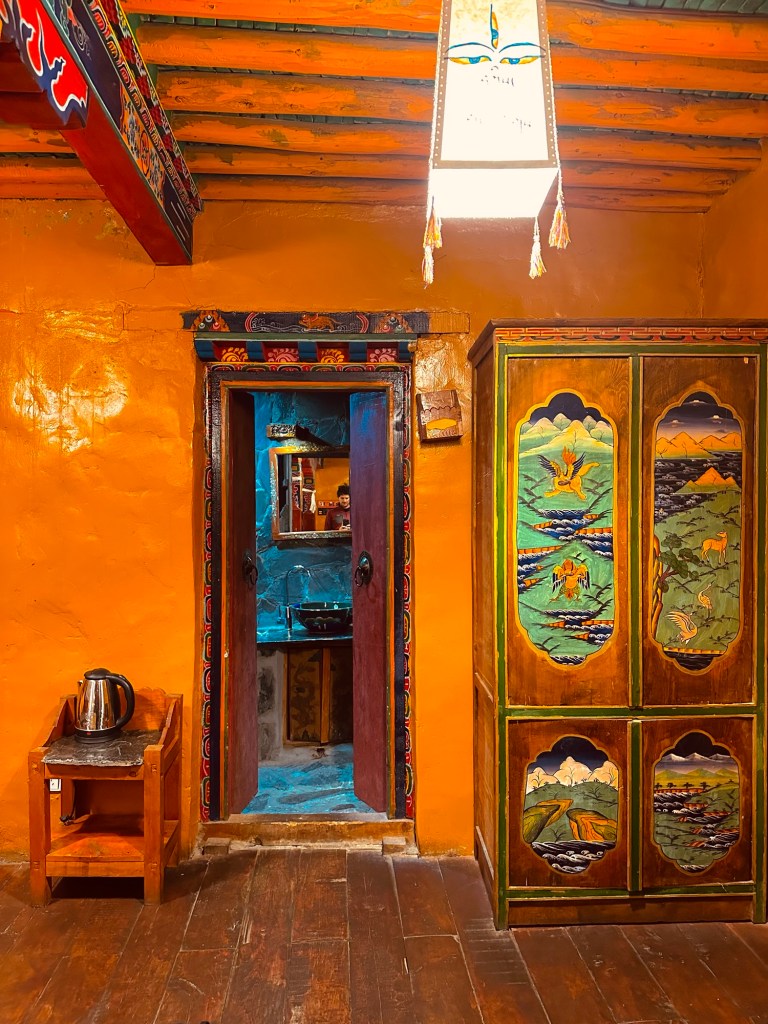
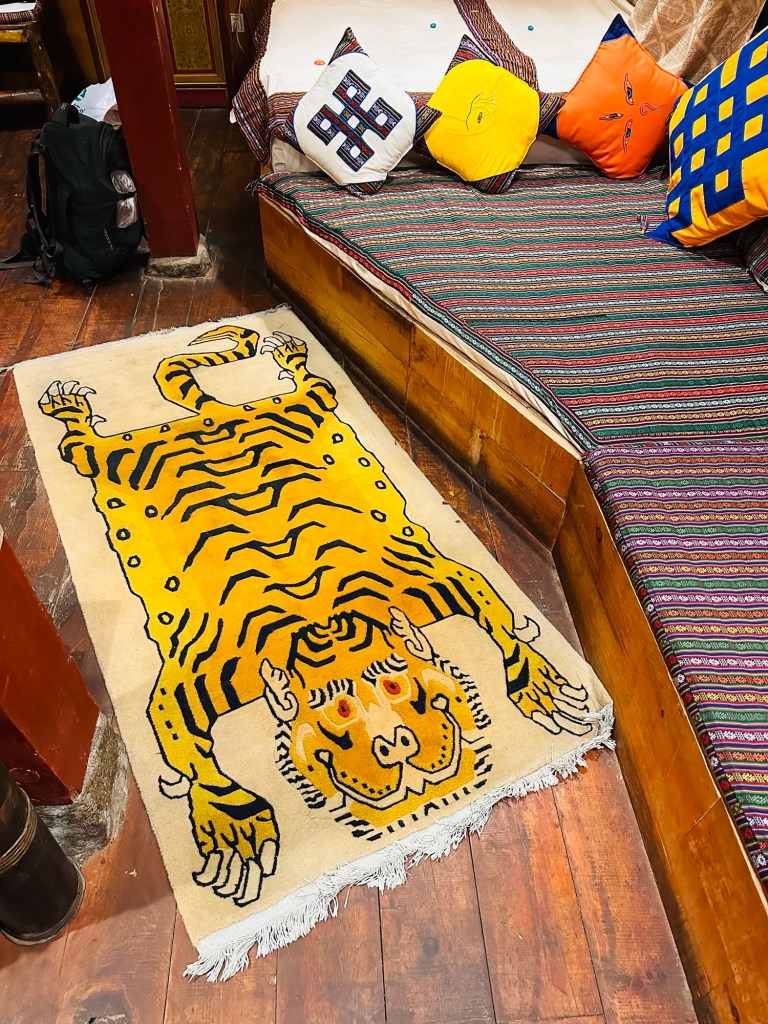
Our hotel in Lhasa is a traditional building that had previously been a small monastery. There are weaved fabrics hanging in front of the room doors, which we learn is customary – perhaps to keep the heat in – our room is full of amazing furniture too, all bright colours with great illustrations. Even an illustrated tiger rug on the floor, which we’d both quite like to take with us.
After a short briefing from our guide, Pema, and meeting the rest of the tour group (there was 5 of us in total, two from Japan and one from the Netherlands) we head out for dinner. We learn that food in Tibet is generally a mix of Chinese, traditional Tibetan (which tends to be quite meaty, yak etc.), and Nepalese (which works for us, as we loved it so much). We often spotted western dishes too. Very easy to be veggie in Tibet.

Our Agenda:
Day 1 – Arrive in Lhasa and acclimatise
Day 2 – Barkhor Square, Jokhang Temple, and debating monks
Day 3 – Summer & Winter Palaces of the Dalai Lama
Day 4 – Leave Lhasa and travel towards Everest Base Camp, staying in Shigatse
Day 5 – Stay at Everest Base Camp
Day 6 – Depart EBC and visit a few more monastery’s on the way back to Shigatse
Day 7 – Final night in Lhasa
Day 8 – Depart Tibet, flying direct to Chengdu, China
Day Two – Barkhor circumambulation, Jokhang Temple & debating monks.
Breakfast (which stayed similar most days) consisted of an omelette, a muesli like substance and coffee. Yak butter tea was also consumed from time-to-time, but it’s an acquired taste – quite grassy, but made more palatable by adding the muesli substance to it (a local’s tip!).
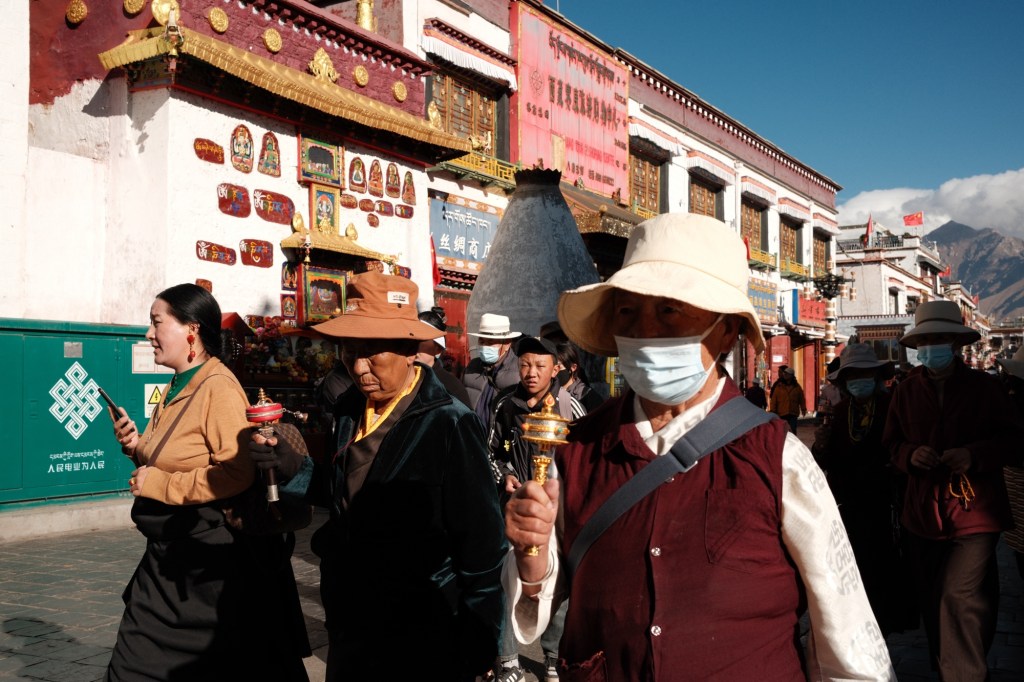
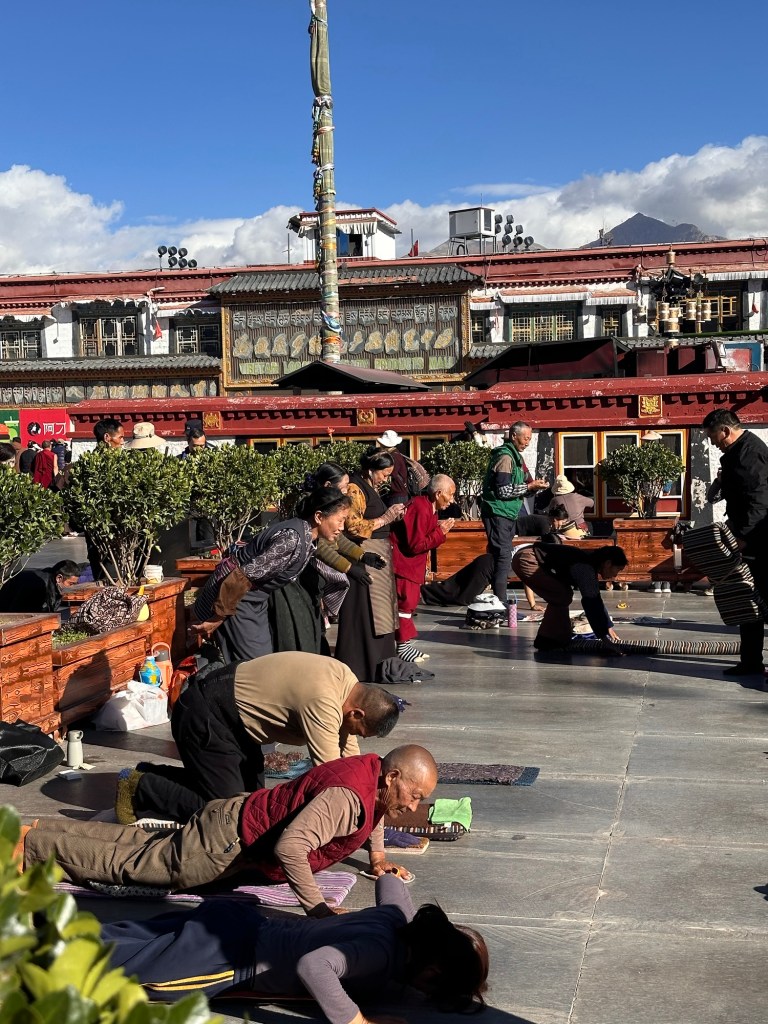
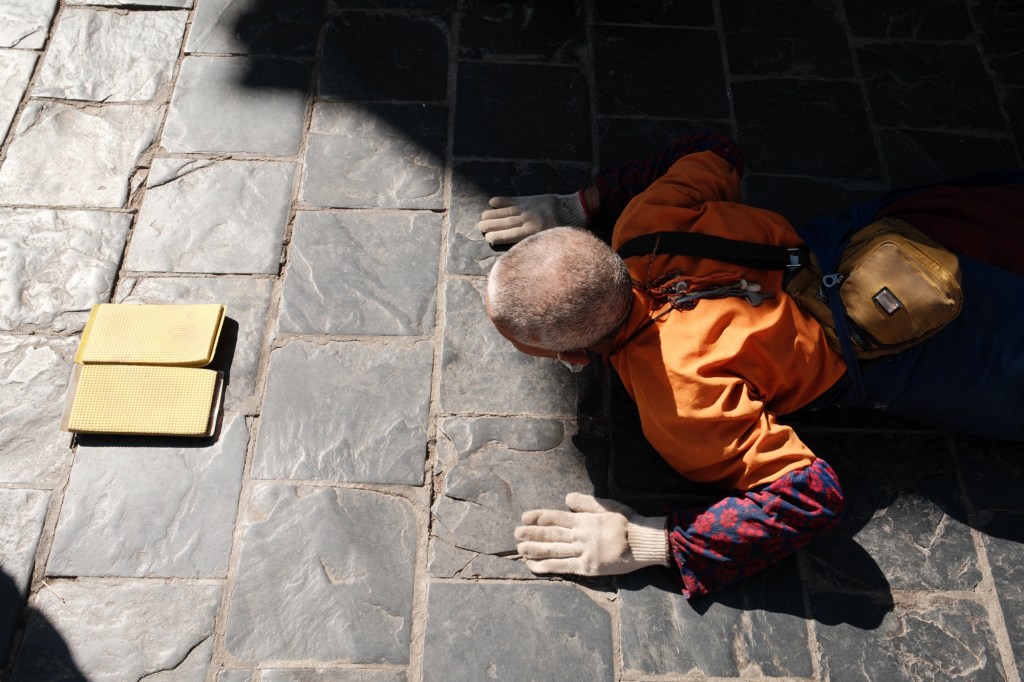
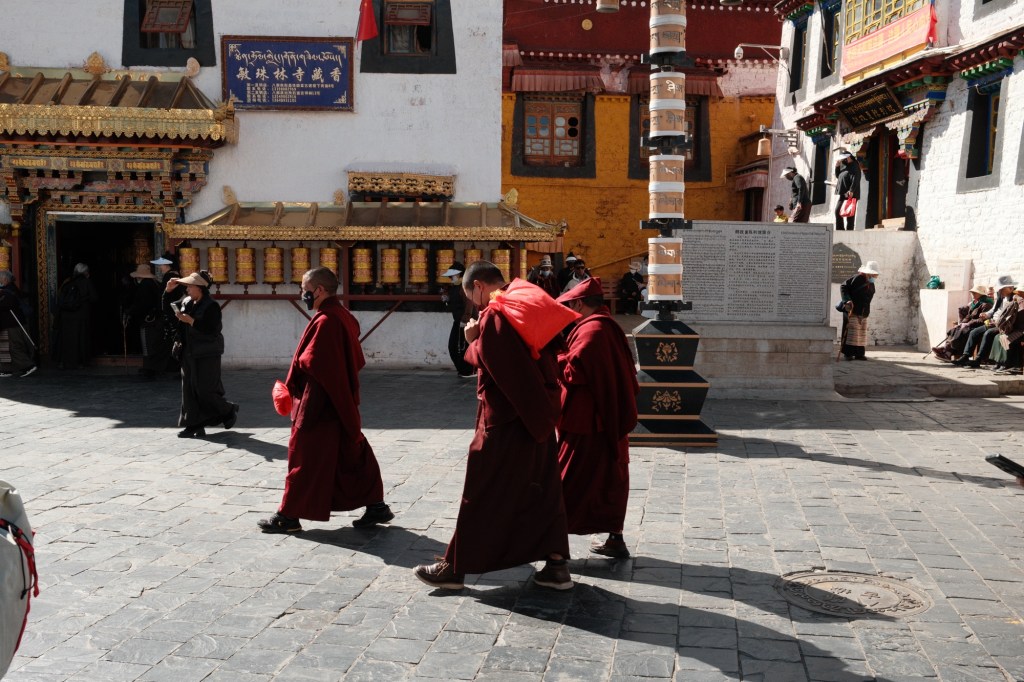
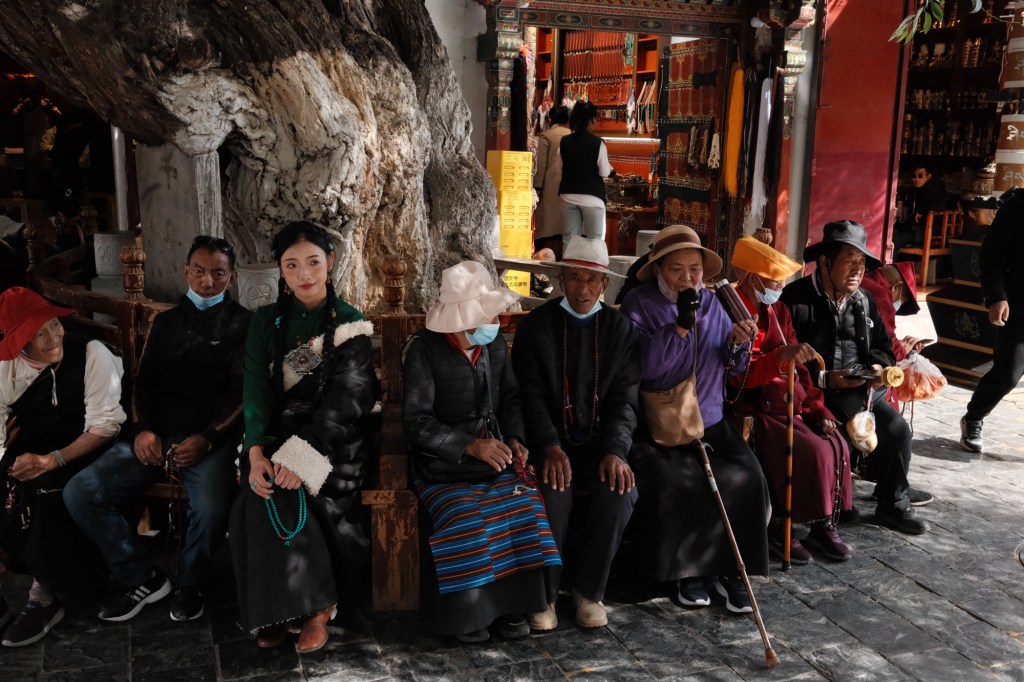
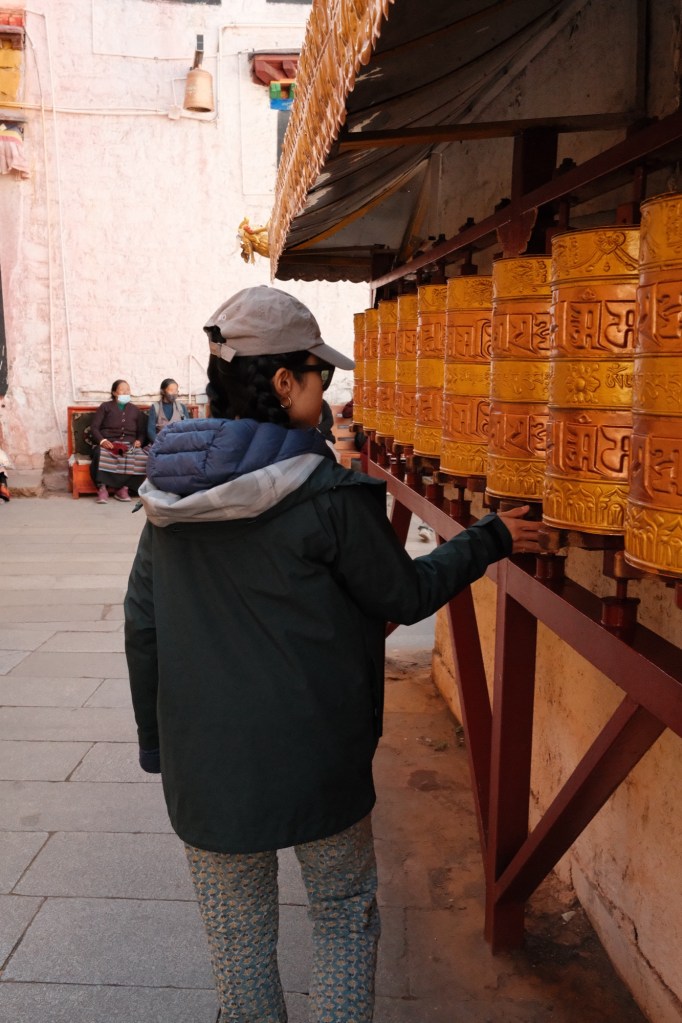
First stop was Barkhor Square in old Lhasa. The site of much conflict and sadness over the years, and still the ‘mecca’ for Buddhist pilgrims and locals, who walk round in a clockwise pattern, traditionally kneeling to pray every few steps (see pics below). The first time you see this is quite captivating – knee and elbow pads are worn by many, so the drop and kneel to the floor is cushioned and a sliding motion is performed so that they’re lying on the floor. It appeared that some circle the square a few times and some do it all day.
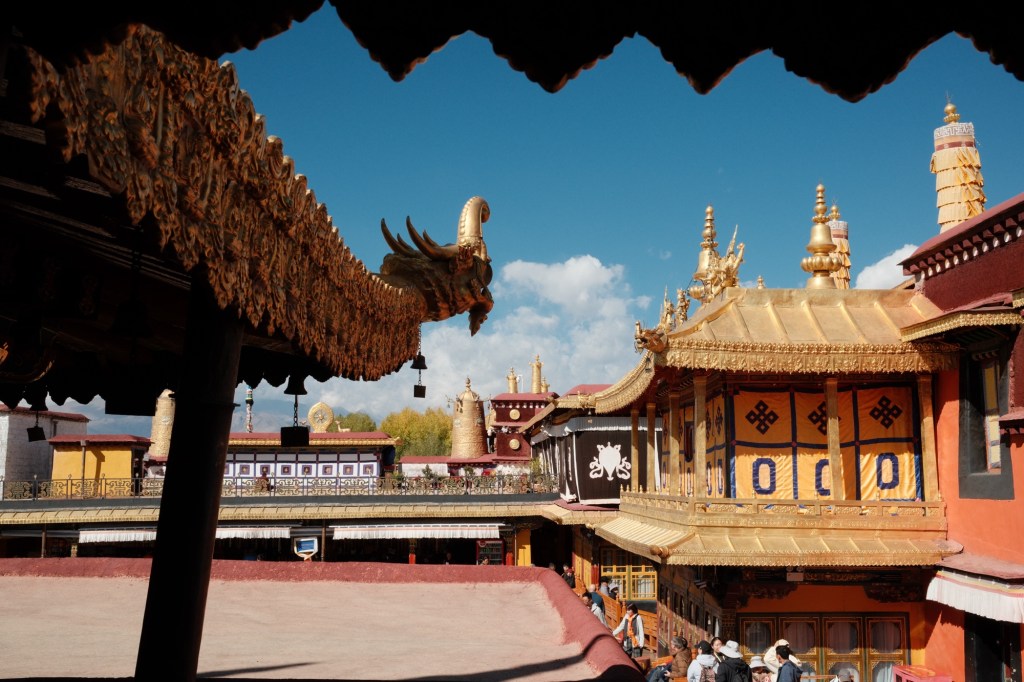
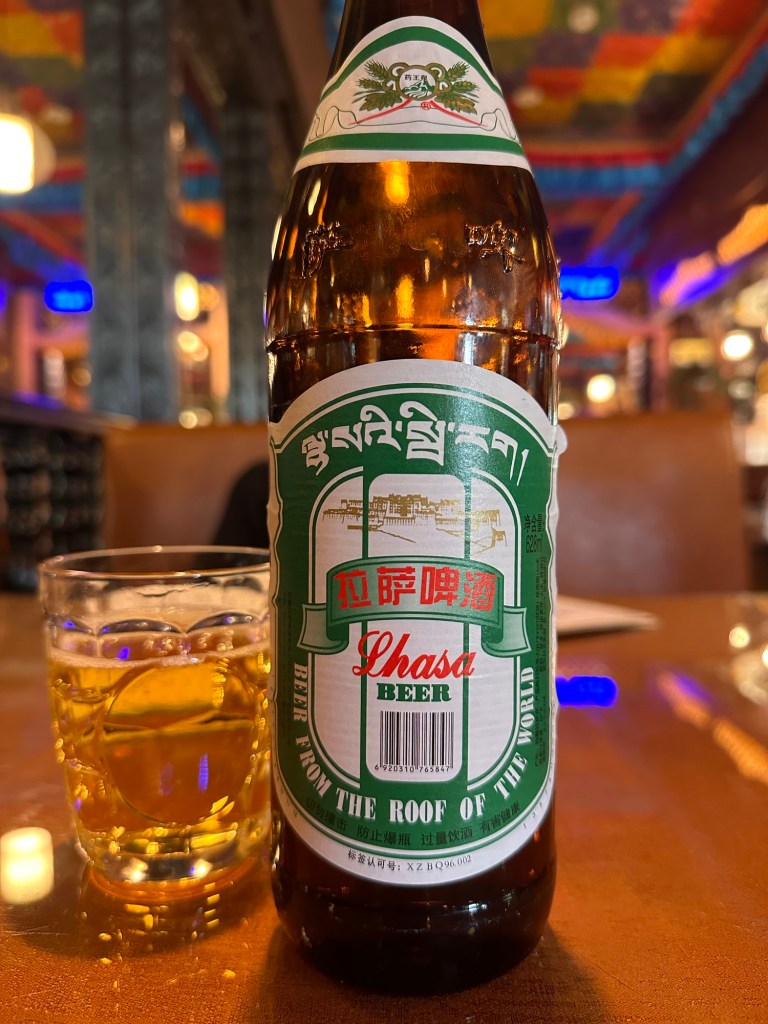
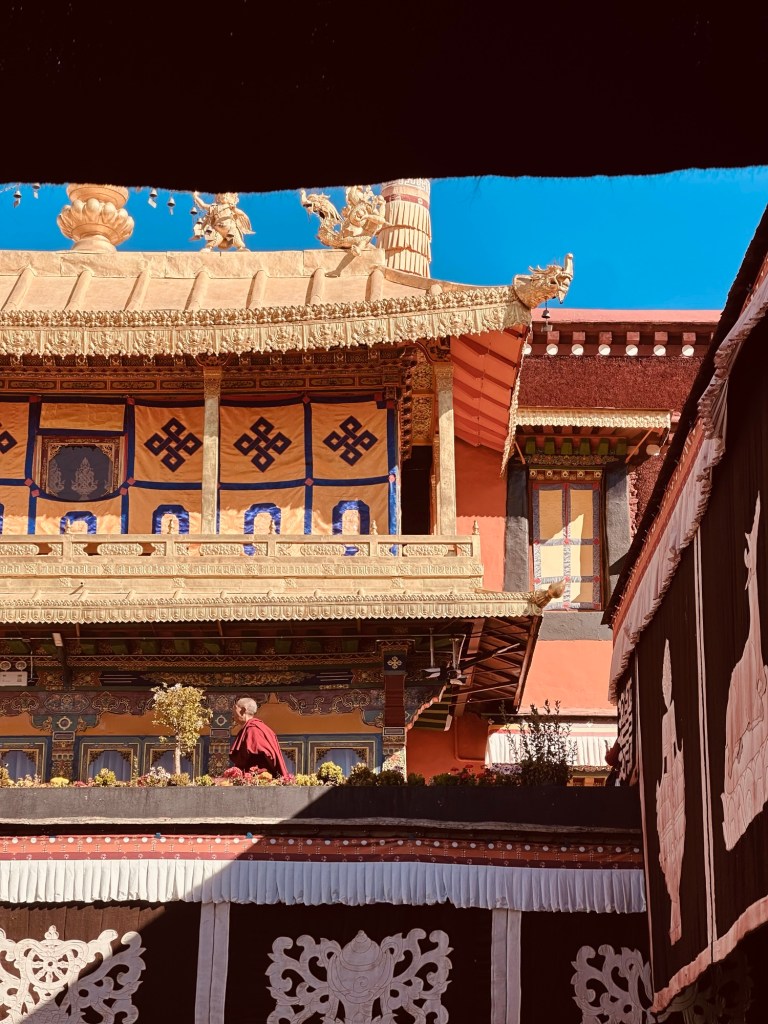
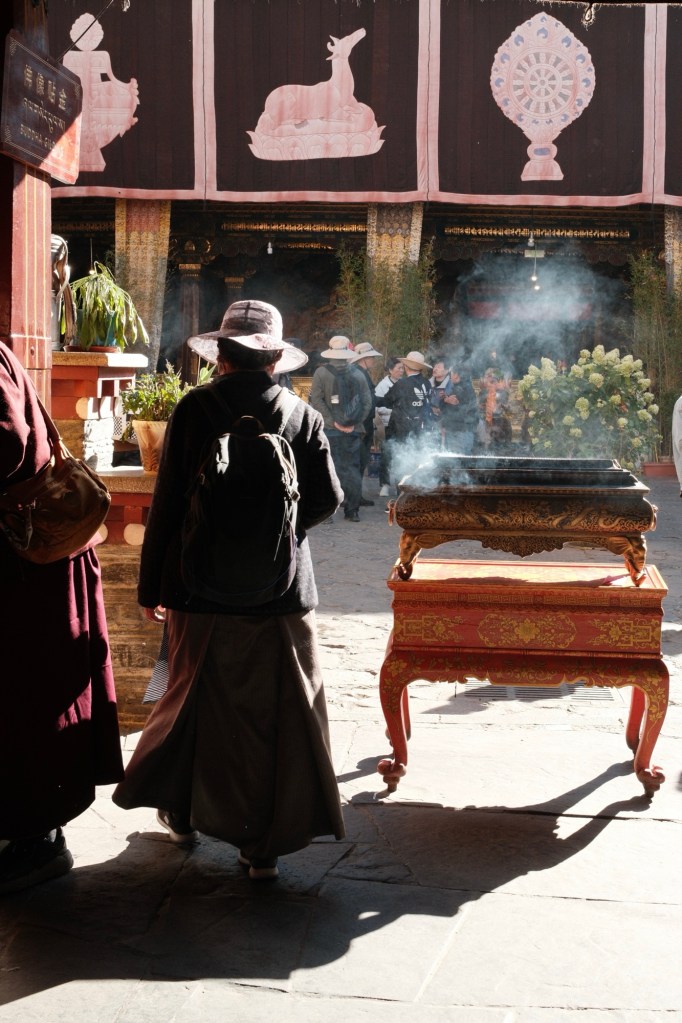
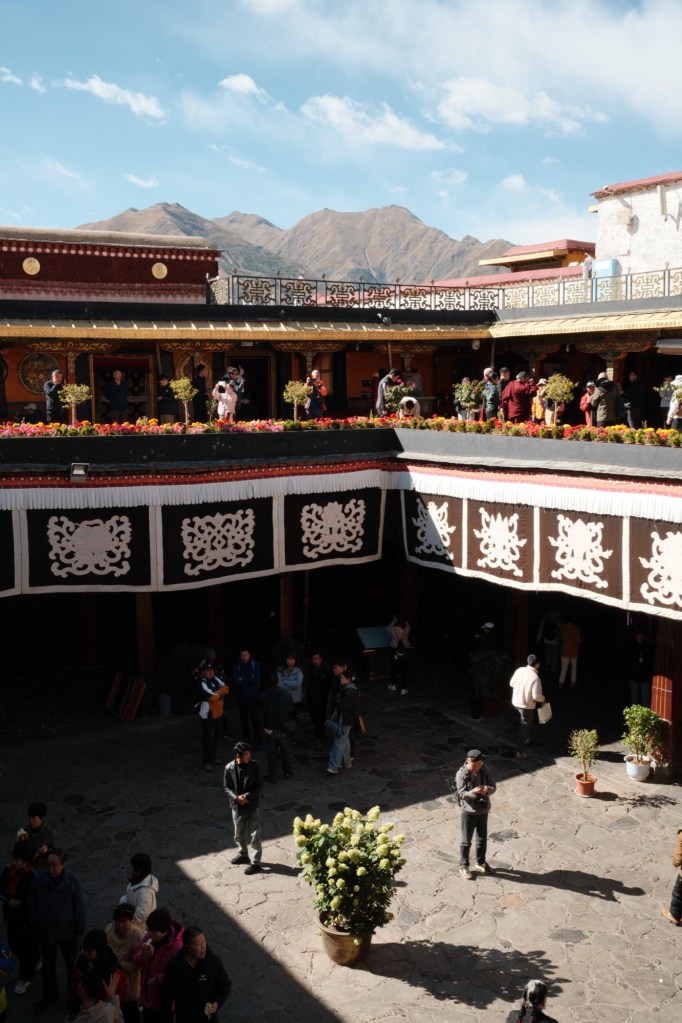
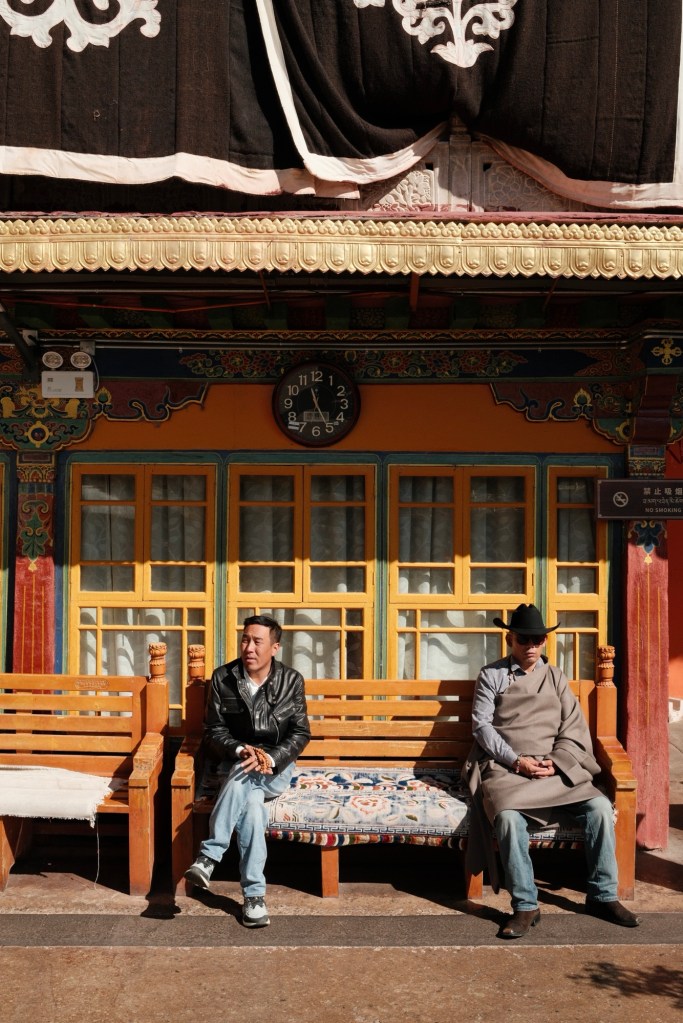
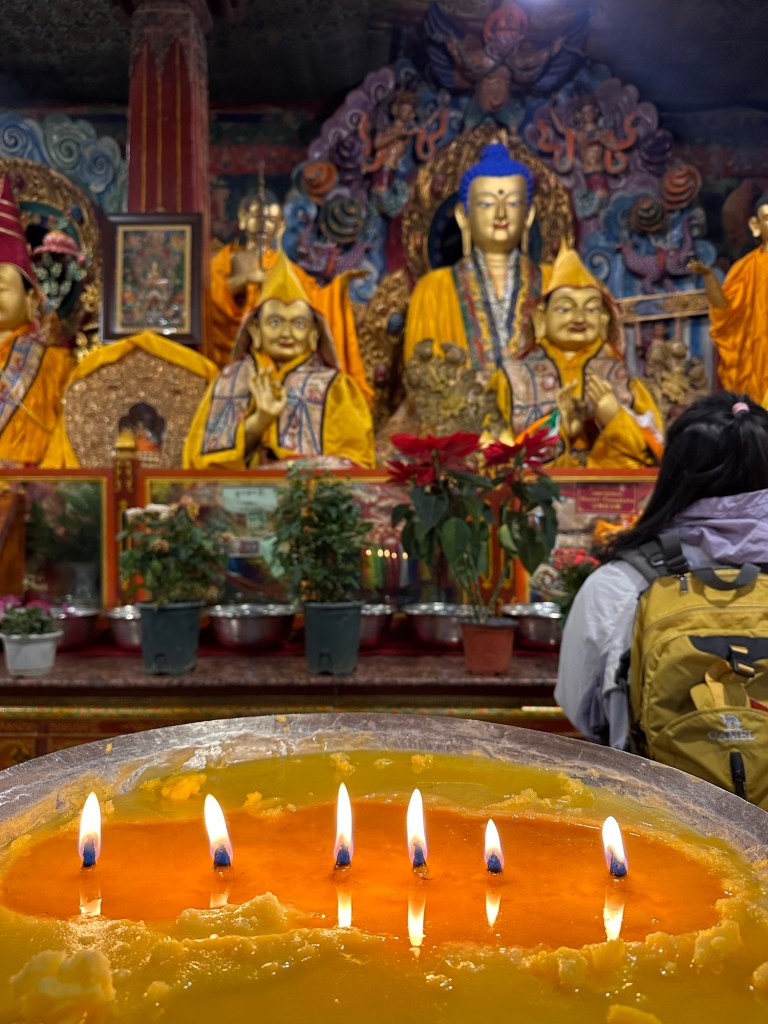
Central to Barkhor square is Jokhang Temple, which is very much active in Buddhism. You can enter as a visitor and see most of it, but certain areas are off limits to Buddhists and the monks who work there. It’s covered in gold and bright colours with thousands of yak butter candles burning (which is quite a smell). It’s incredibly busy inside as pilgrims flock to Lhasa on a daily basis, donating cash to the various Buddhist statues. There’s notes everywhere, stuffed in tiny gaps, donation boxes, on the floor. They also donate drinks, food, even cans of coke and Lhasa beer.
Our guide Pema was educated as a monk for many years before choosing a different path, so he’s wise to the teachings of Buddha and does a great job explaining the statues, gods, demigods, theories, and general history of Buddhism in Tibet. We choose our words wisely as not to ask anything too sensitive, or that might put him at risk. Which is tough at times as there’s things you just want to ask about the last 100 years, but it’s important to remember that we have a lot more freedom with our words than others.
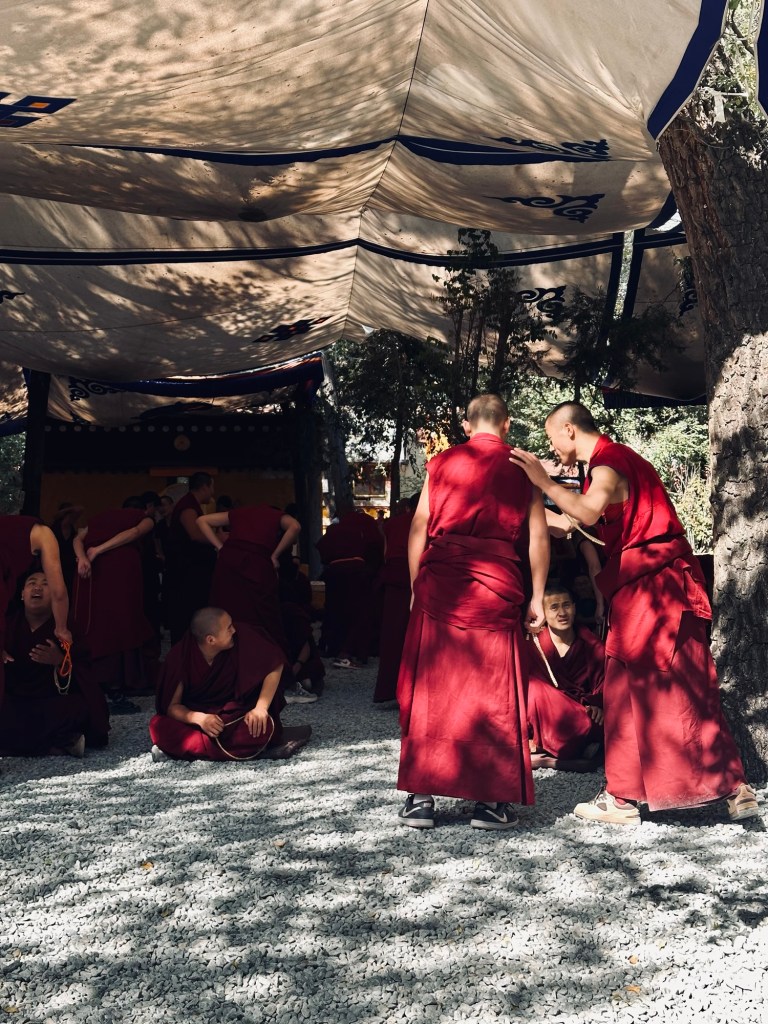
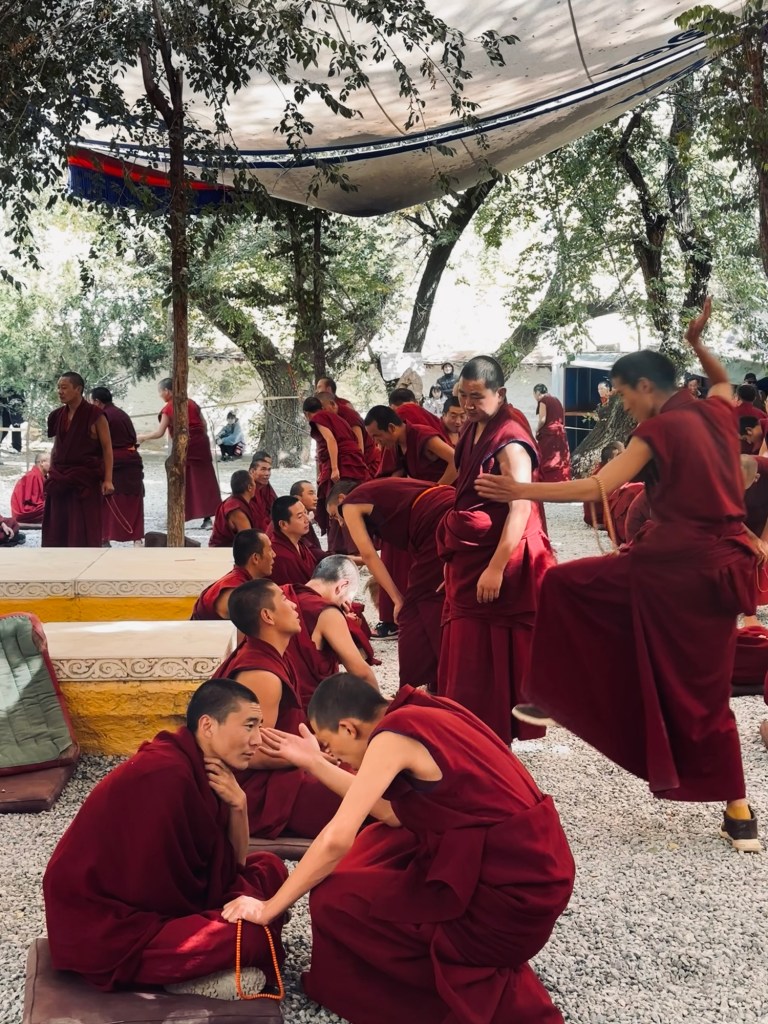
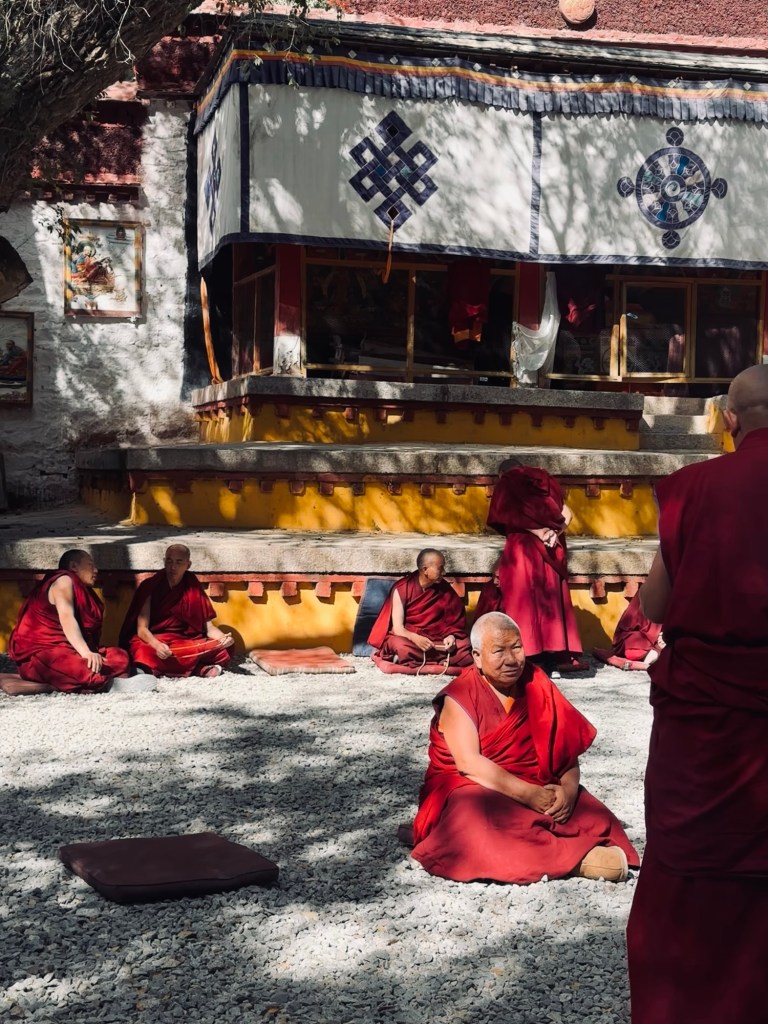
In the afternoon we visit Sera Monastery famed for debating monks. These monks of all ages, but predominantly late teen to early twenties spend their afternoons in a court yard debating the teachings of Buddha and the true meanings. They follow a format using body language and clapping hands to agree or disagree with their debating partner. It’s fascinating to watch, and surprisingly you can get super close, and photos are permitted, albeit with phone only, no full size cameras. One monk may ask the other ‘what is emptiness?’ and the monk should respond. It’s normal to see an older monk mentoring the younger monks on questions, to challenge their rationale or opinion. This was a completely unique experience, not to be missed if you’re in Tibet.

As you walk through old Lhasa, specifically the area around Barkhor Square and Jokhang Temple, you’ll find multiple check points where you’ll need to show your passport and sometimes your Tibet Permit. Occasionally these situations feel a little serious, but more often it’s a relaxed affair. Security is tight though, and cameras are visible in a lot of places. It didn’t equal a hostile or scary experience while in Tibet though, everywhere felt quite relaxed, and we felt free to roam.
Day Three – Palaces
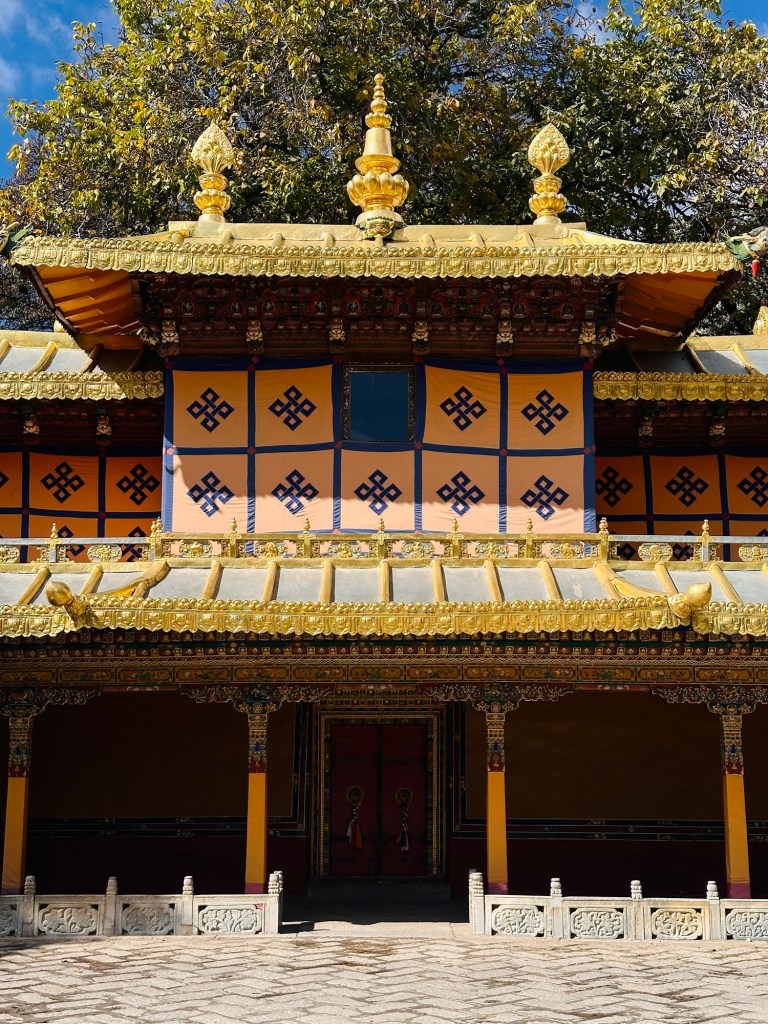
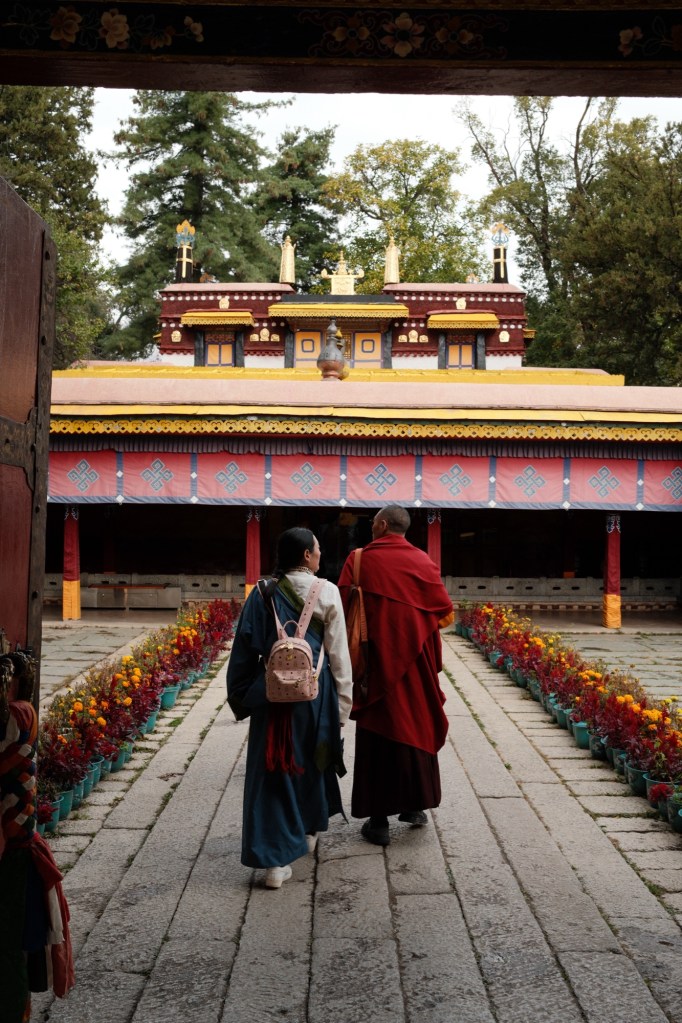
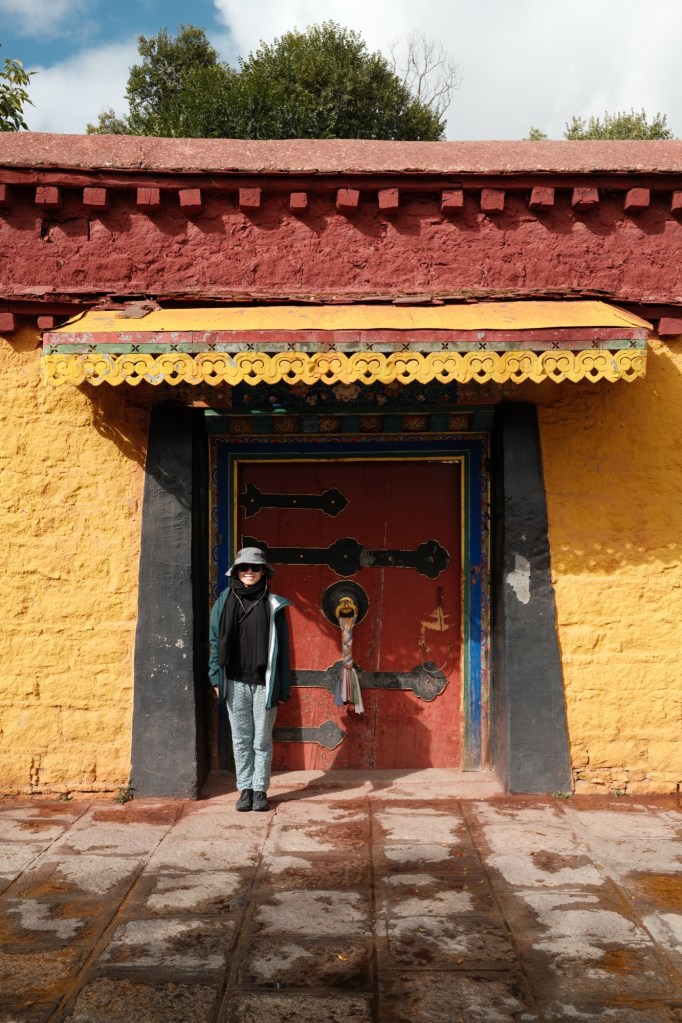
Day three gets going at what was the summer home of the Dalai Lama when he lived in Tibet, Norbulingka. The majority of the buildings were commissioned during the time of the 13th and 14th (current) Dalai Lamas. You can see gifts that were given to the 14th Dalai Lama from multiple countries during the 1940/50’s – a full bathroom suite from the UK, bizarrely. During the summer, the Norbulingka grounds are full of brightly coloured flowers, and it’s the location of festivals and events.
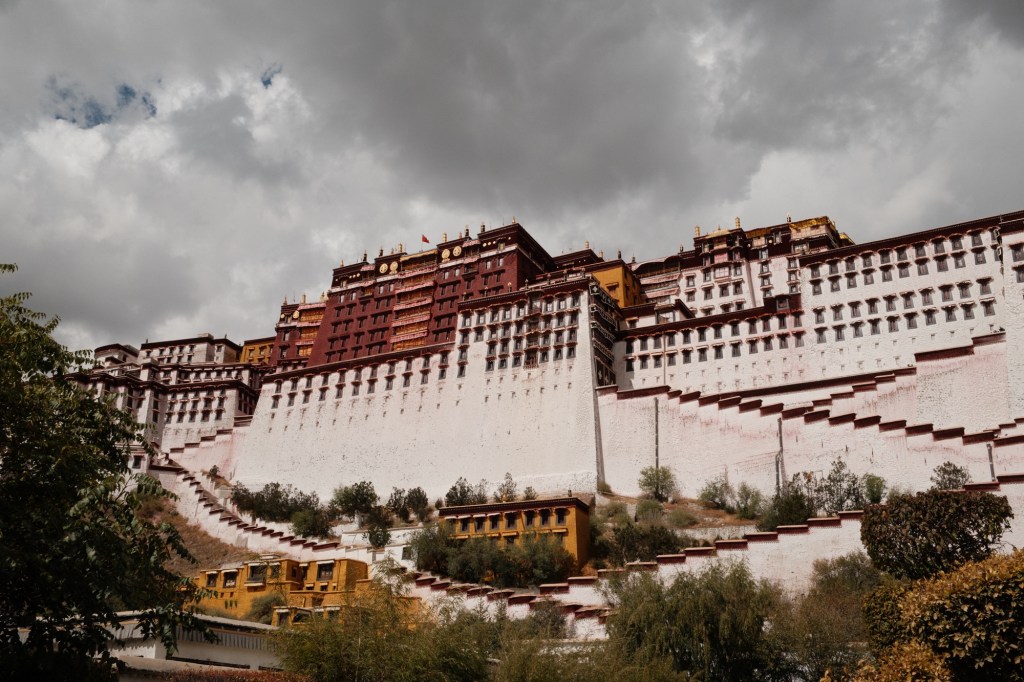
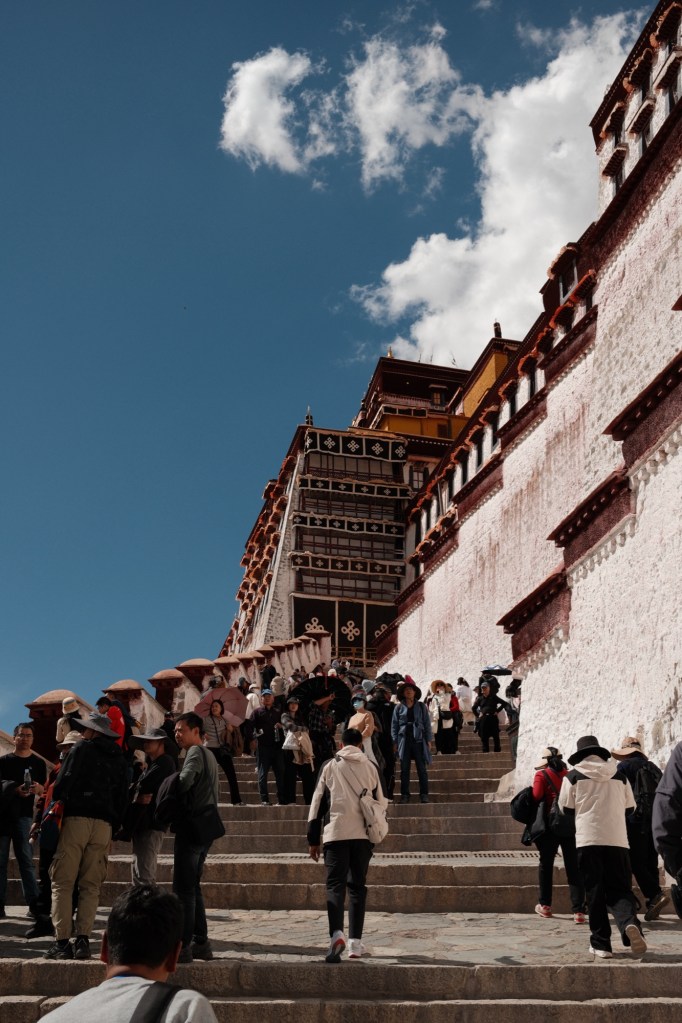
We head to Potala Palace in the afternoon, once the tallest building in the world and previously the winter home of the Dalai Lhama. Now it’s classed as a museum, but you’ll still find monks working there, and it doesn’t exactly feel like the Tate. There’s over 1,000 rooms, but only a few open to the visiting public, and photography is off limits inside. This was once the image of Tibet around the world. It’s built dramatically into the cliff/mountain.
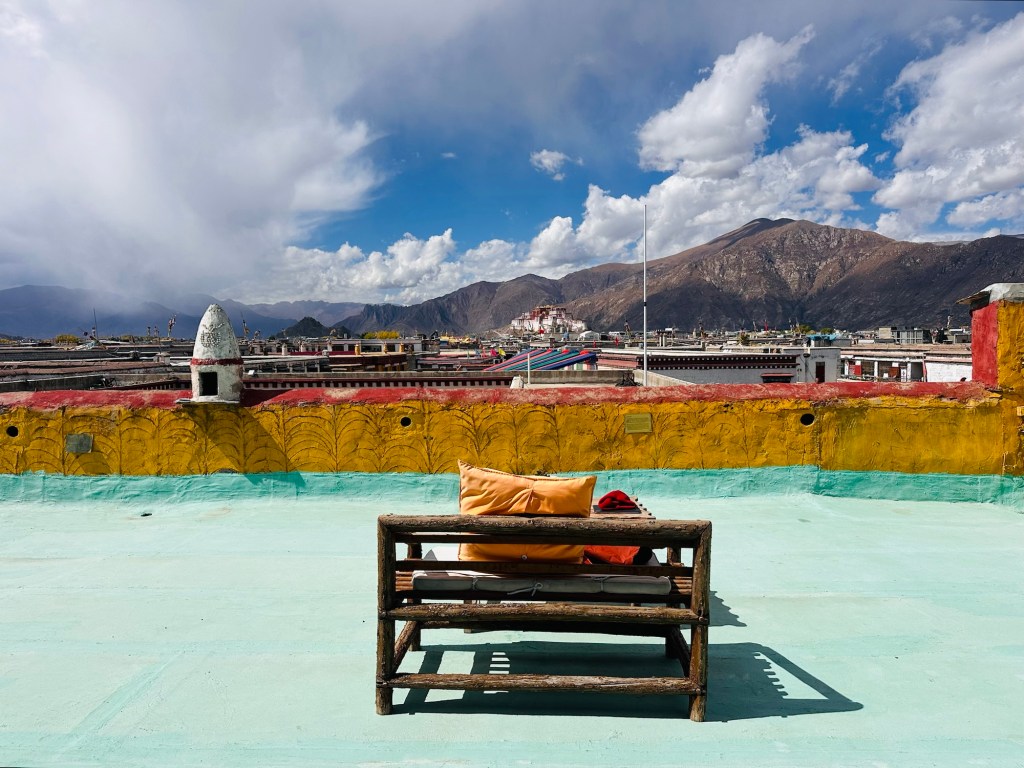
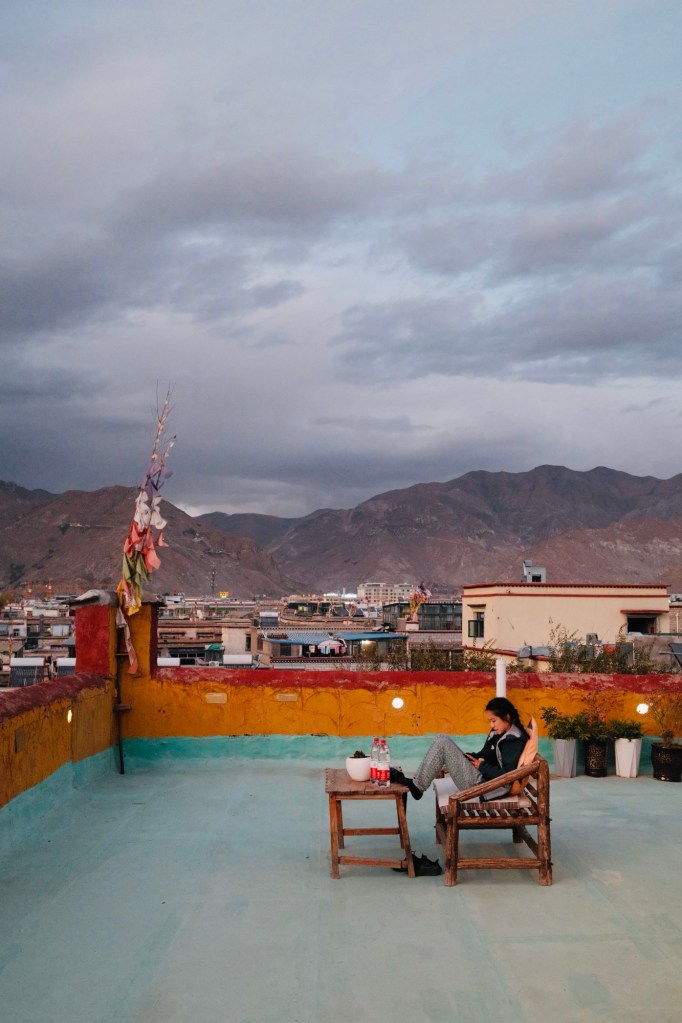
Both Carmen and I had discovered the roof of our hotel actually offered an amazing sunrise and sunset view of Potala palace, with the light bouncing off it perfectly, so we spent some time up there reading and relaxing.
Day Four – Onwards to Everest
After acclimatising in Lhasa for a few days we were now ready to get on the road and see wider Tibet. We’d be travelling in a van, covering a sizeable distance over the next few days.
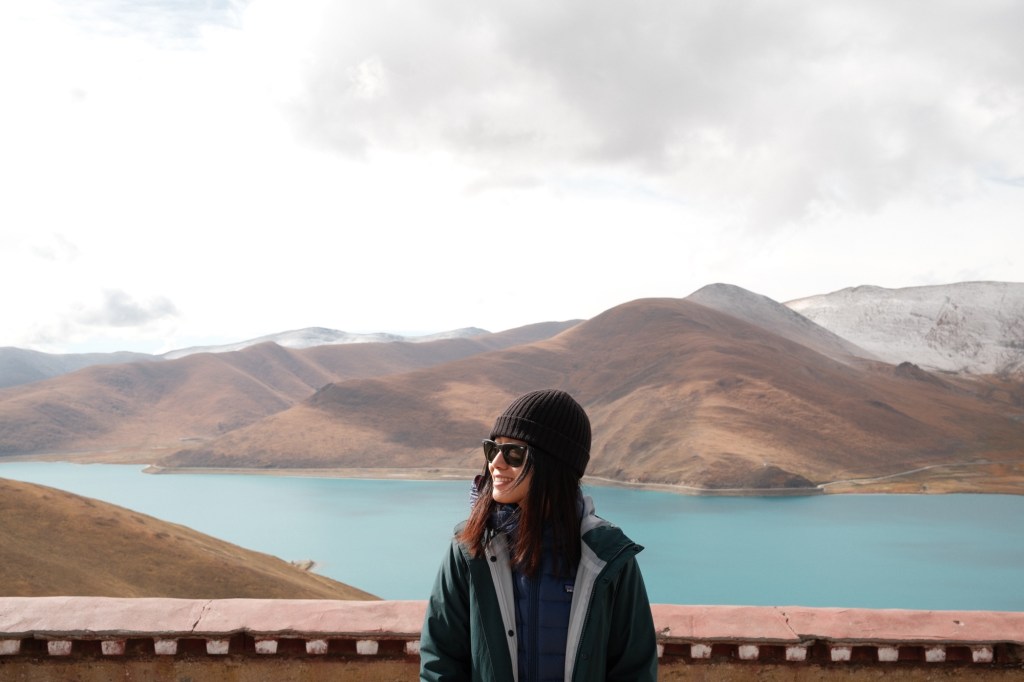
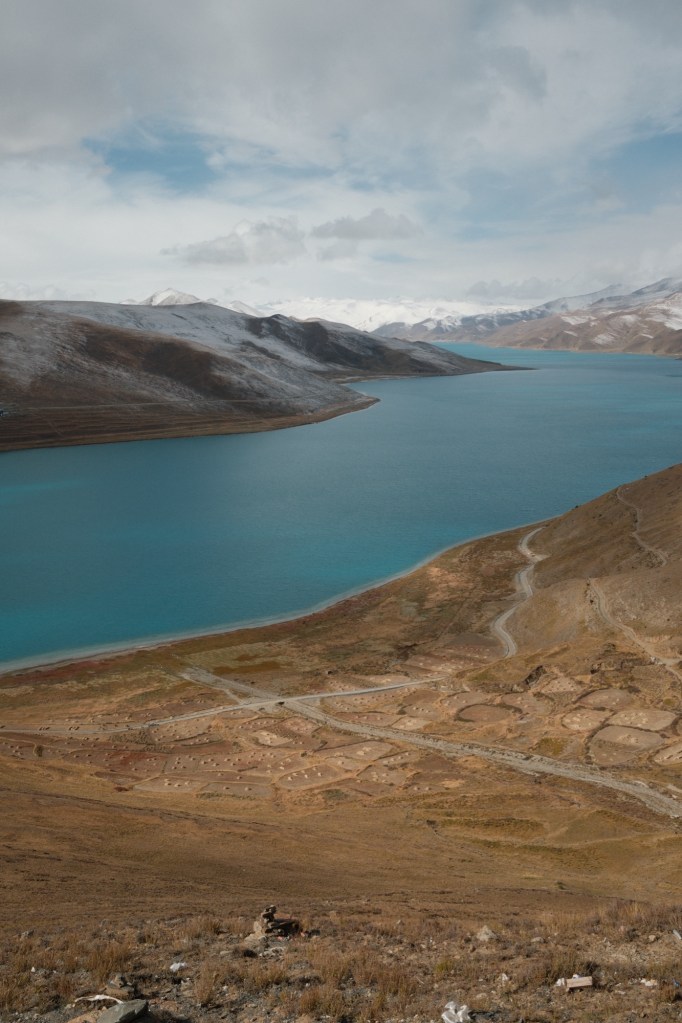
We visited one of the large lakes in Tibet, Yamdrok Lake, with crystal turquoise blue water. One of the tourist attractions we didn’t partake in, or particularly like, was the showing of large mountain dogs and yaks at the roadside, where you could pay money to have your photo taken. The animals looked well cared for, but it did seem a little cruel from them to sit there all day.
What we realise when stopping at landmarks on the journey is that we see the same tourists at each stop, all of us on pretty much the same schedule. This goes for restaurant and hotels too. It’s quite nice really, as you exchange a few words with each as the trip goes on.
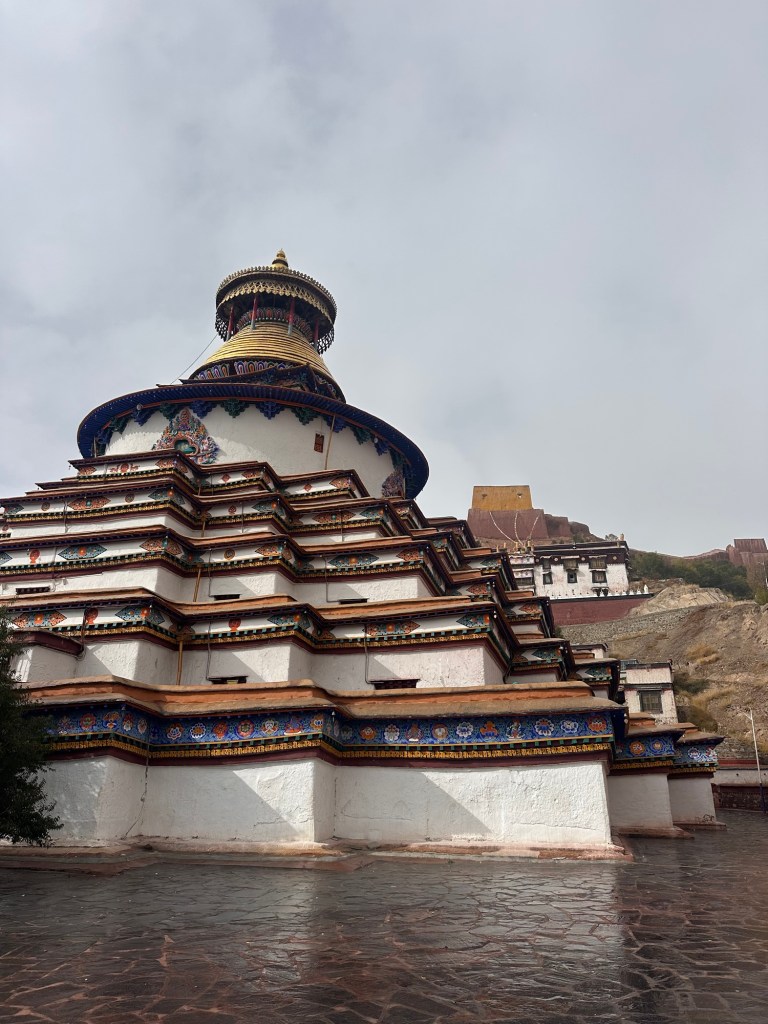
We visit the the Palcho Monastery, which features a building called the Kumbum that has 108 chapels set over 9 levels. You wind your way through the rooms via wooden stairs ( we didn’t actually go to all of them, as we’d hit a bit of saturation point). It’s a bizarre building, unlike anything we’ve seen. There was also a good view from the top.
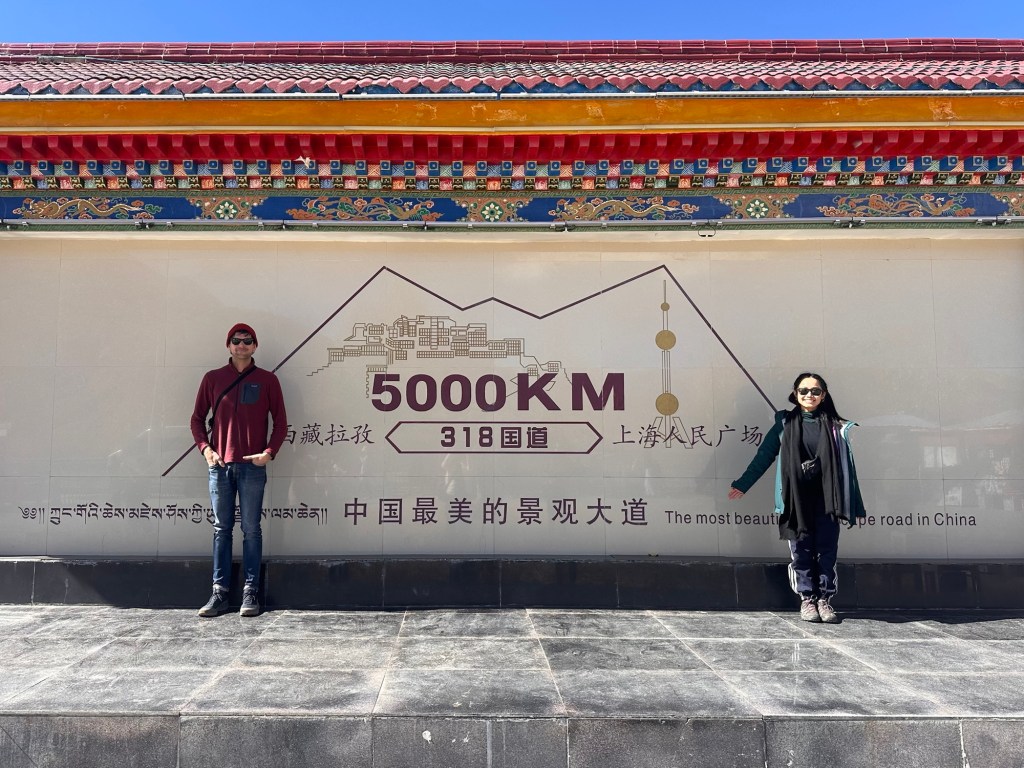
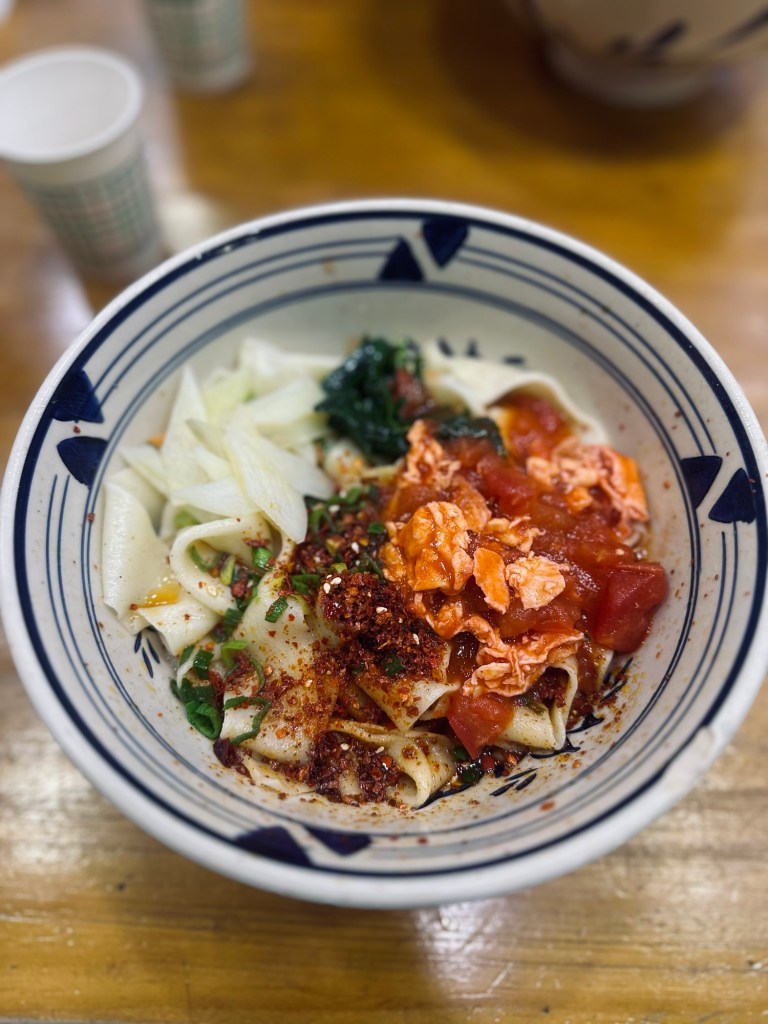
We worked our way towards Everest Base Camp, a distance of around 500 miles, staying for a night in Shigatse before travelling onto Zhagaqu, where we’d take an electric bus up to the main camp. A good bit easier than the Nepalese Everest base Camp trek which takes around 15 days. Shigatse is a sizeable town with plenty of restaurants and hotels for those making their way through Tibet. We stumbled on a really good restaurant where they made Biang Biang noodles (spoiler alert, I’ll talk in detail about the joys of Biang Biang noodles 🍜 when we return to China after Tibet).

Day Five – Everest Base Camp
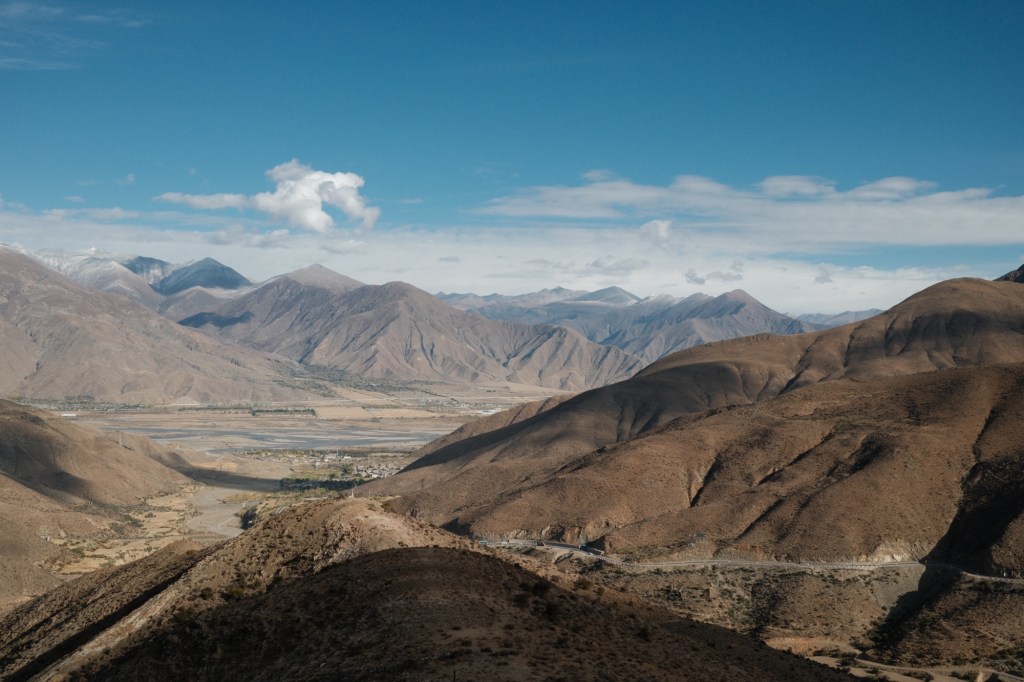
En-route to Zhagaqu we get to travel on a new-ish road which winds its way up the Himalayas, traversing the mountains with ease – another near impossible China engineering project – We can’t help but draw comparisons to the Nepalese Himalayan roads which we’d been travelling on just a few weeks earlier, which aren’t that far away but are in a much poorer state. I wouldn’t be surprised if in 10 years China had supported Nepal with improving them, like they have with other neighbouring countries.
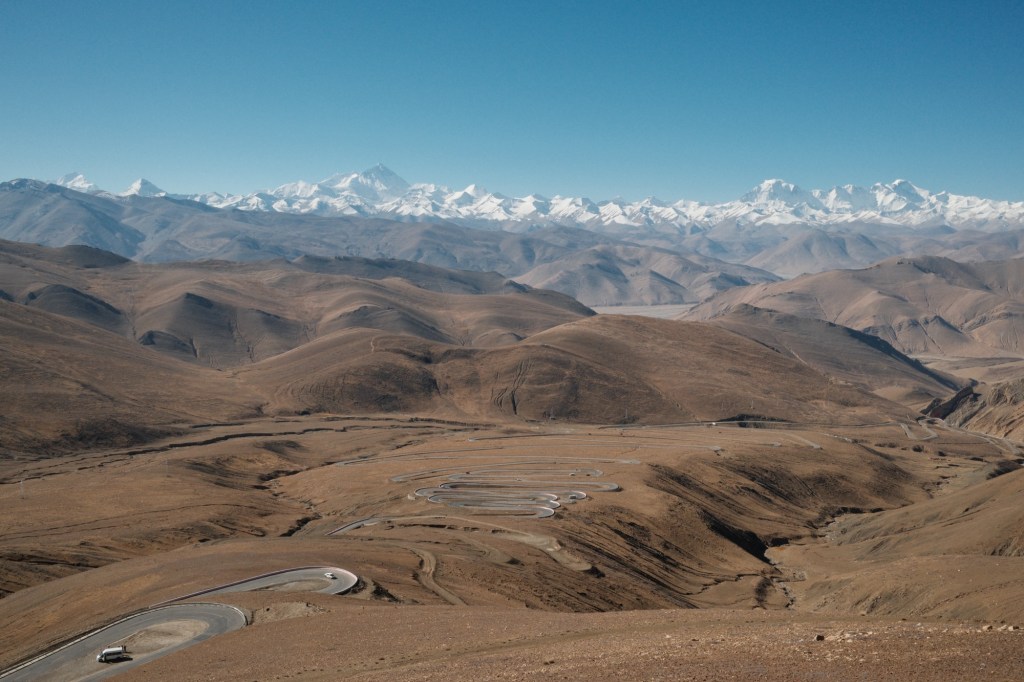
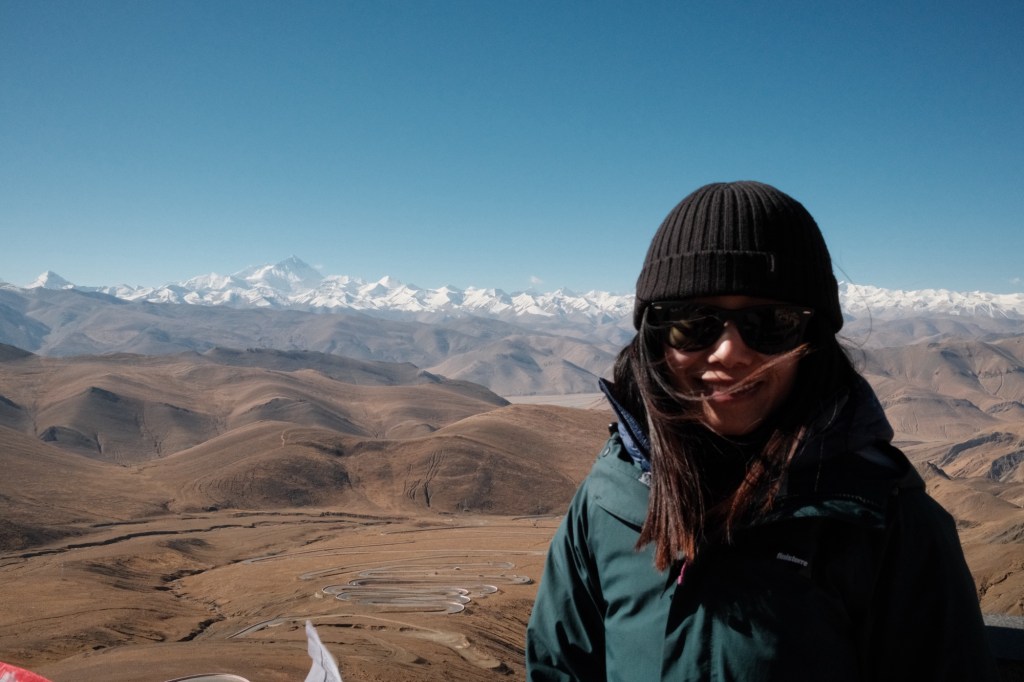
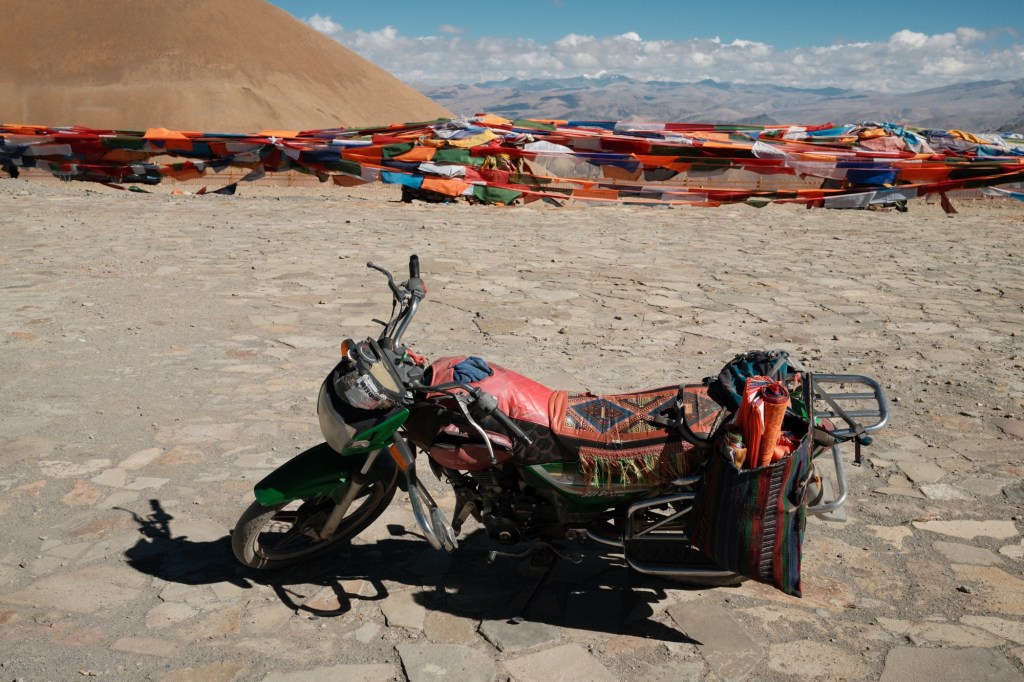
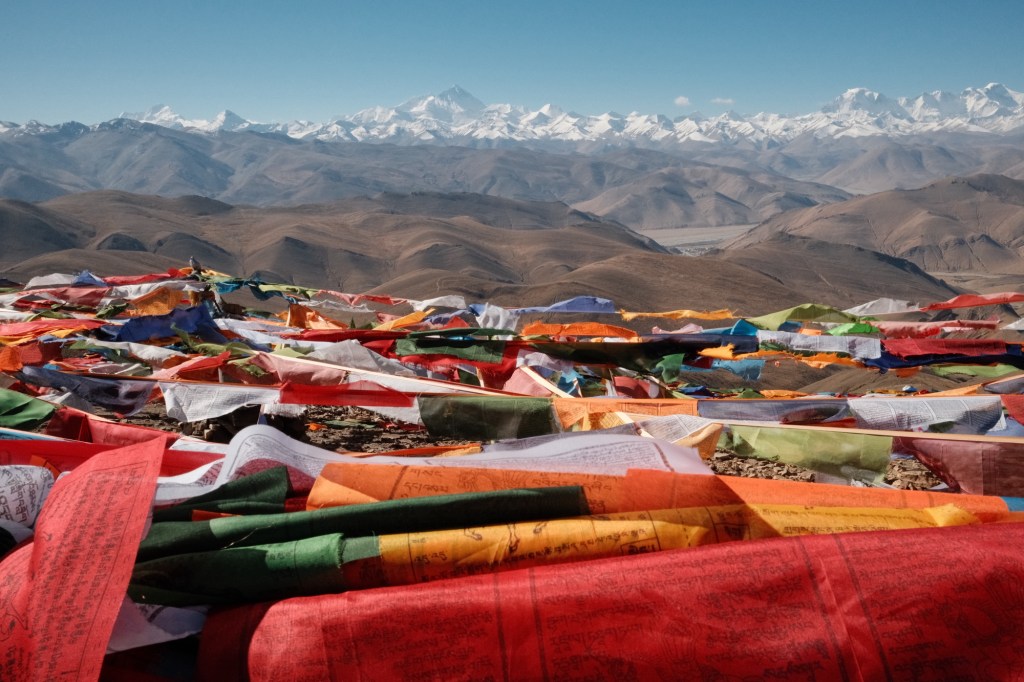
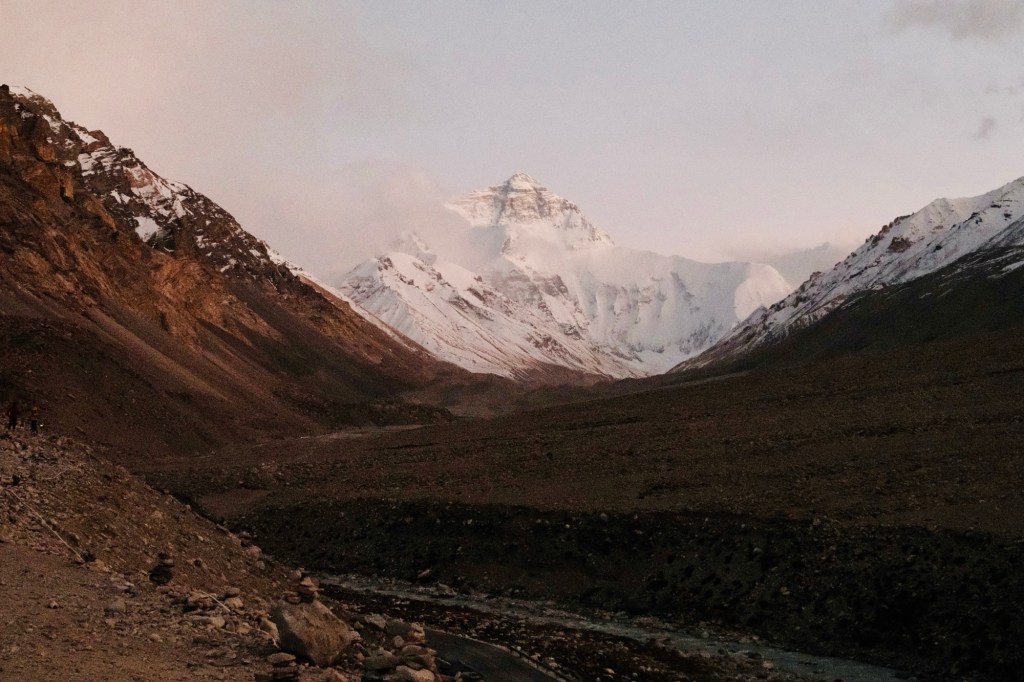
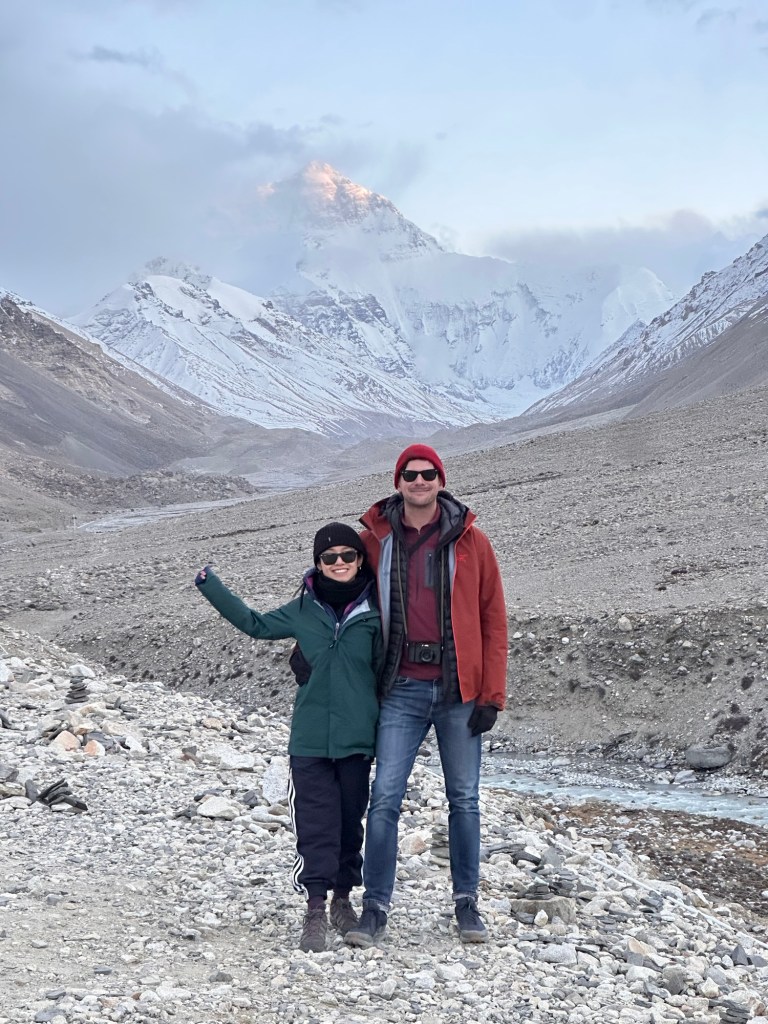
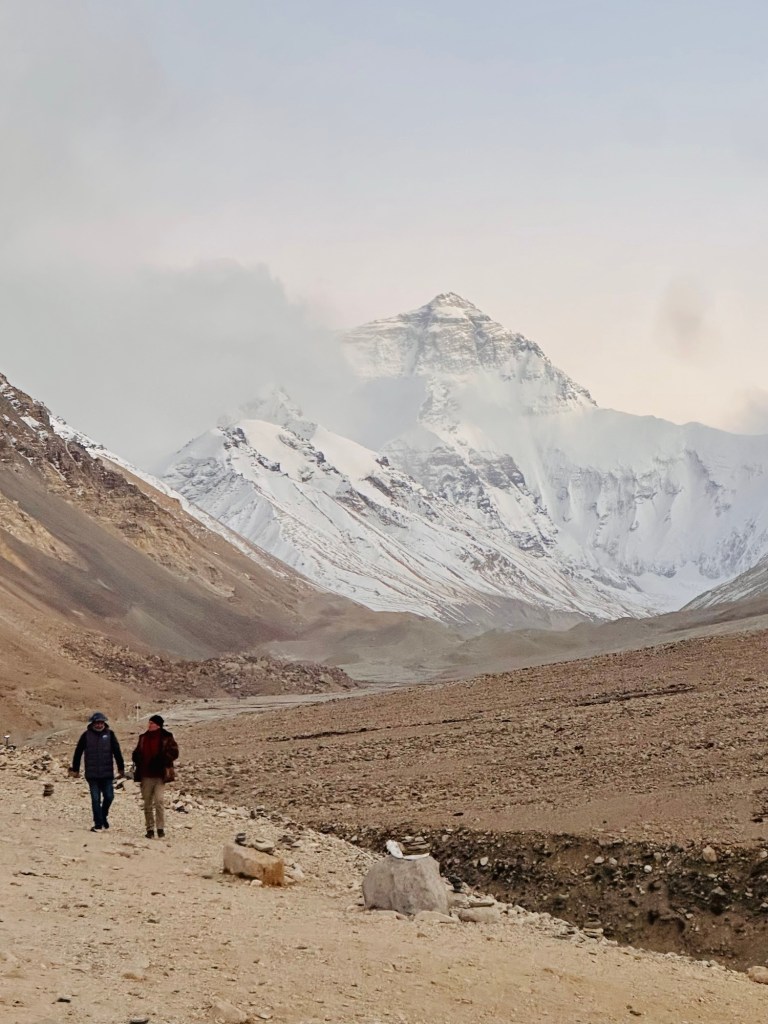
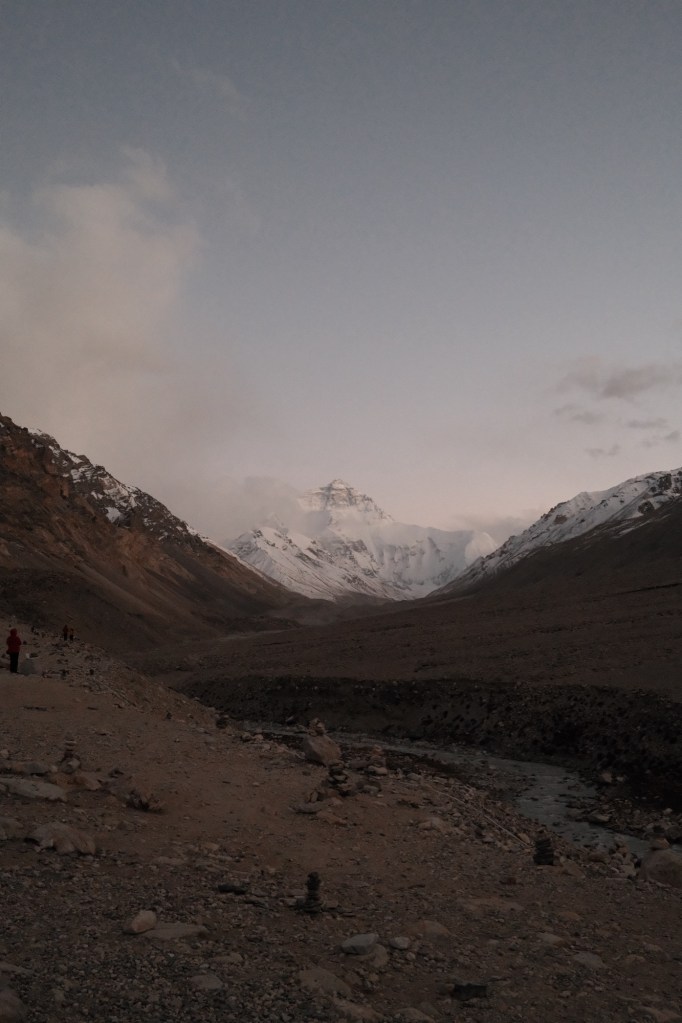
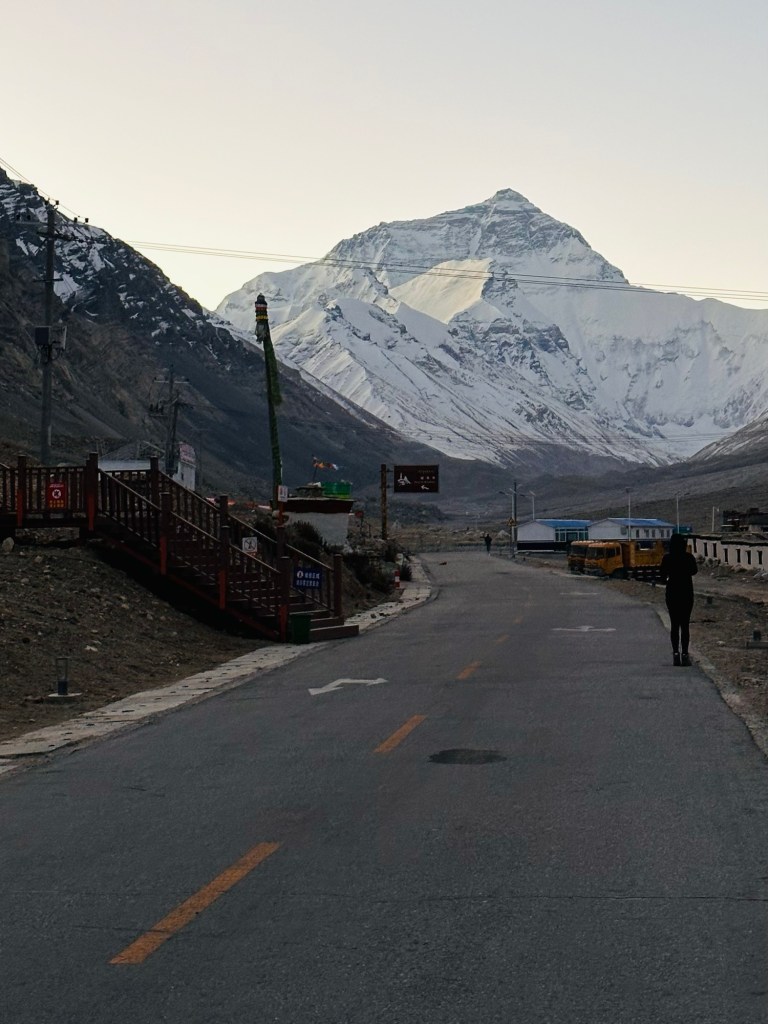
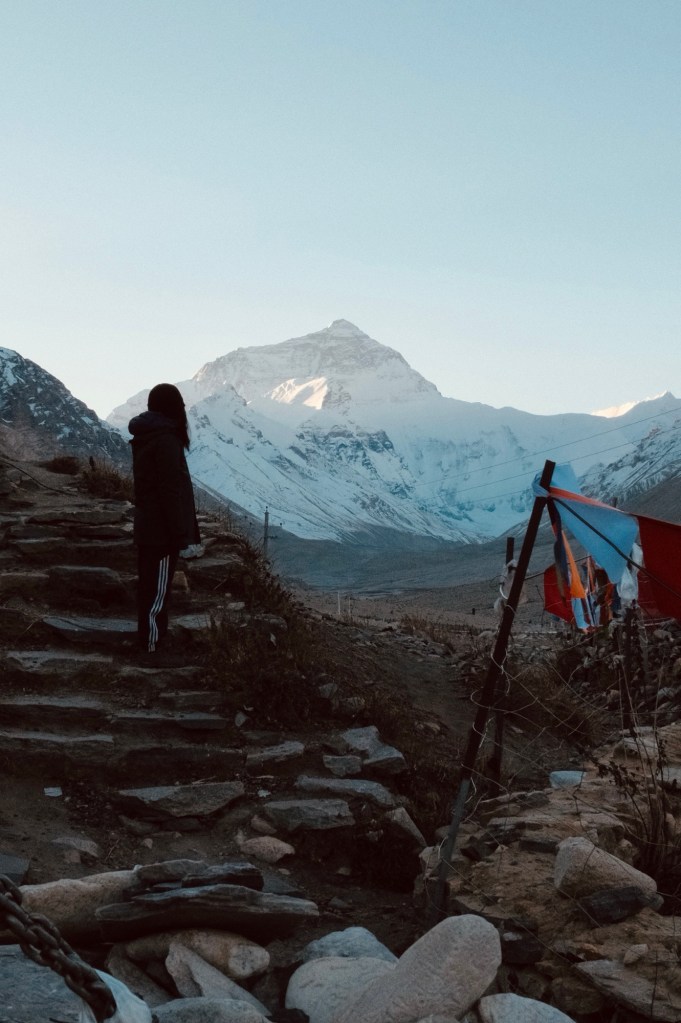
At Everest Base Camp we were staying in a pre-erected camp, luckily with wood burning stoves and electricity, as the temperature will be dropping to c-15° in the night 🥶 We arrived just before sunset and by some miracle made it further up the mountain to get a stunning view of the Everest peak with the sun setting. The only cloud in the sky even decided to move away from the peak to give an entirely clear view. Definitely one of of those pinch me moments. Our entire group was in awe of the view and just how close to Everest we were. I don’t think any of us thought that this part of the trip would live up to the hype that surrounds Everest, but it really did. Yes, there’s a large number of people visiting for the same reasons, but it takes nothing away from how incredible it feels standing at 5,000+ metres looking at the world’s highest mountain. It also adds to the magic that there’s a working monastery at this altitude that we would be visiting shortly after dawn the next morning.
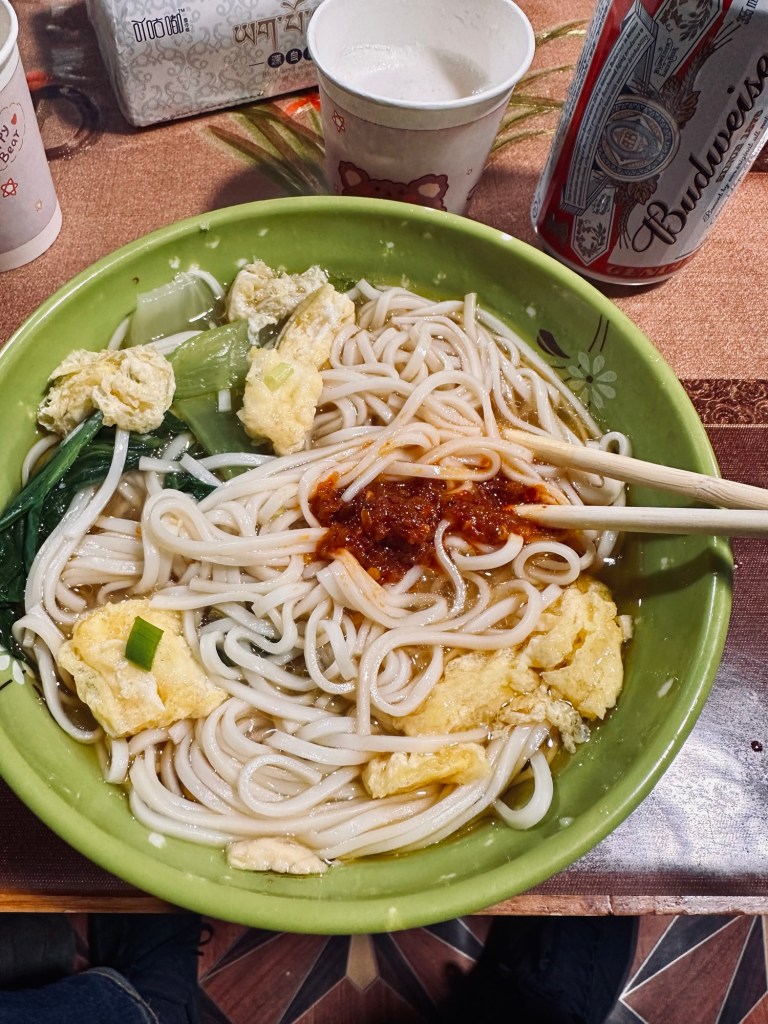
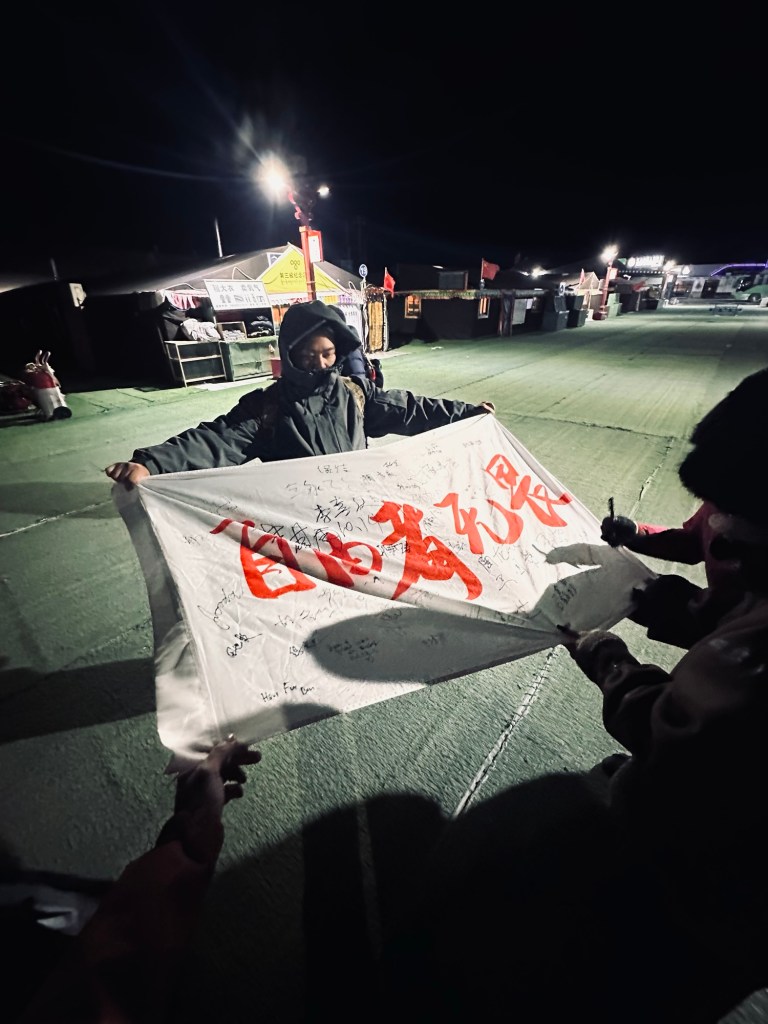
Dinner was prepared by our camp host, simple noodle soup, and for me a warm can of Bud (yes this did disappoint a little when I’d been trying so hard to drink what’s local 😂) . Noone else in the group seemed to want a drink, but some did opt for a regular top ups on their oxygen tanks to manage altitude sickness. What we didn’t expect was a party outside, a regular occurrence apparently, and one that seemed to be mostly orchestrated by some of the tourists from mainland China. There was a sound system and dancing, and people had flags that they ask you to sign. We only stayed for a bit as it was so cold and we wanted to get up for sunrise.

Day Six & Seven – Returning from Everest
Getting up was HARD. It was freezing. Icy. It required even more motivation than normal, and neither of us are good at getting up in the morning. We were impressed to learn that fellow group member, Manfred, had been up most of the night taking Timelapse’s of Everest, with impressive results. He managed to capture a perfect starry sky with Everest clearly visible. Some instant regret from myself for not doing the same, but you can’t do everything.
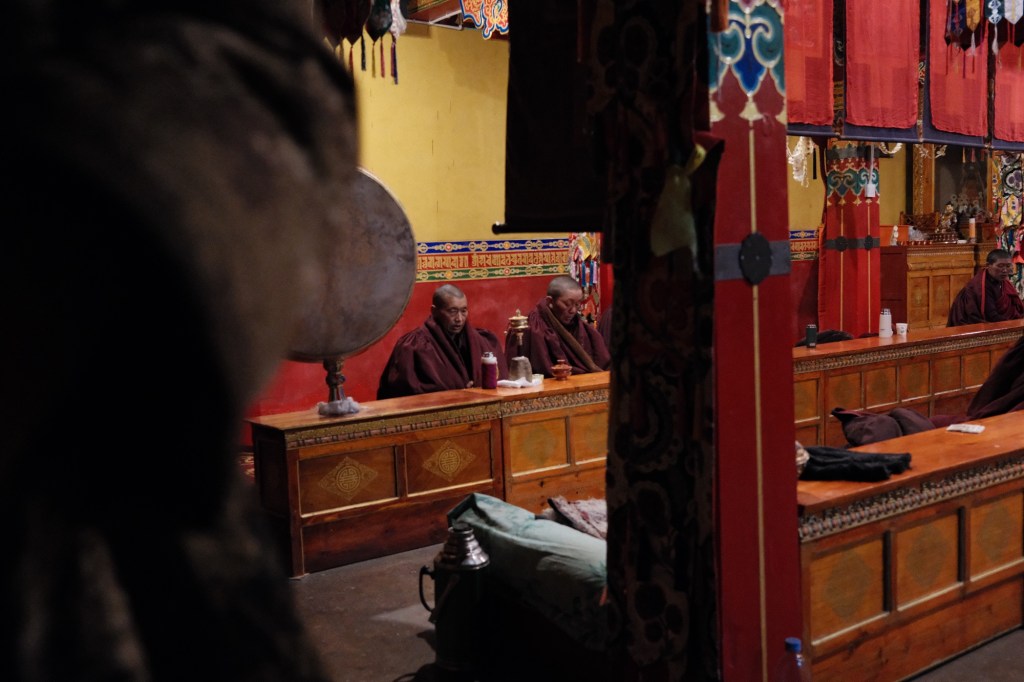
Sunrise light was even more spectacular than sunset, Everest remained in clear view. After taking a few more photos and enjoying the views, we ventured inside the Rongbuk Monastery. Proceedings of the day had just started, we were able to listen and watch the morning chanting, and even take photos if we wanted to, which generally wasn’t the case in wider Tibet.
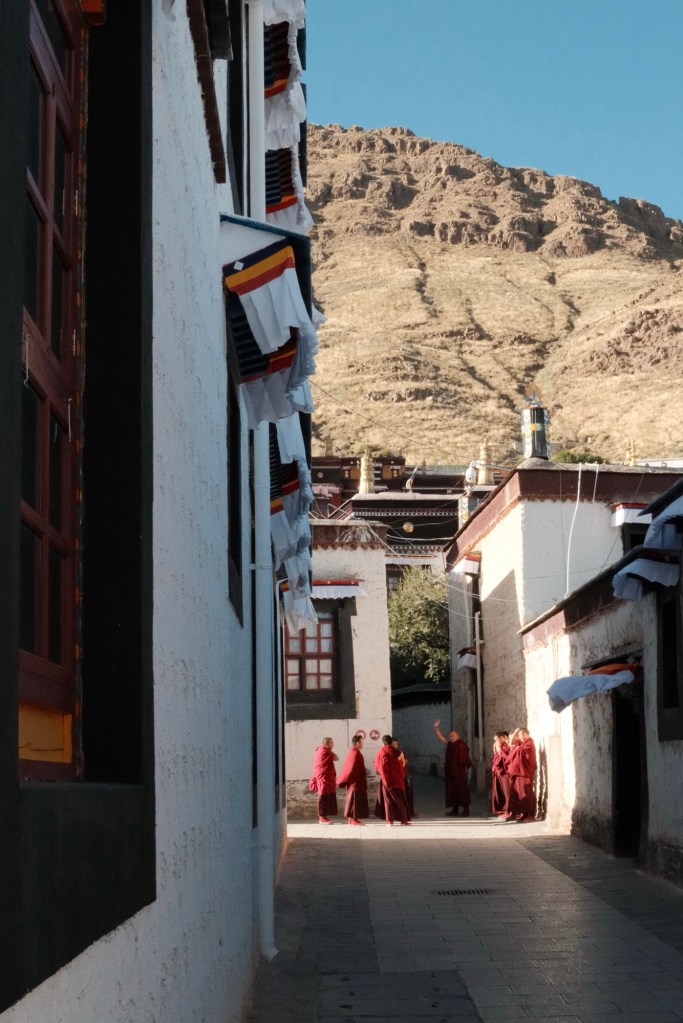
It was then time to make the long journey back to Lhasa. We spent another night in Shigatse, returning to our new favourite restaurant. We also stopped at Tashi Lhunpo Monastery, the second largest in Tibet, founded in the 15th century by the first Dalai Lama. It felt like a mini town (which it probably was before the surrounding town was built next to it). The tallest and largest bronze Jampa Buddha statue in the world is in Tashi Lhunpo Monastery. Like most of the monasteries in Tibet you couldn’t take photos inside, so no photo I’m afraid, you’ll need to see it with your own eyes (you can actually sometimes pay a fee to take photos, but we didn’t think it was necessary).
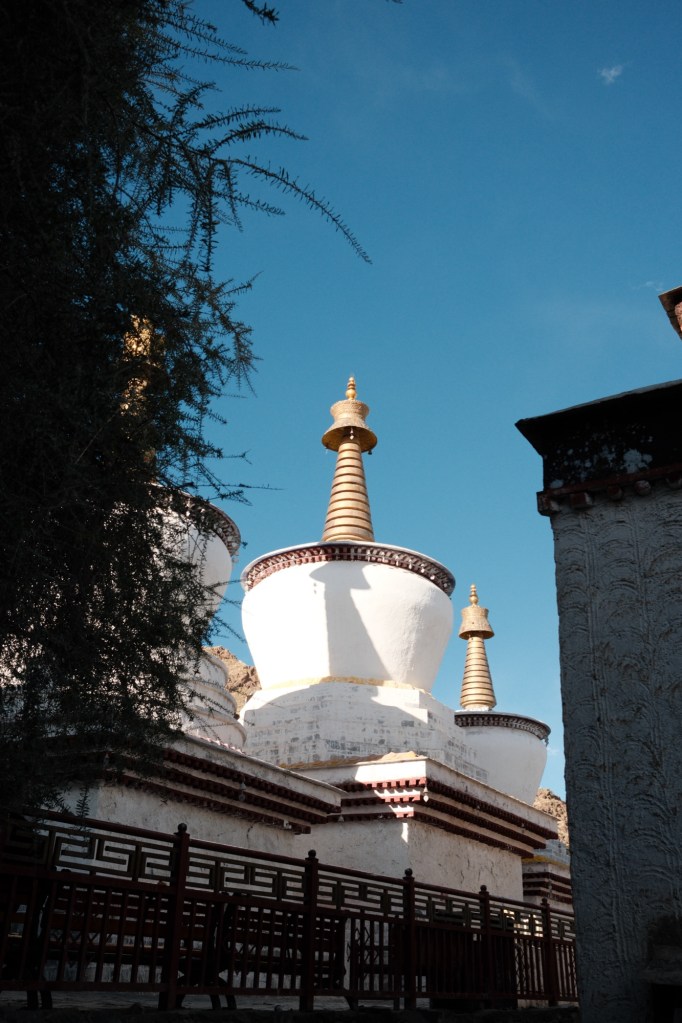
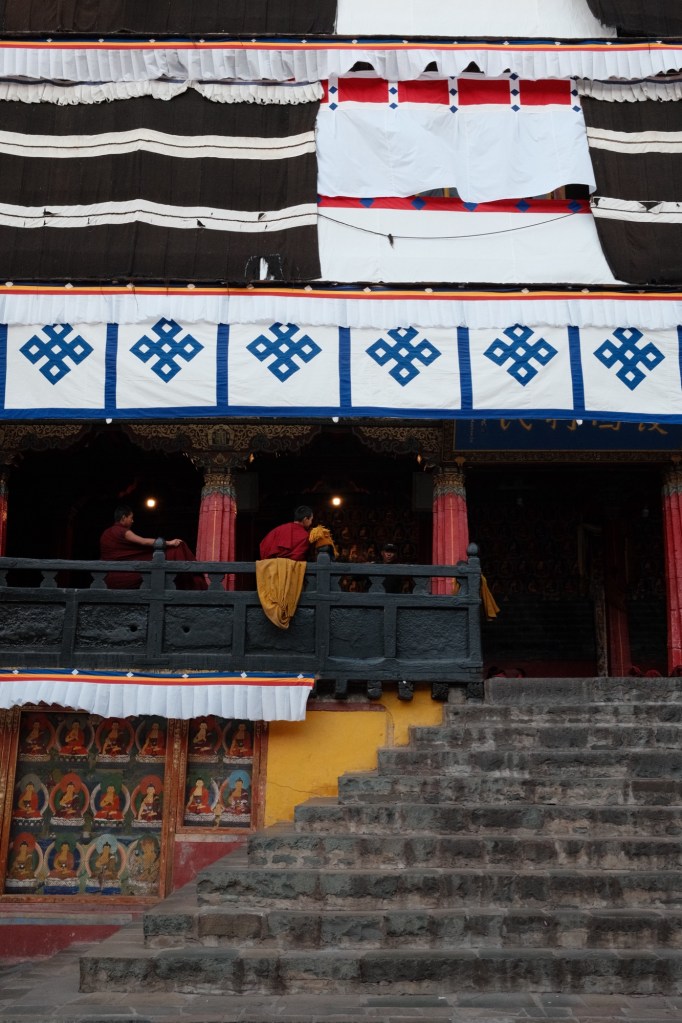
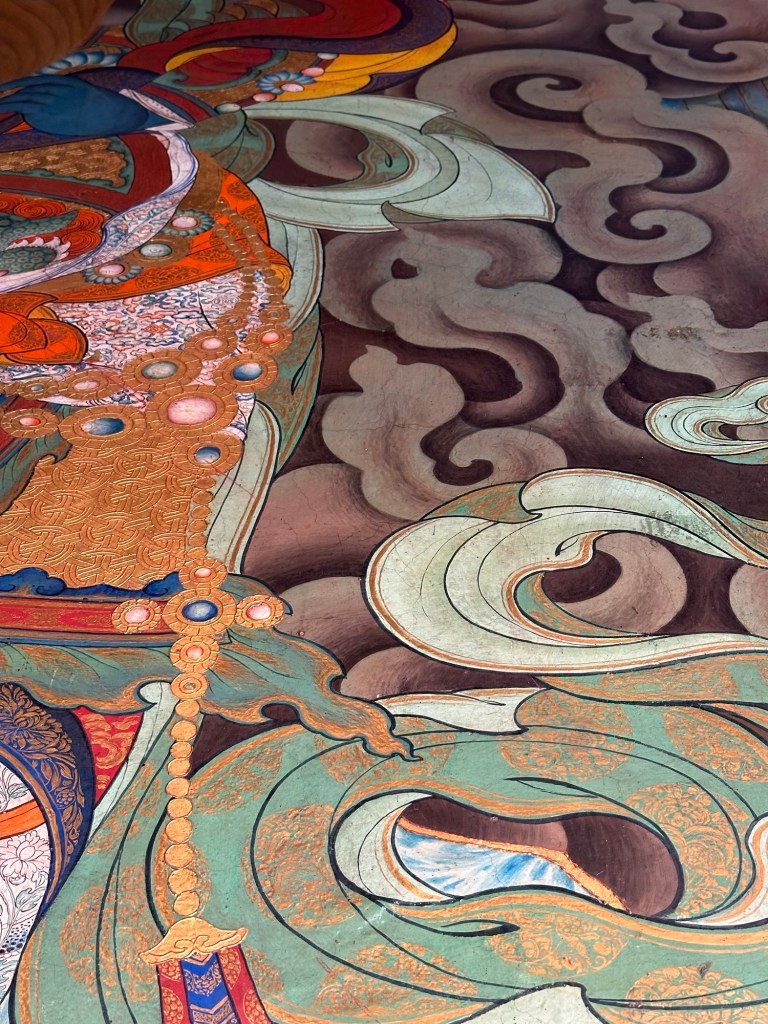
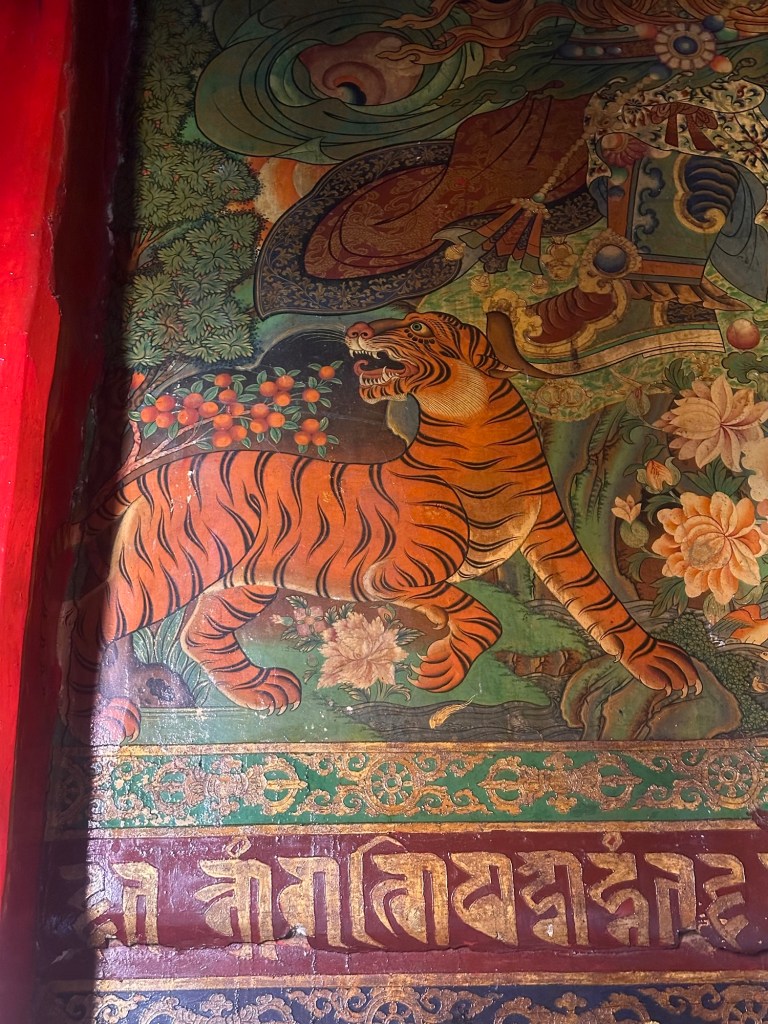
We loved our time in Tibet, it was an incredible experience to visit so many treasured places and understand a little about Buddhism. Plus the bonus of visiting Everest Base Camp, that we hadn’t planned on seeing while in Tibet. The group we travelled with really added to the experience, and I feel we got lucky with our guide/tour company.
Next up: we return to China for another couple of weeks – pandas; Terracotta Warriors; Great Wall; The Forbidden City (all the classics!). Also unlimited Sichuan & Xi’an cuisine, plus Lawson’s mini supermarkets – more on that in my next post.
 seemehear
Leave a comment