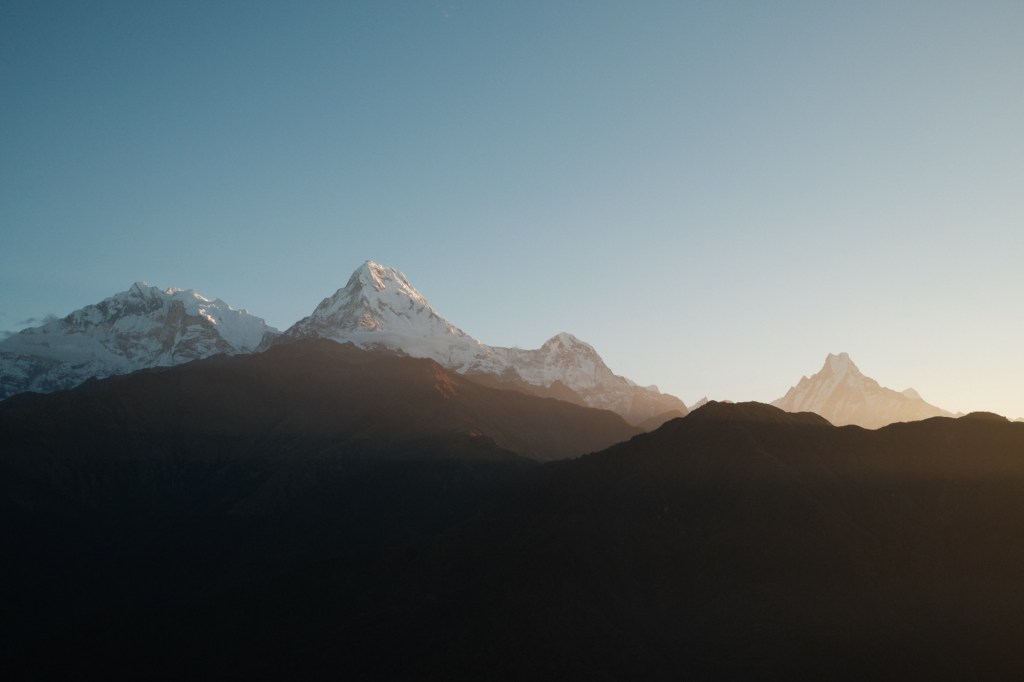
We had a few days in Pokahara to get ready for our big trek in the Annapurna region. We didn’t really have too much planned but we did want to relax and wander about. We’d lucked out and our hotel (£30pn) had a pool and spa, so a bit of self therapy was in order.
Singing Bowls
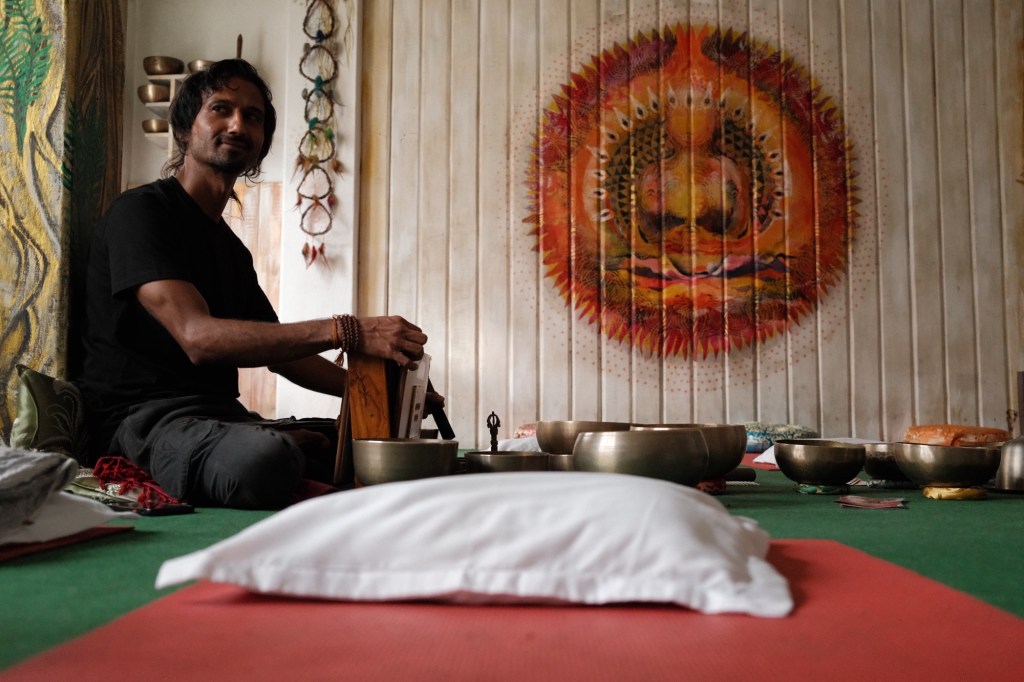
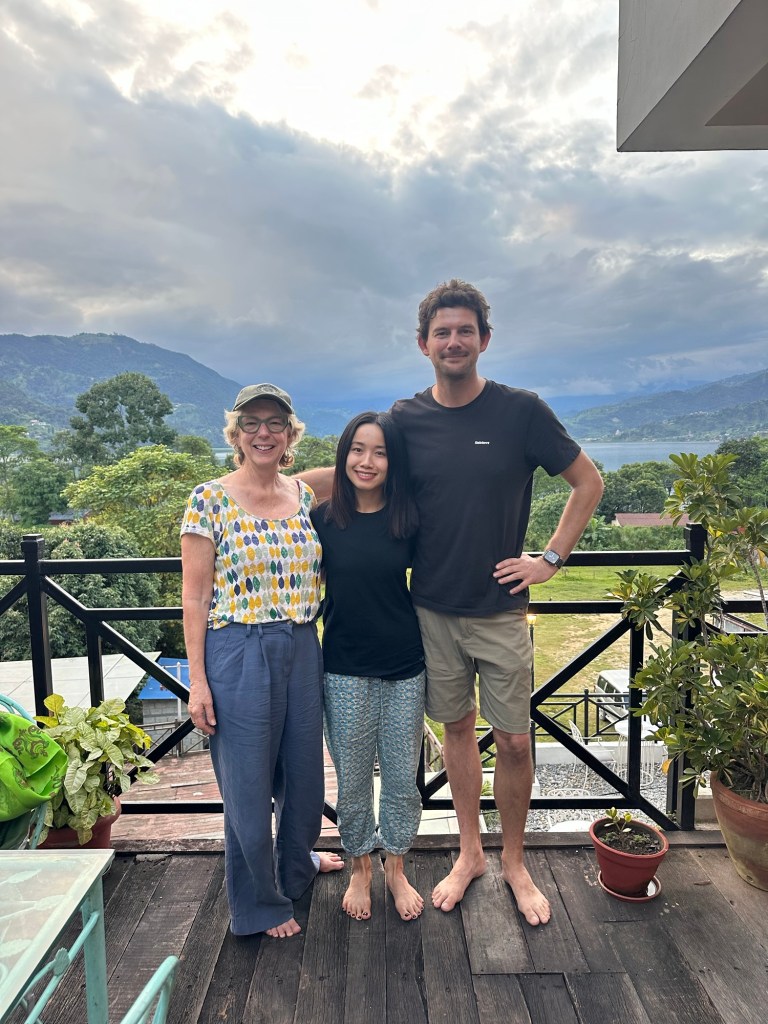
We met up with Olly’s aunt Noreen and went to a singing bowl sound bath (yeah I know, couldn’t get any more Nepalese backpack-traveller-like if we tried). And you may be asking, “what exactly is a singing bowl sound bath?” I had an assumption of what it might be – a relaxing meditation-like class with metal bowls that are played by rubbing or hitting them. I was partly correct. it turned out to be a really enjoyable (and very relaxing) hour.
We headed there early as it’s a popular daily event in Pokhara for tourists, locals and the camp that’s in between, those almost permanently living here. You can donate whatever amount you want after the ceremony, so it’s not an expensive activity.
We were greeted by our host, who made us feel welcome and comfortable straight away. Noreen has been before so knew what to expect. We were allowed to enter the room early, where we were introduced to the singing bowls, but also an interesting instrument from India called a Shruti Box. It was similar to an accordion, where the player must gently squeeze one side to allow air to travel through it. The sound was mesmerising. We all had a go at playing it, but Noreen and Carmen had a jam with our host.
What I wasn’t expecting during the hour of singing bowls, was actual singing. Delicate ambient singing that magically matches the tone produced by the instruments. Metal chimes are moved around the room, producing sound waves that you feel vibrate and move right through you (I guess I’m already a convert).
We left feeling perfectly relaxed and headed for some tea nearby. Big thanks Noreen for taking us to something special.
Fishtail Lodge
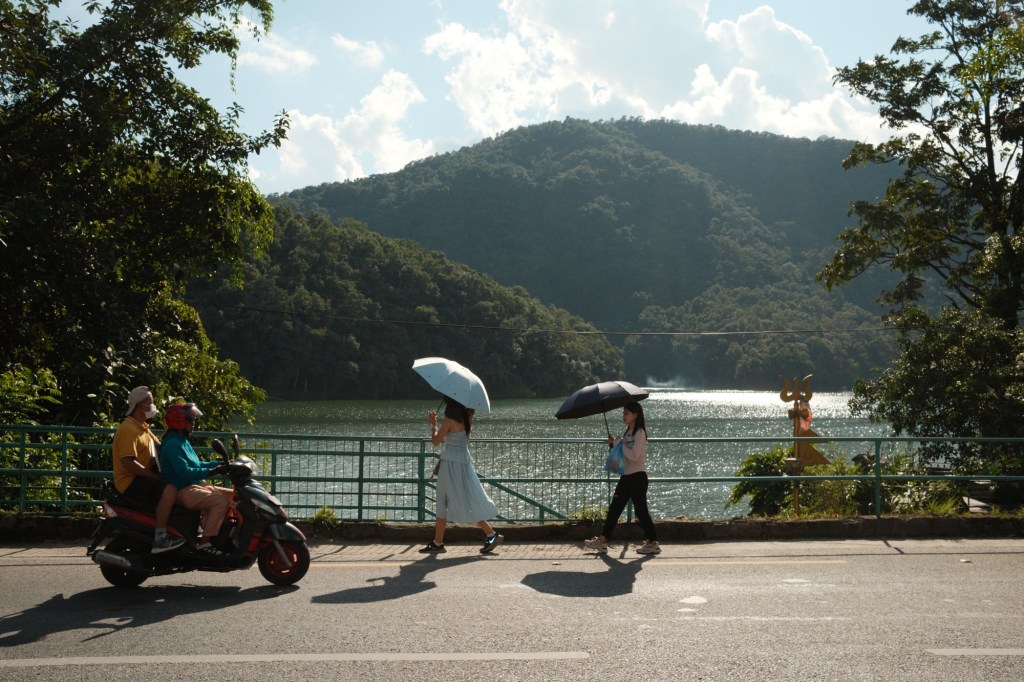
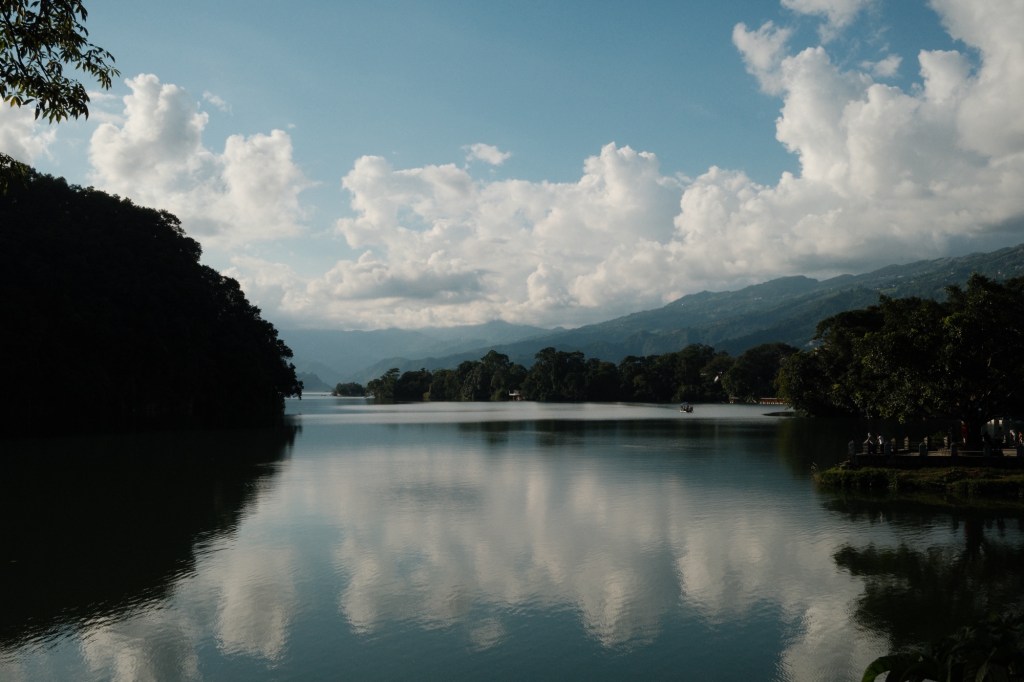
Fishtail is a Himalayan peak that we hope to see on the trek, so suitably there’s a hotel in Pokhara with the same name that is accessed via a private rowing boat across a small river that stems from Lake Phewa. We headed there for tea and coffee, plus a bonus cocktail (a daiquiri felt appropriate). A great place to sit and watch the sunset and ponder the days ahead. I can see why people flock to Pokhara, it’s peaceful, even though it’s the bustling start of the Himalayas for many. You also get amazing views of the Himalayas from the town if it’s a clear day or, early in the morning.

Poon Hill
Our trek in the Annapurna region would eventually finish in an area called Poon Hill, where we’d watch the sunrise over the Annapurna peaks. We would spend 4 days reaching this point, and 1 final day heading back to civilisation. We meet our guide and porter in our hotel lobby, Saujan and Key. We’d worried about the porter element – how much is appropriate to give them to carry. We made the decision to go super light and leave most of our luggage at the hotel we’d be returning to. We gave him 1 bag that weighed about 10kg. As it turns out, we discover on the trek that other porters are carrying circa 35kg! Generally two people’s bags. We had a few laughs with Key, our porter, about this. 35 kilos does seem incredible, when you consider the distances.
We drive to our starting point north of Pokhara in a small village called Kande. We were lucky, we had the guide and porter to ourselves. We thought there would be about 6 of us from the online booking, but it wasn’t the case.
We’ll reach an altitude of around 3,200 meters on our last day, which is a good bit shorter than the peaks that’ll surround us – Annapurna I, II, III, Gangaourna, Machapuchare – all between 6,900-8,000 metres.
Day One
The first day is good, a gradual increase in elevation, with a few steep ascents and decedents. The rain holds off, but there are a few wet-ish bits in the jungle. And pretty quickly we realise theres leeches! Taking us back to our time in Chitwan the previous week. We think we’ve escaped them until at lunch when removing my shoes I notice a patch of blood on my sock. One crafty leech had managed to get through the wool and get a grip on the top of my foot. What a treat. De-leeching occurs and we get back on our way.
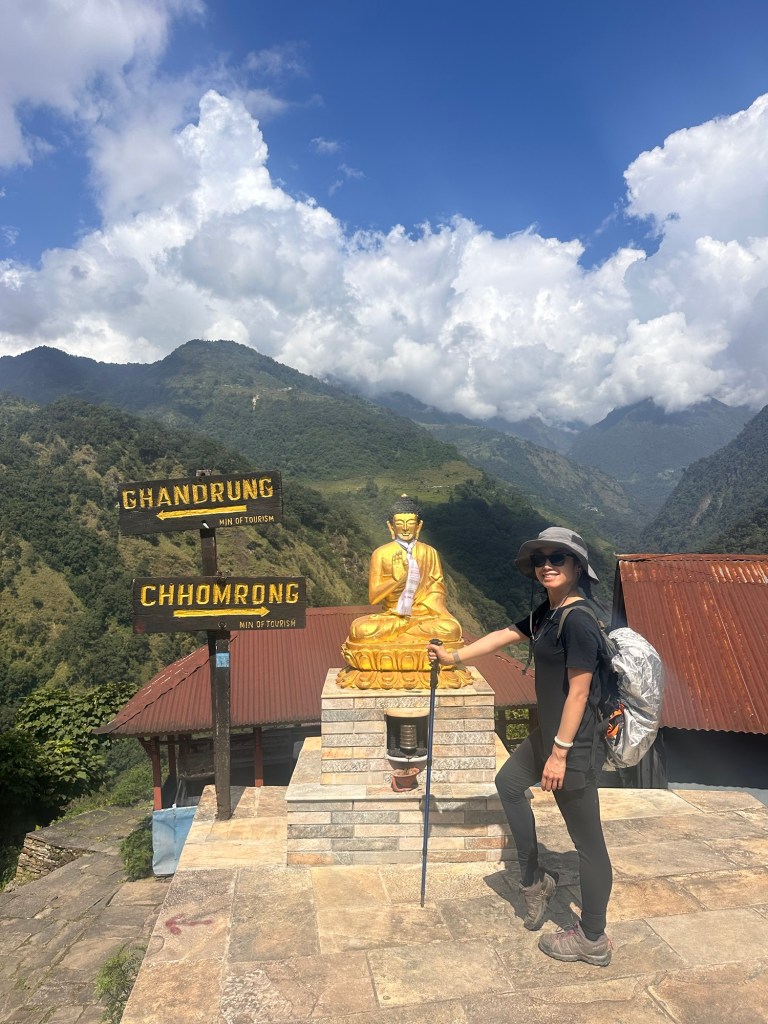
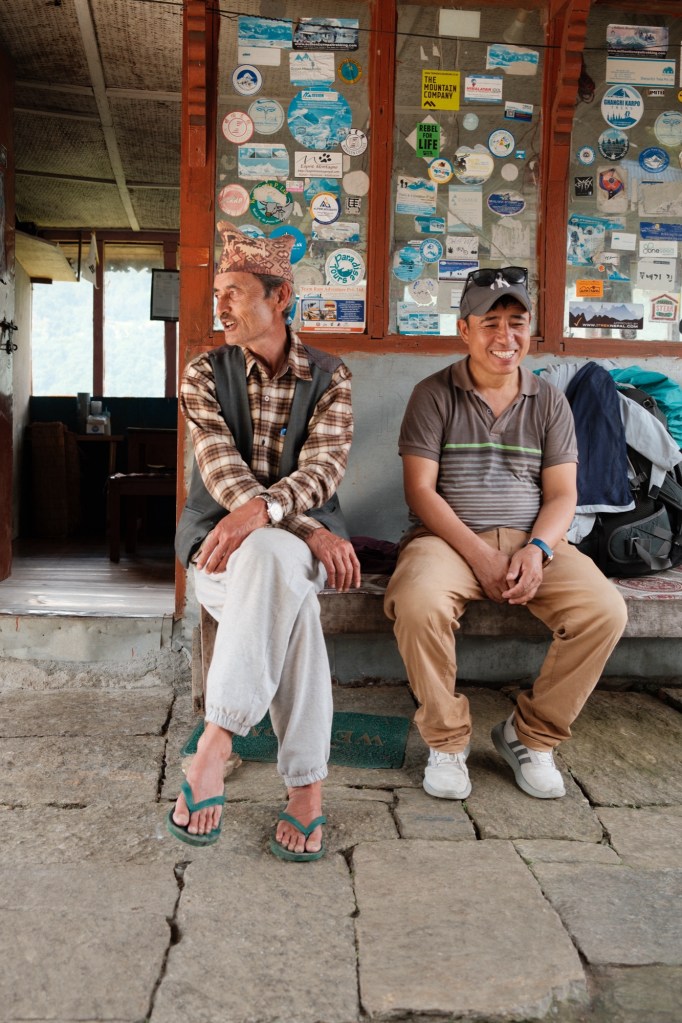
Hiking through the hills, small villages, and trees feels good. It doesn’t seem too busy for the start of the season (there’s generally two seasons in Nepal for trekking – spring, Mar-May, which tends to be more popular, and autumn, Oct-Nov). People do complete these treks without a guide or porter, but having one definitely takes away some of the planning stress or brain power required. The majority of people we encounter have a guide/porter. For one thing, all of the tea houses and food stops are selected by Saujan, and he knows the mountains well, so we’re generally guaranteed a good experience. The other planning element is the permits, all taken care of by the trekking company and check-points are managed by Saujan, getting the necessary stamps where required.
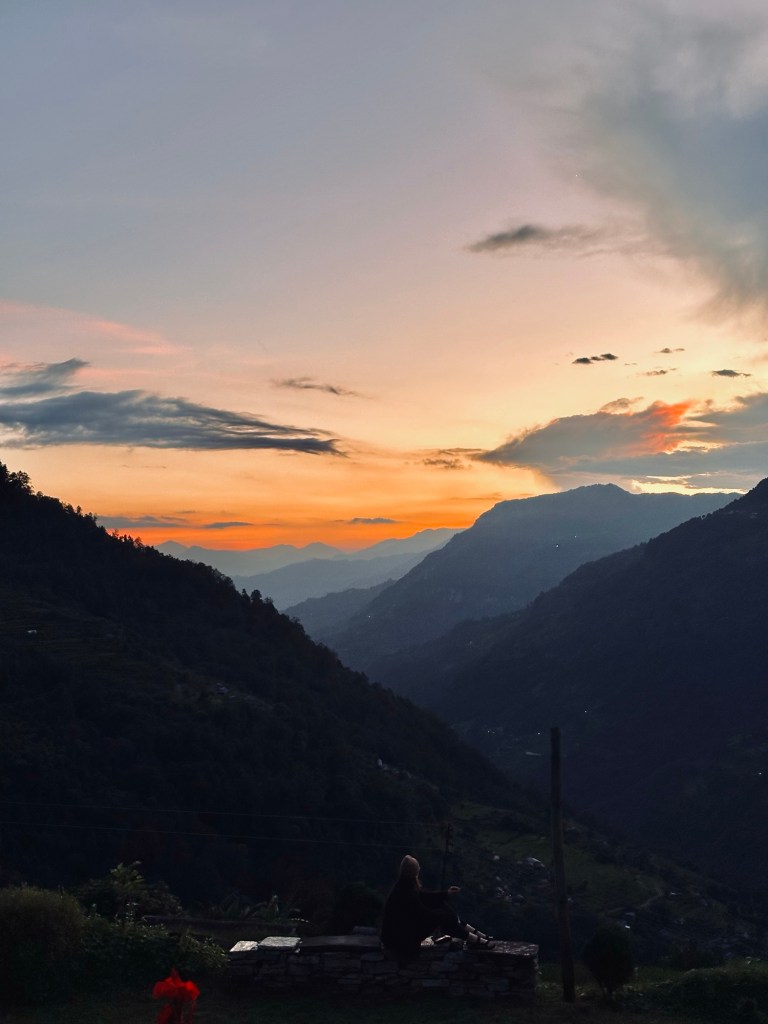
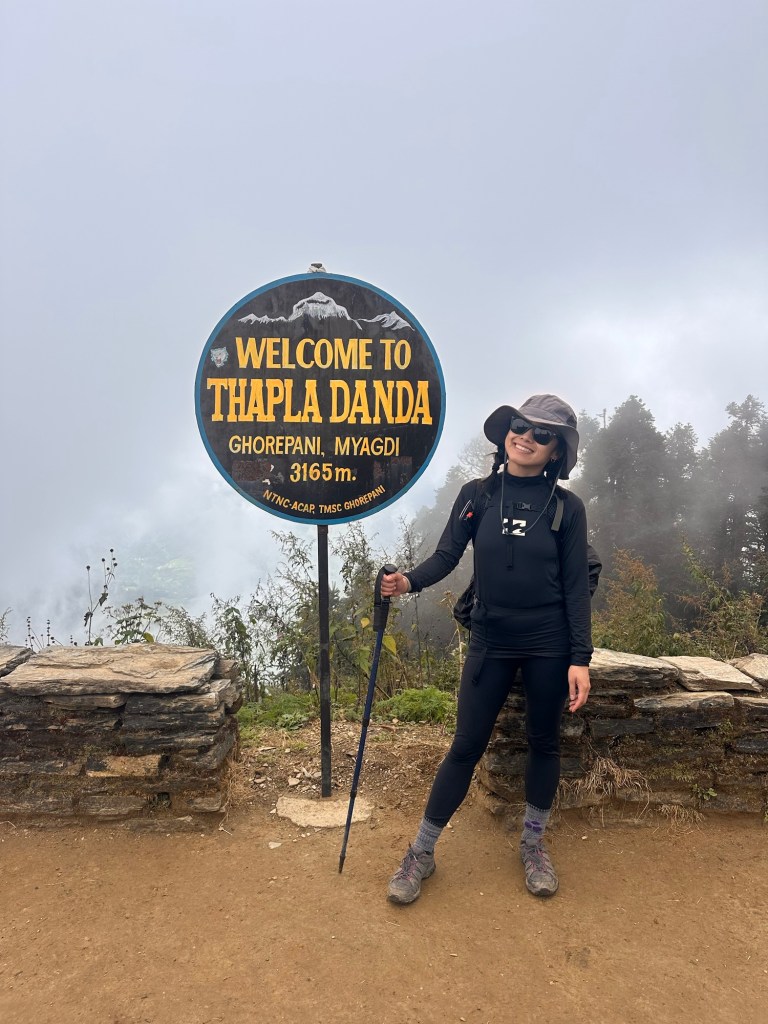
Our first tea house in a village called Tolka, where we’re we’ll sleep, ticks all the boxes, it’s positioned in a small village with panoramic views up and down the valley. Our room is basic, as expected, but it does have its own bathroom. We get an amazing sunset before eating inside a communal hall where other hikers and tours are dining too.
Tea houses are essentially little hotels on the mountain. Some have private rooms and bathrooms with hot showers, some more basic with shared bathrooms and no hot water. They’ve became more popular over the last 10-15 years. Previously people often opted to camp.
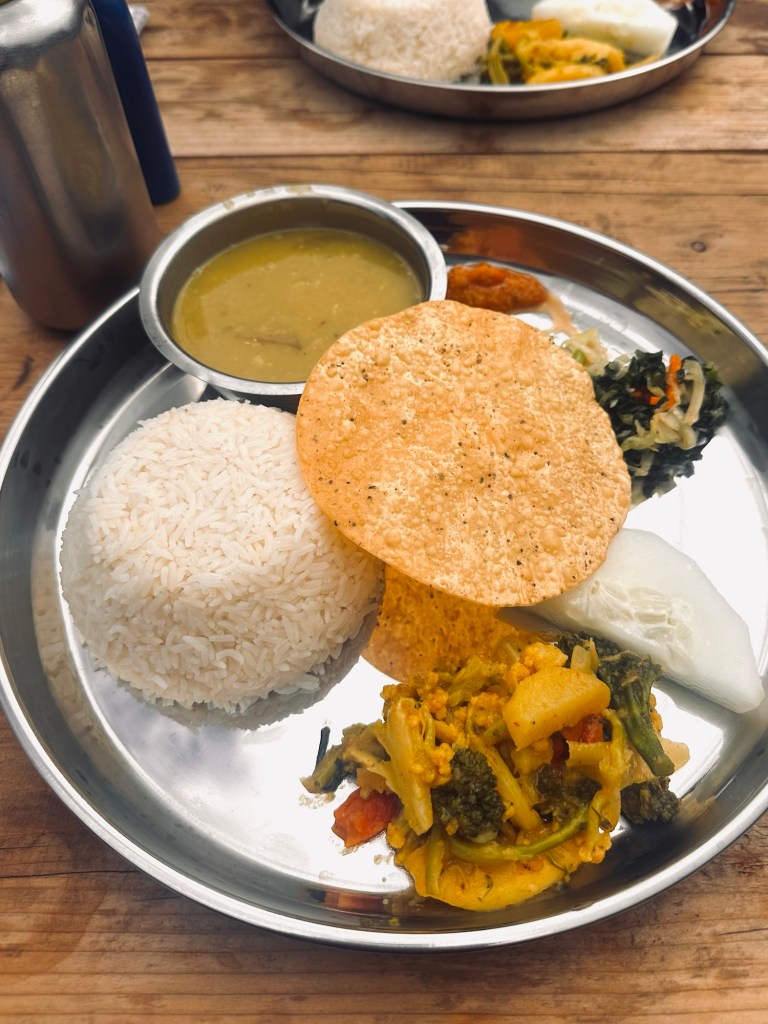
We made the decision to eat Dal Bhat for every meal while trekking, well, lunch and dinner. Saujan and Key are doing this too, so it felt appropriate. There are other meal varieties available, even pizza at some tea houses (spoiler – we spotted some people eating one and it didn’t look exactly Neapolitan). Saujan introduced me to Raksi, a wine made from grain on our first night, and it is delicious. A familiar kinda taste, a bit vodka-ish. From this moments onwards each evening features Raksi. It also happens to be the cheapest alcoholic drink on the menu.
Day Two
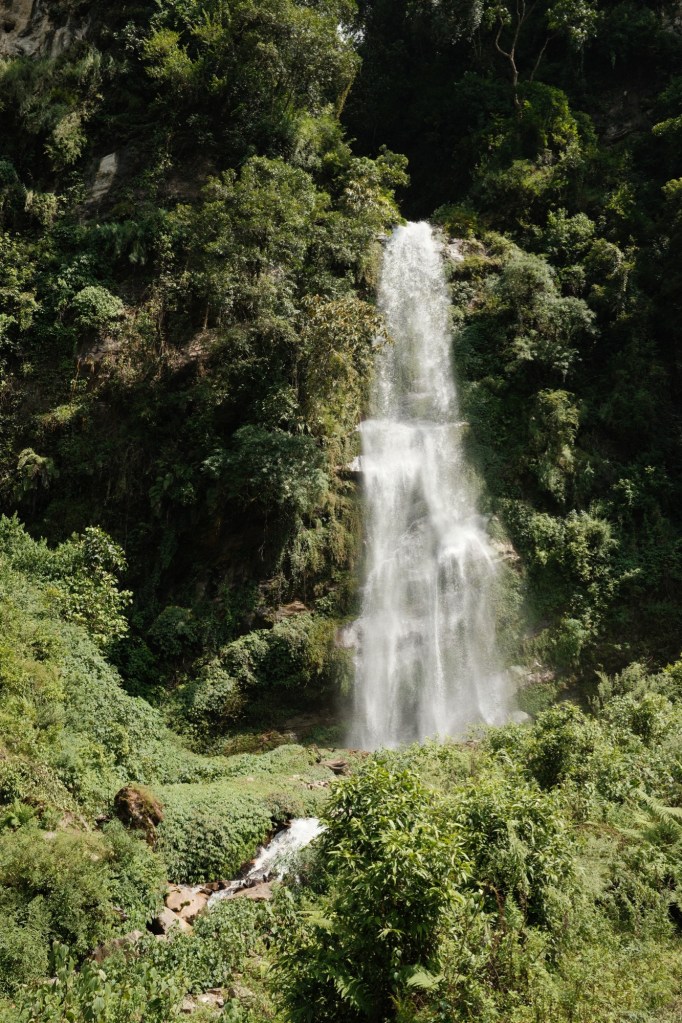
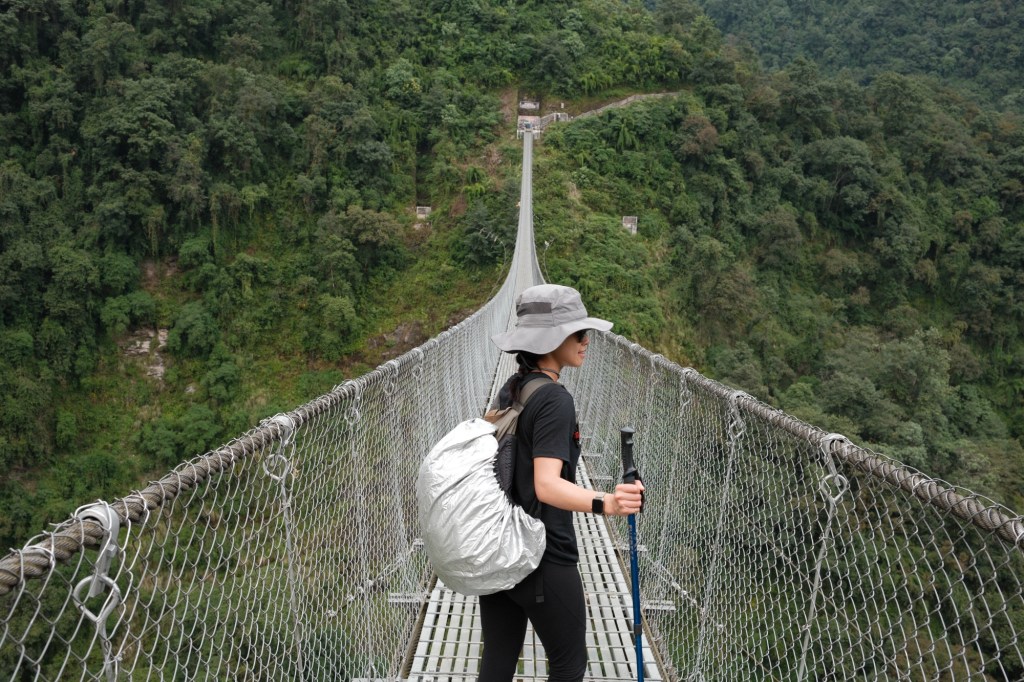
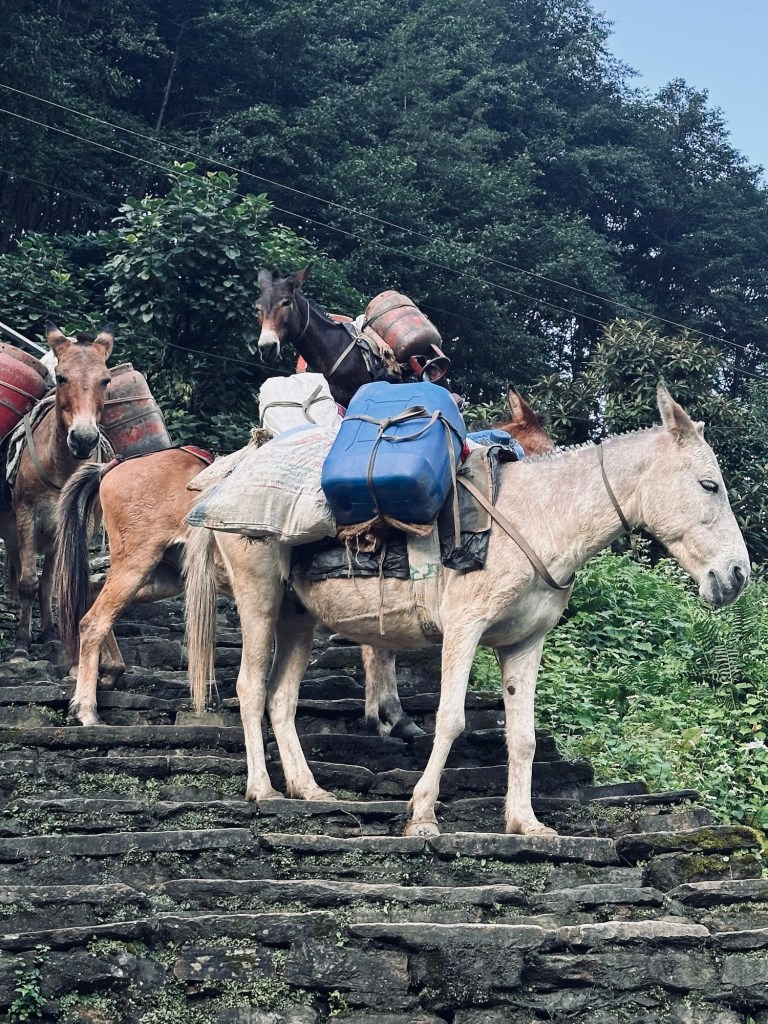
Day two is a bit wetter, but the distance is fine. The views get more impressive each mile. We have lunch at the base of a valley next to a river where’s there’s a huge waterfall that you can walk right up to. We cross many suspension bridges during the trek. The finale of the day is crossing a huge bridge, about 100ft up. We need to pause as donkeys carrying supplies cross ahead of us. We see this scene a lot during the trek, big packs of horses and donkeys, sometimes 25 at a time following each other in series carrying all kinds of goods for the tea houses. This is the normal method of delivery up in the Himalayas for villages where cars or lorries can’t get access easily. It makes you think while consuming that ice cold can of coke at 2,500 metres – a donkey had to carry this.
Our day two tea house is bigger and busier, but still comfortable, if you ignore the 95% humidity in our room, where we’re attempting to dry the days clothes with little success. Saujan convinces us to head to the “nearby” hot springs after we arrive, a mere 10 minute walk he said. 30 minutes of trudging downhill (yes, downhill, the hill we literally just climbed up to reach the Tea House), through actual donkey shit, with scores of leeches, we reach the springs, which are actually very nice. The rain is getting heavier though, and the sun has set – climbing back up the hill through the leechy nastiness doesn’t feel very appealing so I opt for the sprint method, returning to the tea house soaked, covered in mud and everything else. I hose myself down outside to make sure all leeches are washed away. It’s time for a Raksi, or three.
Day Three
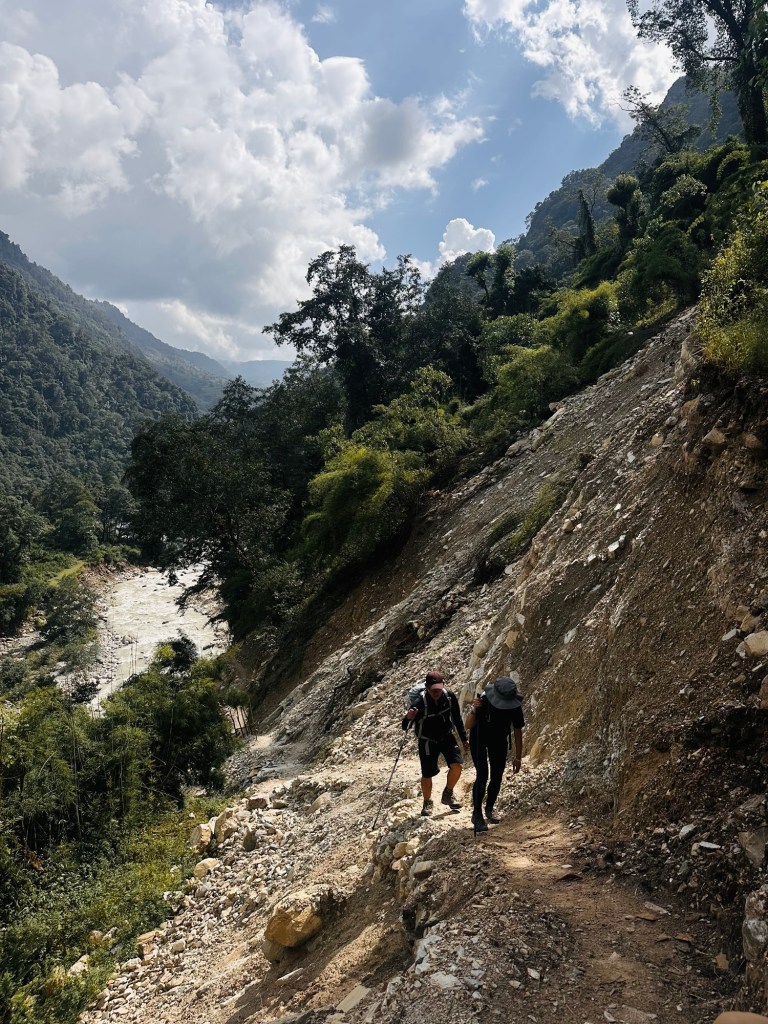
Day three, or hump day as we realised, was tough. More ups and downs, literally, and a good bit longer. The mood in camp was a little low. Many leech removing stops were required. Most of the day was spent in a Harry Potter styled haunted wood, which was eerily quiet most of the time. Before we reached the wood we sat and cooled down at a farm house right at the top of a hill in a small village. We bought water (drinking tap water is generally a no, so buying bottles or refilling from big water containers is important en-route). Saujan spots a ripe cucumber at the edge of a field that is picked and quickly cut up for us. These little moments on the trek are really enjoyable.
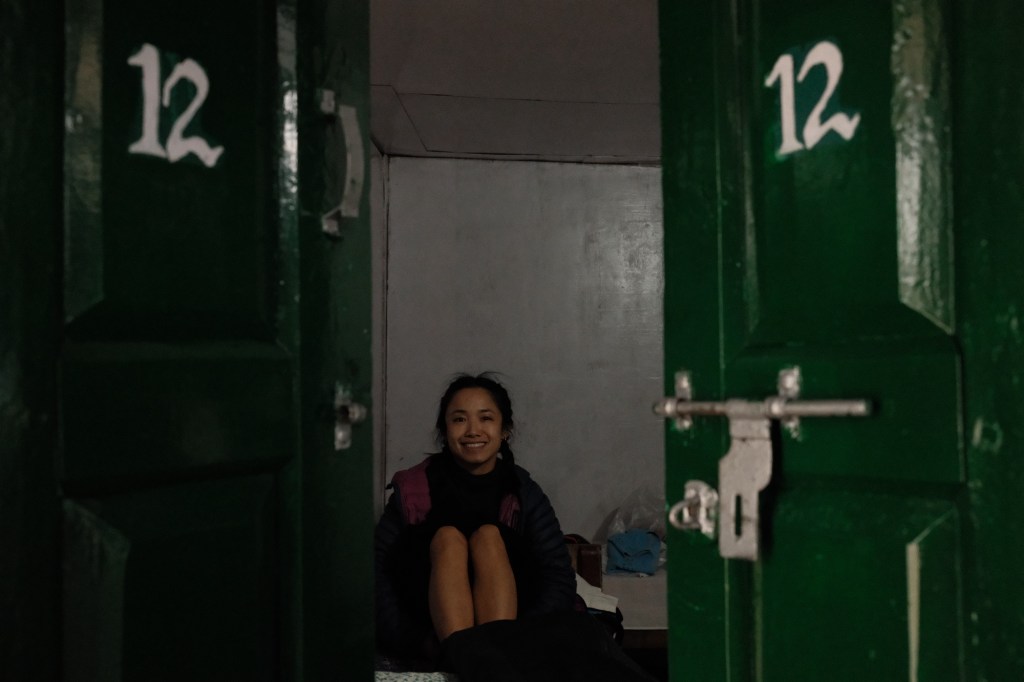
By the time we reach tea house numero three, we’re ready for some rest. It turns out this is the most basic of the tea houses, but it’s still a cool place to stay. No showers or hot water, but the communal dining room has wood burning stove where you can dry clothes. The view is also incredible from where we sit for dinner. Saujan somehow always managed to bag the best table in the corner of each dining room, next to a window.
Day Four
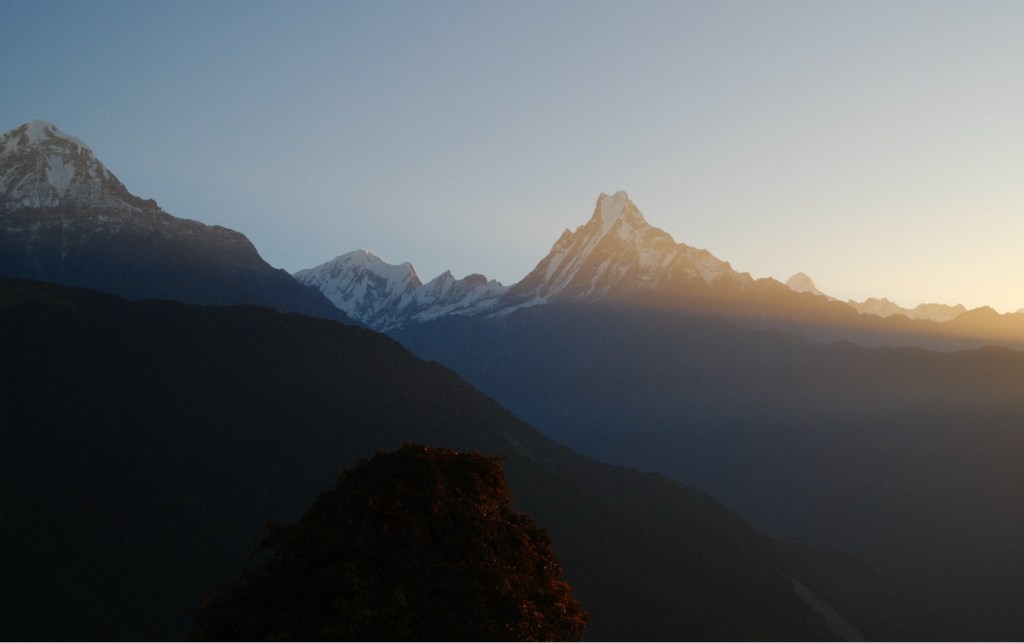
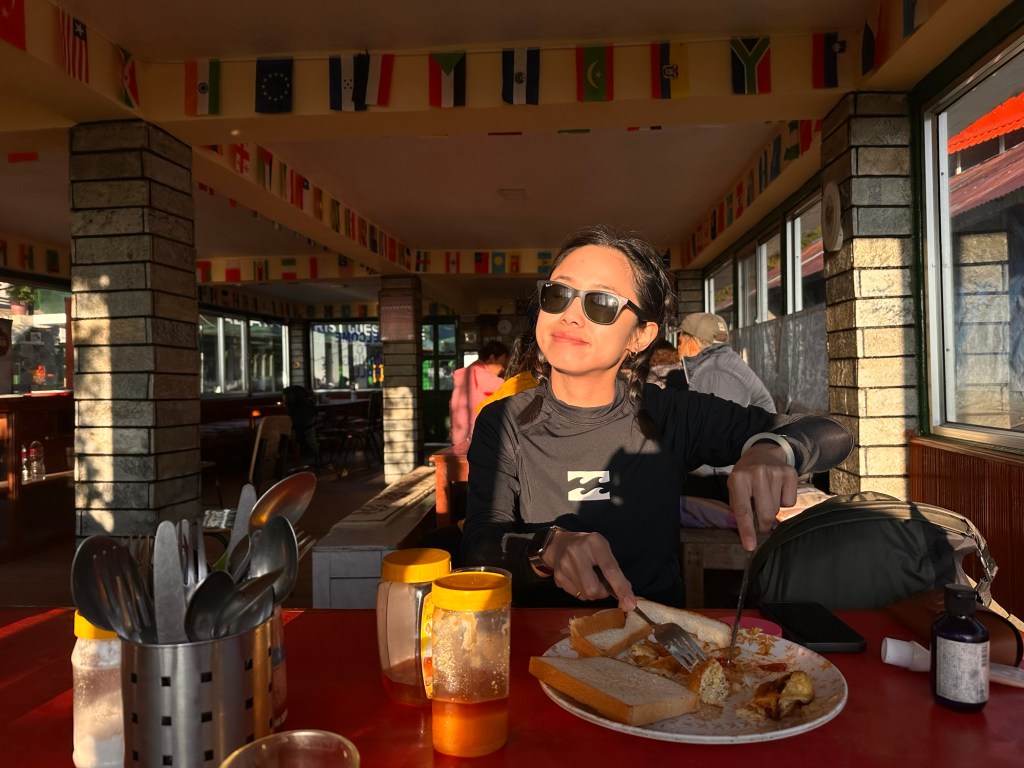
We awake feeling ready for the mountain, I think we know we’re over half way and it can’t be any harder than the previous day. And we’re right, it’s a shorter distance, and at the higher altitude with less rain, the leech numbers decrease too. After watching a killer sunrise over the Himalayas, and eating our staple breakfast of omelette; weird bread; some fruit; and instant coffee (I’m going to write a separate blog on all the coffee we encounter), we get on our way. We make it to tea house number four in record time and even have most of the afternoon to relax and take in the view.
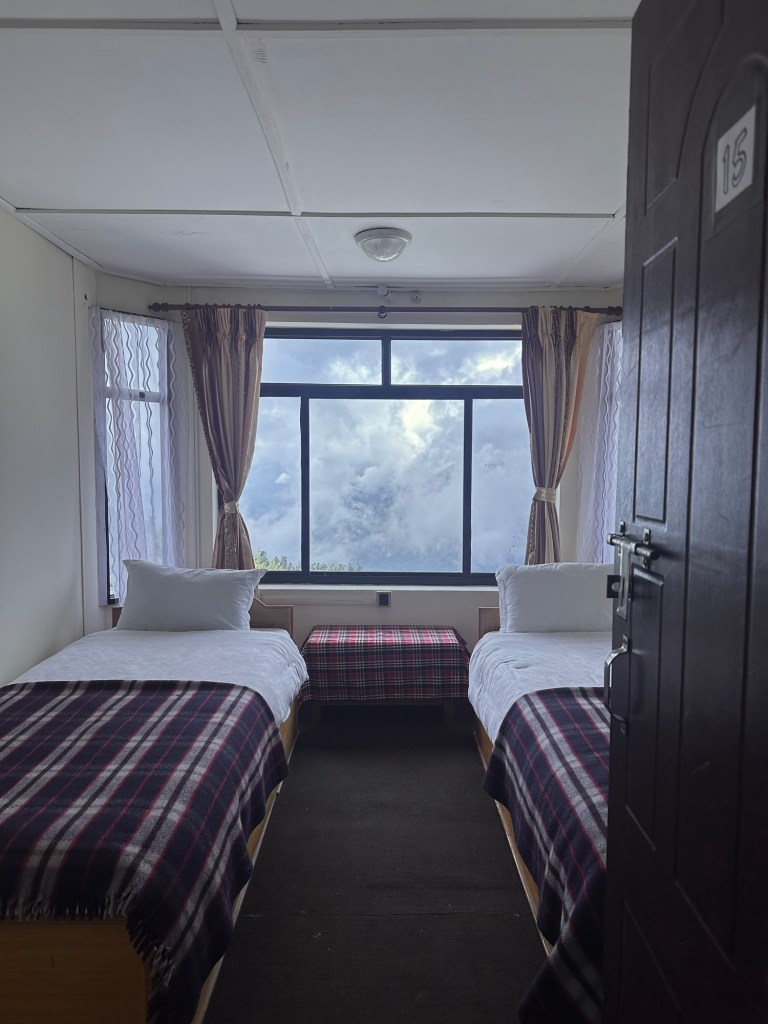
Tea house four has the best view from our room. We’re on the top floor where we can watch the clouds roll in at lightning speed. One moment we see the mountains and the next they’re gone. A rainbow even appears.
Day Five
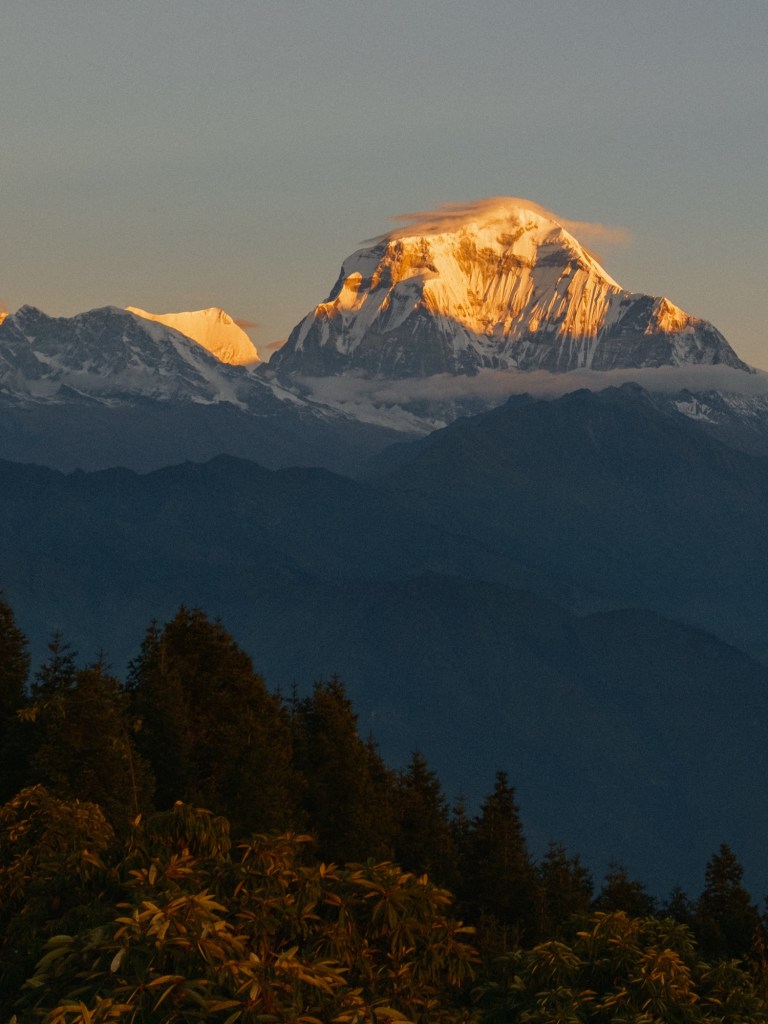
Summit day. We awake at 5am to get ready for the quick ascent to poon hill, which should take 30-45 minutes. It’s a popular hike, so the masses are on the trail too. We wear a few too many layers and instantly get too hot, but we know it’ll be cold when standing watching the sunrise at the top.
The views are spectacular, and we’re super lucky with the weather. No rain, minimal to no clouds in the sky once the sun comes up. From left to right, panoramic views of the Annapurna range. It’s hard not to keep taking photos, how do you capture this. We should remind ourselves to just look at it.
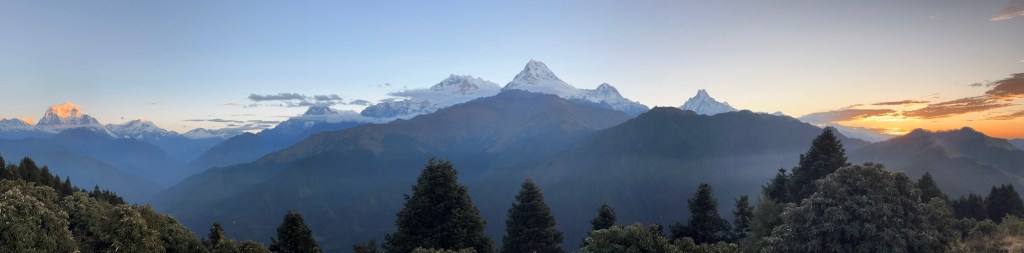
Side story, we meet a man who’s adamant that we’re looking at Everest. We can’t convince him that Everest is viewable in a different part of the country. He tells us his guide explained which mountain is Everest. A gentler reminder that not all guides come with equal knowledge or experience.
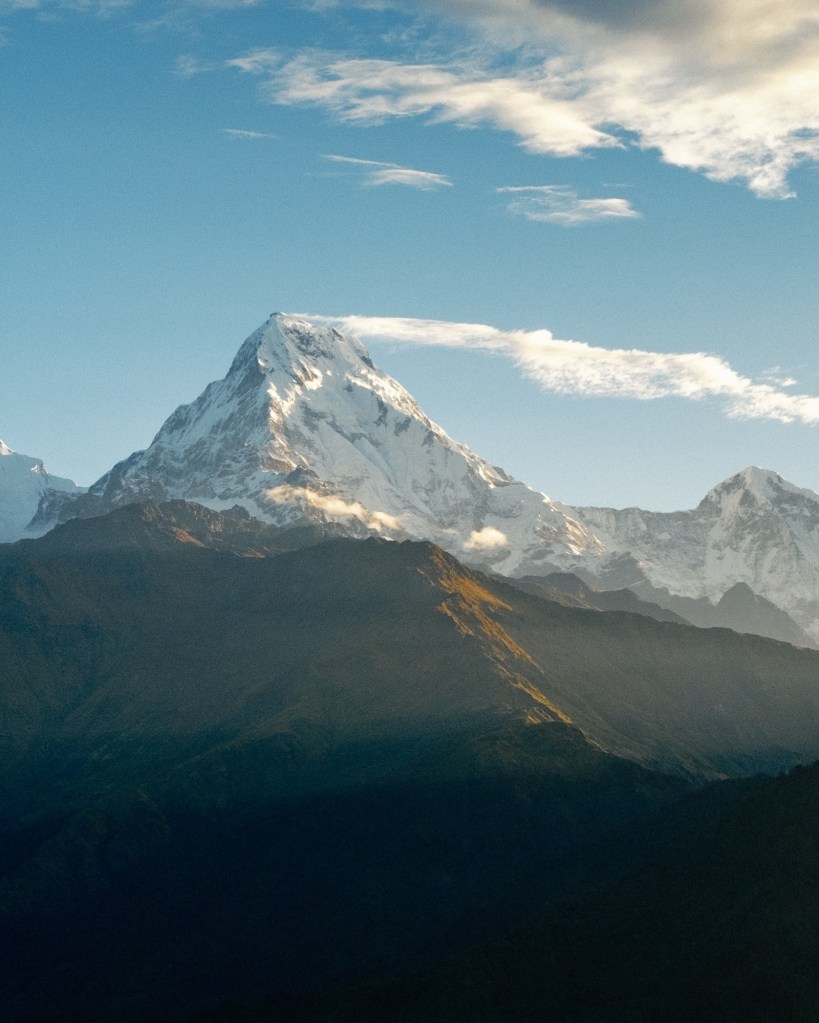
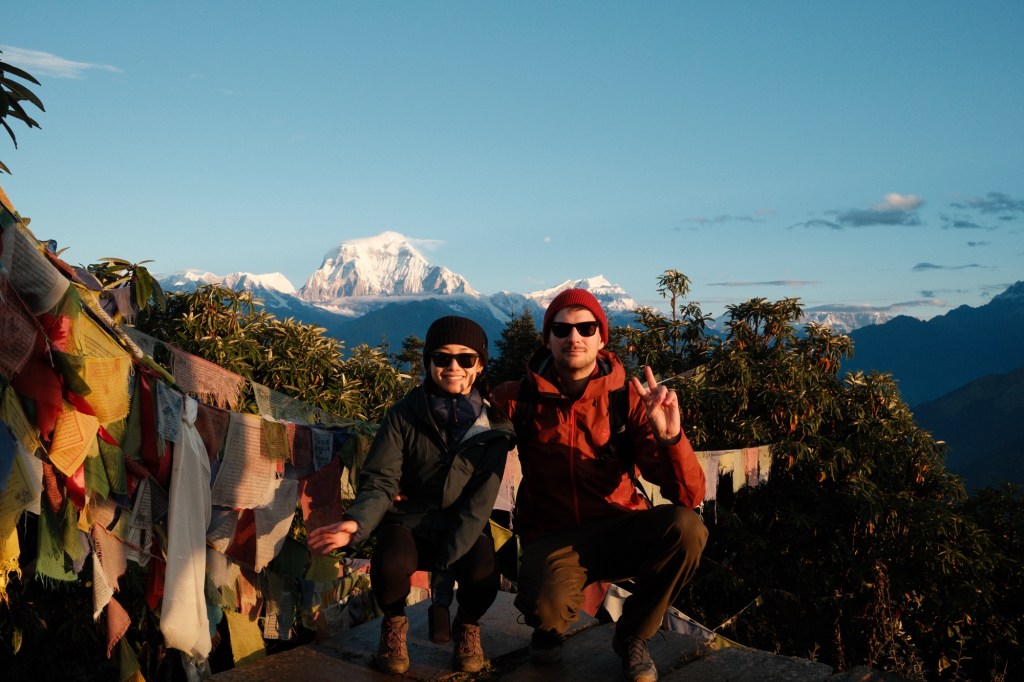
It’s time to descend. Saujan is a little vague on distance and timing. First step is picking up our bags up from the tea house and grabbing some breakfast. The day feels endless, we’re 99% going downhill, and the majority of that is a relentless set of stone steps. Apparently 3,000 of them. It was amazing watching all the people go the other way. We’re both really glad that our route didn’t involve the steps on the way up.
We’ve got to reach one of the villages on the edge of the mountain range to organise a car to Pokhara. Final count shows we walked 25km that day. It was all worth it though.
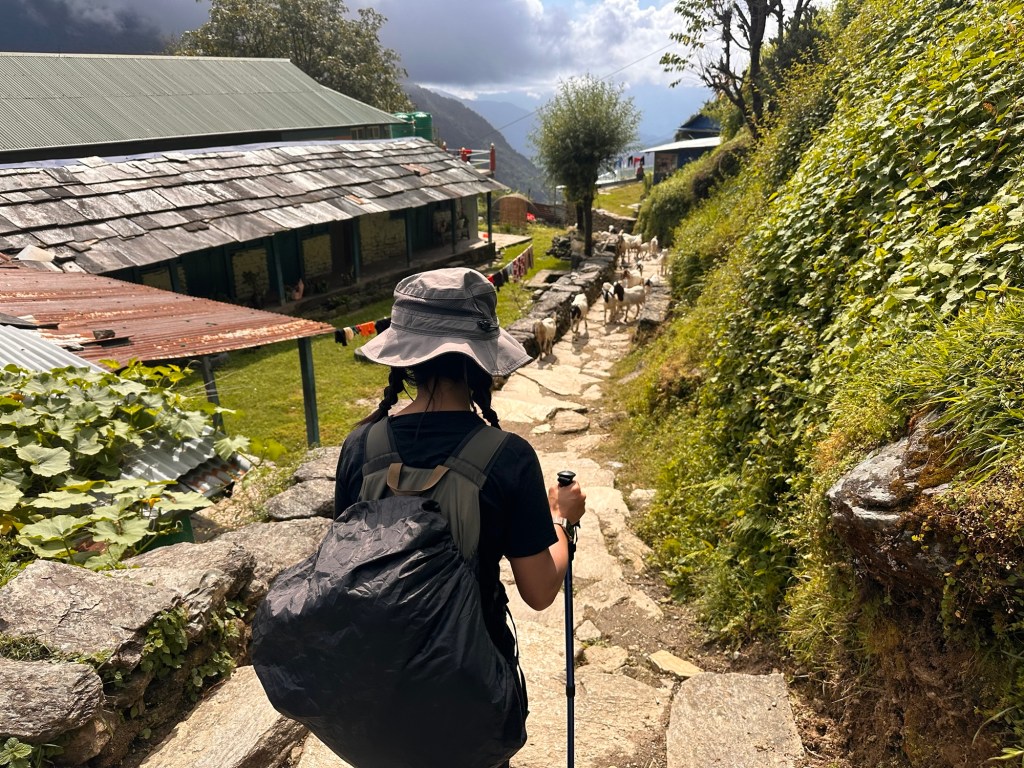
We say our goodbyes to Saujan and Key, who safely navigated and guided us through the mountains. Both recommended if you ever need a Nepalese mountain guide. We spend a final night in Pokhara before getting the bus to Kathmandu early the next morning.
We had another two nights in Kathmandu, washing clothes and generally getting ready for next phase of the trip – China!
Thank you Nepal, you were everything we were hoping for.
 seemehear
Leave a comment