
We arrived in Kathmandu and instantly had a great feeling about being in Nepal. After hearing a few horror stories of flights in and out of the airport, we landed unscathed. For a capital city airport, there was an amazing sense of calm. The visa collection & payment process was seamless, and the airport staff were welcoming (feels odd to write that about any airport!).
We grabbed a SIM card in arrivals for about £5: essential to start using the Pathao app for taxis etc, as you need a Nepalese number for certain services.
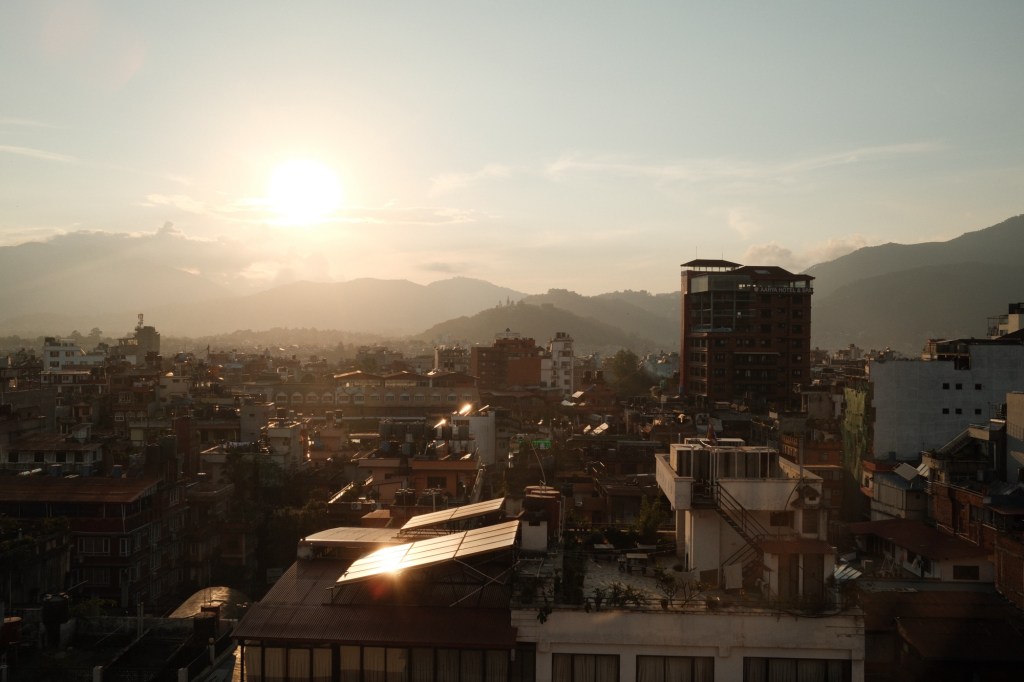
Driving through Kathmandu towards Thamel, the main tourist hotspot, but also the hub for most hotels and hostels, we get our first glimpse of pagodas, giant Buddhas, and the people of Nepal.
Our time in Nepal was mapped out:
- Spend a couple of days in Kathmandu seeing a few sights and getting used to the culture.
- Move onto Chitwan to see the wildlife – hopefully elephants, rhinos and tigers in their natural habitat.
- Relax in Bandipur, a small mountain town.
- Head to Pokhara and get ready for our trek.
- 5 days trekking in the Annapurna region.
- Back to Pokhara for a night and then onto Kathmandu for our final days.
We’ll spend 17 days in Nepal, which is short compared to some who are completing longer treks, to the likes of Everest Base Camp, but it feels plenty time to explore and immerse ourselves.
Coming straight from Delhi to Nepal instantly makes us draw some comparisons – Nepal feels a bit more peaceful, less traffic (but still busy in Kathmandu), less pollution, and generally easier going. Having read a bit about Nepal, it’s important to know that some of the infrastructure is still developing – roads and highways specifically – so we may be impacted by delays at times. We’ve given ourselves a buffer at certain points, just in case.
First things first – what’s for dinner? Of course it has to be Momo’s and Dahl Bhat. The first being the delicious dumplings that come steamed or fried, with either a filling of veg or meat. You’ll find them in any Nepalese restaurant, the world over. Dahl Bat is the staple meal of Nepal, and it provides the perfect balanced diet: Lentil dahl soup, veg curry, rice, pickle, curd, fresh veg, and maybe a poppadom. Each varies from restaurant to restaurant. The main benefit is that it always comes with free refills – if you want more of anything they’ll just fill your plate up. Perfect for long days trekking etc.
We head to a restaurant in Thamel called OR2K and eat both. As we sit crossed legged on the carpeted floor of the restaurant, having left our shoes at the door, squeezing our knees under the low tables, we can’t help but laugh a little at the quintessential image of free spirit Kathmandu ✌️

On our travels we like to sample whatever the local delicacy is (to some degree) and that obviously includes the boozy tipples. The beers on offer in Nepal generally rotate around Yeti brewery (a solid helles like lager), Ghurka (a bit more pilsner like), and Everest (general lager). They also have a grain-like wine called Raksi in the mountains – more on that later.
Thamel as a neighbourhood is full of tourists getting ready for their various treks across Nepal and there’s loads of discount outdoor supply shops selling knockoff editions of most hiking brands. You can definitely get a bargain, but chose wisely or your Norf Face jacket might just turn to dust half way up the mountain. There’s also plenty shops selling prayer flags, incense, herbal remedies, and the occasional street trader with a more off-menu selection.
Fright night: Namaste little friend.
Night one at our Kathmandu hotel gives Carmen a nasty surprise. She sees the head of cockroach just above her bag, which then proceeds to fall inside her bag. Screams ensue, and a man from reception is called to remove the little horror 😂 A full bag check commences, before peppermint oil is applied all over the bag. Carmen’s new remedy for most things 😷
Boudha Stupa
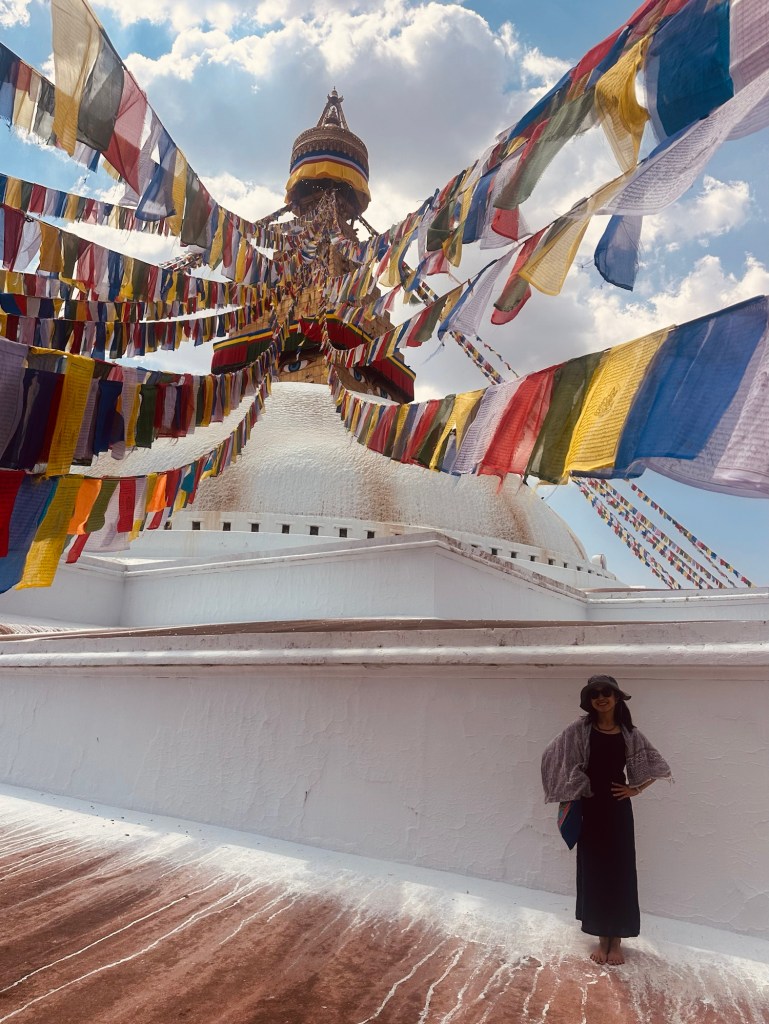
Our first full day starts at the huge Buddha Stupa with eyes in north-east Kathmandu. It is the largest stupa in Kathmandu Valley and is the center of Himalayan Buddhism. You can walk directly onto it if you take your shoes off, it’s also surrounded by Buddhist prayer wheels that you spin clockwise.
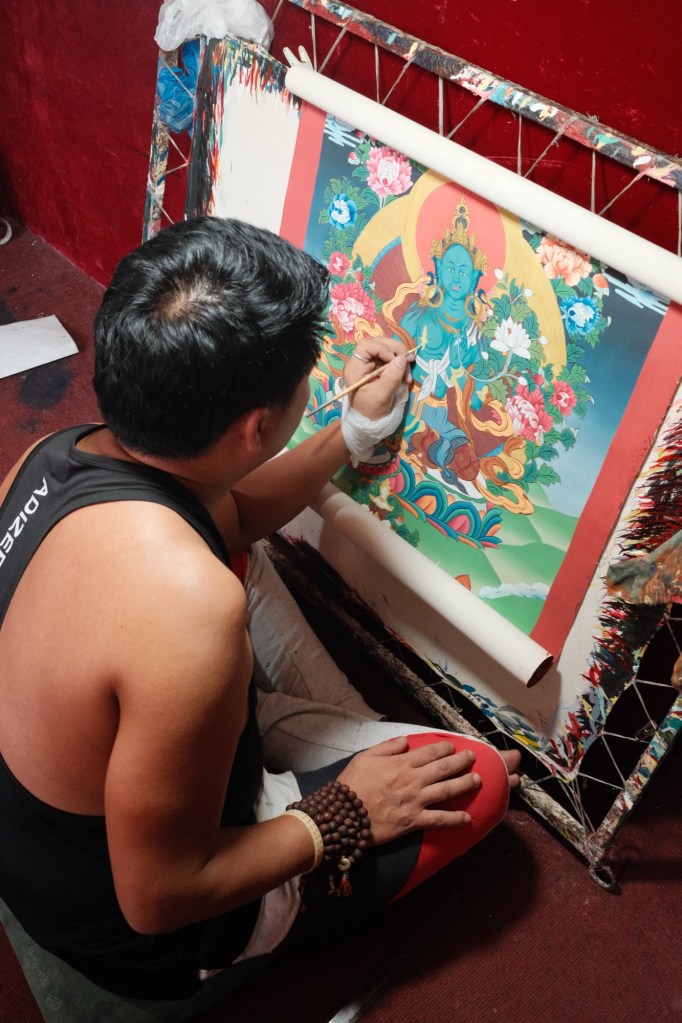
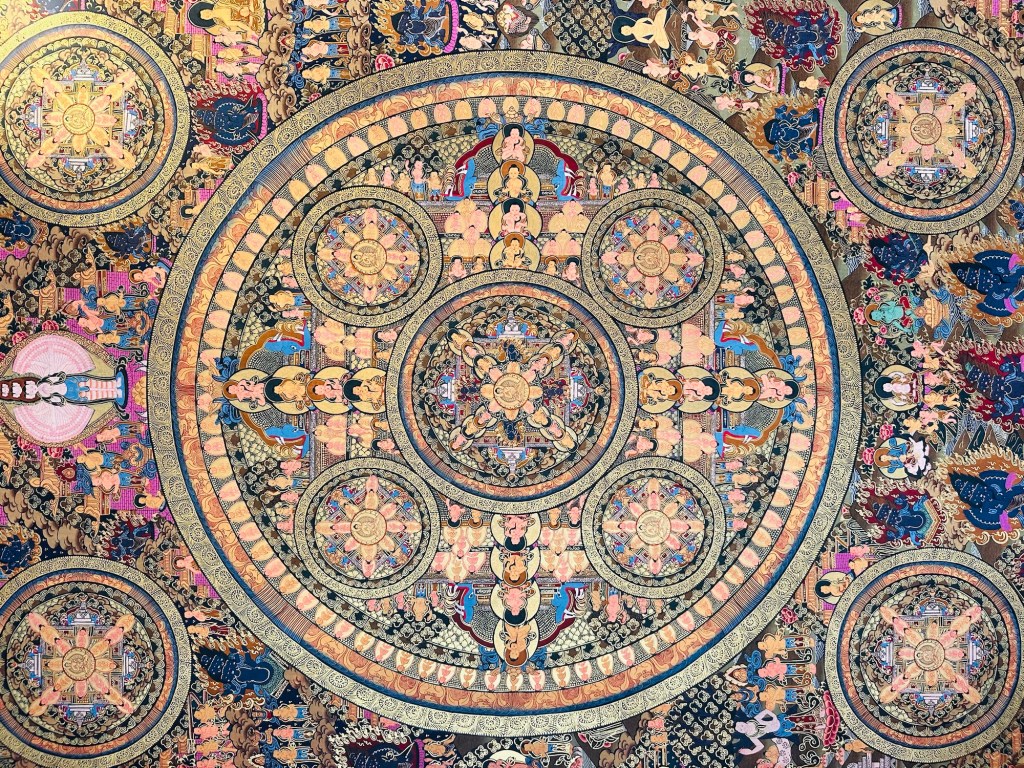
Around the Buddha there’s a host of shops selling traditional Nepalese paintings depicting the teachings of Buddha – the circle of life; true happiness etc. We spend some time watching the craftspeople paint these works of art, fascinated at the detail. The artists train for many years before being known as master crafts people.
By some miracle we happen to be staying in the same hotel at the same time as our friend Olly’s Aunty Noreen! And Carmen even manages to spot her in the lobby. Noreen is an oracle on all things Nepal, after spending considerable time here over the last 8 years. We’re more than happy to get a download on recommendations and general info. And we plan to meet up in Pokhara later in the trip.
Tourist Tax
Nepal has introduced a bit of an unconventional ticketing system in parts of the city. You need to pay to walk-by famous landmarks or buildings, and even streets in some areas. We appreciate why they’ve done this, they need an income for maintenance etc, but at the same time it doesn’t really suit our budget requirements (current price is £5pp per landmark or area), so we spend time circumnavigating the streets trying to catch an alternative view 😂
Onto Chitwan via the Sofa Bus
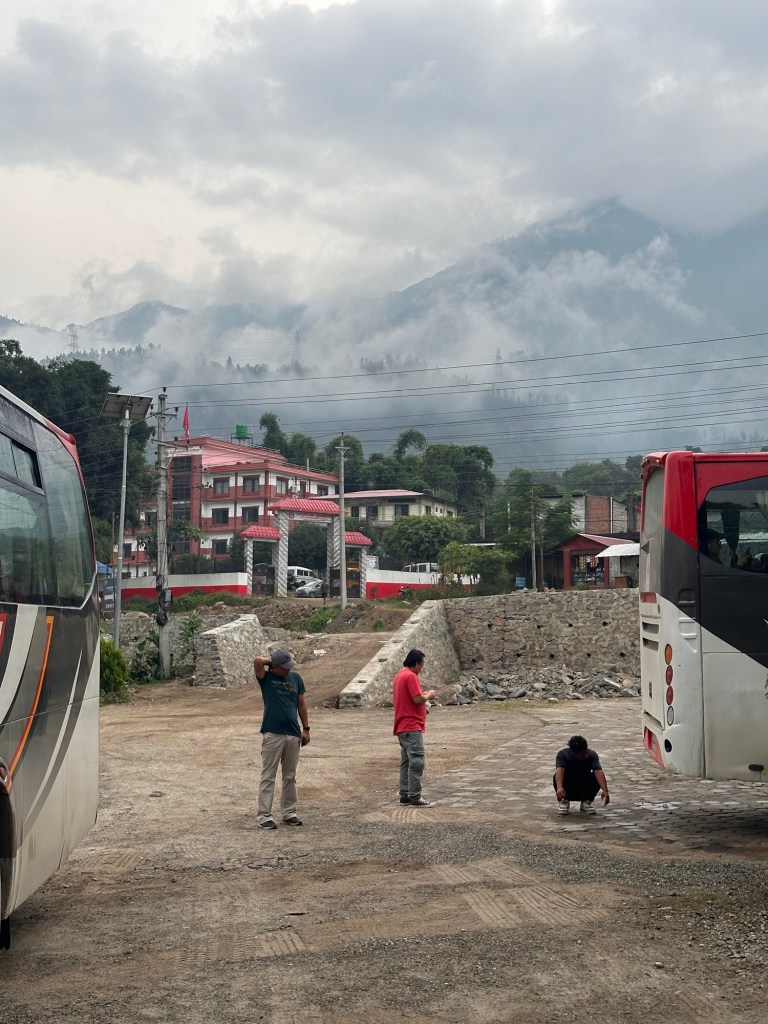
Nepal research kept saying to book a ‘sofa bus’ for long distance travel. The roads are bumpy, and in parts non-existent due to landslides or pending construction. The sofa bus definitely delivered on comfort, the seats were essentially giant armchairs, cushioning the mountain roads, which at times were mostly mud or rock. There were the classic heart-in-your-throat 1000ft drops en-route, where you weren’t sure the bus would make a corner as it screeched through the apex. The driver casually holding onto the wheel, as he’s made the journeys thousands of times.
Vampire Safari
Chitwan is a large area famed for the wildlife: elephants, rhinos, tigers, birds a plenty. We stayed in a family run hotel right on the edge of the national park, with good views in all directions and a veranda outside our room.
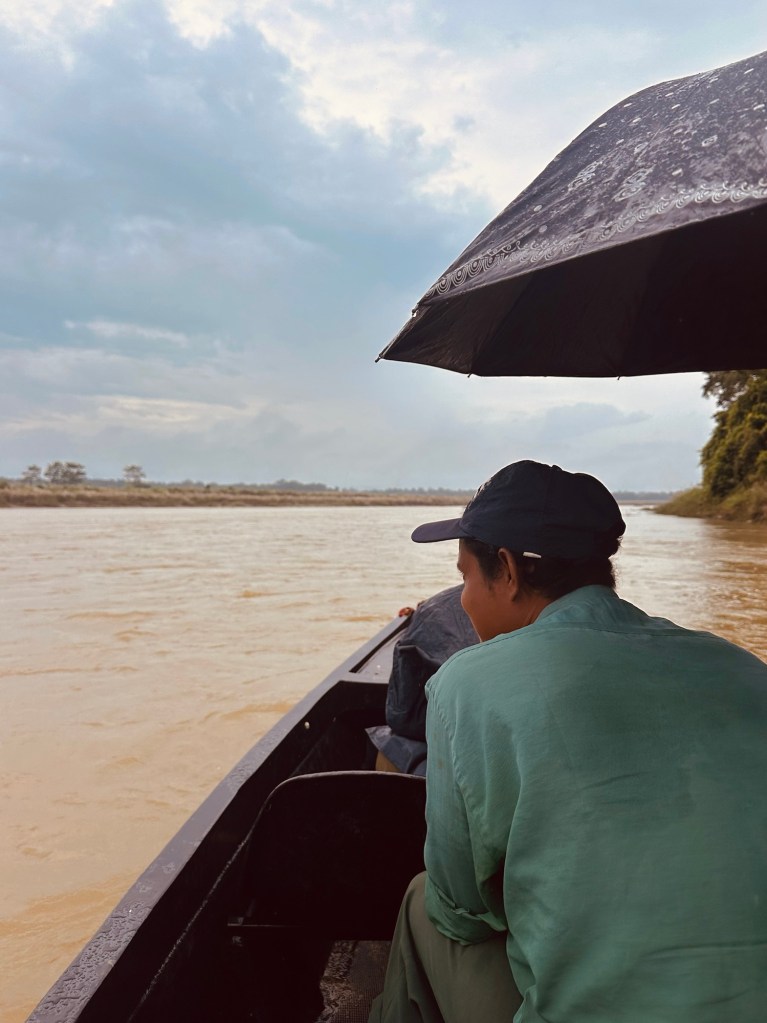
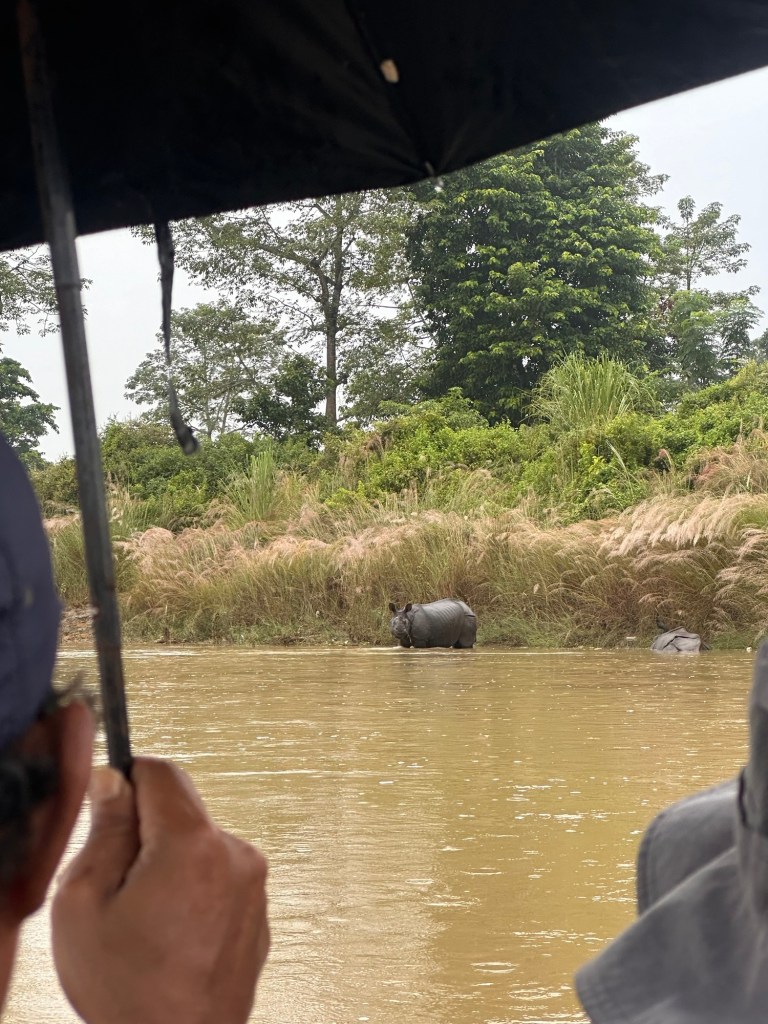
Day 1 on safari was a wet affair, so waterproof layers and hiking shoes were worn. Part one included boarding a narrow wooden canoe to travel down river. We were in awe as we cruised past a family of rhinos bathing in the river, only metres from us.
The rain got heavier as we approached our starting point for the day’s safari. Did I mention it was a walking safari? – I’d never heard of a walking safari, and I’d definitely only been in a car/jeep for anything previously labelled as safari. We took it as a positive, though, more exercise and closer to the animals perhaps.
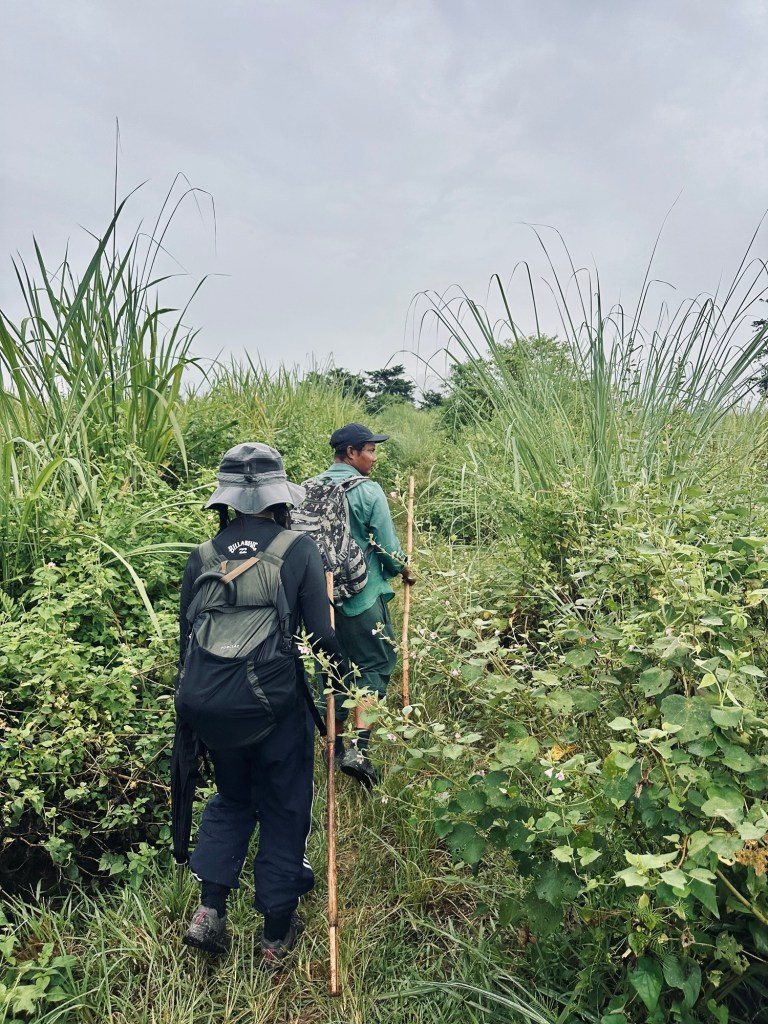
Elephants and tigers were lacking but what we did come across, attached to just above my right hip, feasting on my blood, was a leech. In-fact, the very first leech I’ve experienced. I stayed calm as it was carefully removed by our guide. The jungle grasses and trees were long and wet, so it wasn’t too much of a surprise that it got me. We continued on safari, but now in a state of constant leech scanning alert. There were thousands of them as it turns out. At a break spot high above the jungle, in a look out tower, we watch as other tourists pull them off their bodies, blood squirting. One European holiday maker goes into full field-medicine mode, unpacking a large firstaid kit, including the kind of kidney-shaped metal pan that would be used when extracted bullets are placed in it on the battle field (a tad overkill we felt).
They’re cunning creatures, leeches. Nearly impossible to squash, they move at lightning pace and can morph as required. Part worm, part shape shifting blood drinking parasites. You’ve got to give it to them, they work hard for their nutrients. We need to pick a few more off our clothes and shoes during the day.
In the afternoon, the weather cleared and we spotted a mother and baby rhino eating their way through the fields. A beautiful sight, sadly disturbed and scared off, by our guide’s sudden coughing 😂 feedback was swiftly delivered by Carmen.
We meet a nice selection of people in Chitwan from across the globe. Plenty stories of wider Nepal to keep us informed of what to expect.
Bandipur
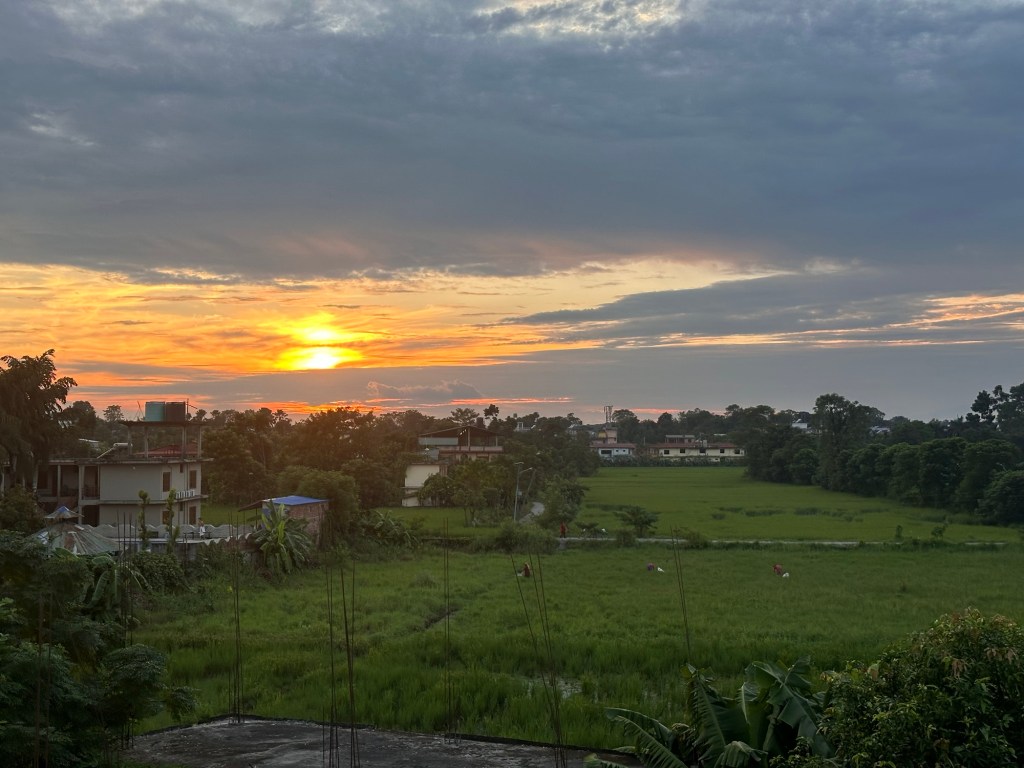
We spent a weekend in a small town called Bandipur. A welcome break to some action-packed travel days. The rain from the Safari had actually gotten worse, a lot worse. Parts of Nepal were badly flooding, and landslides are common when this weather takes hold.
By some miracle the route our bus goes was still open, so we managed to reach Bandipur. But it did mean we mostly needed to stay indoors as we watched the torrential downpour develop further. We learn that south Kathmandu is seeing the worst of it, with deaths reported. A sad reminder of how fragile Nepal’s landscape can be.
Most highways are closed for at least 24hrs in response, impacting some of the people we meet in Bandipur who need to catch on onward travel. Power goes on and off, and internet is intermittent through the weekend. A good period to reset a little.
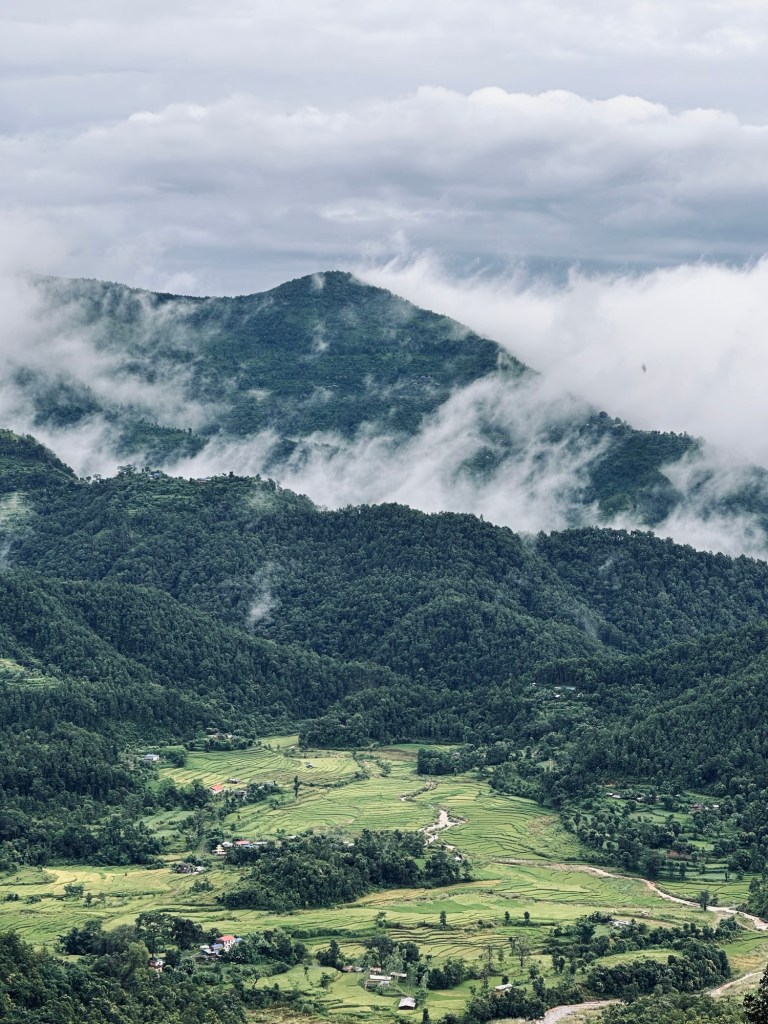
Before we know it, the skies clear and we manage to wander through Bandipur town and see the stunning mountain views surrounding us. We’re literally sat in the clouds.
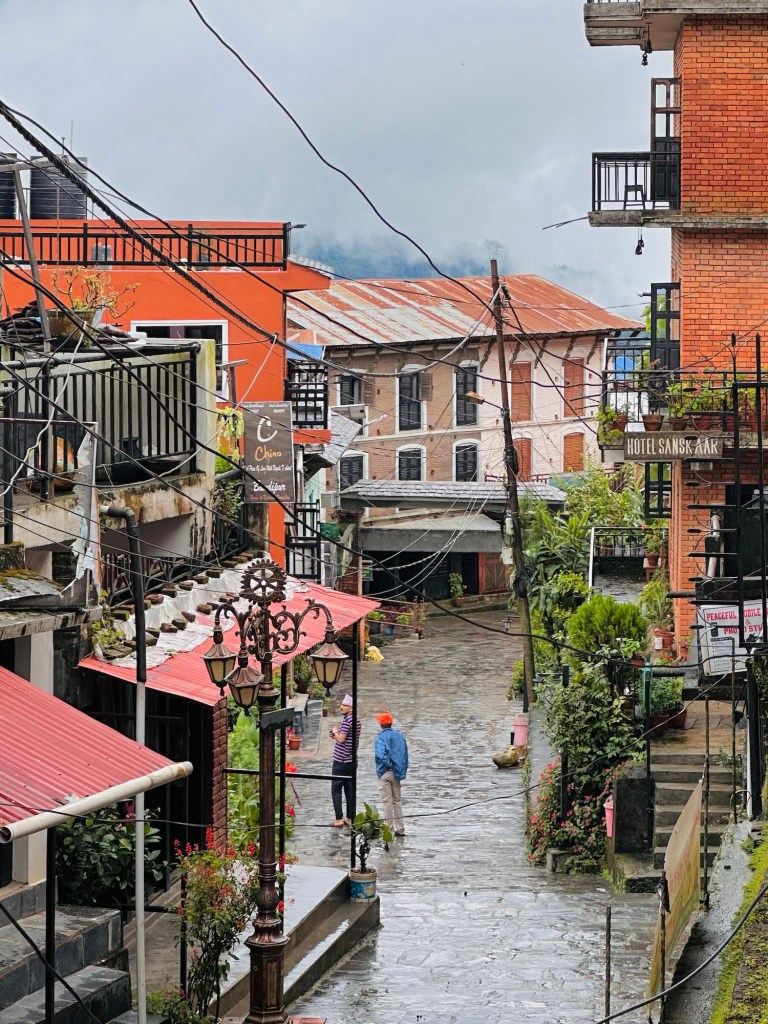
Bandipur is famed for the traditional Newar red brick buildings throughout the town, almost European-like.

We managed to catch a bus onto Pokhara, which took about 3 hours. Not the sofa variety this time, but still comfortable enough. We could see the devastation from the rain. Some of the highways had landslides and telegraph poles were on their side.
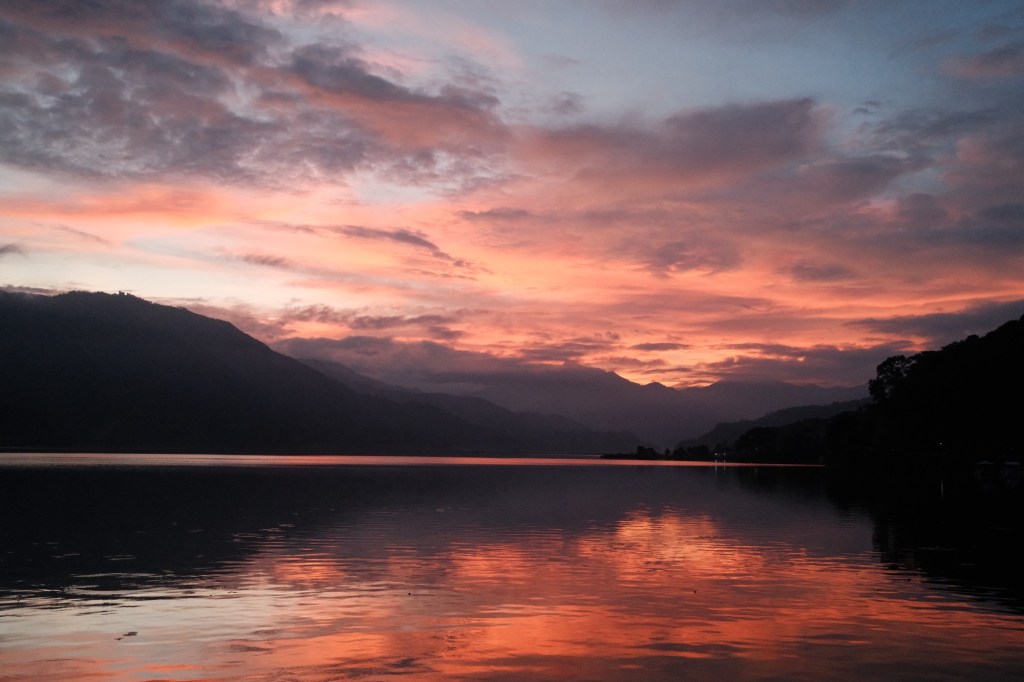
We spent the first evening in Pokhara wandering by the lake, the sunset was especially radiant, with the sky reflecting across the water. We figured the storms from the last few days had created some interesting clouds.
Up next: Nepal Part Deux: A Himalayan Induction.
 seemehear
Leave a comment