It was late Friday afternoon and we had just escaped the Kazak express, from Almaty in Kazakhstan to Bishkek in Kyrgyzstan – there’s nothing that fast about it and it’s a pretty uncomfortable cross border bus. On arrival I realise that our hastily booked hire car is in fact powered by LPG gas, which we know little about (not just the American name for petrol) and it has a miles restriction far below our intended journey. It’s also about 15 years too old 😅 We need to get across to the other side of Bishkek quick before the last place in town, with a half decent car, closes for the weekend. It’s been an intense first week of travels.
After successfully picking up a more suitable car (a Renault Sandero, no less) we awake the next day to realise that I’ve left the headlights running all night and the battery is flat (problem #1). In my defence, all the cars I’ve driven in recent years have had lights that turn off automatically – this doesn’t quite wash with the judge 😂
Initially I think, this isn’t a major problem as I remember a pair of jump cables in the boot. The key fob doesn’t work as the battery is dead, so I resort to using the actual key, which it turns out doesn’t fit any of the locks on the doors or boot (problem #2).
We then try and call the hire car place to get some help, only remembering that they’re closed all weekend (problem #3).
By this point we’re feeling bit defeated. Our friend Dan who we met up with in Bishkek is leaving at this point, so we wave goodbye and head back into the hostel we’d been staying at to ponder options. We opt for a relentless comms plan that involves trying to get hold of anyone that works for the hire car company via all channels – phone, email, WhatsApp. instagram, LinkedIn! After a couple of hours it works and we get a call, support is on its way.
The poor repair guy that meets us spends 3 hours figuring out a method for getting into the car, as the key doesn’t fit the lock, but eventually he’s got the bonnet opened and the battery can be jump started. We’re on our way to Lake Issyk in eastern Kyrgyzstan.
Let’s roll back to the 2nd September to see how our big trip started.
As predicted we didn’t quite leave ourselves enough time to get the flat sorted; move everything we own into a storage locker; and pack for the next 12 months of travels! But we did manage to depart on time on Monday 2 September from Gatwick. And as a bonus I was able to acquire two international driving licences at 7am from a corner shop in Victoria for £5 each while en-route to the airport (who knew this was how you got one?!). First stop Istanbul.
Istanbul 🇹🇷
First time for both of us in Istanbul. We stayed near to Galata tower which seems to be a good central spot for reaching most of Istanbul easily. A local recommended a nice Turkish restaurant with lots of veggie options for our first dinner, which didn’t disappoint. We spent the next day exploring the Grand Bazar, which has been around since the 15th century (resisting any temptation to buy anything but a few pastries and coffee/tea), and then we headed to the Blue Mosque. In error we tried to enter via the locals entrance, and without realising I was allowed in instantly. Carmen was not, she was sent to the tourist line. Istanbul has a magical kind of feel during sunset, with amazing light and the often heard call to prayer in the background.
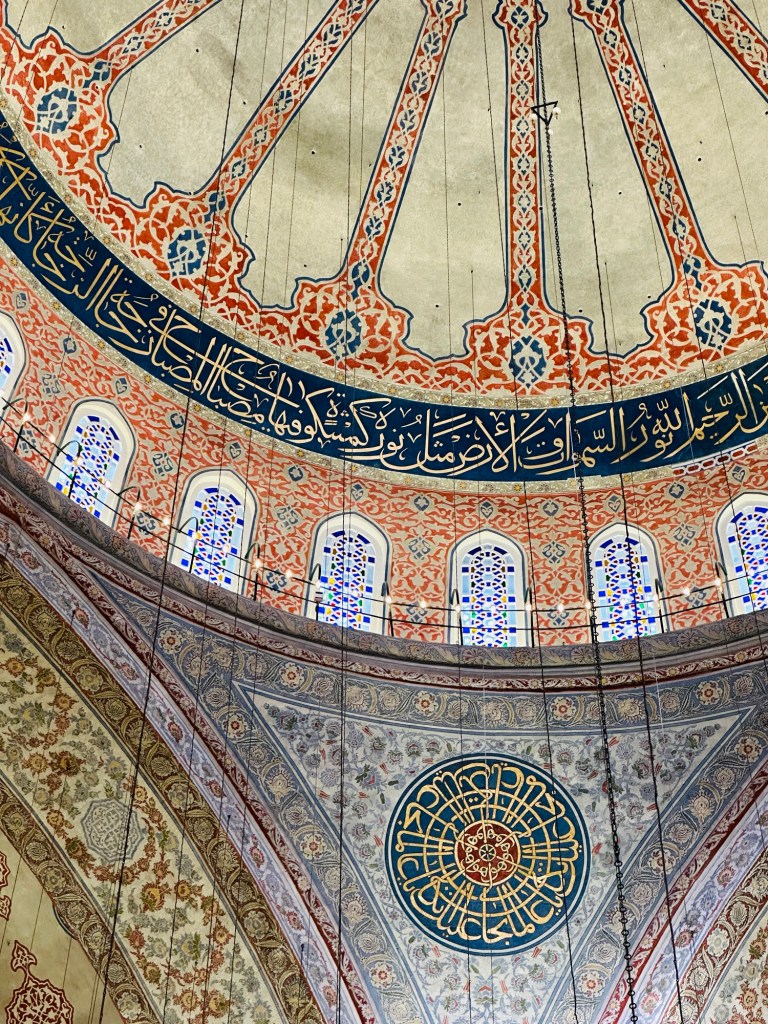
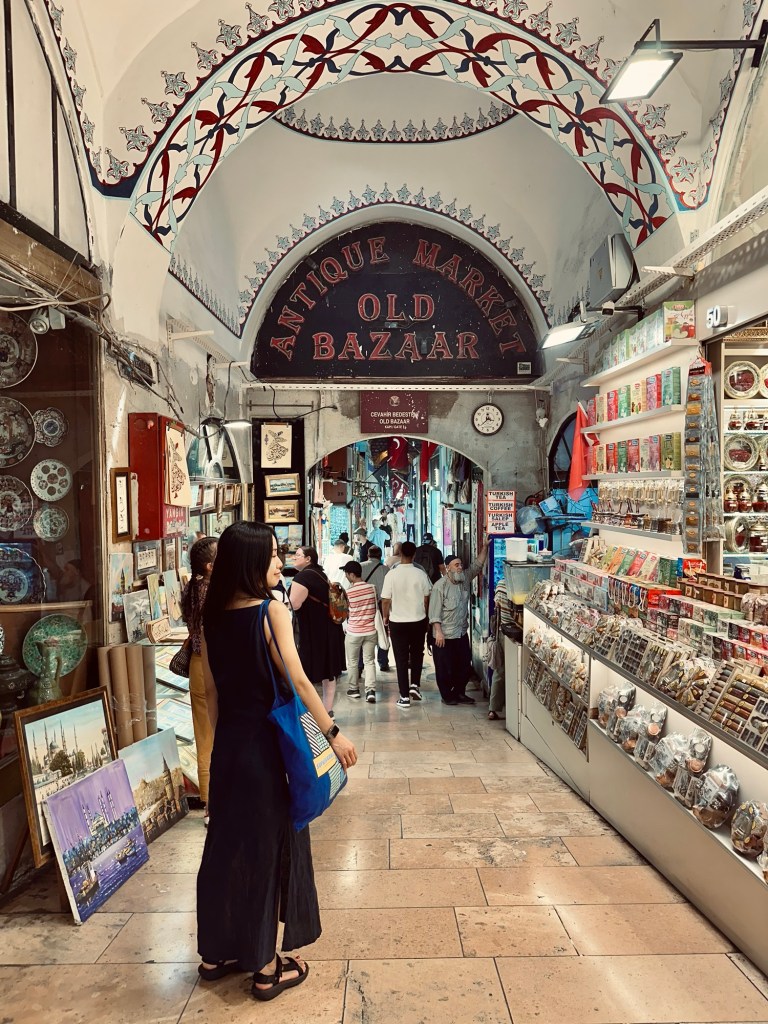
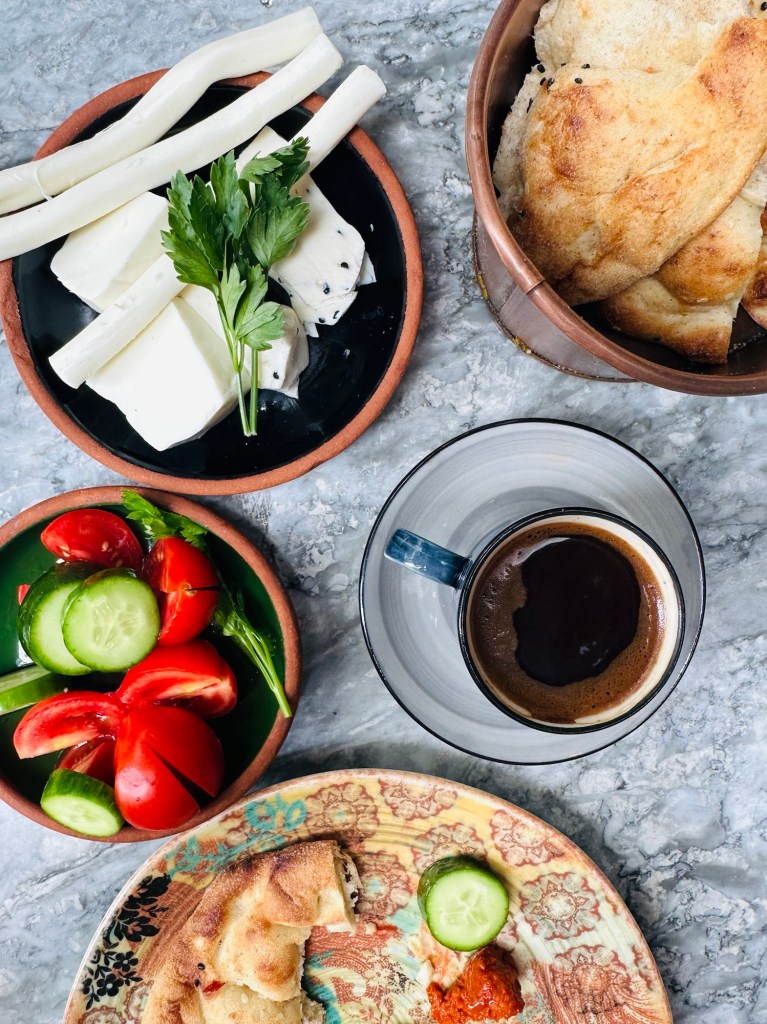
We spent the next day enjoying a traditional Turkish breakfast (well worth it if you’re in Turkey), before getting a ferry across the Bosphorus to the Asia side of Istanbul to explore a little before we head to the airport.
Kazakhstan 🇰🇿
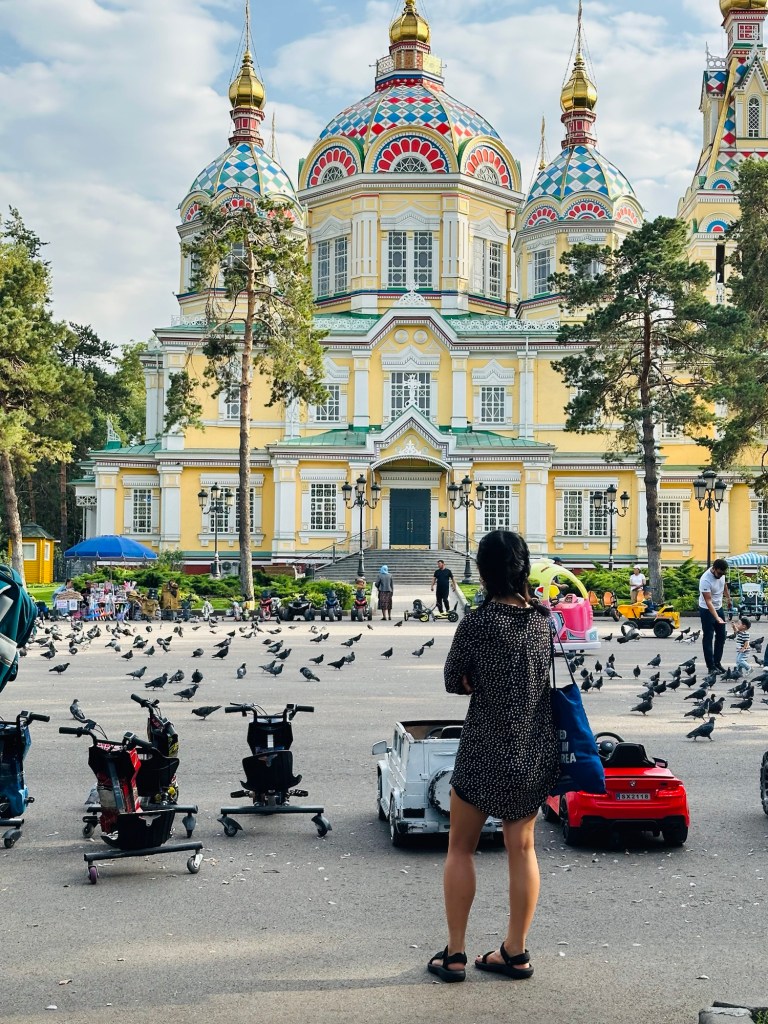
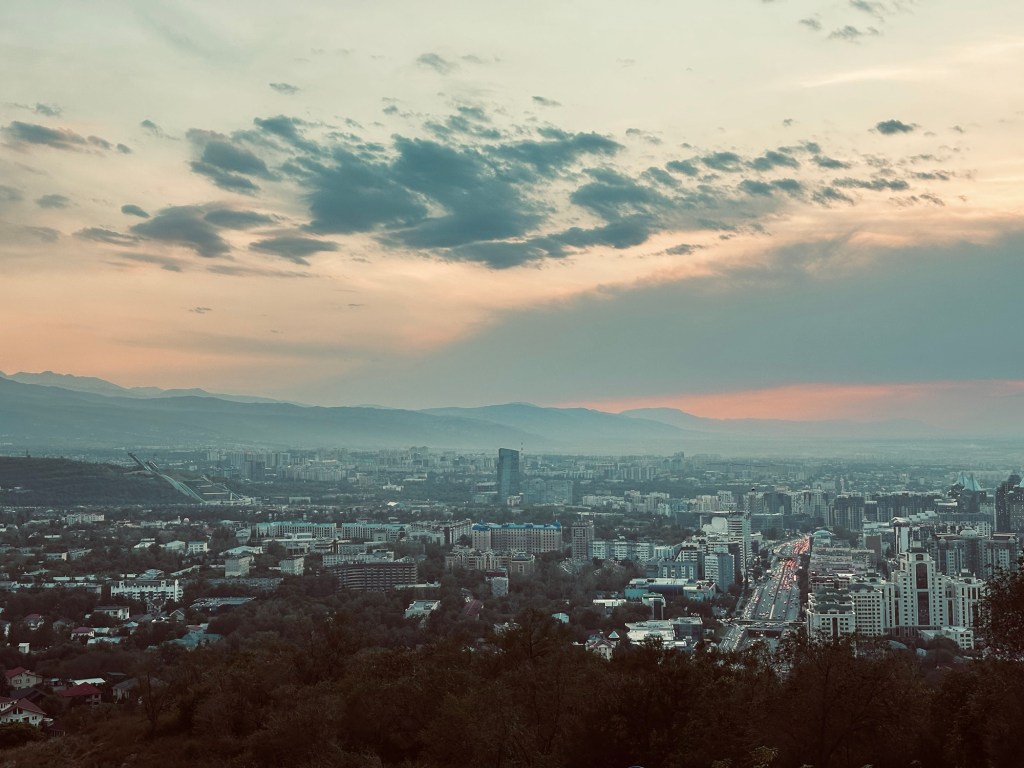
We took a night flight to Almaty from Istanbul, arriving early in the morning. I’m not sure what I thought Kazakhstan would be like, but it was nothing like it is. Almaty is a modern city, very grid like and surrounded by beautiful mountains. It’s the most populated in Kazakhstan and appears to be the center of business. There’s much architecture from the soviet era, but also a big wave of contemporary buildings.
It was a passing visit as we only had one full day, so after a Kazak breakfast which consisted of multiple apple flavoured delights (the national fruit) we wandered around the city trying to soak up as much as we can.
We took a cable car up-to a view spot, which also seemed to double as a theme park. And we ate what can only be described as the best pizza in Central Asia – it was actually delicious, and we’ve eaten a lot of pizza. But onto Kyrgyzstan we must go. We’d arranged to meet our friend Dan in Bishkek.
Kyrgyzstan 🇰🇬
Following car battery gate, it was now around 4pm and we had a long drive to Lake Issyk Kul where we would be spending the next few days. We knew the roads were a mixed bag in Kyrgyzstan, but we didn’t anticipate just how bad. It was also time for Carmen to read a loud some of the driving rules, just to check we didn’t make any mistakes.
Police stops are frequent and we experienced our first within 5 minutes of driving. The policeman was nice though, and after shaking my hand he said “tourism” and waved us on our way. We discover through the drive that speed or licence checkpoints are everywhere and the locals seem pretty accustomed to stopping all the time.
After a beautiful sunset drive, we reach what can only be described as the road from hell. It’s pitch black and the tarmac ends unexpectedly. For the next 80km’s we go from barely tarmac to rocky dirt road every few hundred meters. We then reach a stage where we need to drive on the opposite side of the road – in error I decide this is incorrect and position us back on our side of the road, to Carmen’s horror we drive over some large stones and unanimously decide the other side is more suited. The mood in the car is fear. Several cows’s appear next making us swerve and scream.
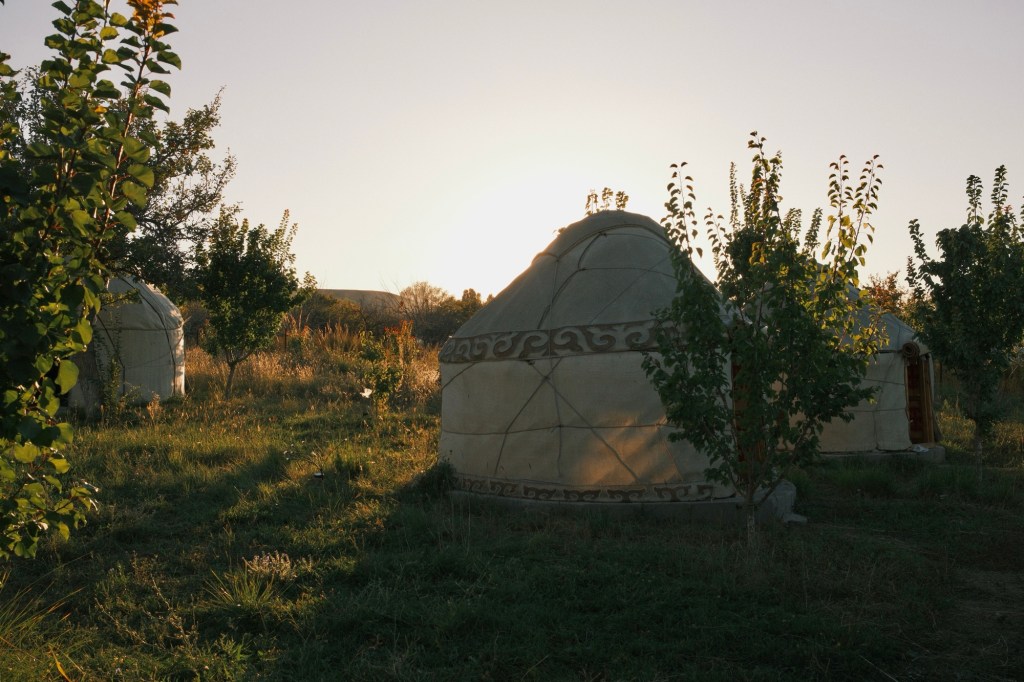
Eventually we make it to our traditional yurt, after scoping out about five other yurt camps to check we’re at the right one. Our host has stayed up for our late arrival and makes us feel at home straight away.
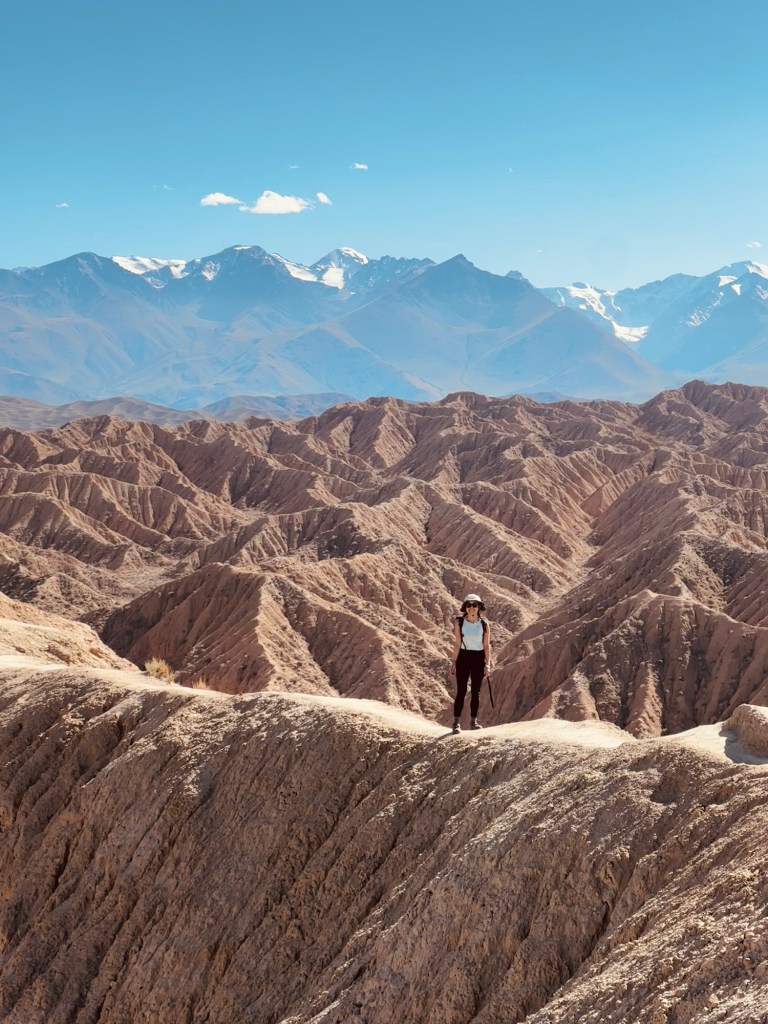
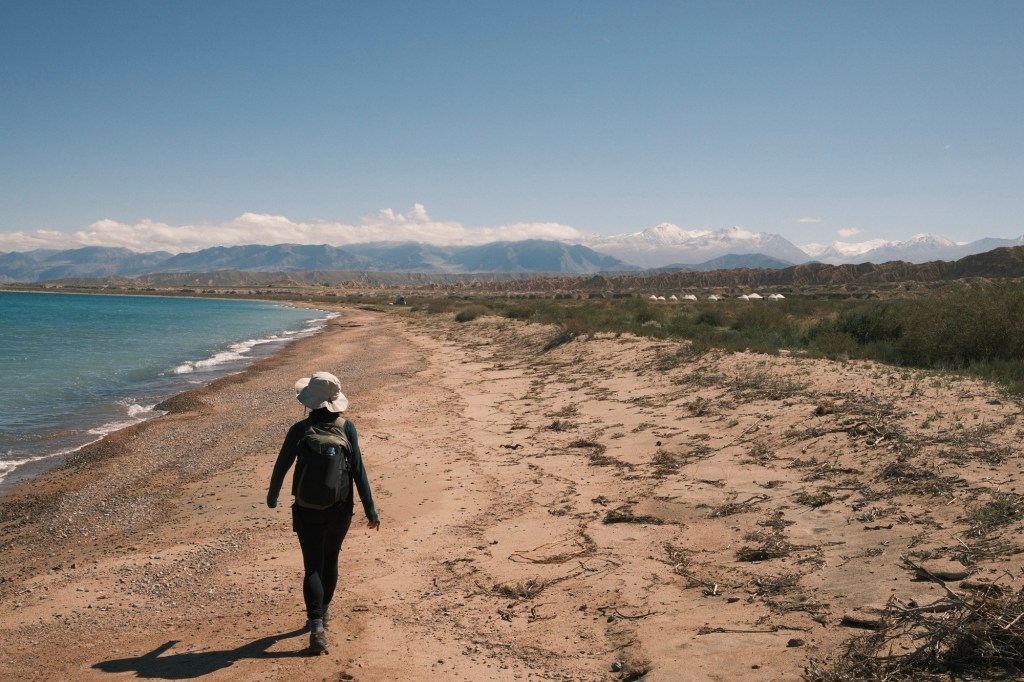
The next day is spent visiting the incredible Aksay Canyons around Lake Issyk Kul, and the lake its self. The whole area is impressive and it appears to have very little tourism on the south side of the lake where we are. Our Renault Sandero handles the drive well, venturing down a dry river bed to near the Canyons – fairly sure this wasn’t in our hire agreement!
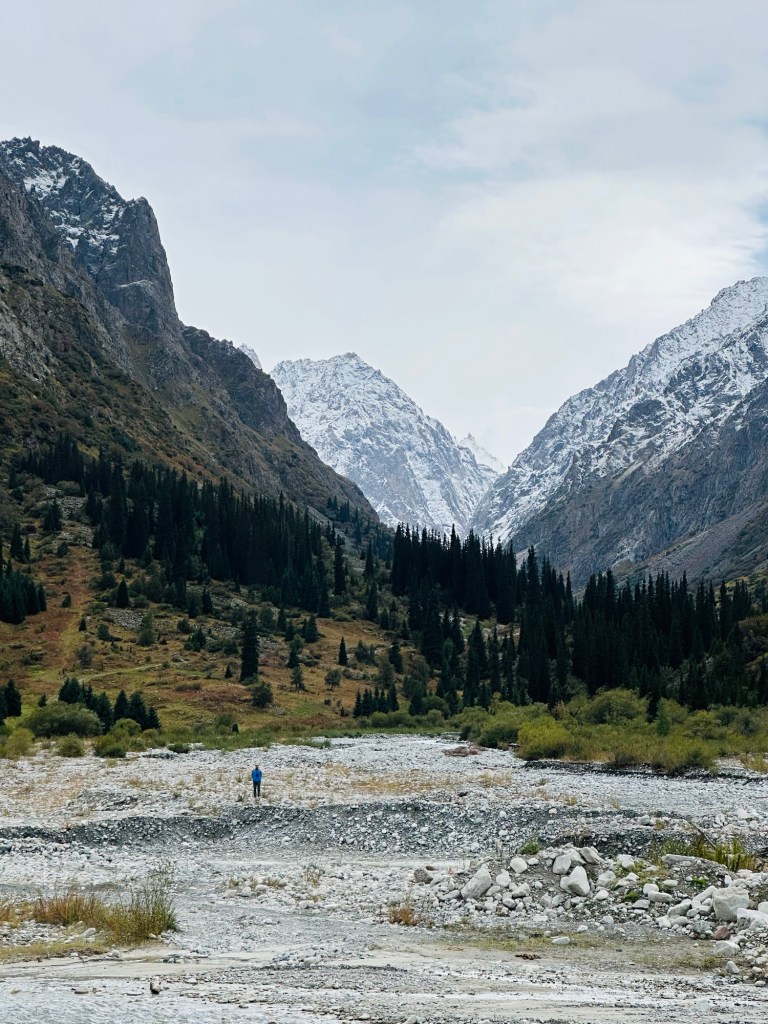
Our return drive from Lake Issyk is easier in day-light, but just as long (6hrs), but we make it to Ala Archa, the national park just south of Bishkek. It’s a beautiful spot, which also seems quiet when compared to similar parks in Europe. The mountains are snow capped and the temperature drops significantly. It’s nearly time to head to our third Central Asia country – Uzbekistan.
Uzbekistan 🇺🇿
Our whole time in Central Asia has been educational, I think we’d both say we knew very little before arriving, and I probably knew even less about Uzbekistan. It’s one of only two doubly landlocked countries in the world, the other being Litchensutein.
Our assumption when we arrived in Kazakhstan was that most people spoke Russian, but after speaking with local’s we start to understand the primary native languages of Kazakhstan, Kyrgyzstan, Uzbekistan and many other Central, Eastern and Western Asian counties are part of the Turkic languages. Carmen does well picking up a little and making an effort to speak it.
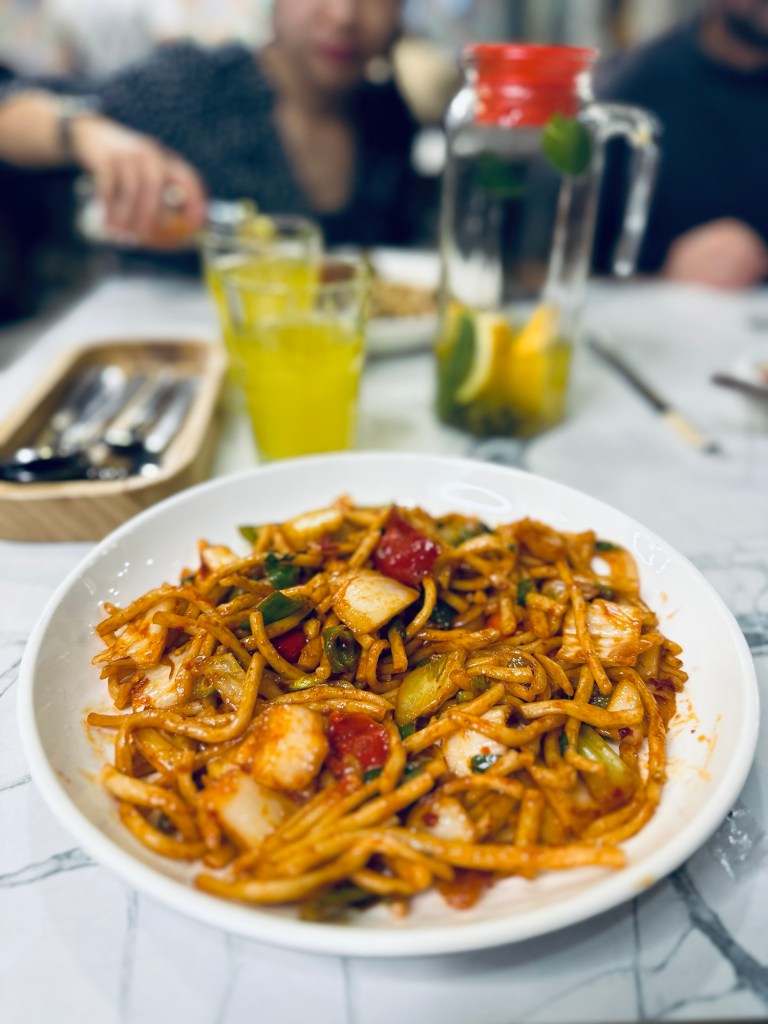
A constant food menu item in Kyrgyzstan and Uzbekistan has been laghman noodles, a hand cut thick noodle served a few different ways normally with meat (not particularly good for me, but everywhere was willing to make a meat-less version). Traditional laghman noodles are quite soupy, boso laghman noodles are fried, and guyru laghman noodles are boiled and less soupy. All delicious. On the whole Central Asia is a very meat-oriented destination, but there was always something to eat.
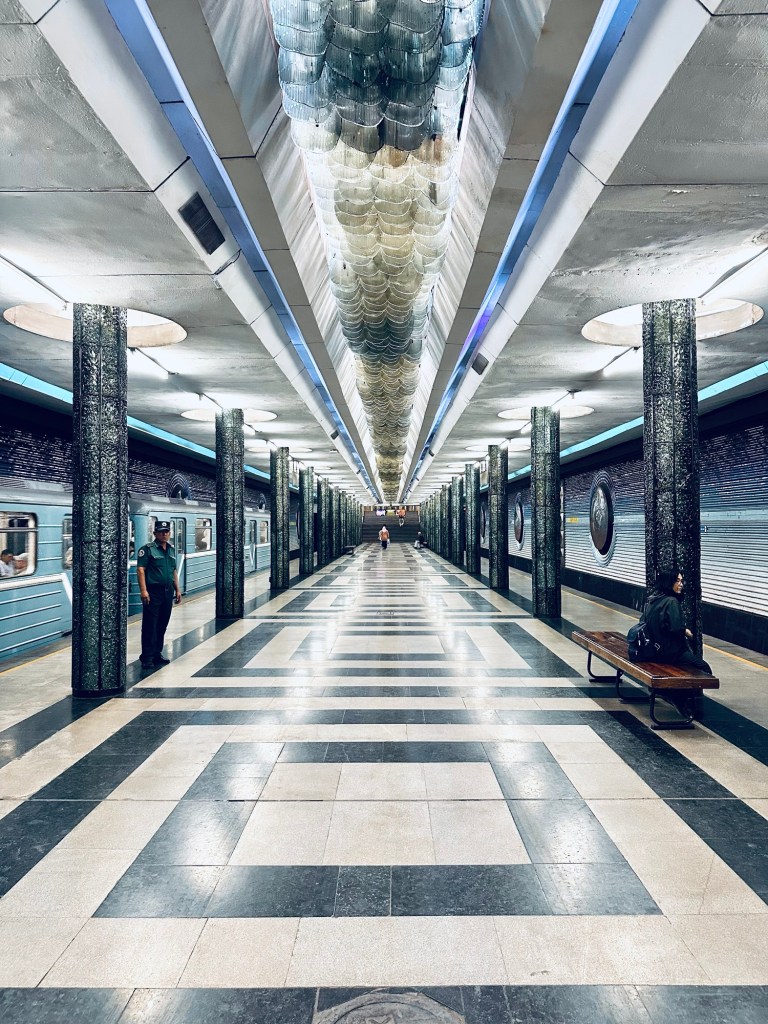
One of the things Tashkent, the capital, is famed for is their metro stations. Each more architecturally impactful than the last. No expense must have been spared when they were built in the 70’s, and the first in Central Asia.
We headed to Samarkand (a UNESCO world heritage site) west of Tashkent by bullet train (yes, bullet train). Uzbekistan is home to a high speed rail line, which means getting around the country is super efficient.
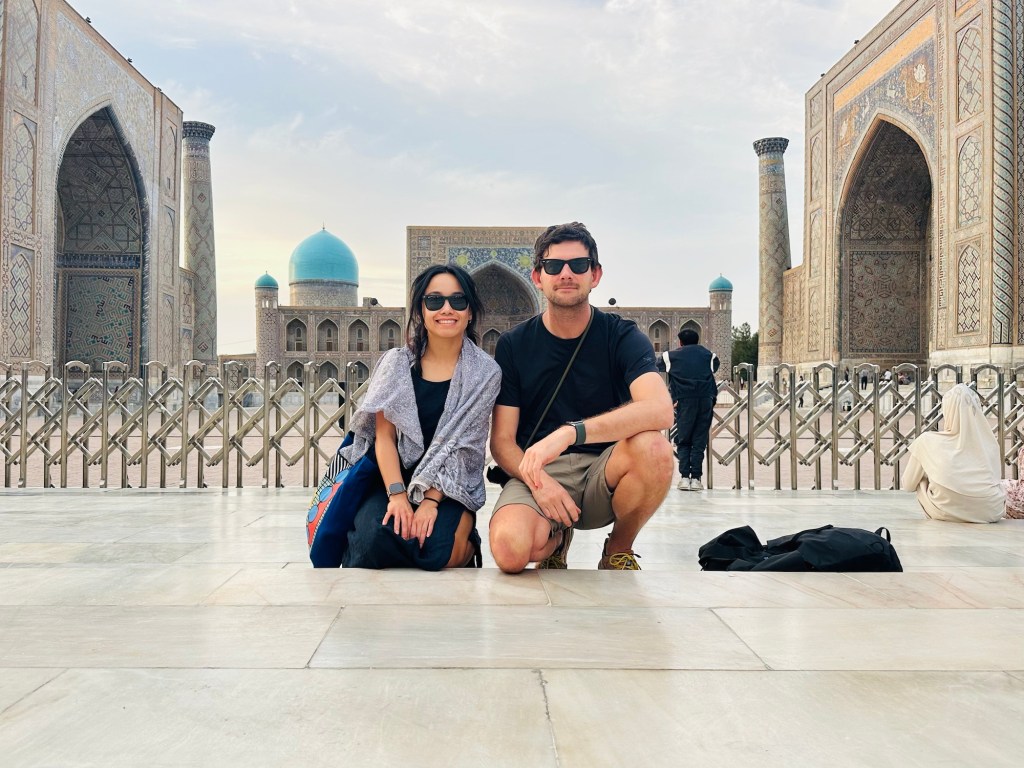
Samarkand is home to much beautiful architecture, having being continually inhabited for one of the longest periods in Central Asia. Top priority was visiting some of the buildings here. In a trip first, we’d actually booked our hotel for the wrong dates, but they were quick to help us out and give us a room.
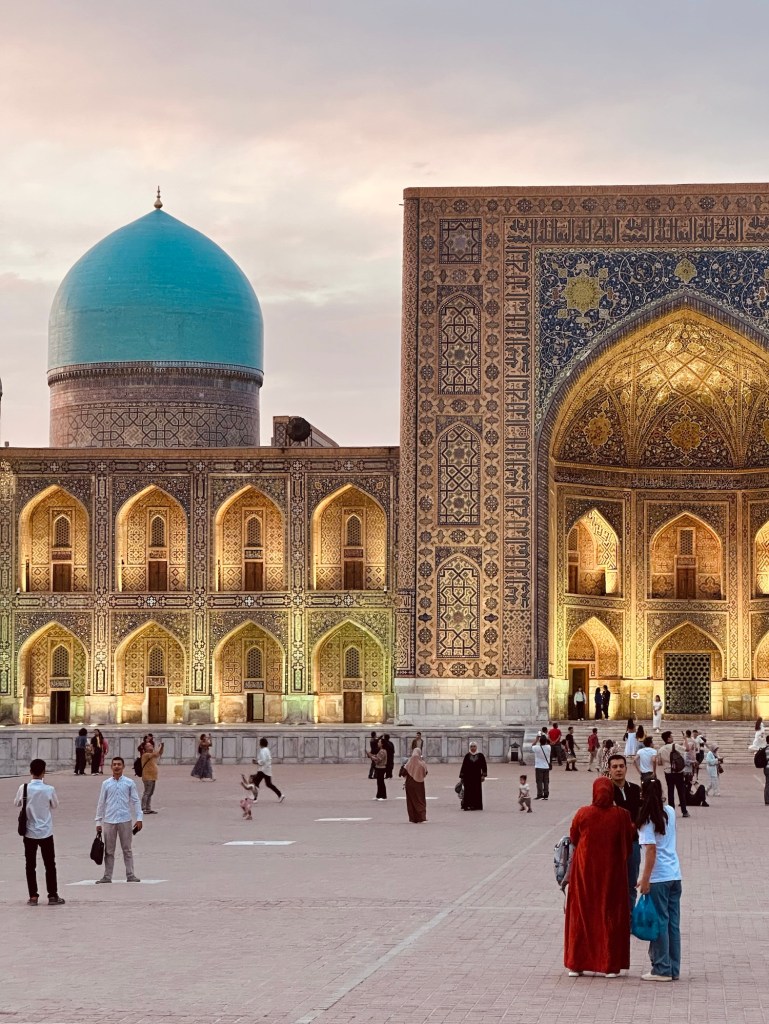
We learnt about the Sultan, Ulugh Beg, who ruled in the 15th century. During this time Samarkand became the centre of medieval science. Many astronomers developed their theories and astronomical measurements from the observatory in Samarkand, which was built by Beg. Samarkand and Beg were credited much later in Europe during the 16-17th Century for their accurate calculations, which were ahead of their time, and way before Greenwich Observatory was built.
The mosques, mausoleums and other buildings in Samarkand were well worth a visit – beautifully crafted tiles throughout – but time was up, off to India we must go.
 seemehear